Manhattan

212-265-0110

White Plains

914-227-2305

Springfield, NJ

973-315-7830

Hauppauge

631-265-3136
Categories
Facial Pain Orofacial Pain TMJ

Is a Medical Condition Causing Your TMJ Pain?


Why some jaw pain doesn’t improve with typical TMJ treatment, and what else might be going on in your body

Can a medical condition cause TMJ pain?

Yes. Conditions such as autoimmune disease, thyroid disorders, anemia, and Lyme disease can all contribute to jaw pain and TMJ symptoms, especially when standard TMJ treatment has not helped. Identifying these underlying causes is often the key to relief.

You wake up with jaw pain that feels different this time. It is in both sides of your jaw, not just one. Your jaw feels stiff in the morning, almost like your hands or knees do on a bad day. You are tired in a way that sleep does not seem to fix. And the nightguard your dentist gave you, the one that was supposed to help, has not made much of a difference.

If this sounds familiar, you are not imagining it, and you are not alone. Most jaw pain is exactly what it appears to be: a TMJ problem caused by clenching, grinding, stress, or a past injury. But for a smaller group of patients, jaw pain is one piece of a larger puzzle, one that involves the rest of the body.

You Deserve to Be Taken Seriously

If you have already tried a nightguard, physical therapy, or other standard TMJ treatments and your symptoms are not improving the way they should, that does not mean the pain is in your head. It often means there is more to the story.

At New York TMJ & Orofacial Pain, we treat TMJ disorders every day, and part of that work is recognizing when jaw pain is connected to something happening elsewhere in the body. Conditions like autoimmune disease, thyroid problems, anemia, and Lyme disease can all contribute to jaw pain, and they are often missed because no one has connected the dots between your jaw and the rest of your health.

Can a medical condition cause TMJ pain?

Yes. Conditions such as autoimmune disease, thyroid disorders, anemia, and Lyme disease can all contribute to jaw pain and TMJ symptoms, especially when standard TMJ treatment has not helped. Identifying these underlying causes is often the key to relief.

Why Your Jaw Muscles May Be the Messenger, Not the Problem

Jaw muscle pain is often a question of oxygen. Muscles that do not get enough oxygen-rich blood build up waste products that irritate nerve endings, and that irritation is what you feel as pain, aching, or fatigue in the jaw.

Two common but often overlooked issues can starve your jaw muscles of the oxygen they need.

A nervous system stuck in overdrive. Chronic stress, anxiety, or poor sleep can keep your body in a constant low-grade fight-or-flight state. One effect of that state is that blood vessels throughout the body, including in the jaw, narrow slightly and reduce blood flow to the muscles you use every day to chew, talk, and yawn.

Anemia. When your blood carries less oxygen than it should, often because of low iron, vitamin B12, or folate, your muscles fatigue and ache more easily with normal use, including the muscles of your jaw. Anemia is common and frequently goes undiagnosed until someone connects it to symptoms like this.

If your jaw pain feels disproportionate to what is actually going on in your bite or your stress level, a simple blood test checking your iron, vitamin B12, and folate levels can be a useful and inexpensive place to start.

Can Autoimmune Conditions Cause Jaw Pain?

Certain autoimmune and inflammatory conditions can directly affect the jaw joint and the muscles around it, sometimes before they are ever diagnosed.

Rheumatoid Arthritis

Rheumatoid arthritis causes inflammation in the joints, and the jaw joint is not immune. If you are noticing pain on both sides of your jaw, morning stiffness, and joint pain in your hands or wrists, it is worth mentioning this combination to your physician, since blood tests can help confirm or rule out rheumatoid involvement.

Lupus

Lupus is a condition that creates inflammation throughout the body, and that inflammation can make the entire pain system, including your jaw, more sensitive. Lupus does not always come with the well-known butterfly rash, which is part of why it can be missed. Fatigue, joint pain, and sensitivity to sunlight alongside jaw pain are worth raising with your doctor.

Psoriatic Arthritis

Psoriatic arthritis can affect the jaw joint as well, and it sometimes shows up before any skin symptoms appear. This is one reason jaw pain connected to psoriatic arthritis can be especially easy to overlook.

Hashimoto’s Thyroiditis

This is one of the most common conditions we see connected to jaw pain in our female patients in particular. Hashimoto’s thyroiditis slows down your thyroid, and an underactive thyroid can lead to muscle aches, joint stiffness, fatigue, and poor-quality sleep, all of which can make jaw pain worse and harder to resolve. Even thyroid levels that look technically normal on paper can still be working against you if they are not optimized for how you feel.

Can Lyme Disease Cause Jaw Pain?

If you live on Long Island, in Westchester County, or anywhere in the surrounding region, this section matters to you specifically. The northeast is the highest Lyme disease region in the country, and Lyme disease can cause joint pain, including in the jaw, sometimes without the classic bullseye rash or even a memory of a tick bite.

If you are dealing with jaw pain alongside fatigue or pain in other joints, and you spend time outdoors in our area, it is worth asking your doctor about Lyme testing, even if nothing about a tick bite comes to mind.
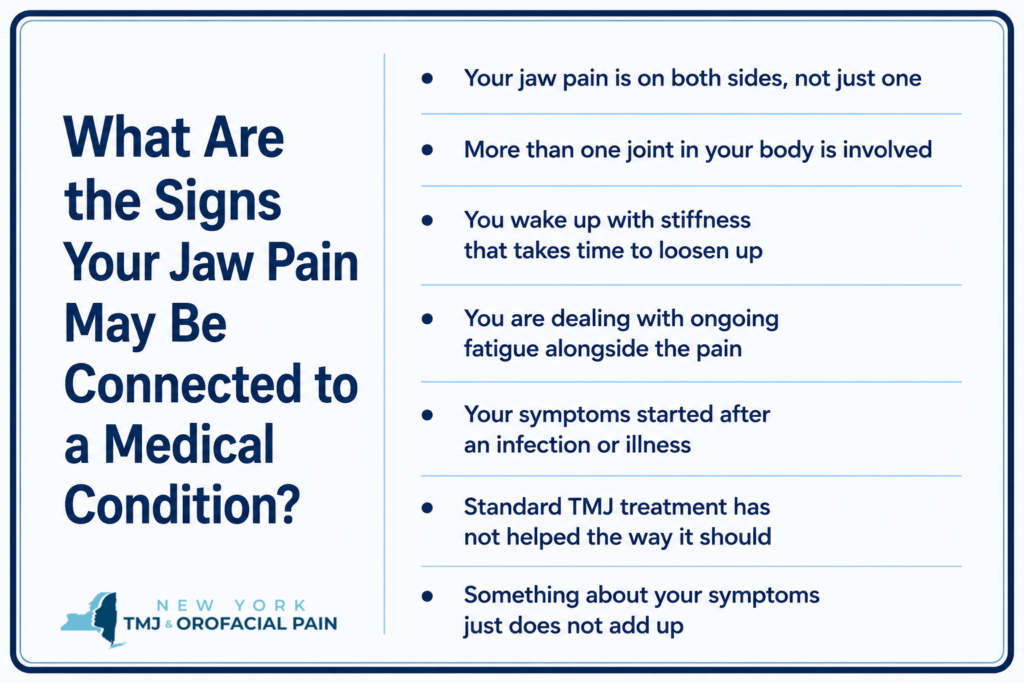
Signs your jaw pain may be connected to a medical condition, including pain on both sides, joint involvement, morning stiffness, fatigue, symptoms after illness, and lack of response to standard TMJ treatment
If several of these apply to you, a broader medical evaluation may be the missing piece in your care.

You Are Not Starting From Scratch

Finding out that something beyond your jaw may be contributing to your pain is not bad news. It is often the missing piece that finally makes your symptoms make sense, and the first real step toward a plan that actually works for you.

Orofacial pain specialists take the time to look at the whole picture, not just your jaw in isolation. When they suspect something systemic may be involved, they will collaborate closely with your physician, rheumatologist, or other specialists so that your care is coordinated rather than fragmented.

Are You Experiencing Jaw Pain That Isn't Responding to Treatment in the NYC Metropolitan Area?

If you’re in the New York City metropolitan area and you’ve been dealing with jaw pain that hasn’t improved with standard treatment, you deserve answers, not just temporary relief.

At New York TMJ & Orofacial Pain, we specialize exclusively in diagnosing and treating TMJ disorders and orofacial pain. We take time to identify the true cause of your symptoms and build a treatment plan that directly addresses it, including coordinating with your physician when a medical condition may be contributing to your pain.

We have 4 locations: Midtown Manhattan, White Plains, Hauppauge, and Springfield, NJ.

Contact us today to schedule a comprehensive evaluation. →

About the Author

Dr. Donald R. Tanenbaum is a board-certified specialist who has dedicated his 40-year career to diagnosing and treating Orofacial Pain, TMD/TMJ, headache, and sleep-related breathing disorders. He practices in our Manhattan and Hauppauge offices.

Our Practice →

Treatments We Provide →

What to Expect at Your First Visit →

Frequently Asked Questions About Medical Conditions That Can Cause TMJ Pain

Can autoimmune diseases cause TMJ pain?
Yes. Conditions such as rheumatoid arthritis, lupus, psoriatic arthritis, and Hashimoto’s thyroiditis can all contribute to jaw pain, jaw joint inflammation, and muscle dysfunction. In some cases, jaw symptoms appear before the underlying condition is even diagnosed.

Can anemia cause jaw muscle pain?
Yes. Anemia reduces the amount of oxygen your blood can deliver to muscles, including your jaw muscles, which can lead to fatigue, cramping, and aching with normal use like chewing or talking.

Can Lyme disease affect the jaw joint?
Yes. Lyme disease can cause joint pain, including in the jaw joint, and this is a particular concern for patients in Long Island, Westchester County, and other parts of the northeastern United States where Lyme disease is common.

How do I know if my jaw pain is connected to a medical condition?
Some signs to watch for include pain on both sides of the jaw, involvement of other joints, morning stiffness, ongoing fatigue, symptoms that began after an illness, or jaw pain that has not responded to standard TMJ treatment. If any of these sound familiar, it is worth discussing a broader medical evaluation with your provider.

What should I do if I think something more than TMJ is going on?
Start by talking with your dentist, physician, or an orofacial pain specialist. A thorough evaluation, sometimes including blood work, can help determine whether a medical condition is contributing to your jaw pain and guide you toward the right treatment plan.
Categories
Children & TMJ Facial Pain Orofacial Pain TMJ

Jaw Pain in Your Teenager: Why Is It Happening?


Your child started mentioning jaw pain a few months ago. Maybe they said their jaw clicks when they eat. Maybe they’ve been waking up with headaches, or complaining of ear pain their pediatrician can’t explain.

You brought it up at their next dental appointment. The dentist checked their teeth, said everything looked fine, and suggested a nightguard.

You tried the nightguard. The complaints kept coming.

If this sounds familiar, here’s something that may help: jaw pain and TMJ symptoms are well documented in adolescents and young adults. When they show up during this period of life, there are usually very specific, identifiable reasons why. And the right specialist can find them.

In the New York City metropolitan area, where academic pressure runs high and schedules are often relentless, we see this pattern regularly in our busy orofacial pain practice. Teens and young adults from Manhattan, Westchester County, Long Island, and northern New Jersey arrive having already been to their dentist, their pediatrician, and sometimes an ENT or neurologist. They are not getting answers. In many cases, the missing piece is a specialist trained specifically in orofacial pain.

What Is TMJ?

TMJ, or temporomandibular disorder (TMD), is a condition involving the jaw joint, the muscles that control jaw movement, and the surrounding tissues. It commonly produces jaw pain, clicking, headaches, ear fullness, and facial muscle tension. In adolescents, it is frequently triggered by a combination of hormonal changes, stress, sleep disruption, orthodontic treatment, and certain medications.

In teens and young adults, TMD most often shows up as some combination of the following:

  • Jaw pain or soreness, especially in the morning or after eating
  • Clicking, popping, or grinding sounds in the jaw
  • Headaches, often starting at the temples or behind the eyes
  • Ear fullness, ringing, or pain without an ear infection
  • Difficulty opening the mouth fully or comfortably
  • Facial muscle tension or fatigue

These symptoms are real, and they should not be something your child simply has to live with.

Why Does TMD So Often Start During the Teen Years?

Adolescence creates a convergence of factors that can push a vulnerable jaw system toward symptoms. Hormones shift significantly. Sleep patterns change. Stress levels rise. Orthodontic treatment is often in progress. And for many teens today, new medications enter the picture for the first time.

None of these factors alone necessarily causes TMD. But when several of them are present at once, they can tip a previously quiet jaw problem into an active, painful one.

Understanding which factors are driving your child’s symptoms is the starting point for effective care.

Why Are Girls More Likely to Develop TMD During Puberty?

TMD affects women significantly more often than men, and the difference is largely believed to be hormonal.

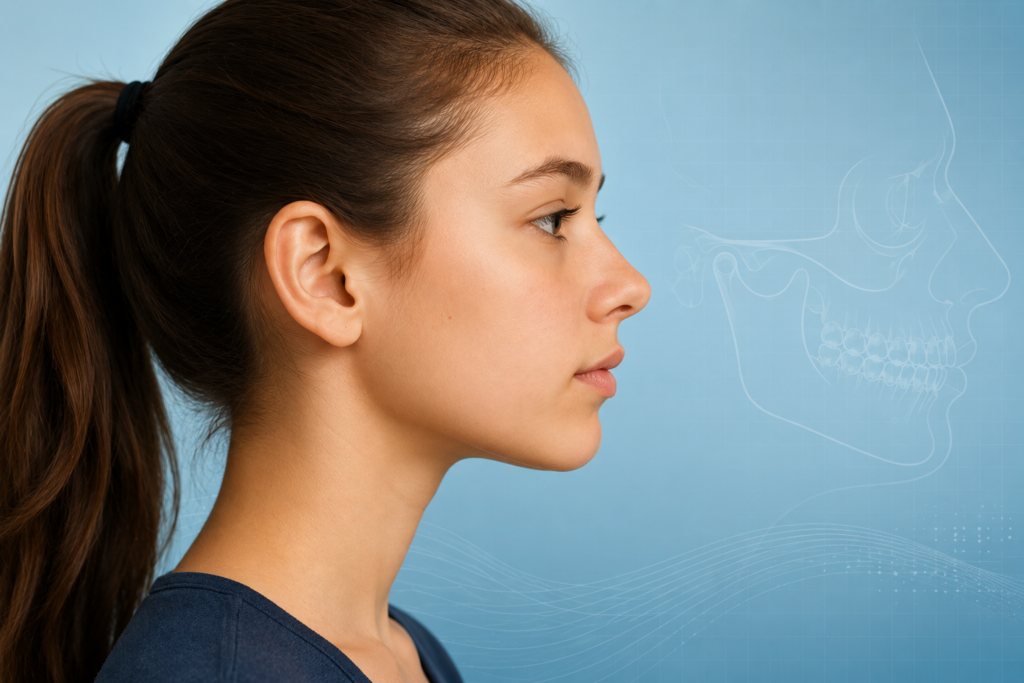
Side profile of a teenage girl with a jaw anatomy illustration overlay highlighting the temporomandibular joint and bite structure

The jaw joint contains receptors for estrogen, the primary female sex hormone. As estrogen levels fluctuate, the ligaments supporting the joint can become more lax, making the joint less stable and more prone to problems.

Puberty triggers major hormonal shifts, and it is not coincidental that TMJ clicking and early jaw symptoms often first appear during this window. If your daughter’s jaw symptoms started in middle school or early high school, this hormonal connection may be part of the explanation.

Can a Teenager Have Both TMD and Migraine at the Same Time?

Yes, and it is more common than most parents expect. Many parents bring their child to our practice complaining of “headaches and jaw pain,” and assume the jaw is causing both.

Sometimes that is true. But a pattern we see frequently is that the child is actually dealing with two distinct but overlapping conditions: TMD and migraine. Both involve the trigeminal nerve, which governs sensation in the face and jaw. When one condition flares, it can amplify the other.

Migraine commonly begins during the teen years and early adulthood, overlapping almost exactly with the typical window for early TMD onset.

If your child has been treated for headaches and jaw pain without meaningful improvement, it is worth making sure both conditions have been formally evaluated. Treating only one when both are present often leaves a significant part of the problem unaddressed.

Can Braces or Aligners Make TMD Worse?

Orthodontic treatment does not cause TMD. That is well established in the research, and it is important to say plainly.

However, there are meaningful nuances that parents should understand.

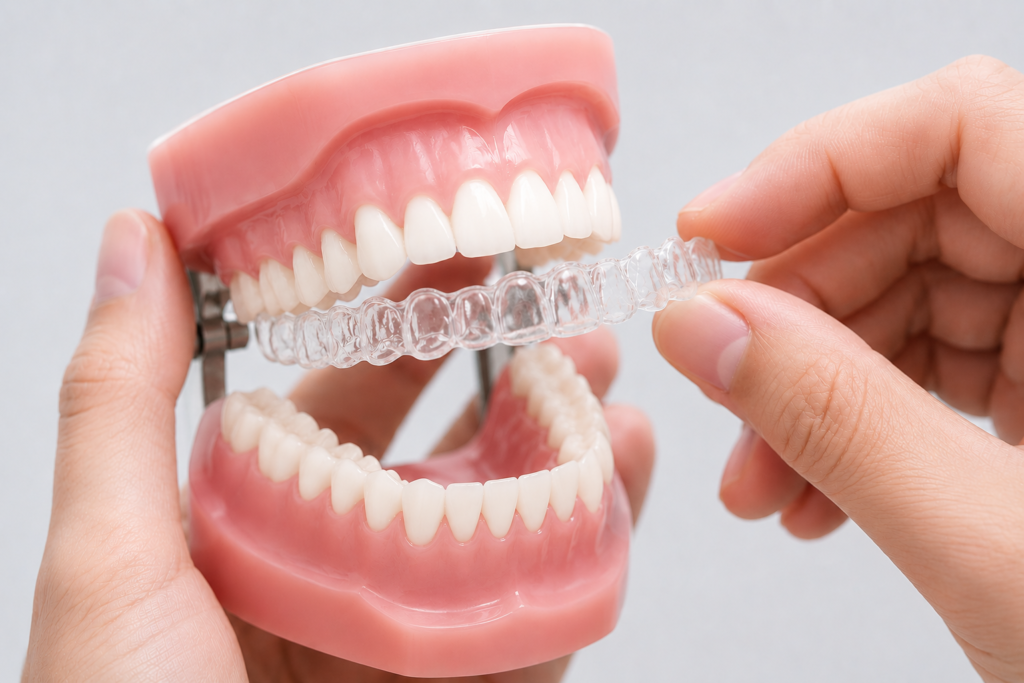
Orthodontic forces change the feedback that teeth send to the jaw muscles. In some patients, the continuous presence of clear aligners between the teeth appears to increase tooth contact awareness and clenching activity. For teens who are already predisposed to jaw problems, orthodontic treatment can sometimes be what converts a subclinical condition into an active, symptomatic one.

Clear aligner therapy in an adolescent patient with temporomandibular disorder considerations
Clear aligner therapy may contribute to increased tooth contact awareness or symptom aggravation in susceptible TMD patients.

This does not mean your child should avoid or stop orthodontic treatment. It means two things. First, children starting orthodontic treatment should be evaluated by an orofacial pain specialist for existing TMD symptoms beforehand. Second, jaw pain that develops or worsens during orthodontic treatment should be evaluated by an orofacial pain specialist, not simply managed with over-the-counter pain relief or reassurance that it will pass.

In some cases, active orthodontic treatment limits the TMD therapies available, and those trade-offs need to be considered by a specialist.

Can ADHD Medication or Antidepressants Cause Jaw Clenching?

Yes. This is a connection many families are not aware of, and it can be directly relevant to your child’s symptoms.

SSRIs, a common class of antidepressants that includes sertraline, escitalopram, and fluoxetine, are associated with a significant increase in bruxism, meaning clenching and grinding, both during sleep and while awake. This side effect can begin within weeks of starting the medication.

Stimulant medications prescribed for ADHD, including both amphetamine-based and methylphenidate-based drugs, are also strongly associated with increased daytime jaw clenching.

If your child began experiencing jaw pain or muscle tension shortly after starting a new medication, that connection is worth raising with their prescribing physician and with an orofacial pain specialist.

In some situations, alternative medications may be available. In others, the better path is managing the jaw symptoms directly while continuing the medication that is helping with the underlying condition.

How Does Poor Sleep Make Teen TMD Symptoms Worse?

Poor sleep is one of the strongest predictors of chronic pain, including TMD. When your child is not sleeping adequately, their muscles recover more slowly, their pain sensitivity increases, and their body is less equipped to manage the jaw problems that are already present.

During adolescence, the body’s internal clock naturally shifts toward a later sleep phase, making it biologically harder for teens to fall asleep early. The American Academy of Sleep Medicine recommends that teenagers get 8 to 10 hours of sleep per night. Given typical school start times, most adolescents fall well short of that.

Screen use before bed worsens the problem by suppressing melatonin and increasing physiologic arousal, pushing sleep onset even later.

If your child has jaw pain and is also consistently under-sleeping, the sleep deficit is not incidental. It is likely contributing to their symptoms and interfering with recovery.

Does Stress Really Cause Physical Jaw Pain?

It can be tempting to hear “stress is contributing to this” and interpret it as a suggestion that the pain is not real. That is not what it means.

Psychosocial stress, whether from academic pressure, social demands, athletic expectations, or the chronic low-grade stress that comes with constant social media exposure, has real physiologic effects. It activates jaw and facial muscles. It increases clenching. It raises systemic inflammation. And it disrupts sleep, which compounds everything else.

For many adolescents in Westchester County, Manhattan, and the surrounding suburbs, this kind of sustained pressure is a daily reality, and it shows up in the jaw.

Helping your child build skills for physiologic self-regulation, including jaw relaxation techniques, diaphragmatic breathing, and consistent sleep habits, is a legitimate and evidence-based part of managing TMD. Mental health support, when appropriate, is also part of the picture.

Read Part 2 to learn about treatment for TMD in teens.

Is Your Child Experiencing TMJ or Jaw Pain Symptoms in the New York City Metropolitan Area?

If you are in Manhattan, Westchester County, Long Island, or northern New Jersey and your child has been dealing with jaw pain, TMJ symptoms, or related headaches, you deserve answers, not just temporary relief.

At New York TMJ & Orofacial Pain, we specialize exclusively in diagnosing and treating TMJ disorders and orofacial pain. We take time to identify the true cause of your child’s symptoms and build a treatment plan that directly addresses it.

We have 4 locations: Midtown Manhattan, White Plains, Hauppauge, and Springfield, NJ.

Contact us today to schedule a comprehensive evaluation.


About Our Practice →
Treatments We Provide →
What to Expect at Your First Visit →

About the Author

Dr. John Dinan is a board-certified Orofacial Pain specialist dedicated to the treatment of TMJ/TMD disorders and related conditions. He practices at New York TMJ & Orofacial Pain’s Manhattan and Springfield, NJ locations.

Frequently Asked Questions about Jaw Pain in Teenagers

Can TMD go away on its own in teenagers?
In some mild cases, symptoms improve with reduced stress, better sleep, and behavioral changes. However, TMD that persists beyond a few weeks, or that is associated with jaw clicking, bite changes, or recurring headaches, warrants a formal evaluation. Waiting without a diagnosis risks missing a condition that responds much better to early intervention.

What kind of doctor treats TMD in children and teenagers?
An orofacial pain specialist is the appropriate provider for diagnosing and treating TMD. This is a board-certified dental specialty focused specifically on jaw disorders, facial pain, and related conditions. General dentists and orthodontists are not typically trained in comprehensive TMD diagnosis.

Can braces cause TMJ problems?
The research is clear that orthodontic treatment does not cause TMD. However, in teenagers who are already predisposed, the forces and appliances involved in orthodontic treatment can sometimes activate symptoms that were previously quiet. Any jaw pain arising during orthodontic treatment should be evaluated, not assumed to be normal soreness.

Is jaw clicking in teenagers serious?
Jaw clicking on its own, without pain or limited opening, is common and often benign. However, clicking that is accompanied by pain, occurs on one side only, or is associated with changes in how the bite fits together is worth evaluating. Clicking can be an early sign of disc displacement inside the jaw joint.

Why does my teenager’s jaw hurt more in the morning?
Morning jaw pain is frequently a sign of nighttime clenching or bruxism during sleep. The jaw muscles work throughout the night and wake up fatigued and sore, much like any overworked muscle. This pattern is worth mentioning to an orofacial pain specialist, as it is highly treatable.

Can anxiety or depression contribute to TMD symptoms in teens?
Yes. Anxiety and depression increase muscle tension, disrupt sleep, and in many cases involve medications (such as SSRIs) that independently raise the risk of clenching. Addressing mental health as part of a comprehensive TMD plan is not a suggestion that the pain is psychological. It is simply treating the whole picture.

Further Reading

TMJ Problems During Invisalign Treatment

The Connection Between Pain And Sleep

3 Tips To Reduce Jaw Problems From Aligners

Categories
Facial Pain Orofacial Pain TMJ

TMJ Hypermobility: Jaw Instability, Clicking, and Ehlers-Danlos Syndrome

When the issue is joint instability, not tightness

If your jaw opens very wide, clicks frequently, and feels loose or fatigued, TMJ hypermobility may be the underlying cause. This type of TMJ disorder is driven by joint instability, not restriction, and requires a specialized approach to treatment.

When Your Symptoms Do Not Fit the Usual Pattern

Most people assume TMJ problems come from a jaw that is tight or stuck.

But some patients experience the opposite.

Your jaw may open very wide. You may hear clicking or feel shifting in the joint. Instead of restriction, it can feel loose or unreliable. The muscles around it often feel constantly tired or sore, even when you are not doing much.

If this sounds familiar, TMJ hypermobility may be part of the picture. The issue is not too little movement. It is too much. In our practice in the New York City metropolitan area, we see this pattern more often than many patients expect.

The Role of TMJ Hypermobility – Why the Jaw Becomes Painful

Hypermobility means your joints move beyond the normal range.

For some people, that simply means they are flexible. For others, it reflects a connective tissue condition such as Ehlers-Danlos Syndrome.

These conditions affect collagen, the material that gives structure and support to ligaments and joints. When collagen is more elastic than it should be, the joint is not held as firmly. It moves more than it should, and the body has to compensate.

In TMJ hypermobility, that compensation falls on the muscles.

Why the Jaw Becomes Painful

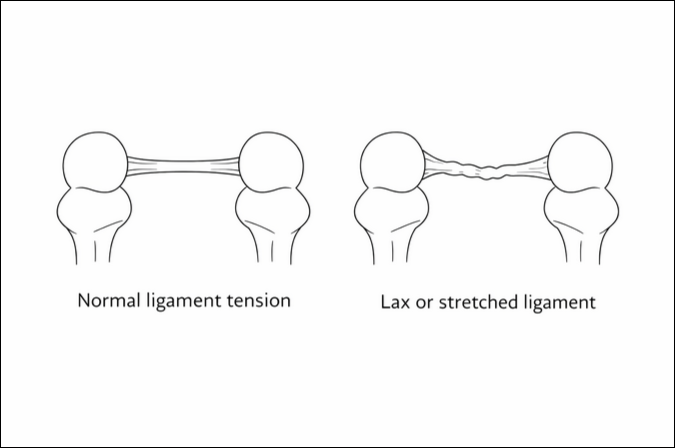
lax ligament vs normal tension joint instability diagram

When the joint lacks stability, the muscles step in to control it.

At first, this works. Over time, it becomes a problem.

The muscles are constantly active, trying to keep the joint steady. This leads to fatigue, soreness, and persistent discomfort. Many patients also notice clicking or popping, which often reflects instability inside the joint rather than something harmless.

This is what makes TMJ hypermobility different.

Instead of a jaw that cannot open enough, this is a joint that moves too much and lacks control.

A Common Pattern

In our practice, we often see patients who have always been “flexible.”

They may have a history of joint issues in other parts of the body. Ankles that sprain easily. Shoulders that feel unstable. Pain that takes longer than expected to resolve.

Some already have a diagnosis of hypermobility or Ehlers-Danlos Syndrome. Others have never connected these patterns before.

When the connection is made, their jaw symptoms finally start to make sense.

Why Treatment Has Not Worked

Many patients with TMJ hypermobility have already tried treatment.

They are often told to relax their muscles or adjust their bite. Sometimes this helps temporarily, but the symptoms return.

That is because the underlying issue is instability.

In a hypermobile joint, small strains do not fully resolve. The joint remains less supported, and the muscles continue to compensate. Over time, they become overworked and sensitive.

This does not mean improvement is not possible. It means the approach needs to change.

Treatment Focus: Stability and Control

The goal is not to change the underlying connective tissue.

The goal is to improve stability and reduce strain on the system.

This often involves reducing clenching and jaw tension during the day and protecting the joint at night with an oral appliance. Patients are also guided to avoid extreme opening, such as wide yawning or large bites.

Physical therapy plays an important role, but the focus is different. Instead of just relaxing muscles, the emphasis is on controlled strengthening and stabilization.

When muscle pain is persistent, targeted treatments may be used to help calm the system.

In some cases, therapies that support ligament strength may also be considered.

Setting the Right Expectations

With hypermobility or Ehlers-Danlos Syndrome, the underlying tissue does not change.

But that does not mean nothing can improve.

When treatment focuses on stability, protection, and control, patients often experience less pain, better function, and more confidence in how their jaw feels.

When to Seek Evaluation

If your jaw opens unusually wide, clicks along with pain or fatigue, or has not improved with previous care, it may be worth a more specialized evaluation.

This is especially true if you have been diagnosed with hypermobility or Ehlers-Danlos Syndrome, or suspect that you may be more flexible than average.

Moving Forward

If your symptoms have never quite fit the typical TMJ pattern, there is usually a reason.

Recognizing that TMJ hypermobility is often the turning point in getting the right diagnosis and treatment.

DO YOU HAVE TMJ AND A HYPERMOBILITY DISORDER IN THE NEW YORK CITY METROPOLITAN AREA?

If your jaw opens very wide, clicks frequently, and feels loose or fatigued, TMJ hypermobility may be the underlying cause. This type of TMJ disorder is driven by joint instability, not restriction, and requires a specialized approach to treatment.

At New York TMJ & Orofacial Pain, we specialize in diagnosing and treating TMJ disorders and orofacial pain. We take the time to understand what is actually driving your symptoms and build a treatment plan around it.

Our team of orofacial pain specialists provides evidence-based, individualized care at our locations in the NYC metropolitan area. We work closely with each patient and often other healthcare providers to restore comfort and function.

If your symptoms have persisted despite reassurance or prior treatment, a more specialized evaluation can make all the difference.

About Our Practice →
Treatments We Provide →
What to Expect at Your First Visit →

Categories
Facial Pain Orofacial Pain TMJ Women & Pain

Why Women Experience TMJ Symptoms More Frequently Than Men


TMJ disorders affect women far more often than men.
This is not a coincidence. Differences in joint structure, hormones, and pain processing can make symptoms more likely to develop and harder to resolve.
Understanding why is often the first step toward real, lasting relief.

If you’re a woman dealing with TMJ symptoms such as jaw pain, clicking, locking, tightness, frequent headaches, or facial pain, this is for you.

I’m a board-certified orofacial pain specialist and have been treating people with TMJ symptoms for over 40 years. The majority of patients who come to our NYC practice are women. In fact, close to 70% of people seeking treatment for TMJ disorders are women.

There are biological reasons for this huge disparity, and understanding them can be essential if you are struggling to feel better.

Helping Patients Better Understand Their Persistent Symptoms

Many women come to us looking for a reason why their jaw continues to hurt, though they have used a nightguard, taken anti – inflammatory medications, and followed a soft diet for months.

TMJ (the clinical term is temporomandibular joint disorder, or TMD) involves the interaction between your joints, your muscles, and your nervous system. According to the National Institute of Dental and Craniofacial Research, these disorders are among the most common causes of facial pain.

TMJ symptoms are not something you’re imagining. They are what your body is expressing.

Why This Happens in Women

temporomandibular joint disc condyle joint space instability diagram

1. The ligaments in your temporomandibular joint are more flexible and less stable

In women, the ligaments in the temporomandibular joint tend to be more flexible and less structurally stable than in men.

There is a reason for this! The temporomandibular joint in women contains an abundance of estrogen receptors, making its tissues directly responsive to hormonal fluctuation. In fact, estrogen promotes elastin production, producing ligaments that are more flexible and less structurally organized than those in men. The result is greater joint laxity and reduced load-bearing capacity. In women, this means that the temporomandibular joint is more susceptible to compromise with everyday function, and certainly when under excessive loading during daytime jaw overuse behaviors and sleep grinding and clenching of the teeth.

More stable joint ligaments tolerate these stresses longer. More flexible ligaments reach their limits sooner.

That is why symptoms can emerge more commonly in the temporomandibular joints in women over time.

2. The female brain processes pain differently

Pain is not just about what is happening in a body part.  It is also about how your brain processes pain signals.

Men generally have stronger central nervous system modulating elements for dampening pain signals. Women, on average, have less of that built-in inhibition due to the lack of Androgens, including testosterone and related hormones. In practical terms, male hormones strengthen the brain’s capacity to send dampening signals down to pain receptors throughout the body. Women, carrying lower androgen levels, lack this same degree of biological protection

This means that the same level of inflammation and tissue injury generated pain can be experienced very differently.

What might feel like temporary soreness in a man can become persistent pain in a woman.

This is not about tolerance or resilience. It reflects real biological differences in how the nervous system regulates pain.

3. Stress has a greater physical impact on a woman’s jaw

Stress affects everyone, but it often shows up differently in women than it does in men, again for biological reasons.

Under prolonged stress, the human body can remain in an activated state, often with accompanying muscle tension. This is called sympathetic activation. Over time, this activation can deplete the neurotransmitters that support descending pain modulation, the very system that blunts pain experiences on a daily basis. With research suggesting that women have less robust pain blunting systems than men, the pain that results from ongoing muscle tension can be more profound in women and recovery even in the presence of care taking longer.

In the jaw specifically, muscle pain and fatigue as a result of stress-driven daytime clenching and night grinding can be impactful and persistent

Men can experience this as well, but women tend to develop more sustained symptoms, which increases the overall load on the system.

The Emergence of TMJ Symptoms

In our NYC metropolitan area practices, we commonly see TMJ symptoms develop as a result of a specific traumatic event, a mind-body disorder that drives persistent muscle tension, or an underlying medical condition that reduces tissue resiliency in the jaw muscles and temporomandibular joints.

Sometimes multiple factors are responsible, and symptoms develop gradually.

First, the body adapts. Then it begins to struggle. In women, as a result of the biological factors mentioned, the likelihood of a TMJ problem emerging and hanging around increases. At times, TMJ symptoms such as jaw pain, clicking, locking, tightness, frequent headaches, or facial pain no longer resolve on their own but require explanation and formal treatment.

A More Complete Understanding for Women

Biological vulnerability is real, but it does not mean that tissue healing and feeling better are not achievable. With the right evaluation, the causes and risk factors can be addressed comprehensively with education and a wide variety of supportive treatments that lead to meaningful and sustainable improvement.

Are You a Woman Experiencing TMJ Symptoms in the NYC Metropolitan Area?

If you are dealing with persistent jaw pain, clicking, locking, tightness, frequent headaches, or facial pain, there is a reason why.

At New York TMJ & Orofacial Pain, we specialize in diagnosing and treating TMJ disorders and orofacial pain. We take the time to understand what is actually driving your symptoms and build a treatment plan around it.

Our team of orofacial pain specialists provides evidence-based, individualized care at our locations in the NYC metropolitan area. We work closely with each patient and often other healthcare providers to restore comfort and function.

If your symptoms have persisted despite reassurance or prior treatment, a more specialized evaluation can make all the difference.

About Our Practice →
Treatments We Provide →
Read: Women & Pain →

Categories
Facial Pain

Low-dose Naltrexone for Neuropathic Facial Pain


The Jaw Surgery Worked – But the Pain Didn’t Go Away

What low-dose naltrexone can do for persistent neuropathic facial pain

Your jaw surgery went well. The imaging looks fine. Your surgeon says everything healed the way it should.

And yet, you have pain. It aches along your jaw. The sensation feels, as one of our patients put it, like “my skin is sunburnt” – even though nothing is visibly wrong.

If this sounds familiar, you are not imagining it. And you are not alone.

Persistent pain after facial or jaw surgery is a recognized clinical reality. It has a name, a mechanism, and – importantly – treatment options that go beyond what most patients are ever offered.

Your Pain Is Real. And It Has a Medical Explanation.

One of the most disorienting experiences our patients describe is being told that everything looks fine, yet they still live with daily pain.

When surgery corrects a structural problem, but pain continues, the issue often isn’t structural at all. It’s neurological. The nervous system, particularly the pain-signaling pathways, can remain in an activated state long after the original source of injury has been addressed.

This is called neuropathic pain – pain that originates in your nervous system itself, not in damaged tissue. In some cases, it takes on a more complex form called nociplastic pain, a term from the International Association for the Study of Pain that describes pain arising from altered signaling in the central nervous system, without ongoing tissue damage to account for it.

In plain terms: your brain’s pain system has become hypersensitive. It keeps sending pain signals even after the original problem has been treated. This is not a character flaw, a low pain threshold, or something you should simply push through. It is a measurable, treatable condition.

A Case We Treated: Debbie’s Story

“Debbie” was a 52-year-old woman from the New York City area who came to us with a problem that had no easy answer.

Two years earlier, she had undergone bilateral TMJ total joint replacement – a significant surgery to address severe, progressive jaw degeneration. The procedure went well. Her jaw opened better. Imaging confirmed the prosthetics were stable. By every measurable standard, surgery was a success.

But Debbie was in constant pain.

She described a burning sensation along both sides of her jaw and temples. It was relentless, unpleasant, and unlike anything she had experienced before the surgery. She had tried NSAIDs, benzodiazepines, opioids, and anticonvulsant medications. None helped. Several caused side effects severe enough to stop.

When she arrived at our practice, the examination revealed something important: light touch to the affected areas caused heightened sensitivity and a kind of distorted sensation. This told us that her issue wasn’t structural, but neurological. Her pain wasn’t coming from the joint. It was coming from a sensitized nervous system.

This is where a mechanism-based approach – asking not just what is causing pain, but how and why her pain system had become dysregulated – becomes essential.

Introducing Low-Dose Naltrexone (LDN)

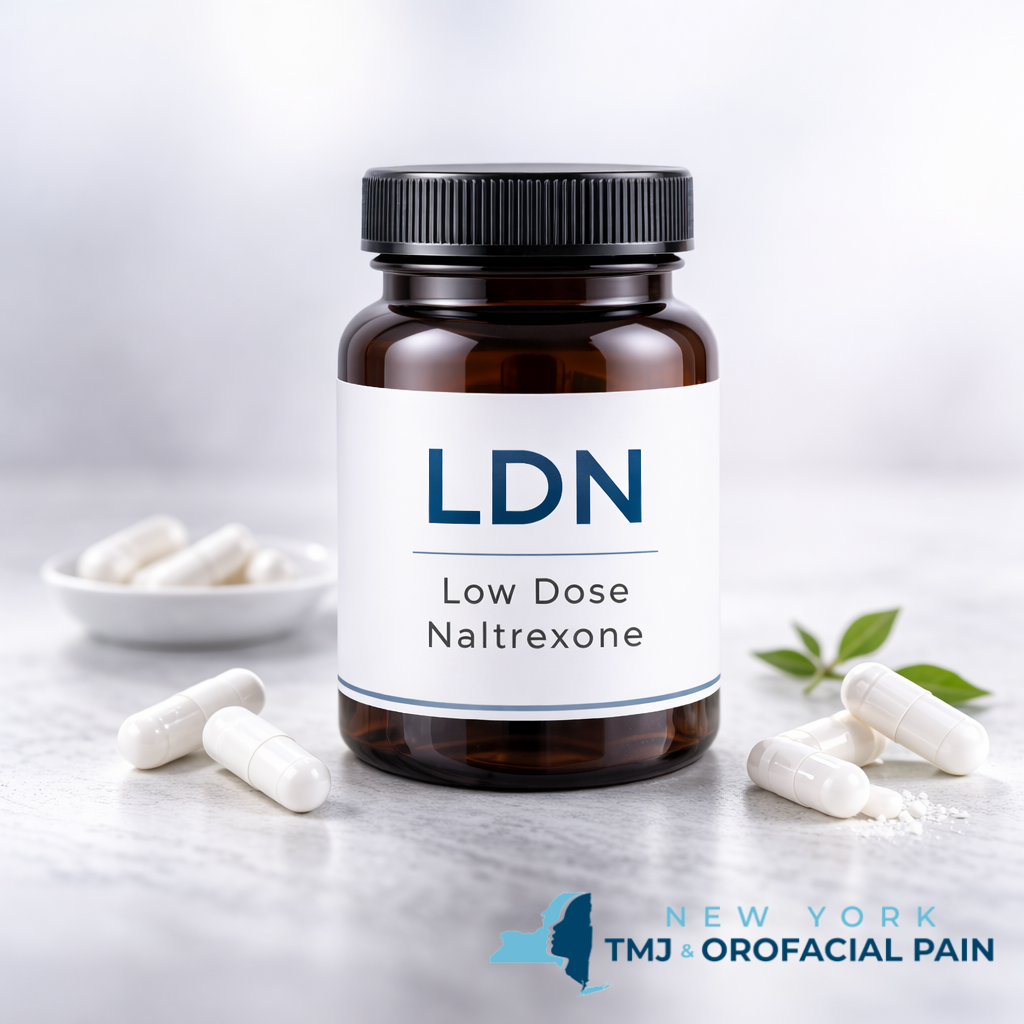
Low-dose naltrexone (LDN) bottle used in the treatment of neuropathic facial pain and centrally mediated pain disorders
Low-dose naltrexone is used off-label for neuropathic and centrally mediated facial pain conditions.

What Is Low-Dose Naltrexone (LDN?)

Naltrexone is a medication with a long track record in addiction medicine, typically prescribed at 50 to 100 mg daily. Low-dose naltrexone (LDN) refers to the same medication prescribed at a fraction of that dose – generally 1.5 to 6 mg daily – where it appears to work through an entirely different set of mechanisms. LDN is obtained through a compounding pharmacy and used off-label for centrally mediated and neuropathic pain conditions.

Naltrexone is a medication with a long track record in addiction medicine when used in large doses. But at a fraction of that dose, it appears to work through an entirely different set of mechanisms, ones that are particularly relevant to persistent, centrally mediated pain.

This low-dose application is called Low-Dose Naltrexone (LDN).

How Low-Dose Naltrexone Works: Two Mechanisms That Matter

1. Low-Dose Naltrexone helps your body produce more of its own natural pain-relievers.

At low doses, naltrexone temporarily and mildly blocks the body’s opioid receptors for a few hours. The body responds by producing more endorphins, which are its own natural pain-modulating molecules. When the mild blockade resolves, those elevated endorphins flood back into the system. The result is a net increase in the body’s own pain-relief capacity.

2. It calms an overactivated immune response in the brain.

The central nervous system contains immune cells called microglia. In patients with chronic or neuropathic pain, microglia can become chronically activated, releasing inflammatory signals that amplify pain. LDN appears to reduce this microglial activation, quieting the neuroinflammatory response that keeps pain pathways in a heightened state.

Together, these two mechanisms address something many conventional pain medications do not: the underlying nervous system dysregulation driving persistent pain.

How Low-Dose Naltrexone Is Prescribed

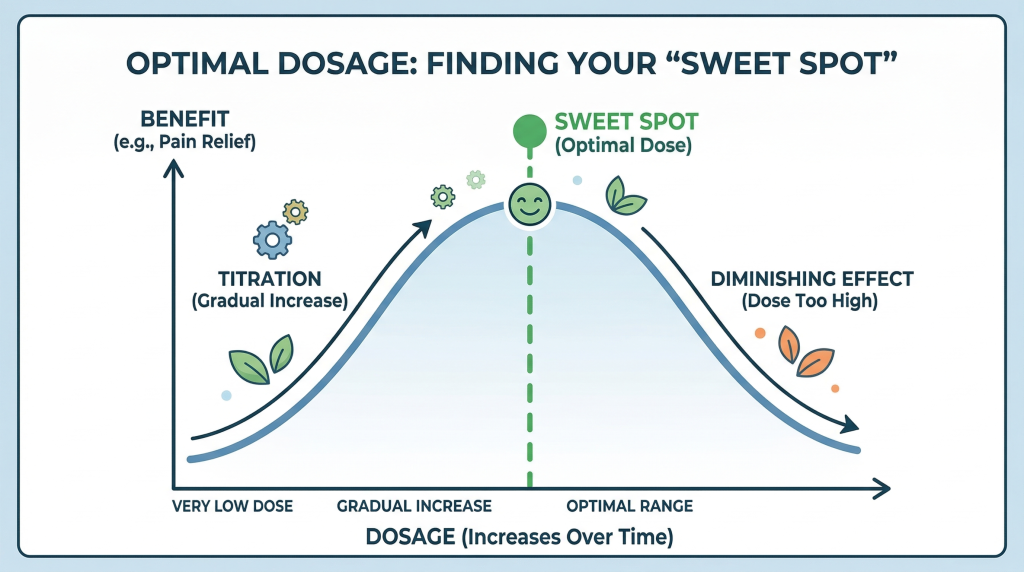
A bell curve graph showing Low-Dose Naltrexone (LDN) titration, highlighting the "sweet spot" where pain relief is highest before benefits diminish at higher doses.

Treatment typically begins at a very low dose nightly, with gradual increases every two to three weeks, depending on how you respond.

One of the most important things to understand about LDN is that more is not necessarily better. There is what clinicians describe as a “sweet spot”, an optimal dose where the benefit peaks. Going above that range can actually diminish the effect. This is why individualized, carefully supervised titration matters.

LDN is generally well tolerated. The most commonly reported side effects are vivid dreams, mild insomnia, or light nausea, but they are usually transient and dose-dependent. Importantly, LDN cannot be used concurrently with opioid medications, as it would block their effect.

What Happened with Debbie

Debbie began LDN nightly. After minimal change, we increased the dose and within days, her burning pain had begun to decrease substantially.

At her two-month follow-up, she described the change this way: she could still feel her face, but the sensation was no longer unpleasant or painful. After years of burning, that distinction was everything.

“She could still feel her face – but the sensation was no longer unpleasant or painful.”

Common Misconceptions About Post-Surgical Pain

Patients with persistent pain after facial or jaw surgery often encounter frustrating responses from providers who haven’t yet connected the dots between mechanism and treatment. Here is what we often hear and what the evidence actually says:

“If the surgery worked, you should be pain-free.”

Structural success does not always equal pain resolution. Neuropathic and nociplastic pain can persist independently of tissue healing.

“There is nothing left to try.”

Mechanism-based options like LDN are often not explored until later in a patient’s journey – if at all. They represent a distinct category from conventional neuropathic medications.

“It may be psychological.”

Nociplastic pain involves measurable central nervous system changes. It is not “in your head” – though behavioral and psychological factors can influence how any pain is experienced, as they do with all chronic conditions.

Who May Benefit from This Approach

Low-dose naltrexone may be an appropriate consideration for you if you experience:

  • Persistent burning or aching pain following TMJ surgery
  • Post-surgical facial pain with negative or stable imaging
  • Neuropathic facial pain that has not responded to standard medications
  • Persistent idiopathic facial pain
  • Burning mouth syndrome
  • Chronic headache or orofacial pain with a centrally mediated component

Patient selection and dose titration are essential. This is not a first-line treatment for acute or clearly structural pain. Instead, it is a targeted option for a specific mechanism.

Our Approach: Finding the “Why” Before the “What”

At New York TMJ & Orofacial Pain, we do not begin with a treatment. We begin with a question: what is actually driving your pain?

For patients like Debbie, that question led to an answer that changed everything. Her pain was not structural. It was neurological. And once we understood the mechanism, we could target it directly.

That same principle applies across the full range of conditions we treat. Whether the pain stems from muscle dysfunction, joint pathology, nerve sensitization, or a combination of factors, our goal is always the same: identify the true cause and build a plan around it, not around generic protocols.

LDN is one tool within that framework. It is not right for every patient. But for the right patient, it can offer relief that nothing else has.

Are You Experiencing Persistent Facial Pain in the NYC Metropolitan Area?

If you have had facial or jaw surgery, or if you’ve been living with facial pain that no one has been able to explain, you deserve more than temporary relief. You deserve answers.

At New York TMJ & Orofacial Pain, we specialize exclusively in diagnosing and treating TMJ disorders and orofacial pain. We take the time to identify the true cause of your symptoms and build a treatment plan that directly addresses it.

We have four convenient locations across the region, staffed with experienced orofacial pain specialists:

  • Midtown Manhattan
  • White Plains
  • Hauppauge, Long Island
  • Springfield, New Jersey

Contact us today to schedule a comprehensive evaluation.

https://www.nytmj.com/contact-us-locations/

About the Author

Dr. John Dinan is a board-certified Orofacial Pain specialist dedicated to the treatment of TMJ/TMD disorders and related conditions. He practices in our Manhattan and Springfield, NJ offices.

Learn more about Dr. Dinan →

Learn about our treatments →

Read: Trigeminal Neuralgia and the Experience of Tooth Pain →


Categories
Facial Pain Jaw Problems Orofacial Pain Persistent Toothache Referred Pain TMJ

The Secret Behind Unexplained Toothaches & Facial Pain


There’s a good chance you landed here because you’ve been suffering from an unexplained toothache, a persistent sinus pain that won’t leave you alone, or an annoying earache that makes you wince every time you chew for a long time. These symptoms have likely sent you on multiple visits to healthcare professionals, each one leaving you with more questions than answers.

But what if the source of your pain is not where you’re feeling it?

Your puzzling array of symptoms just may be due to problems with your temporomandibular joints (TMJs) and associated muscles. Your TMJs and jaw muscles play a fundamental role in the basic movements of your jaw—talking, chewing, yawning, and even expressing emotions. When this joint and its corresponding muscles and ligaments become strained, unstable, and or overworked, the resulting condition is known as temporomandibular disorder or TMD.

When a TMD problem is not considered as a source of pain in teeth, the ear and/or sinus, for example, the result can be ongoing evaluations and treatments that address the location of the pain symptoms but not the origin. When the location of the pain complaint is not the true origin, the term referred pain is commonly used.

Referred Pain & Its Relationship To TMD Problems

Referred pain is pain perceived at a location other than the origin of the painful stimulus. It is the result of a network of interconnecting sensory nerves that are persistently over-excited. For example, when there is an injury or pathology at one site in the network, it is possible that when the signal is interpreted in the brain, mistakes are made as to the true origin of the problem. As a result, pain is often experienced at a distance from the true origin. (E.g., pain from a heart problem is experienced in the shoulder or jaw)

So, how does this relate to the structures of the jaw?

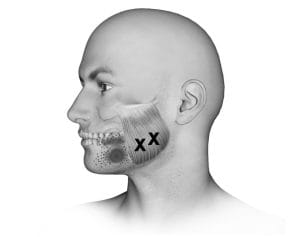
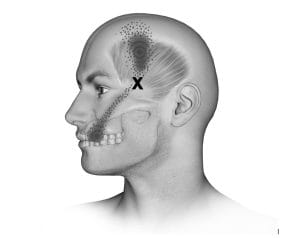
When your jaw muscles (masseters and temporalis) are persistently overworked, they become sore, extremely sensitive, and knotted. These areas are known as trigger points. When activated, trigger points can send pain signals to places far from their origins, resulting in referred pain. Jaw overuse behaviors such as clenching your teeth during the day, biting your nails, chewing your pens, etc., can lead to the formation and activation of these trigger points, leading to referred pain in areas such as your teeth, ears, or sinuses.

The Secret Behind Unexplained Toothaches & Facial Pain
Referred Pain to the Teeth, Ear, Sinus, and Face from the Masseter Muscle
Referred Pain to the Teeth, Ear, Sinus, and Face from the Temporalis Muscle

Orofacial Pain Specialists Understand What You’re Going Through

As part of an Orofacial Pain practice, my colleagues and I are well-versed in the nuances of this disorder. For many of our patients, merely validating their pain and helping them understand the concept of referred pain gets them moving in the right direction on the road to recovery.

If you’re nodding your head right now, thinking, “That’s me!” I encourage you to seek the care of an Orofacial Pain specialist. Your treatment plan might include education, awareness strategies to reduce jaw overuse behaviors and fatiguing postures, oral appliances, exercises, and/or relaxation techniques to address daily worries and stress. In addition,  physical therapy can also be helpful, along with muscle injections, to break up the trigger points that are driving your pain.

How To Get Help Now

If you live in the NYC metro area and are ready to uncover the root of your Orofacial Pain, we are here to guide you. Take the first decisive step by scheduling a consultation at one of our convenient offices in Manhattan, White Plains, New Jersey and on Long Island. Together, we’ll get to the bottom of what’s causing your suffering and get you on the road to recovery.

If you’re outside the NYC metro area, the American Board of Orofacial Pain website has a national directory of Orofacial Pain specialists.

Find out more about TMJ pain:
TMJ Headaches & Migraines
Pain & The Brain

Categories
Facial Pain Home page blog Orofacial Pain TMJ

Pain & Sleep

The Connection Between Pain And Sleep

Over the last 10 to 15 years, there has been a great deal of research looking at the relationship between sleep and pain. As a result of these studies, it is now very clear that pain thresholds are significantly impacted by both the quality and quantity of your sleep.

If the quality and quantity of your sleep are compromised, your pain thresholds drop, which can lead to situations where pain is experienced in your muscles and joints on a daily basis. This is in spite of the fact that no clear evidence of joint or muscle injury exists. Rather, your pain is experienced as a result of normal activity and accentuated when muscles or joints are overworked.

Many people who are seen in our office describe pain in their muscles and joints as a result of normal eating and even talking. This points to the possibility that the nerve endings in their jaw muscles and joints are operating at a low threshold and, therefore, they experience pain almost all the time. This is called allodynia: when normal stimulation generates pain. In addition, excessive jaw use from teeth clenching and grinding produces even higher levels of pain beyond what is normally expected. Poor sleep can lead to all of these TMJ symptoms.

If you have insomnia (the inability to get to sleep or stay asleep), your pain thresholds can drop significantly. You may experience morning headaches and/or an assortment of body pain symptoms during the course of almost every day.

Sleep quality is also impacted if you have airway difficulties. If you’ve been diagnosed with upper airway resistance or respiratory effort-related arousal, your pain symptoms are commonly in your head and neck region. Headaches and temporomandibular problems are very common in people with airway challenges. Many patients who grind and clench their teeth (bruxism) have been shown to have airway problems, and some are diagnosed with obstructive sleep apnea.

There is an association (not an absolute relationship) between fragmented sleep and the occurrence of grinding and clenching activity. If you wake up with sore or tight jaw muscles, it is likely a result of bruxism activity.

We will ask you many questions about your sleep history during the evaluation process. Most sleep problems can be helped in my office. If your problem is more complex, we will consult with a sleep professional to help you get on the road to feeling better.

If you or someone you know is experiencing persistent or acute pain in the face or jaw, we invite you to set up a consultation with one of our Orofacial Pain specialists in the NYC metropolitan area. Our office locations and contact information are below.

Categories
Ear Pain Facial Pain Jaw Problems

Why Wearing A Mask Can Cause TMJ Symptoms

Wearing a mask all day is routine for some people, including dentists and surgeons. It’s just part of their jobs and they’re used to it. For everyone else wearing a mask for all (or most) of the day is completely unnatural. And, what’s going on under our masks can cause many problems – because wearing a mask can cause TMJ symptoms to emerge.

Without even realizing it, you may be pressing your lips together in a pursed position or clenching your teeth under your mask. These are normal human reactions to fear, anxiety, and worry. But, when the jaw and facial muscles in this contracted position for an extended length of time, they become overworked. And, like any other muscle in your body, when jaw and facial muscles become overworked, lactic acid accumulates. That irritates the nerve fibers running through the overworked muscles. The result is pain. Sometimes, “really bad pain.”

4 Ways to Reduce (or Avoid) TMJ Symptoms While Wearing a Mask

Most of us are required to wear a mask in public these days. As a board-certified orofacial pain specialist, I’m have been seeing patients whose previous symptoms are getting worse, people whose previously-resolved symptoms have returned, and many people who never had TMJ problems in their lives. Here a few of the tips I give them to help reduce their TMJ pain and/or minimize the potential for pain to emerge:

  1. Avoid Chin-Pullavoid ear pulling mask, wearing a mask can cause TMJ symptoms, donald tanenbaum, tmj doctor in nyc, tmj doctor in long island
    Most masks extend under the chin, and that’s a good thing. If you wear a homemade or surgical mask you’re probably pretty comfortable because it fits loosely. But, if you wear an N95 or KN95 mask, it fits tighter and applies tension to your chin that pulls your jaw upwards. Many of us are unconsciously and repeatedly pushing down on our chin attempting to move the mask away and release the tension. As a consequence, we experience fatigued and sore muscles. I recommend only wearing tight N95 or KN 95 masks if you’re out shopping, plan to be in a crowded area with poor ventilation, are using public transportation, or will be in a public space with other people for a sustained period of time. Because wearing a mask can cause TMJ symptoms, I recommend your use a less-restricting mask when you’re not in a risky environment.
  2. Stop Using Ear Loopsavoid ear pulling mask, wearing a mask can cause TMJ symptoms, donald tanenbaum, tmj doctor in nyc, tmj doctor in long island
    Earloops that pull and tug on your ears are another reason why wearing a mask can cause TMJ symptoms. They can cause pain that can be felt from your ears, across your jaw joints, and into your face – all within a short period of time. Some people even get headaches that extend from their ears into their temples. The culprit is the trigeminal nerve. The trigeminal nerve (visible in the diagram above) is responsible for face and jaw sensations and influences the muscles that allow you to move your jaw. When your mask’s ear loops are constantly tugging, the trigeminal nerve can become excessively excited, resulting in pain and tension in your jaw muscles. A great solution to this problem is ear savers. Ear savers allow you to ditch earloops and eliminate the maddening pulling they can cause. If you’re crafty, you can make them yourself – there are lots of instructional videos on YouTube). For the rest of us, it’s easy to find them online. In fact, Etsy has a huge selection of ear savers and they are very affordable.
  3. Keep Your Neck Muscles Loosesore neck, wearing a mask can cause TMJ symptoms, donald tanenbaum, tmj doctor in nyc, tmj doctor in long island
    Another reason that wearing a mask can cause TMJ symptoms involves your neck. Your mask can cause you to change your normal head position. That can have a negative impact on your neck muscles. Several of my patients, after sometimes just a few hours of mask-wearing, experience stiff and aching neck muscles. Their tense neck muscles ultimately lead to jaw pain and sometimes limited jaw motion – typical symptoms of TMJ. If your neck is stiff and sore, check out Bob and Brad’s neck exercises on YouTube. Bob Schrupp and Brad Heineck are physical therapists. They offer advice, tips, and information on how to stay healthy, fit, and pain-free. (They’re very entertaining, too).
  4. Smile!mask can cause TMJ symptoms, donald tanenbaum, There’s a pretty good chance that while your face is covered by a mask, you don’t smile very much. Plus, if you have your lips pursed and your teeth clenched under your mask,  there’s a good possibility that you’re holding your breath, too.

Try to keep a smile on your face when your mask is on. This may seem ridiculous because no one can see your mouth, but try to keep your lips loose and your teeth apart as much as possible. Concentrate on your breath now and then, which also helps your jaw to relax.

It’s True: Wearing A Mask Can Cause TMJ Symptoms

There’s no question we live in very stressful times and, for most people, wearing a mask feels unnatural. If you already have TMJ symptoms or want to avoid them, please try some of the tips in this post. You can be safe and comfortable at the same time.

Live or work in New York City or on Long Island? You can schedule a consultation with me here or call 212-265-0110


Categories
Facial Pain Jaw Problems Referred Pain TMJ

How To Self-Treat Jaw and Face Pain During Stressful Times

As an orofacial pain specialist in New York City and Long Island, patients come to me because they suffer from the painful symptoms of TMJ. Most often their symptoms are a result of their stressful lives.

During the pandemic, most people have been living with an unusually high level of stress. Poor sleep and limited exercise is one reason. Also involved are continually tensed shoulders, breathing in a strained manner, and grinding and clenching your teeth at night (or during the day). The result can be headaches, pain in the neck and back, or pain in your face, teeth, and jaw, or all of them.

How To Detect A TMJ Problem

When your TMJs (your jaw joints) are in trouble, it typically shows in five ways. You may have one, a few, or all of these symptoms:

  • Facial pain
  • Clicking or popping when you open and close your mouth
  • An unexplained toothache
  • Difficulty opening your mouth
  • Unexplained headaches, particularly when you wake up

It’s easy to understand how living with the pandemic for the past few years could trigger stress-related symptoms even in people who are normally calm and positive. I’ve seen hundreds of new patients never had a TMJ problem before the pandemic and just as many who suffered from TMJ in the past.

My advice is to become hyper-aware of how stress is impacting your jaw muscles. Stop every now and then during the day and take note if you are:

  • Holding your breath
  • Bracing your jaw muscles
  • Furrowing your brow
  • Clenching your teeth
  • Biting your nails
  • Raising your shoulders

Tips: How To Treat Jaw & Face Pain During Stressful Times

Control Your Daytime Breathing

Perform these three steps if you notice you’re holding your breath or breathing more rapidly than normal:

  • Slowly breathe in through your nose deep into your core and hold it for 3 seconds. It’s easier if you place the tip of your tongue on the roof of your mouth or behind your lower front teeth as you breathe.
  • Let the air out for three seconds through your lips and pause for 3 seconds.
  • Repeat 6 times.

Note: If your nose does not let air in (quite possible during allergy season) breathe in through your mouth in a slow, controlled way with your lips barely touching. There are no absolute rules; just do the best you can.

how to relax your face, donald tanenbaum
Loosen-Up Your Face and Jaws

Notice if you hold tension in your face or brace your jaw muscles when you’re at your computer, reading, or listening to the news. If you are, use this 3-step method to relax your face and jaw:

  • Let your jaw hang limp – kind of the way your hands hang limp when you drop them at your sides.
  • Keep your lips together, teeth apart.
  • Breathe.

Do this every time you notice tension in your face or jaw.

how to stop biting nails, donald tanenbaum
Stop Biting!

Biting your lips, cheeks, nails, or cuticles, can all lead to jaw muscle fatigue and pain. The 3 tips below may help you stop:

  • Keep your lips soft (don’t purse them).
  • Keep your lips touching lightly and your teeth apart (you don’t have to keep your mouth open.
  • Let your face and jaw hang in a neutral, relaxed posture (same as step 1 above).

how to treat face and neck pain, donald tanenbaum
Soften Your Shoulders

Many people experience headaches and neck and jaw pain as a result of tense shoulders. It’s called referred pain. To keep your shoulders soft:

  • Don’t hunch up your shoulders up close to your ears. Periodically stop what you’re doing and gently push them down.
  • Try not to cross your arms.

Both tips will ease your neck tension, help your breathing, and reduce the onset or the intensity of the muscle tension that leads pain.

get up and move around, face and neck pain, computer neck, donald tanenbaum
Get Up & Move Around

It’s never a good idea to sit in one place for hours and hours even in less stressful times.

  • Every 45-minutes get up and walk around, even if it’s just to throw in a load of laundry or cook a meal.
  • If you’re experiencing severe neck tension or pain, the Feldenkrais Method® is a great way to manage it, too. It’s an easy and gentle technique that eases neck and jaw tension.

moist heat to treat face and jaw pain, donald tanenbaum
Use Moist Heat

Moist heat is a good way to treat jaw and face pain:

  • Use a wet towel, heat pack, or TMJ wrap – available in many pharmacies.
  • Apply the heat for 15-minutes
  • Then perform a gentle jaw muscle self-massage. Here’s how:
    • Open your mouth halfway.
    • With your index and middle finger massage the fleshy part of your jaw muscles in a circular motion for 10-seconds
    • Then, move in the opposite direction for 10-seconds.
    • Next, with your mouth still half-open, move your fingers to your temples right under the hairline and perform the same massage technique. If you feel muscle soreness as you massage, you’re doing it right.

Do this moist heat massage twice a day.

TENS unit for neck pain, donald tanenbaum
Purchase A TENS Unit

If your pain is severe and moist heat doesn’t help, go online and purchase a TENS unit (Nursal EMS TENS unit). Place the pads as directed on your jaw muscles (called masseters) and your large neck muscles (your trapezius) once or twice a day. Most TENS units come with simple instructions and there are many videos online with instructions.

biofreeze for neck pain, donald tanenbaum
Try Biofreeze®

Another method that works for many people is to rub Biofreeze® onto the jaw and neck muscles several times a day. Just make sure you keep it away from your eyes.

calm your mind to treat face and jaw pain, donald tanenbaum
Calm Your Mind

Yoga or meditation are great ways to keep stress from impacting your body. Online you can find hundreds of classes, many of them free. I like the app Insight Timer. Headspace, Calm, and Buddhify are also terrific apps. Find the one that fits your style and needs and try not to make it a challenge but a regular part of your day and/ir when you really need it.

tension while sleeping, donald tanenbaum
Is Your Body Tense While You Sleep? Try this:

If you wake up with headaches, facial, jaw, or teeth pain, you are problem clenching or grinding your teeth at night. Try these tips:

  • Drink warm chamomile or Sleepytime® tea before bed.
  • Try magnesium. Before you retire for the night, eat a banana or buy a magnesium supplement at the pharmacy (ask the pharmacist to recommend a good one).
  • If you’re really suffering, purchase a dental night guard at the pharmacy. The best one is made by DenTek™. However, some patients report that over-the-counter devices actually make them clench more! If that’s the case, talk to your dentist about having a custom-made nightguard made for you.

By following the above tips, you can treat your jaw and face pain at home. But note, it may take some time for your symptoms to subside. Don’t give up!

Now that life is getting back to normal it’s time we all assess our physical and emotional state and do what we need to do to feel better.

For more information about TMJ, please link here

Categories
BOTOX® Bruxism Case Studies Facial Pain Jaw Problems Orofacial Pain TMJ Women & Pain

Facial Pain – Is It Bruxism or Is It Bulimia?

TMJ /Facial Pain Symptoms & Eating Disorders – The Connection

As a TMJ doctor, every year I see a number of patients who are suffering from an extraordinarily high level of face and jaw pain. At first glance, the level of suffering they report is much greater than what I commonly see. One such group are people with a history of one particular eating disorder – bulimia nervosa. In these patients, the typical characteristics I see in people with TMJ are not present. Although their symptoms may lead them to believe that their pain is driven by stress-related jaw tension and bruxism (teeth grinding and clenching), the telltale signs are simply not there. That’s when I ask myself, is it bruxism or is it bulimia?


Is It Bruxism or Bulimia? A Case Study

Marci was 26 when she arrived at my office some three years ago. For several years she’d been dealing with debilitating jaw and face pain almost daily. The pain was centered at the angles of her jaw on both sides and it had become, as she described it, “unmanageable.”

Pain was ruining her life.

Many doctors and therapists had tried to help Marci find relief. She’d been prescribed pain medications and muscle relaxers. She’d been treated by physical therapists. She had acupuncture and trigger point injections. She even tried wearing an oral appliance to bed, thinking her problems were the result of bruxism.

Frustrated and discouraged, Marci was still suffering – with no resolution in sight.


4 Clues That Bruxism Was Not The Culprit

At first, Marci didn’t share her entire medical history with me. Possibly because she was embarrassed or simply didn’t think there was a connection. However, even without knowing her full history, several clues pointed to the fact that Marci’s pain was not caused by bruxism, but instead was a result of bulimia:

  1. No signs of the kind of tooth wear characteristic of bruxism were detected.
  2. Her masseter (jaw) muscles were not rock hard and well-built, typically a sign of bruxism.
  3. The biting surfaces of her lower molars showed a complete loss of enamel.
  4. Her face was extremely puffy.

So, Why Did I Ask If It Was Bruxism Or Bulimia?

In order to answer the question, is it bruxism or is it bulimia, each clue pointed to the answer. You see, bulimia can wreak havoc in the mouth because frequent vomiting exposes the teeth to acid, which can dissolve their protective enamel. This is seen on the back of the upper front teeth and in the center of the lower back teeth where regurgitated acid can pool. And, over time, frequent vomiting can cause the parotid gland (the largest salivary gland) to become inflamed and enlarged, resulting in acute nerve pain in the overlying jaw muscles and prompting facial puffiness.


Facial & Jaw Pain Caused by Bulimia – Treatment

Probing deeper into Marci’s medical history, I concluded that it was indeed bulimia, not bruxism that was the cause of Marci’s pain. Now it was time to offer a plan of treatment. I prescribed the medication nortriptyline (a once-popular antidepressant) that, when used in small doses has been shown to be effective in reducing pain in muscles by quieting nerve excitation. It is thought to work over time by increasing the activity of serotonin in the brain, according to the Mayo Clinic.

Marci also had a series of BOTOX® injections in her masseter muscles at my office, designed to not only reduce muscle tension but to also diminish the release of nerve-irritating chemicals. (See BOTOX® Injections For TMJ – 6 Things You Need To Know)

She was also given a custom-made topical salve containing a mixture of anesthetic, nerve membrane stabilizers, and anti-inflammatory medications to rub over the sore areas of her jaw three times a day.

A Much Happier Existence

Four weeks into treatment, Marci reported that her pain was more than 40% reduced. A second series of BOTOX® injections months later provided even better results. With her pain reduced, she was more motivated than ever to continue talk therapy, which she had started in an attempt to get a handle on her bulimia.

Today, Marci comes into my office every 4-6 months for a refill of her nortriptyline prescription and occasional BOTOX® injections. She’s nearly pain-free, almost bulimia free, and she leads a much happier existence.


Do You Know Someone Who Has Bulimia?

If you or someone you care about has bulimia and is suffering from facial and /or jaw pain, it is quite possible that a relationship exists. It’s very important to answer the question, is it bruxism or is it bulimia, so the right treatment can be put into place.

Although strategies like those used in Marci’s case won’t provide a cure, they can go a long way towards improving the quality of a suffering person’s life.

Live or work in New York City or on Long Island? You can schedule a consultation with me here or call 212-265-0110.

Categories
Case Studies Facial Pain Jaw Problems TMJ

Can Lyme Disease Cause TMJ? – 3 Case Studies

As a specialist in orofacial pain and TMJ for over 30 years, it’s my conclusion that the impact of Lyme Disease on the peripheral and central nervous systems can produce nerve and muscle pain that mimics the symptoms of TMJ. But can Lyme Disease cause TMJ?

Starting in the early 90’s many patients have visited my office exhibiting the symptoms of TMJ – jaw pain, limited jaw opening, and severe facial pain. But upon evaluation, I did not find the common histories and risk factors that typically cause the muscle strain and inflammation associated with TMJ problems.

Lyme Disease infects over 300,000 people in the United States every year. But making a diagnosis is extremely difficult due to the fact that the only blood tests available are unpredictable. On top of that, only 25-50% of infected people ever develop the telltale rash associated with a deer tick bite (the tick that carries Lyme).

If left untreated, Lyme can cause facial tics (contraction and twitching of muscles), jaw pain, headaches in the temples, neck stiffness, and episodes of pain during talking and smiling. Very similar, if not identical to TMJ. 

The three case studies that follow prompted me to ask this question:

Can Lyme Disease Cause TMJ?

3 Case Studies

Case Study #1: John

In 1992 I treated a patient named John. John was a 38-year-old landscape gardener who worked at a golf course on the East End of Long Island. His complaints were acute jaw pain, limited jaw opening, and an inability to bring his teeth together in a consistent way.

At first glance, it seemed that John had the type of jaw problem that I see every day in my office so I prescribed the course of treatment that helps most of my patients. But it didn’t help him. Then I discovered that John had been diagnosed with Lyme Disease.

Case Study #2: Anne

A recent patient named Anne. She is a 52-year old female. She describes her symptoms this way: “I have pain in my face that can be so intense that I have thought about going out on disability.”

Ann’s pain is triggered whenever she talks. And her jaw muscles feel as if they’re “pulling all the time”. At times her teeth ache. And when the frames of her glasses press on her temples, the pain escalates. Anne’s facial and jaw symptoms have been present for seven months and are accompanied by exhaustion, disabling headaches, and what she describes as “bizarre sensations in my body”.

As with John, my evaluation did not suggest the reason for Anne’s suffering was a typical TMJ problem. But evaluations don’t always indicate Lyme, either. Due to the fact that she takes long walks in the Connecticut woods and because she remembers getting bitten by insects (she never had the telltale rash) her infectious disease doctor has considered starting her on antibiotic therapy for Lyme Disease.

Case Study #3: Sue

Another patient named Sue, a 45-year old female, came in with jaw problems, too. She had been diagnosed with Lyme disease seven years earlier. Sue felt sure that her Lyme had been “successfully treated with alternative remedies.” But still, she suffers from tight jaw muscles, intense pain when she lays her face on a pillow, fragile emotions that prompt daily outbursts of crying, and “raging pain in my face and jaw”. She was sure she had TMJ but never imagined that the effects of Lyme Disease cause TMJ symptoms.

Sue also suffers from bouts of intense back pain with a nerve-like character, that comes on suddenly and as quickly passes.

As noted, Sue believes that her Lyme Disease has already been “cured” by alternative remedies. But as in the cases of John and Anne, my evaluation provided no evidence of the typical causes of TMJ symptoms. With her belief in alternative treatments, it is no surprise that Anne is very reluctant to try antibiotic therapy. But she is about ready to move in that direction.

Did Lyme Disease Cause TMJ Symptoms In John, Sue, or Anne?

The outcome of these cases remains to be determined, but they are very similar to many other confirmed cases of Lyme Disease I have encountered since 1992 when I first began to wonder if can Lyme Disease cause TMJ symptoms. 

It is my conclusion, therefore, that the impact of Lyme Disease on the peripheral and central nervous systems can produce nerve and muscle pain that mimics the symptoms of TMJ. I am hopeful that better testing, control of the deer tick population, more effective treatments, and even perhaps a vaccine is on the horizon for these suffering patients. 

If you would like to add your comments please feel free to do so below.

Live or work in New York City or on Long Island? You can schedule a consultation with me here or call 212-265-0110.

Categories
Facial Pain Jaw Problems Orofacial Pain TMJ

BOTOX® Injections For TMJ – 6 Things You Need To Know

During the past few years in my practice as a dentist who focuses primarily on TMJ and orofacial pain problems, I have seen a lot of success using BOTOX® injections for TMJ to treat muscle pain and oral nerve pain.

BOTOX® is not suitable for every patient, however. Care must be taken as to when to use it, how to use it, and who is a good candidate. If you’re considering BOTOX® as part of your treatment for TMJ problems, jaw pain, pain in or around your teeth, or because of a change in the shape of your jaw, please read on:

6 Important Things You Need To Know About BOTOX® Injections For TMJ

  1. BOTOX® is Not a First-Line Treatment for Jaw Muscle Pain
    First-line treatment for jaw muscle pain (and spasm or tightness) is dictated by a careful evaluation to identify why you have symptoms in the first place. For example, it may be necessary for you to change some daytime habits, postures and behavioral tendencies that fatigue the jaw and neck muscles. Or if you clench or grind your teeth at night you may need to wear a protective night guard. In addition, you may get relief from medications, home jaw and neck exercises, breathing exercises, meditation, a change in your diet, or all of the above. Muscle injections or dry needling would be next in line along with visits to a physical therapist, chiropractor or osteopath who would work to promote muscle comfort. The bottom line, however, is that you the patient, must participate in the process of getting better and BOTOX® will not produce the desired goals if the underlying reasons for your pain have not been identified and dealt with.
  2. BOTOX® Will Not Ease Certain Types Of Muscle Pain
    There are times when muscles hurt even though they have not been overused. When life circumstances, emotions or thoughts cause your muscles to tighten and ultimately ache, then BOTOX® injections for TMJ will not likely help. Instead, counseling, talk therapy, cognitive behavioral therapy, and the like may be the right strategies to pursue.
  3. If You Currently Wear a Night Guard
    If you currently wear a night guard and still have morning symptoms of muscle pain or tightness, joint noises, locking, and/or pain, you may be a good candidate for BOTOX®. This is particularly true if you find yourself biting hard on the guard when you wake up in the morning. Keep in mind however, that BOTOX® will be most helpful if you continue to wear your night guard. Two strategies are better than one in this scenario.
  4. If You Can’t Tolerate A Night Guard
    If you have simply cannot tolerate a night guard (and have tried various types, with your dentist’s guidance) BOTOX® injections for TMJ may provide meaningful benefit.
  5. If Your Jaw Muscles Are Too Big
    If your jaw muscles are just too big and visibly over-built, BOTOX® may be an option. One of the predictable things that BOTOX® does is reduce muscle bulk when used over time. BOTOX® has been shown to be effective in producing a flatter and more natural-looking profile. You will likely need three BOTOX® sessions in three-month intervals to achieve the best results. However, jaw bulk may creep back if the reasons your muscles become larger have not been identified and dealt with.
  6. If You Experience Persistent Oral Nerve Pain
    Small quantities of BOTOX® may be helpful if you experience persistent pain in your gum tissue, at the site of a tooth or tooth extraction, or at other sites around your face. Nerve pain inside your mouth or in your face is often due to electrical discharge from the trigeminal nerve. BOTOX® injections for TMJ into the painful sites (often called trigger zones) can provide real benefit, especially if you don’t respond well to oral medications. In spite of being relatively new, this type of treatment is showing promise.

In Conclusion

BOTOX® has become a helpful component in the management of TMJ, jaw muscle pain and oral nerve pain problems. The important thing for you, the patient, is to understand that BOTOX® injections for TMJ are not a cure-all. Careful assessment by an experienced practitioner remains the key to making treatment decisions that will result in a long-term positive outcome. If you choose BOTOX® as first-line therapy without understanding the origins of your pain, you will likely be out of pocket quite a bit of money with nothing to show for it.

Related reading:

BOTOX® for teeth grinding is in the news! I was recently interviewed on ABC’s Good Morning America on the topic, Can BOTOX® be used to treat teeth grinding?  Click the link to watch the segment.

Dr. Donald Tanenbaum is a dentist with offices in New York City and Long Island, NY. He is uniquely qualified to diagnose and treat problems associated with facial pain, TMJ and sleep apnea. To make an appointment for a consultation, call: Manhattan: 212-265-0110, Suffolk county: 631-265-3136.

Categories
Facial Pain Jaw Problems TMJ

TMJ Problems During Invisalign Treatment

Modern technology has changed nearly every aspect of dentistry during the past ten years. The world of orthodontics, in particular, has seen incredible advances that allow teeth to be moved in a revolutionary way. Because of software technology dentists can now simulate the tooth movement steps that are necessary to go from starting point to end point before treatment has even begun. This remarkable technology is known to most of us as Invisalign.

Invisalign has not only changed the way teeth are moved, it enables many more dentists than before to offer tooth movement services. This is a huge shift in the way orthodontic treatment is delivered. And for millions of people, Invisalign is more desirable than traditional braces. However, despite the wonderful outcomes, many patients experience TMJ problems during Invisalign

More Patients Experiencing TMJ Problems During Invisalign Treatment

My practice is made up mostly of patients that suffer from disorders of the temporomandibular joint, most commonly referred to as TMJ. One of the significant risk factors that may initiate a TMJ problem is the presence of frequent and aggressive tooth contact during the day and at night. These tendencies are called awake bruxism and sleep bruxism respectively. Before the popularity of Invisalign, I normally saw a small proportion of patients every year that were actively involved with orthodontic treatment.

But recently I have seen an influx of patients with TMJ problems during Invisalign treatment. They represent all ages: teens, adolescents and adults. And they arrive with a combination of jaw muscle problems and jaw joint-related problems. From treating these patients I have begun to see a pattern emerge. Let me explain:

Patients in Invisalign treatment must wear their upper and lower aligner trays on a nearly full-time basis. The only exception is while eating. These clear aligners are made from a very rigid material that is relatively thick. Consequently, they take up a considerable amount of the free space between the upper and lower teeth, even when the jaw is in a relaxed position. For some patients, the upper and lower aligner trays are always in contact, which means their jaw muscles are always contracted in braced state. Over time these contracted muscles can become sore, painful and tight. In some cases, the jaw joint gets involved as well with symptoms such as popping, clicking and locking. And that’s what happened to Paula.

Paula is a 56-year-old who arrived at my office in a state of panic. Her jaw had locked and she was in considerable pain. Paula told me that only two months into her Invisalign treatment she had begun to experience jaw tightness and jaw joint noise upon arising every morning. Reporting it to her dentist, he assured her that her problem was likely not related to Invisalign, as he had “never seen this before.”

Although concerned, Paula pushed ahead with Invisalign until one morning she woke up in tremendous pain with a locked jaw. During our consultation, it became apparent to me that her Invisalign trays had prompted her to her jaw in a braced jaw position during the day and a clenched position at night. Because Paula’s history revealed no other risk factors, it is likely that her jaw muscles and jaw joints were compromised due to repetitive overuse.

Paula is not the only patient I’ve seen in the past few weeks with TMJ problems during Invisalign treatment. Take into consideration Nicole, who is 13-years old. Nicole had a minor jaw click before starting Invisalign. She wore her aligners for only a short period of time before her minor click became out of control and she was in tremendous pain. During her consult, I recognized that with the aligners in place, Nicole could not maintain a relaxed jaw posture. It is, therefore, easy to understand why her previously minor jaw problem had escalated during Invisalign treatment.

Many people have a history of tooth clenching or consistent teeth contact before they ever enter into Invisalign treatment. And some people don’t even know they do it because they don’t experience the typical symptoms. For these folks the introduction of Invisalign trays makes it very hard to maintain a neutral and restful jaw position and the risk of TMJ problems is very real.

How To Prevent TMJ Problems During Invisalign Treatment

The best way to prevent TMJ problems during Invisalign treatment is to ask your dentist some very specific questions before you make the decision to go ahead. Here are some sample questions:

  • YOU’VE HAD TMJ PROBLEMS IN THE PAST: “I have had jaw problems in the past. Is Invisalign the best choice for me?”
  • YOU DON’T KNOW IF YOU CLENCH OR GRIND YOUR TEETH: “I don’t know if I clench or grind my teeth during the night. Can you check for signs before I decide to start Invisalign?”
  • YOU’RE ENTERING INTO A STRESSFUL PERIOD IN YOUR LIFE, such as moving or a divorce: “I’m going to be under a lot of stress in the near future. Should I wait until life is calmer to begin the Invisalign treatment?”
  •  YOU’RE ON A MEDICATION THAT COULD CAUSE MUSCLE TENSION such as Adderall. “I am currently taking Adderall. Could that impact my treatment?”

You may have your heart set on Invisalign, but it’s best to know for sure that it’s right for you before starting. If you are in the midst of treatment I recommend that you make great efforts to be as mindful as you can to keep your trays apart during the day. Report your concerns about night clenching to your dentist immediately if you suspect you are doing it. TMJ problems during Invisalign treatment can negatively affect the outcome.

More than anything else: choose a dentist that you trust and who listens to you and addresses your concerns. It’s better to be safe than sorry.

If you or someone you know is experiencing persistent or acute pain in the face or jaw, we invite you to set up a consultation with one of our Orofacial Pain specialists in the NYC metropolitan area. Our office locations and contact information are below.

Categories
Facial Pain

BOTOX Effective In The Treatment Of Severe Facial Pain

In my practice of over 30 years I have had many opportunities to think about why people develop facial pain problems and what I can do to get them out of trouble. The majority of patients who come my way suffer from pain that is muscle-based and in turn is caused by any number of factors. I have found BOTOX® to be effective in the treatment of persistent facial pain, especially when other strategies have failed.

In order to determine who is a good candidate for BOTOX® therapy I first investigate the cause of the muscle stress in the first place. Usually I discover that my patient is experiencing one (or more) of the following:

  • Poor sleep quantity and quality.
  • Repetitive work postures fatiguing the neck and shoulder region.
  • Behaviors repeated throughout the day which tighten the jaw, neck and shoulder muscles.
  • Emotional upset and challenging life circumstances.
  • Shallow and fast chest breathing patterns.
  • Excessive consumption of stimulants in beverages and food.
  • Stimulant-based medications.
  • Poor breathing at night while sleeping.
  • Autoimmune problems, which lower pain thresholds.
  • Physical exercise choices that continually stress the neck muscles such as spinning classes.

BOTOX® is proving to be another way to break the cycle of chronic pain. A series of injections are administered into the jaw muscles, upper neck muscles and across the forehead. The goal is to reduce or eliminate the pain, which in turn often imparts a new sense of optimism to my patients who have suffered for years, many believing that there was no solution.

In addition to relieving pain, BOTOX® is helpful for patients who experience nighttime teeth clenching and grinding. After treatment there is a period of time when the muscles simply cannot contract as aggressively. And although the cause of the bruxing isn’t eliminated, many people discover that the achy, tight jaw that they normally wake up with is gone.

BOTOX® is not a miracle drug but it is becoming an increasingly important part of my toolbox to help my patients get better. Do you have questions about BOTOX® therapy? Please use the comment box below.


BOTOX® is in the news! I was recently interviewed on ABC’s Good Morning America on the topic, Can BOTOX® be used to treat teeth grinding?  Click the link to watch the segment.

Categories
Bruxism Facial Pain Jaw Problems TMJ

BOTOX® Is Effective For Facial Pain Treatment


As an orofacial pain specialist for over 30 years, I have had many opportunities to think about why people develop facial pain problems and what I can do to get them out of trouble. The majority of patients who come my way suffer from pain that is muscle-based and in turn is caused by any number of factors. I have found that BOTOX® is effective for facial pain treatment, especially when other strategies have failed.

In order to determine who is a good candidate for BOTOX® therapy, I must first investigate the cause of the muscle stress in the first place. Usually, I discover that my patient is experiencing one (or more) of the following:

  • Poor sleep quantity and quality.
  • Repetitive work postures fatiguing the neck and shoulder region.
  • Behaviors repeated throughout the day which tightens the jaw, neck and shoulder muscles.
  • Emotional upset and challenging life circumstances.
  • Shallow and fast chest breathing patterns.
  • Excessive consumption of stimulants in beverages and food.
  • Stimulant-based medications.
  • Poor breathing at night while sleeping.
  • Autoimmune problems, which lower pain thresholds.
  • Physical exercise choices that continually stress the neck muscles such as spinning classes.

When BOTOX® Is Effective For Facial Pain Treatment

BOTOX® is proving to be another way to break the cycle of chronic pain. A series of injections are administered into the jaw muscles, upper neck muscles and across the forehead. The goal is to reduce or eliminate the pain, which in turn often imparts a new sense of optimism to my patients who have suffered for years, many believing that there was no solution.

In addition to relieving pain, BOTOX® is helpful for patients who experience nighttime teeth clenching and grinding. After treatment, there is a period of time when the muscles simply cannot contract as aggressively. And although the cause of the bruxing isn’t eliminated, many people discover that the achy, tight jaw that they normally wake up with is gone.

BOTOX® is not a miracle drug but it is becoming an increasingly important part of my toolbox to help my patients get better. Do you have questions about BOTOX® therapy? Please use the comment box below.

Dr. Donald Tanenbaum is a specialist with offices in New York City and Long Island, NY. He is uniquely qualified to diagnose and treat problems associated with facial painTMJ and sleep apnea.

Categories
Facial Pain

Gender Bias In Chronic Pain Treatment

A common theme in many of the scientific conferences Ive recently attended is that chronic pain, when left untreated, can actually cause permanent changes to the brain and nervous system. That knowledge makes it all the more important for physicians to address pain soon after a patients struggles begin. In my practice I treat a majority of female patients who are dealing with severe jaw and facial pain. From their stories, I know first-hand that gender bias in chronic pain treatment is real.

There seems to be a common attitude among many health care providers that

women who complain about pain are exaggerating their suffering.

According to references in the book “A Nation in Painby Judy Foreman, studies have shown that doctors are more likely to request tests for male patients who complain of pain. Men“s symptoms are often treated as physical and neurological conditions while similar symptoms in women are considered due to psychological or psychosocial issues. In addition, there is evidence that physicians frequently dismiss women who report chronic pain or write them off as experiencing emotional hysteria, unlike their male counterparts.

This evidence, combined with the well-known
biologic factors that predispose women to jaw and facial pain, makes it easy for me to understand why women with longstanding pain problems ultimately seek care in my office. The problems I see are broad in nature and typically caused by disorders of muscle, joint, or nerve tissue. My patients
stories about misdiagnosis and/or delays in proper pain therapy (as a result of the attitude that the pain is all in her head) are certainly unnerving.

In addition, many of my female headache patients have been told to “tough it out” or take anti-anxiety medications for pain problems. These treatment recommendations again put the emphasis on blaming the patient as opposed to identifying a potential biological cause and directing treatment at specific pain receptors and pathways. 

Clearly these kind of gender-biased misconceptions need to be addressed if women are to get the timely pain care they deserve, especially before changes occur in the brain and along nerve pathways. As a result of research in the often-maligned diagnoses of Chronic Fatigue Syndrome and Fibromyalgia, these disorders have been redefined (Chronic Regional Pain and Systemic Exertion Intolerance Disorder) revealing that biases can be changed. As scientific investigations are today beginning to shed light on gender-specific pain problems, hopefully the same kind of change in attitude will prevail.

For the time being women suffering from chronic pain will have to seek help where they can find it. Many chronic pain support groups have sprung up (I often share their posts often on my Facebook page) which can help these patients feel less alone.

My office will continue to assess the physical and cognitive emotional components of all pain complaints that pass through our door, regardless of gender. With a female patient population approaching 82%, I know that not only do these patients have real problems I know that most of them can be helped.

Have you experienced gender bias in your quest for treatment for chronic pain? Please share:

Dr. Donald Tanenbaum is a specialist with offices in New York City and Long Island, NY. He is uniquely qualified to diagnose and treat problems associated with facial painTMJ, headaches and sleep apnea.

Categories
Facial Pain Tinnitus TMJ

Tinnitus, Facial Pain and TMD – Are They Related?

It is not uncommon to see patients that present with facial or jaw pains that are not associated with disease, injury or illness of any type. These patients, typically women between the age of 18-55, relate that their pains came on without specific events, emerging spontaneously upon awakening one morning after a fatiguing day or associated with a routine meal, for example. As all medical and dental investigations are unrevealing, answers are searched for and often prompt comments like “there is nothing wrong.”

Over the course of the last several years I have also seen numerous patients present with the same historical account, but instead of suffering with pain they complain of debilitating ear ringing, humming, buzzing and whooshing sounds. For these patients the onset of their ear complaints (often lumped under the term tinnitus) also started for no good reason and prompted multiple tests which were all normal.

So what is going on with these two patient groups that are plagued with symptoms that have no specific origin. How to ease their suffering? From my perspective, the pain and ear noises (tinnitus) represent a specific type of sensory disorder that typically occurs after prolonged periods of challenging life circumstances and emotional distress. In short, these patients consistently relate that they have lost control over their daily existence. As a result, the human brain is upset, and an upset human brain loses its ability to regulate nerve function, muscle tone, heart and breathing rates, and hormonal regulation. The end result is something called sensitization…when normal stimuli are perceived by the brain as noxious (like putting a shirt on after a sunburn).

For the patient with tinnitus, I believe that everyday normal sounds are interpreted as noxious and patients describe their symptoms with variable choices of language, such as humming, ringing, buzzing, hissing, whooshing, and “fullness.” For the patient with facial pain any type of superficial stimulation (a hug, chewing, yawning, or speaking too much) prompts the sensation and experience of pain.

The good news is that with time (months or years) the majority of these patients improve (at times the relief occurs for “no good reason” the same way the symptoms emerged. The key is for these patients to avoid unnecessary and unproven treatments, particularly if surgical explorations are involved. The most useful treatments involve strategies to quiet the mind and body. Programs like the Stop and Breathe Program advocated by Susan Ginsberg have provided relief for patients along with Transcendental Meditation, Biofeedback, Autogenic Training, and Progressive Muscle Relaxation to name just a few. The use of medications like Clonazepam and/or supplements can also be found to be helpful. And, periodic assessments with pain doctors and audiologists are always advised.

Categories
Facial Pain

Facial Pain & Diabetes – The Connection

Recently I had the opportunity to evaluate a 55-year old woman who complained of right side facial pain that by its description seemingly had a nerve-related origin. Her pain was daily and was most intense during the first few bites of a meal. In addition, as she brought food to her lips, (which initiates salivation), her pain greatly intensified. The pain was described as bright, sharp, and debilitating during eating and lingered even after the meal was over.

Prior to her consultation in my office she had seen a number of ENT doctors whose evaluation did not lead to a diagnosis or an effective course of treatment. All dental exams and X-rays were also negative. What then could be causing this pain problem characterized by nerves that were firing abnormally essentially sparking when stimulated? Trauma and disease had been ruled out as the source of the pain based on the patient’s pain history and complete MRI scanning.

How did I approach this mystery? There was a risk factor that needed consideration: the patient was diabetic! While many patients with diabetes experience no nerve symptoms, others have pain, tingling, and even numbness. This condition is called diabetic neuropathy. Diabetic neuropathy in fact can impact every organ in the body. Some studies have shown that 60% to 70% of patients with diabetes have some form of neuropathy and the highest rates are in those who have had diabetes for more than 25 years.

The causes of diabetic neuropathy are multiple and researchers are now studying how prolonged exposure to high blood glucose causes nerve damage. Nerve damage, however, is likely due to a combination of factors:

  • Metabolic factors: high blood glucose levels, and possibly low levels of insulin
  • Neurovascular factors: lead to damage of the blood vessels that carry oxygen and nutrients to nerves
  • Autoimmune factors: can cause inflammation in nerves
  • Lifestyle factors: smoking or alcohol use (in this case, the patient also smoked!)

So my patient’s intense facial pain was most likely glossopharyngeal neuralgia, a type of neuropathy that individuals with diabetes may develop, particularly when aggravated by chronic smoking! Glossopharyngeal neuralgia causes sudden, intense pain in the throat, mouth, tongue, jaw, ear, and neck and may be brought on by swallowing, sneezing, chewing, clearing the throat, eating spicy foods, drinking cold liquids, speaking, laughing, or coughing.

As with other neuralgic pain, the course of treatment has been to use medications to reduce the spontaneous firing of nerves in the presence of normal stimuli, in this case eating. Though glossopharyngeal neuralgias are often quite receptive to medications, my patient’s history of diabetes and long-term smoking will likely be complicating factors that will influence her ability to respond to treatment.

For more information about neuropathy and diabetes, link here.

Dr. Donald Tanenbaum is a specialist with offices in New York City and Long Island, NY. He is uniquely qualified to diagnose and treat facial pain associated with jaw problemsTMJreferred painnerve pain, and migraines. Find out more at www.nytmj.com.

Live or work in New York City or on Long Island? You can schedule a consultation with me here or call 212-265-0110