If your teenager has been dealing with jaw pain, headaches, or clicking in the jaw, you have probably already been to the dentist. You may have seen a pediatrician or an ENT as well. And you may have come away with a nightguard, a referral, or simply reassurance that things would improve on their own.
When that hasn’t happened, the question becomes: what should evaluation and treatment actually look like?
In our practice, which serves families from Manhattan, Westchester County, Long Island, and northern New Jersey, these are among the most common questions we hear from parents navigating this process for the first time.
Part 1 of this guide covers the reasons TMJ problems so often begin during the teen years. This post focuses on what comes next: what a proper evaluation involves, how TMJ disorders are treated in adolescents, and what you can expect from specialized care.
Read Part 1 to learn the main reasons for TMJ in teens.
What Is Different About a TMJ Evaluation Compared to a Regular Dental Visit?
A TMJ evaluation conducted by an orofacial pain specialist looks at far more than teeth and bite alignment. It is a comprehensive assessment of everything that may be contributing to your child’s symptoms.
That means the conversation comes first. Before any physical examination, a thorough specialist will want to understand your child’s full history: when the symptoms began, how they have changed over time, what makes them better or worse, what treatments have already been tried, and what is going on in their life right now. Sleep patterns, stress levels, school demands, athletic schedules, medications, and orthodontic history are all relevant.
This is not incidental. In TMJ care, the context of your child’s life is often as diagnostically important as the clinical findings. Two teenagers can have identical joint findings on imaging and have completely different treatment needs based on what is driving their symptoms. That context is what we are looking for.
What Does the Physical Examination Involve?
A thorough TMJ evaluation goes well beyond a standard dental exam. The specialist examines jaw muscle tenderness, range of motion, joint mechanics, and disc position, alongside a full review of sleep, stress, medications, and orthodontic history. Many families tell us it is the first time anyone has looked at the complete picture.
Once the history is established, the specialist will conduct a structured physical exam. This typically includes assessment of how wide the mouth opens, whether the jaw deviates to one side during opening, palpation of the jaw muscles and surrounding structures to identify areas of tenderness, and evaluation of the joint itself for clicking, popping, or restricted movement.
The muscles of the face, jaw, neck, and temples are examined carefully, since many TMJ symptoms originate in the muscles rather than the joint itself. A teenager who has been clenching heavily due to stress or medication side effects may have significant muscle tenderness that explains much of their pain. Finding that is often a turning point for families who have been searching for answers for a long time.
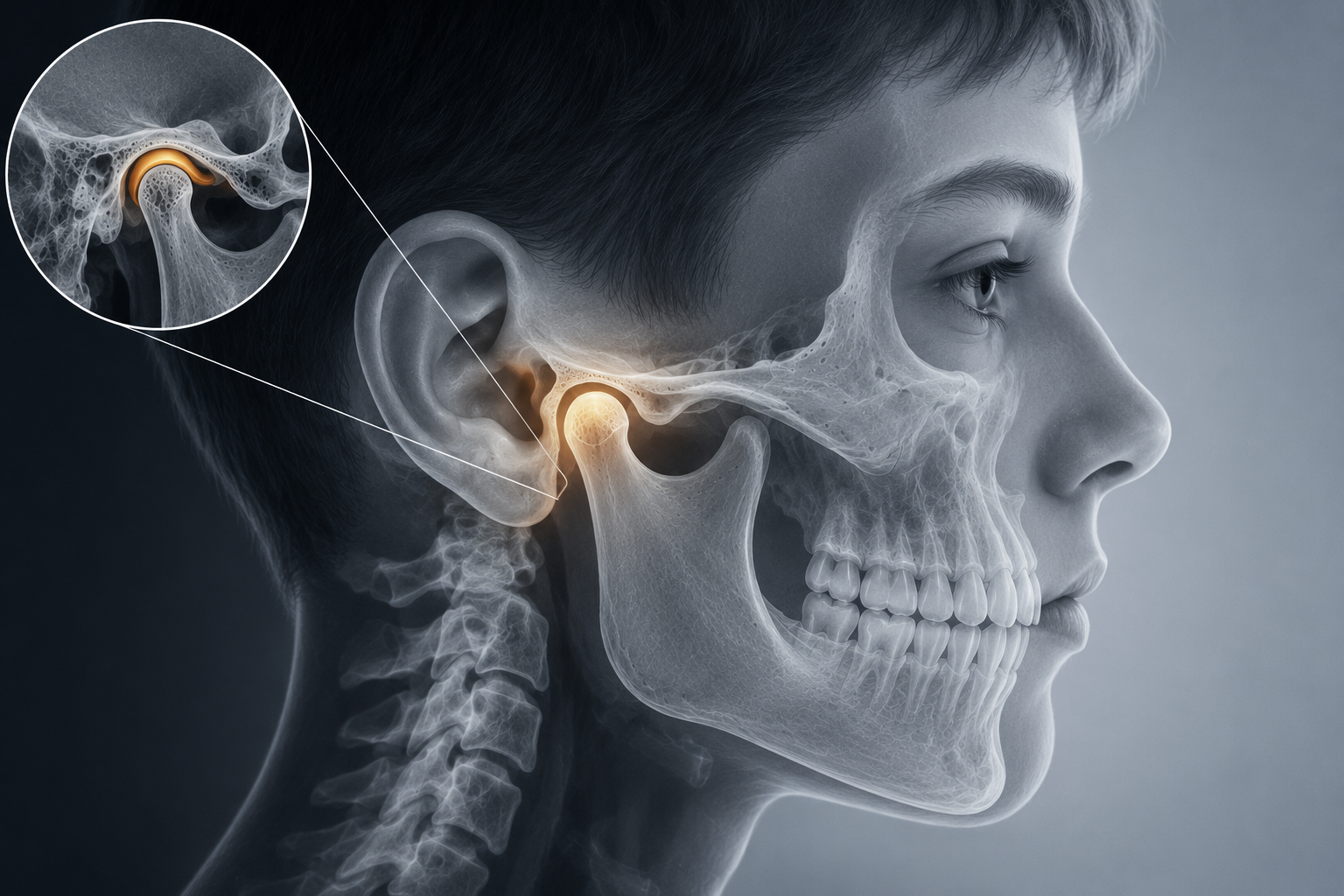
Imaging may also be part of the evaluation. Panoramic X-rays provide a broad overview of the jaw structures. In cases where more detail is needed, cone beam CT or MRI may be recommended to assess the joint anatomy and disc position more precisely.
If this feels more thorough than anything your child has experienced at a routine dental visit, that is by design. Most parents tell us it is the first time anyone has looked at the full picture.
Why Does the Specialist Ask So Many Questions About Life Outside the Jaw?
This is something parents often notice and occasionally find puzzling. The answer is that TMJ disorders in teenagers are rarely caused by a single structural problem. They develop when multiple contributing factors converge.
A teenager who is under significant academic pressure, sleeping poorly, taking an SSRI for anxiety, and wearing clear aligners is dealing with four separate inputs that all increase jaw muscle activity or joint stress. Treating only the joint, without recognizing those inputs, is likely to produce limited or temporary results.
The orofacial pain approach asks: what is going on in this child’s life that is contributing to this? That question shapes the entire treatment plan.
For adolescents in the New York City metropolitan area, where academic demands are intense and schedules leave little room for recovery, these contributing factors are especially common. Understanding which ones are active in your child’s life is what makes treatment effective rather than generic.
How Is TMJ Treated in Teenagers?
Most parents are surprised to find that treatment is less complicated than they expected, and that the most effective first steps are often the least invasive.
Behavioral guidance and habit modification are typically the foundation of treatment. This includes instruction in jaw relaxation techniques, guidance on reducing parafunctional habits like clenching and tooth contact during the day, and education about sleep positioning and screen use before bed. These changes are evidence-based and can produce significant symptom improvement on their own.
Physical therapy is frequently recommended, particularly when muscle tightness or restricted jaw opening is a significant part of the picture. A physical therapist trained in orofacial conditions can work on jaw mobility, muscle release, and postural factors that contribute to jaw loading.
Oral appliance therapy involves a custom-fitted device worn over the teeth, most commonly during sleep, that reduces muscle activity and protects the joint from the forces of clenching and grinding. For teenagers in active orthodontic treatment, the timing and design of any appliance needs to be coordinated carefully with the orthodontist.
Medication management is used when appropriate. This may include short-term anti-inflammatory medication, muscle relaxants, or other targeted therapies depending on what is driving the symptoms. In teenagers on SSRIs or stimulants whose jaw symptoms are clearly medication-related, communication with the prescribing physician about possible adjustments is part of the plan.
Collaborative care is often necessary. TMJ disorders in teenagers frequently intersect with migraine, sleep problems, anxiety, and orthodontic treatment. An orofacial pain specialist who works in coordination with neurologists, sleep specialists, mental health providers, and orthodontists produces better outcomes than any single provider working in isolation.
More advanced interventions, including injections such as trigger point therapy or botulinum toxin, are available when conservative approaches have not produced sufficient relief. These are not the starting point, but they are part of the toolkit when needed.
How Long Does TMJ Treatment Last for a Teenager?
There is no single answer, because treatment length depends on what is driving the symptoms and how many contributing factors are present.
For teenagers with primarily muscular symptoms and identifiable triggers such as stress, poor sleep, or medication side effects, meaningful improvement often occurs within weeks of beginning behavioral changes and conservative therapy.
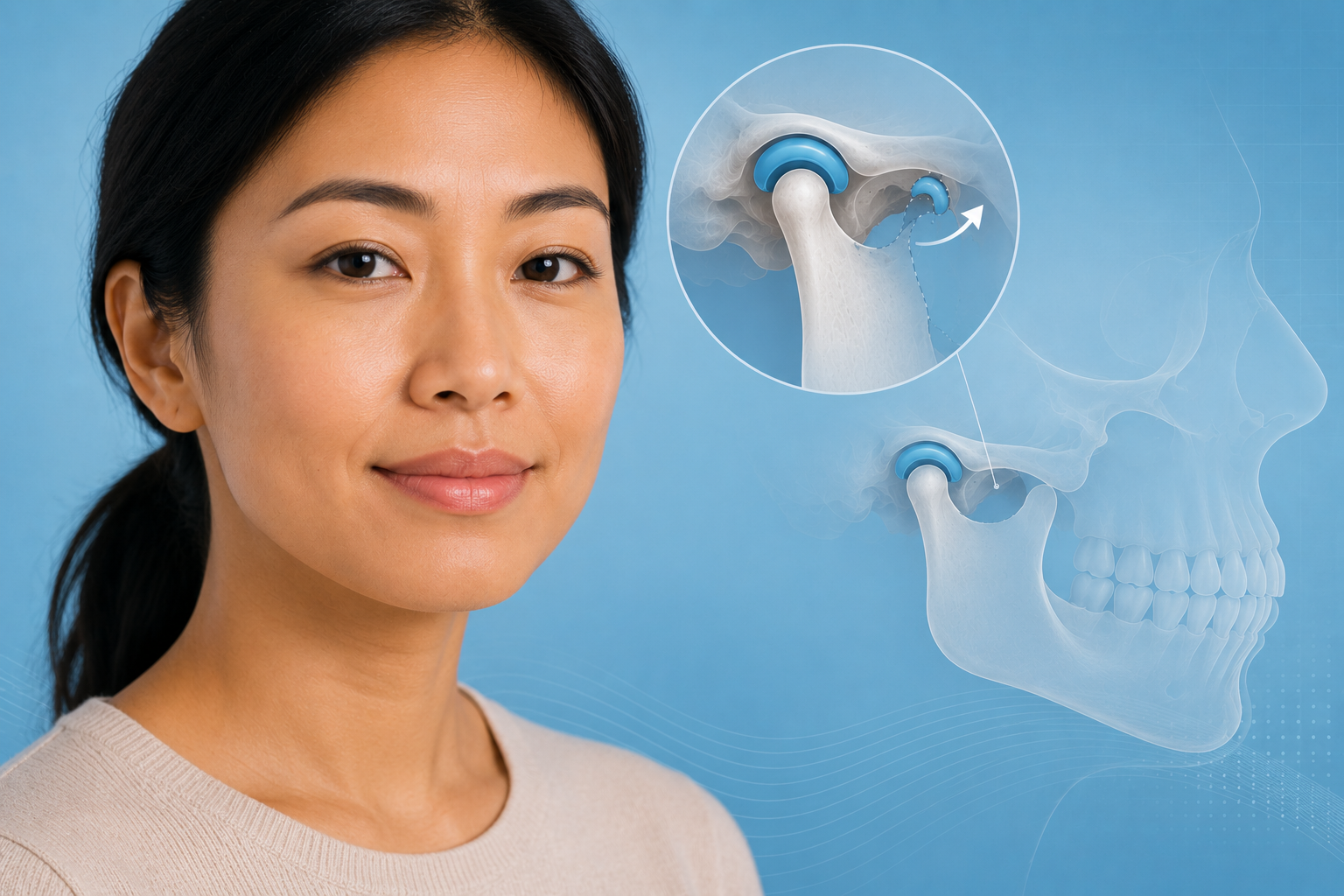
For teenagers with disc displacement, more complex joint involvement, or multiple overlapping conditions such as TMJ and migraine together, treatment is longer and requires more coordination. Progress is typically gradual and non-linear. Flare-ups can occur and do not necessarily mean treatment is failing. That is worth knowing going in, so that a difficult week does not feel like the plan is not working.
In our practice, we regularly see teenagers who have been dealing with jaw pain for months or even years before finding their way to a specialist. The earlier your child is evaluated, the better the outcome tends to be. Symptoms that are caught early are significantly easier to address than those that have had time to become chronic.
What Are ICR and JIA, and When Should They Be on your Radar?
Most TMJ problems in teenagers involve the muscles or the disc inside the joint, both of which respond well to conservative care. However, two less common conditions are worth knowing about if you have noticed changes beyond pain, particularly shifts in how your child’s bite fits together or changes in their facial profile.
Idiopathic Condylar Resorption (ICR) is a condition in which the rounded part of the jaw joint gradually breaks down. It most commonly affects females between the ages of 15 and 35, and hormonal influences are believed to play a significant role. Changes in bite and jaw appearance are often among the first visible signs, sometimes before significant pain develops.
Juvenile Idiopathic Arthritis (JIA) is a systemic autoimmune disease that frequently involves the jaw joints, sometimes producing similar patterns of progressive change.
If you have noticed any of these changes in your child, it is worth mentioning them at their evaluation. Catching either condition early makes a meaningful difference in how it is managed.
Is Your Child Dealing With Jaw Problems in the New York City Metropolitan Area?
If you are in Manhattan, Westchester County, Long Island, or northern New Jersey and your child has been dealing with jaw pain, TMJ symptoms, or related headaches, you deserve answers, not just temporary relief.
At New York TMJ & Orofacial Pain, we specialize exclusively in diagnosing and treating TMJ disorders and orofacial pain. We take time to identify the true cause of your child’s symptoms and build a treatment plan that directly addresses it.
We have 4 locations: Midtown Manhattan, White Plains, Hauppauge, and Springfield, NJ.
We regularly see patients from Nassau County, Suffolk County, and across the five boroughs, in addition to our immediate practice communities.
Contact us today to schedule a comprehensive evaluation. →
About the Author
Dr. John Dinan is a board-certified Orofacial Pain specialist dedicated to the treatment of TMJ/TMD disorders and related conditions. He practices at New York TMJ & Orofacial Pain’s Manhattan and Springfield, NJ locations.
Frequently Asked Questions
What does a TMJ evaluation for a teenager involve?
A thorough evaluation looks beyond the jaw joint. It covers sleep quality, stress levels, current medications, orthodontic history, and headache patterns, alongside a physical exam of the jaw muscles, joint mechanics, and range of motion. Imaging may also be part of the assessment. The goal is to understand the full picture before recommending treatment, not to apply a standard protocol.
How is TMJ treated in teenagers?
Treatment for most teenagers begins with conservative, non-invasive approaches: behavioral guidance, jaw relaxation techniques, physical therapy, oral appliance therapy when appropriate, and medication management when indicated. More advanced interventions are available but are not the starting point. The approach is individualized based on what is driving your child’s symptoms.
How long does TMJ treatment take in a teenager?
It depends on what is driving the symptoms. Teenagers with primarily muscular symptoms and identifiable triggers often see meaningful improvement within weeks. More complex cases involving disc displacement, migraine overlap, or multiple contributing factors take longer. Early intervention consistently produces better outcomes than waiting.
What is idiopathic condylar resorption, and how do I know if my child has it?
ICR is a condition in which the rounded part of the jaw joint gradually breaks down. It most commonly affects females between ages 15 and 35. The most noticeable signs are often changes in bite alignment or facial profile rather than pain. If your child’s bite has shifted or their chin appears to be receding, an evaluation with an orofacial pain specialist is warranted.
Do we need a referral to see a TMJ specialist in New York?
A referral is not required to schedule an evaluation at New York TMJ & Orofacial Pain. Many patients come directly after researching their symptoms. That said, referrals from dentists, neurologists, ENTs, and pediatricians are common and welcome.
We are located in New Jersey. Can we still see a TMJ specialist at NYTMJ?
Yes. New York TMJ & Orofacial Pain has a location in Springfield, NJ, in addition to offices in Midtown Manhattan, White Plains, and Hauppauge. Patients from across northern and central New Jersey, Westchester County, Nassau County, Suffolk County, and the five boroughs regularly seek care at our practice.
We don’t live in the New York City metropolitan region. How can we find a TMJ specialist in our area?
The American Board of Orofacial Pain maintains a searchable directory of board-certified TMJ and orofacial pain specialists across the country. You can search for a specialist near you here. Board certification ensures the provider has met rigorous standards in the diagnosis and treatment of TMJ disorders and related conditions.