Manhattan

212-265-0110

White Plains

914-227-2305

Springfield, NJ

973-315-7830

Hauppauge

631-265-3136
Categories
Facial Pain Jaw Problems Orofacial Pain Persistent Toothache Referred Pain TMJ

The Secret Behind Unexplained Toothaches & Facial Pain


There’s a good chance you landed here because you’ve been suffering from an unexplained toothache, a persistent sinus pain that won’t leave you alone, or an annoying earache that makes you wince every time you chew for a long time. These symptoms have likely sent you on multiple visits to healthcare professionals, each one leaving you with more questions than answers.

But what if the source of your pain is not where you’re feeling it?

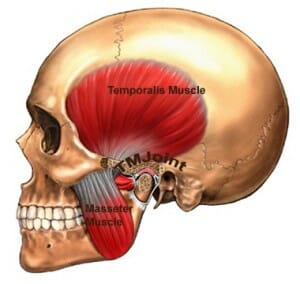
Your puzzling array of symptoms just may be due to problems with your temporomandibular joints (TMJs) and associated muscles. Your TMJs and jaw muscles play a fundamental role in the basic movements of your jaw—talking, chewing, yawning, and even expressing emotions. When this joint and its corresponding muscles and ligaments become strained, unstable, and or overworked, the resulting condition is known as temporomandibular disorder or TMD.

When a TMD problem is not considered as a source of pain in teeth, the ear and/or sinus, for example, the result can be ongoing evaluations and treatments that address the location of the pain symptoms but not the origin. When the location of the pain complaint is not the true origin, the term referred pain is commonly used.

Referred Pain & Its Relationship To TMD Problems

Referred pain is pain perceived at a location other than the origin of the painful stimulus. It is the result of a network of interconnecting sensory nerves that are persistently over-excited. For example, when there is an injury or pathology at one site in the network, it is possible that when the signal is interpreted in the brain, mistakes are made as to the true origin of the problem. As a result, pain is often experienced at a distance from the true origin. (E.g., pain from a heart problem is experienced in the shoulder or jaw)

So, how does this relate to the structures of the jaw?

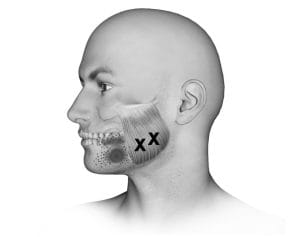
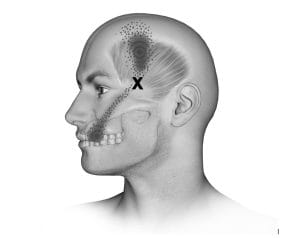
When your jaw muscles (masseters and temporalis) are persistently overworked, they become sore, extremely sensitive, and knotted. These areas are known as trigger points. When activated, trigger points can send pain signals to places far from their origins, resulting in referred pain. Jaw overuse behaviors such as clenching your teeth during the day, biting your nails, chewing your pens, etc., can lead to the formation and activation of these trigger points, leading to referred pain in areas such as your teeth, ears, or sinuses.
The Secret Behind Unexplained Toothaches & Facial Pain
Referred Pain to the Teeth, Ear, Sinus, and Face from the Masseter Muscle
Referred Pain to the Teeth, Ear, Sinus, and Face from the Temporalis Muscle

Orofacial Pain Specialists Understand What You’re Going Through

As part of an Orofacial Pain practice, my colleagues and I are well-versed in the nuances of this disorder. For many of our patients, merely validating their pain and helping them understand the concept of referred pain gets them moving in the right direction on the road to recovery.

If you’re nodding your head right now, thinking, “That’s me!” I encourage you to seek the care of an Orofacial Pain specialist. Your treatment plan might include education, awareness strategies to reduce jaw overuse behaviors and fatiguing postures, oral appliances, exercises, and/or relaxation techniques to address daily worries and stress. In addition,  physical therapy can also be helpful, along with muscle injections, to break up the trigger points that are driving your pain.

How To Get Help Now

If you live in the NYC metro area and are ready to uncover the root of your Orofacial Pain, we are here to guide you. Take the first decisive step by scheduling a consultation at one of our convenient offices in Manhattan, White Plains, New Jersey and on Long Island. Together, we’ll get to the bottom of what’s causing your suffering and get you on the road to recovery.

If you’re outside the NYC metro area, the American Board of Orofacial Pain website has a national directory of Orofacial Pain specialists.

Find out more about TMJ pain:
TMJ Headaches & Migraines
Pain & The Brain

Categories
Jaw Problems Orofacial Pain Referred Pain TMJ

How To Get Relief From TMJ Pain When Nothing Is Working

When exercises, medication, nightguards, relaxation techniques, and a soft diet don’t provide relief from TMJ pain, injections for TMJ may be the next step.

What Causes TMJ/TMD Problems?

Note: TMJ stands for Temporomandibular Joint, which is your jaw joint, and TMD stands for Temporomandibular Joint Dysfunction, which refers to jaw problems. Because most people use the catchall term “TMJ” to describe all TMDs, I use the term TMJ in this article.

Anything that causes your jaws to be overworked and fatigued, such as continually clenching your teeth, biting your nails during the day, or clenching and grinding at night, puts you at high risk for TMJ. However, your TMJ problem could stem from a history of trauma or a medical or dental procedure that sprained your jaw joints or strained the muscles and tendons. In some cases, systemic disease or a disorder can predispose you to experience inflammation, pain and instability in your jaw joints, ligaments, and/or tendons.

Regardless of the cause of your TMJ, if your jaw’s in trouble, you want treatment that will provide relief.

First-Line Therapies For Relief From TMJ Pain

I’ve been a TMJ doctor and orofacial pain specialist for nearly four decades. During that time, I’ve treated thousands of patients and have at my disposal many first-line therapies to help my patients feel better and get better (once an accurate diagnosis has been made). They include:

  • Nightguards or specifically designed oral appliances that address teeth clenching, grinding, and joint instability during sleep
  • At-home exercises
  • Anti-inflammatory and/or muscle relaxant medications
  • Stress-reducing activities such as meditation or yoga
  • Adherence to a soft diet
  • Reducing or eliminating the daytime behaviors that overwork the jaws
  • Physical therapy

While most of my patients respond well to the first-line therapies above, you may be someone for whom the above strategies simply don’t work. What’s next for you?

massage for TMJ, temporalis and masseter

Injections For TMJ

I’m sure you’ve read about people having BOTOX® injections for TMJ problems, but BOTOX® is not the only injectable that can help. In fact, it is not the right choice for many patients. The good news is there are injections for TMJ that are less risky and can be very helpful to provide relief from TMJ pain. They include jaw muscle injections, injections into the tendons or ligaments, and injections into the temporomandibular joint itself.

Jaw Muscle Injections For TMJ

  • Trigger point injections, sometimes called dry needling, can help reduce the muscle spasms, tension, associated pain and limited jaw motion experienced by many TMJ sufferers. They’re also designed to reduce the likelihood of “referred” pain when irritated jaw muscles refer pain to other locations such as your teeth, ears and sinuses. With trigger point injections, the mechanical prodding of the muscle with a needle creates the benefit. Some providers inject a bit of Lidocaine, a local anesthetic, to make the procedure more comfortable. Trigger point injections are typically repeated several times before the spasms and muscle tension release. When combined with exercises and other home care techniques, trigger point injections for TMJ can be very effective for people whose problems have not responded to first-line treatments.

Tendon and Ligament Injections For TMJ

Sometimes first-line therapies fail because pain is due to stubborn and persistent inflammation in a jaw tendon or ligament. In this case, prolotherapy and steroid injections are often effective:

  • Prolotherapy, also known as proliferative therapy, involves a combination of dextrose and an anesthetic. Dextrose is a natural irritant that can kick-start your body’s natural healing response and the anesthetic helps deaden pain. When injected directly into damaged tendons and/or ligaments prolotherapy can strengthen and repair them. When combined with exercises and home care strategies, prolotherapy injections for TMJ can provide a great deal of relief from TMJ pain and also promote healing. The injections typically need to be repeated several times over a few months for full effectiveness.
  • Steroid injections into irritated tendons and ligaments can also provide life-changing relief from TMJ pain and usually are administered in a series. If overused, however, steroids carry some serious risks, so your steroid injections should be administered only under the guidance of an experienced clinician.

Injections Into The Jaw Joint

Some TMJ problems stem from inflammation or structural compromises in the jaw joint itself. They can’t move their jaw without severe pain and experience mechanical symptoms as well, such as clicking, popping, or locking and gravelly sounds emanating from the joint.   Injections directly into the temporomandibular joint can often help. There are two types of joint injections for TMJ: steroids and hyaluronic acid.

  • Steroid injections are frequently used to ease pain in the knees, hips, shoulders, etc. So, it’s no surprise that steroids can also provide relief from pain in the TM joint. Depending upon the severity of your underlying joint problem, one shot may be all you need for life-changing pain relief. If your pain doesn’t diminish with just one injection, you may need a series. Proceed with caution because, as I mentioned above, steroid injections carry risks when overused.
  • Hyaluronic acid injections into the jaw joint are another strategy. Your jaw joint contains a substance called synovial fluid, which provides nourishment and shock absorption to keep them healthy. When there’s a change in the volume or quality of synovial fluid due to jaw overuse or trauma, the result can be pain and joint noises. When hyaluronic acid, a lubricating substance, is injected into the joint, the relief from TMJ pain and noises can be profound. Research suggests that hyaluronic acid also provides an anti-inflammatory effect. The only drawback to hyaluronic acid injections for TMJ is that the positive effects can be short-lived.

New Injections For TMJ Are On The Horizon!

Many research efforts show that over 30 million Americans have TMJ/TMD problems. Some problems are minor, but others can lead to life-compromising pain and jaw function limitations. There is a great need for earlier diagnoses and pain and discomfort management for people who suffer. There’s also a need for therapies that are specifically designed for treating stubborn and persistent TMJ problems.

Fortunately, emerging therapies such as stem cell and blood component injections may be able to regenerate new tissue in TM joints, ligaments and tendons. The research is very promising, and I suspect in the near future, these new and innovative types of injections will become commonplace for treating TMJ/TMD problems and provide the kind of healing that has not been achievable with other established injection therapies.

The Last Word

If you’re suffering from jaw problems, we know what you’re going through. Orofacial pain specialists like us have the knowledge to accurately diagnose your problem and the skills to help you find relief from TMJ pain, whether by first-line therapies or injections for TMJ. We invite you to set up a consultation with one of our Orofacial Pain specialists in the NYC metropolitan area. Our office locations and contact information are below. If you’re not in the NYC metropolitan area, go to the American Board Of Orofacial Pain and search for a physician with diplomate credentials in your area.

Feel Better!


Further Reading:

All About BOTOX® For TMJ

What Is Referred Pain?

The Connection Between Pain & Sleep

Categories
Facial Pain Jaw Problems Referred Pain TMJ

How To Self-Treat Jaw and Face Pain During Stressful Times

As an orofacial pain specialist in New York City and Long Island, patients come to me because they suffer from the painful symptoms of TMJ. Most often their symptoms are a result of their stressful lives.

During the pandemic, most people have been living with an unusually high level of stress. Poor sleep and limited exercise is one reason. Also involved are continually tensed shoulders, breathing in a strained manner, and grinding and clenching your teeth at night (or during the day). The result can be headaches, pain in the neck and back, or pain in your face, teeth, and jaw, or all of them.

How To Detect A TMJ Problem

When your TMJs (your jaw joints) are in trouble, it typically shows in five ways. You may have one, a few, or all of these symptoms:

  • Facial pain
  • Clicking or popping when you open and close your mouth
  • An unexplained toothache
  • Difficulty opening your mouth
  • Unexplained headaches, particularly when you wake up

It’s easy to understand how living with the pandemic for the past few years could trigger stress-related symptoms even in people who are normally calm and positive. I’ve seen hundreds of new patients never had a TMJ problem before the pandemic and just as many who suffered from TMJ in the past.

My advice is to become hyper-aware of how stress is impacting your jaw muscles. Stop every now and then during the day and take note if you are:

  • Holding your breath
  • Bracing your jaw muscles
  • Furrowing your brow
  • Clenching your teeth
  • Biting your nails
  • Raising your shoulders

Tips: How To Treat Jaw & Face Pain During Stressful Times

Control Your Daytime Breathing

Perform these three steps if you notice you’re holding your breath or breathing more rapidly than normal:

  • Slowly breathe in through your nose deep into your core and hold it for 3 seconds. It’s easier if you place the tip of your tongue on the roof of your mouth or behind your lower front teeth as you breathe.
  • Let the air out for three seconds through your lips and pause for 3 seconds.
  • Repeat 6 times.

Note: If your nose does not let air in (quite possible during allergy season) breathe in through your mouth in a slow, controlled way with your lips barely touching. There are no absolute rules; just do the best you can.

how to relax your face, donald tanenbaum
Loosen-Up Your Face and Jaws

Notice if you hold tension in your face or brace your jaw muscles when you’re at your computer, reading, or listening to the news. If you are, use this 3-step method to relax your face and jaw:

  • Let your jaw hang limp – kind of the way your hands hang limp when you drop them at your sides.
  • Keep your lips together, teeth apart.
  • Breathe.

Do this every time you notice tension in your face or jaw.

how to stop biting nails, donald tanenbaum
Stop Biting!

Biting your lips, cheeks, nails, or cuticles, can all lead to jaw muscle fatigue and pain. The 3 tips below may help you stop:

  • Keep your lips soft (don’t purse them).
  • Keep your lips touching lightly and your teeth apart (you don’t have to keep your mouth open.
  • Let your face and jaw hang in a neutral, relaxed posture (same as step 1 above).

how to treat face and neck pain, donald tanenbaum
Soften Your Shoulders

Many people experience headaches and neck and jaw pain as a result of tense shoulders. It’s called referred pain. To keep your shoulders soft:

  • Don’t hunch up your shoulders up close to your ears. Periodically stop what you’re doing and gently push them down.
  • Try not to cross your arms.

Both tips will ease your neck tension, help your breathing, and reduce the onset or the intensity of the muscle tension that leads pain.

get up and move around, face and neck pain, computer neck, donald tanenbaum
Get Up & Move Around

It’s never a good idea to sit in one place for hours and hours even in less stressful times.

  • Every 45-minutes get up and walk around, even if it’s just to throw in a load of laundry or cook a meal.
  • If you’re experiencing severe neck tension or pain, the Feldenkrais Method® is a great way to manage it, too. It’s an easy and gentle technique that eases neck and jaw tension.

moist heat to treat face and jaw pain, donald tanenbaum
Use Moist Heat

Moist heat is a good way to treat jaw and face pain:

  • Use a wet towel, heat pack, or TMJ wrap – available in many pharmacies.
  • Apply the heat for 15-minutes
  • Then perform a gentle jaw muscle self-massage. Here’s how:
    • Open your mouth halfway.
    • With your index and middle finger massage the fleshy part of your jaw muscles in a circular motion for 10-seconds
    • Then, move in the opposite direction for 10-seconds.
    • Next, with your mouth still half-open, move your fingers to your temples right under the hairline and perform the same massage technique. If you feel muscle soreness as you massage, you’re doing it right.

Do this moist heat massage twice a day.

TENS unit for neck pain, donald tanenbaum
Purchase A TENS Unit

If your pain is severe and moist heat doesn’t help, go online and purchase a TENS unit (Nursal EMS TENS unit). Place the pads as directed on your jaw muscles (called masseters) and your large neck muscles (your trapezius) once or twice a day. Most TENS units come with simple instructions and there are many videos online with instructions.

biofreeze for neck pain, donald tanenbaum
Try Biofreeze®

Another method that works for many people is to rub Biofreeze® onto the jaw and neck muscles several times a day. Just make sure you keep it away from your eyes.

calm your mind to treat face and jaw pain, donald tanenbaum
Calm Your Mind

Yoga or meditation are great ways to keep stress from impacting your body. Online you can find hundreds of classes, many of them free. I like the app Insight Timer. Headspace, Calm, and Buddhify are also terrific apps. Find the one that fits your style and needs and try not to make it a challenge but a regular part of your day and/ir when you really need it.

tension while sleeping, donald tanenbaum
Is Your Body Tense While You Sleep? Try this:

If you wake up with headaches, facial, jaw, or teeth pain, you are problem clenching or grinding your teeth at night. Try these tips:

  • Drink warm chamomile or Sleepytime® tea before bed.
  • Try magnesium. Before you retire for the night, eat a banana or buy a magnesium supplement at the pharmacy (ask the pharmacist to recommend a good one).
  • If you’re really suffering, purchase a dental night guard at the pharmacy. The best one is made by DenTek™. However, some patients report that over-the-counter devices actually make them clench more! If that’s the case, talk to your dentist about having a custom-made nightguard made for you.

By following the above tips, you can treat your jaw and face pain at home. But note, it may take some time for your symptoms to subside. Don’t give up!

Now that life is getting back to normal it’s time we all assess our physical and emotional state and do what we need to do to feel better.

For more information about TMJ, please link here

Categories
Persistent Toothache Referred Pain

What To Do If A Dentist Won’t Treat Your Toothache

Now and then, we in the dental field see patients who suffer from toothaches that don’t seem to be caused by a tooth. If you have pain that feels like it’s coming from a tooth, but your dentist won’t treat your toothache, it can be a very frustrating situation for you and for your dentist.

(Note, you may also be seeing a dental professional such as a periodontist or an endodontist. For this article, I refer to them all as dentists).

In a situation like the above, where it’s unclear why you have pain, there are two options.

Option One: “Wait And See”

When a toothache presents in an unusual way or won’t go away even after treatment has been performed, your dentist may ask you to give it some time. The hope is that your symptoms will lessen, become more recognizable, or the examination findings become more revealing.

It’s important for you, the patient, to understand why your dentist chooses this wait and see approach, especially when you’re in pain and just want some relief. It’s not because your dentist won’t treat your toothache, it’s because additional clues to the cause of often only appear after a bit of time has gone by.

In this case, your dentist might ask you some unusual questions, such as if you have been having other medical problems, sleep difficulties, a recent virus or even cancer-related therapies including chemotherapy. This is all in an effort to get a clearer understanding of why you have a toothache when there’s nothing that indicates there’s something wrong with your tooth.

During the wait and see period, your dentist won’t treat your toothache because they want you to suffer. In fact, they may offer short term pain medications to make you more comfortable and make stay in touch with you. 

Option Two: “Treat Me Now Or I’m Leaving!”

Most dentists that won’t treat your toothache don’t want to put you through treatment if they are not convinced, without a doubt, that your pain is the result of decay or a root problem. If you are adamant about wanting your tooth to be treated and your dentist won’t do it, you can move along to a different dentist. However, it’s likely you’ll hear, “let’s wait and see” again.

There’s always a chance you could find a dentist you can convince to treat the tooth, despite the results of an exam and x-rays. 

Try to understand that even if your dentist won’t treat it right away, they really do want to fix your toothache problem. They want you to feel better and be able to get on with your life. They have no vested interest in seeing you suffer.  

If you insist on being treated and your dentist agrees (despite having no clear evidence that your tooth is in trouble) and the result is your toothache then goes away – great!

However, if your toothache does not go away even after treatment, your problem has just become a lot more complicated. Add to that the time and money you have invested – and you’re not going to be very happy.

Toothaches That Are Not Caused By Teeth 

If your dentist won’t treat your toothache, it’s important you find out what they think could be the cause. It may sound weird, but tooth pain can be triggered by factors that have very little to do with the nerve in that aching tooth! Here are just a few possibilities:

  • Neck and/or jaw muscle problems, such as tightness, spasm, and fatigue – can be caused by life tensions, bad posture, aggressive tooth clenching, degenerative cervical spine conditions, and more. When muscles are in trouble this way for a prolonged length of time, the result is what can feel like a real toothache.
  • Sinus problems can make your upper teeth hurt – sometimes acutely.
  • Nerve problems often labeled as neuralgia or neuritis can create intense tooth pain.
  • Various medical conditions including systemic inflammatory diseases, migraines, autoimmune conditions, Lyme disease, and other infectious diseases.
  • Brain tumors can lead to toothache symptoms.
  • Past chemotherapy and/or radiation treatment in the head or neck area can lead to toothache symptoms.

What To Do If A Dentist Won’t Treat Your Toothache

If your dentist won’t treat your toothache dentist won’t treat it because the reason is unclear, there are three tests you should expect:

  1. A careful exam and x-rays. Sometimes 3D scans can be helpful, too, to uncover what’s wrong.
  2. Testing your teeth with hot and cold, percussion and mobility tests, and nerve testing with a pulp stimulator.
  3. Local anesthetic injections to isolate the source of the pain.

If these tests do not identify a specific tooth that is the cause of your toothache, your dentist should ask you more questions. They should validate that your pain is real and explain why they believe the source could be somewhere else. 

The Bottom Line

If your dentist and you both want to start work on a tooth, despite being unsure if the treatment will eliminate your toothache, be prepared to consider other sources of the pain if the toothache lingers. Remember, if your dentist won’t treat your toothache, they probably have a very good reason.


Learn more about persistent toothache and referred pain.


Categories
Persistent Toothache Referred Pain

Lingering Toothache After Root Canal

When the recommendation has been made for wisdom teeth removal, and the patient has (or has experienced TMJ problems), some very important factors must be considered because TMJ problems and wisdom teeth removal sometimes don’t play nice with each other. The trauma to the jaw during surgery can make TMJ problems flare and potentially cause longer-term problems including pain, additional joint noises and more challenging joint locking problems.

Consider the following case: An 18-year old female is preparing to go off to college in the fall. Although she is experiencing no pain symptoms associated with her wisdom teeth, her dentist and consulting oral surgeon have made a recommendation to have all four removed, in order to avoid potential problems while she’s away at college.

The patient and her parents are concerned that her recently stabilized TMJ problem (clicking, pain and sporadic morning locking) will flare up as a result of the extraction process. Is this a legitimate concern, or excessive worry?

Since TMJ problems are orthopedic in nature it is logical to assume that a difficult extraction event can cause a managed TMJ problem to resurface. This is particularly relevant if the patient mainly had joint problems that required care. Females more than males are at risk due to the fact that their TMJ structures are biologically more susceptible sprain and strain.

The following is my recommended list of questions that should be discussed before the patient goes ahead with the wisdom teeth extraction.

1. Should the teeth be left in place for a year or two to ensure further healing of the TMJ problem?

2. Should two teeth be taken out initially, instead of all four? (A lengthy surgery could therefore be avoided.)

3. Should a local anesthetic alone be used so that the patient could communicate with the surgeon if in fact she felt that the jaw was being stressed, or should sedation/general anesthetics be used to relax the patient’s muscles and diminish muscle tension due to fear.

4. Should an intravenous steroid be routinely used to minimize any potential muscle/ joint inflammation, which would lead to post-extraction pain, and excessive/prolonged limited jaw motion.

Clearly there are no easy answers to these questions. The important message is that if your son or daughter is in this position, please be proactive and ask the difficult questions.

Some more questions to consider:

  • Is the jaw clicking and/or locking due to instability of the joint ligaments or movement of the shock-absorbing disc?
  • Are the wisdom teeth impacted in bone, are they fully or partially erupted, and if impacted, are they lying on their sides? (If they are lying on their sides, it will likely require more time and more bone removal to be extracted).
  • Is there inflammation of the gum tissues surrounding or overlying the wisdom teeth? Or is the plan to remove them designed to prevent possible acute periods of pain while the patient is at school or traveling overseas for an extended period of time?
  • Is there concern that the erupting wisdom teeth may cause undesirable tooth movement after orthodontics has been completed?
  • Does the patient’s gender and age make a difference in the outcome?

Patients with TMJ histories must be handled thoughtfully, and with an open mind. Remember, the removal of wisdom teeth is most often an elective procedure. Delaying their extraction may carry with it additional risks, but a patient with a history of TMJ problems, (particularly a young female) is always at risk during the extraction process.

Categories
Facial Pain Jaw Problems Referred Pain

2 Techniques to Help You Relax During Difficult Times

Time for yourself during difficult times….

For many of us on the Northeast coast, the last two weeks have tested our physical and mental fortitude in ways that we have never experienced. Despite our best attempts to stay upbeat and positive, the loss of lives, property, businesses, and income have been a tough pill to swallow. As a result of these ongoing stressors that have no easy answers and unpredictable outcomes that have not yet been determined, many of us have felt like we have lost control of our ways of life and daily routines.

Unfortunately when we lose control of our world and our efforts to restore order are met with obstacles that are tough if not impossible to budge, a price is often paid both emotionally and physically. The impact on your body is often seen as symptoms such as headaches, neck aches, back pain, stomach distress, rashes, high blood pressure, and jaw pain. Some of these symptoms occur as a result of the loss of regulation in critical body systems or the loss of quality sleep while others occur due to behaviors that develop during the day as a response to your brain being under constant siege. Specifically shallow breathing and bracing of the jaw, face, and neck muscles are common occurrences when humans are faced with challenging life circumstances.

With the knowledge that there are no easy fixes to the situations many of us are facing, here are some simple concepts and techniques that can be employed simply.

1) Take stock of your body posture frequently during the day. Are your shoulders raised? Are you creasing your brow? Are you jutting your jaw forward or bracing your jaw muscles? Are your teeth resting together or worse still are you clenching your teeth together as you attempt to accomplish a physical task, or is this activity accompanying an unpleasant thought? Are you holding your breath???

If so here is an easy technique to follow. Whether you are sitting or standing throughout the day, make a conscious effort to wet your lips and let the lips lightly touch each other with your teeth part. In this posture you can let your tongue gently touch the inside surface of the lower front teeth or place the tip of your tongue on the roof of your mouth. Once in this position, breath slowly through your nose holding the gentle lip seal. Fill your belly with air (not your chest), hold for 2 seconds and then blow the air out through your lips over 3 seconds. Then repeat this sequence 6 times. At the same time make sure your shoulders are down, your hands unclenched, and your forehead held without tension. To stay reminded of this muscle relaxation technique, place some reminder stickers on critical places like cell phones, computers, the dashboard of your car or watch face, for example. Every time you see these reminders repeat this breathing cycle. You will find the effort calming within several hours or a few short days…

2) Once you have mastered the techniques above, try the following. Once every hour, isolate one minute. During this minute attempt the following. Try to take 6 breaths during this minute, 10 seconds each.  Proceed like this:  With your lips sealed, Breath air in through your nose, filling your belly, taking 4 seconds to do this. Then exhale air through your slightly parted lips, taking 4 seconds to do this. Then pause for 2 seconds. This is the first 10-second breath. Now repeat five more times…though this is difficult to master you will find that you will look forward to this minute. It is your place to calm the mind.

Remember, taking a few moments for yourself during these difficult times will enable you to remain capable of helping others in need.

Dr. Donald Tanenbaum is a specialist with offices in New York City and Long Island, NY. He is uniquely qualified to diagnose and treat facial pain associated with jaw problemsTMJreferred painnerve pain, and migraines. Find out more at www.nytmj.com.

Categories
Facial Pain Referred Pain

Causes of Facial Pain: The Psycho-Muscle Connection

The Muscle Connection is Key

In my book, Doctor, Why Does My Face Still Ache?,” we explore puzzling questions that do not have simple or anticipated answers:
• Why would a person experience a constant toothache when the tooth that hurts is completely fine?
• How does someone gradually lose the ability to open his or her mouth or talk when there hasn’t been a direct injury to the area, or medical disease diagnosed?
• Why does someone experience non-stop aches or pains in their face when a medical evaluation suggests that nothing is wrong?

Unfortunately in the search for answers, many practitioners tend to overlook the muscle connection when it comes to the cause of facial pain. But considering how much of the face is made up of muscles, it’s beneficial to know how muscles can be affected by factors such as emotional issues and the stress of life-challenges. In the book, I call this state a “Brain Under Siege.”

Facial Pain and Emotions

A brain is under siege when it is faced with many challenges, which may include but not limited to:
• Economic uncertainty
• Loss of control relating to illness, aging parents, work relationships, etc.
• Inability to express fear and anger
• Pressure to “Keep Up with the Joneses”
• Marital and or relationship turmoil

For patients experiencing one or more (or perhaps all) of these stressors, the toll it can take on jaw and neck muscles could directly cause facial pain. I realize that many people might want to reject this theory. Our culture is such that we often look for external or structural causes of facial pain. Even medical professionals are tempted to ignore these connections to muscle pain, perhaps because they’re uncomfortable posing sensitive questions to their patients. But this doesn’t mean that a connection doesn’t exist.

Of course there are many causes of facial pain, and in many cases traditional methods of relieving this pain works fine. But each patient needs to be evaluated individually, and all aspects of what causes facial pain need to be taken into account. Most facial muscle pain sufferers can be helped, and it often requires patient insight and participation so the proper treatment can be applied.

Though we often wish it were so, sometimes facial muscle pain can’t be solved by the patient simply walking into the office and saying, ‘Doctor, fix me.’

Dr. Donald Tanenbaum is a co-founder of New York TMJ & Orofacial Pain. We have four locations in the NYC metropolitan area: Manhattan, White Plains, Long Island, and Springfield NJ. Each location is staffed with board-certified Orofacial Pain specialists who are qualified to diagnose and treat symptoms associated with TMJ problems. Find out more at www.NYTMJ.com

Categories
Referred Pain

When a Painful Toothache Won’t Go Away

I recently treated a 35 year old woman who was referred to my practice because she had a persistent toothache that continued though she already had a new filling placed, had her bite adjusted, and was constantly taking Advil and Tylenol. Based on how she described her tooth pain symptoms (variable in terms of the severity, frequency, and not related to eating or hot or cold fluids), I suspected that her pain was coming from somewhere, but not from her tooth!

You may ask how this that possible? To have a toothache that is not caused by a tooth? To begin to understand how you can experience pain in one area that is being caused by a problem somewhere else, it is important to become familiar with the concept of referred pain.

Referred pain is best understood when you consider the most common symptom reported by patients that are about to have or are in the midst of having a heart attack: pain in the left arm, the left side of the jaw, and under the chin. All caused by signals being sent by the heart muscle. You can only imagine that 100 years ago, before this connection was understood, doctors and community healers probably went to great lengths to sooth these left sided symptoms only to often fail with dire consequences.

The knowledge we have gained about referred pain through medical research not only has helped us recognize the signs of a heart attack, but have enabled us to also understand puzzling toothaches, face pains, ear symptoms, and other problems that often elude quick solutions. Getting back to the young woman with toothache: my evaluation uncovered that her symptoms were due to referred pain from the muscles of her upper neck! My patient was dumbfounded. How could the source of her painful toothache be her neck? But soon after her care began, her symptoms diminished and she is now happily toothache-free.

The care I applied was a combination of:

• Changing learned behaviors (posture, especially)

• Home exercises

• Physiotherapy

• Injections

It is routine to be asked by one of our patients, “Why does my ear, tooth, face, and eye hurt when I have been told by my physician and dentist that there is nothing wrong and they don’t see anything?” If this describes you, I assure you, you’re not “crazy.” Referred pain is real.

Muscle referred pain is just one of many topics I will be sharing on this blog. It is my hopes that these discussions will provide the insight and knowledge that you need to get proper care and guidance as you seek information to address your pain or that of other people in your life.