Manhattan

212-265-0110

White Plains

914-227-2305

Springfield, NJ

973-315-7830

Hauppauge

631-265-3136
Categories
Facial Pain

Low-dose Naltrexone Neuropathic Facial Pain


The Jaw Surgery Worked – But the Pain Didn’t Go Away

What low-dose naltrexone can do for persistent neuropathic facial pain

Your jaw surgery went well. The imaging looks fine. Your surgeon says everything healed the way it should.

And yet, you have pain. It aches along your jaw. The sensation feels, as one of our patients put it, like “my skin is sunburnt” – even though nothing is visibly wrong.

If this sounds familiar, you are not imagining it. And you are not alone.

Persistent pain after facial or jaw surgery is a recognized clinical reality. It has a name, a mechanism, and – importantly – treatment options that go beyond what most patients are ever offered.

Your Pain Is Real. And It Has a Medical Explanation.

One of the most disorienting experiences our patients describe is being told that everything looks fine, yet they still live with daily pain.

When surgery corrects a structural problem, but pain continues, the issue often isn’t structural at all. It’s neurological. The nervous system, particularly the pain-signaling pathways, can remain in an activated state long after the original source of injury has been addressed.

This is called neuropathic pain – pain that originates in your nervous system itself, not in damaged tissue. In some cases, it takes on a more complex form called nociplastic pain, a term from the International Association for the Study of Pain that describes pain arising from altered signaling in the central nervous system, without ongoing tissue damage to account for it.

In plain terms: your brain’s pain system has become hypersensitive. It keeps sending pain signals even after the original problem has been treated. This is not a character flaw, a low pain threshold, or something you should simply push through. It is a measurable, treatable condition.

A Case We Treated: Debbie’s Story

“Debbie” was a 52-year-old woman from the New York City area who came to us with a problem that had no easy answer.

Two years earlier, she had undergone bilateral TMJ total joint replacement – a significant surgery to address severe, progressive jaw degeneration. The procedure went well. Her jaw opened better. Imaging confirmed the prosthetics were stable. By every measurable standard, surgery was a success.

But Debbie was in constant pain.

She described a burning sensation along both sides of her jaw and temples. It was relentless, unpleasant, and unlike anything she had experienced before the surgery. She had tried NSAIDs, benzodiazepines, opioids, and anticonvulsant medications. None helped. Several caused side effects severe enough to stop.

When she arrived at our practice, the examination revealed something important: light touch to the affected areas caused heightened sensitivity and a kind of distorted sensation. This told us that her issue wasn’t structural, but neurological. Her pain wasn’t coming from the joint. It was coming from a sensitized nervous system.

This is where a mechanism-based approach – asking not just what is causing pain, but how and why her pain system had become dysregulated – becomes essential.

Introducing Low-Dose Naltrexone (LDN)
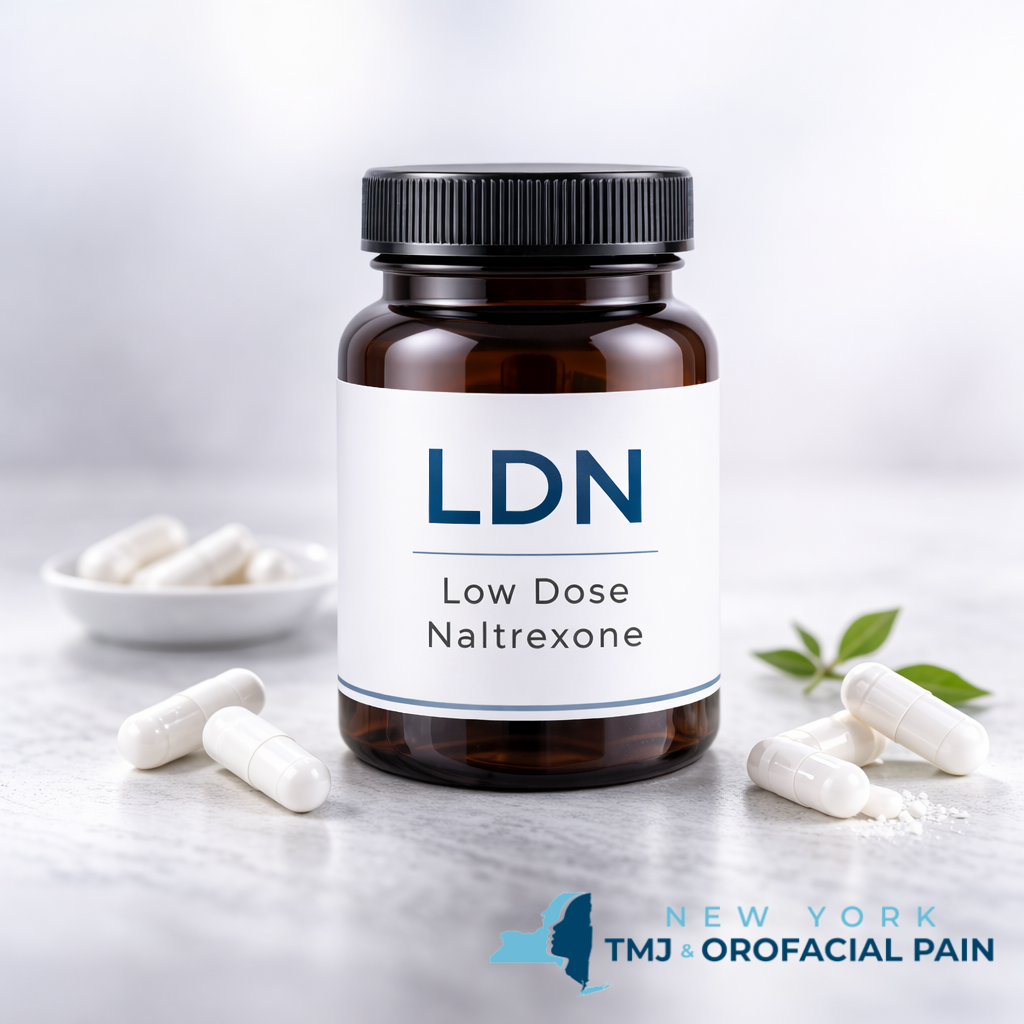
Low-dose naltrexone (LDN) bottle used in the treatment of neuropathic facial pain and centrally mediated pain disorders
Low-dose naltrexone is used off-label for neuropathic and centrally mediated facial pain conditions.

What Is Low-Dose Naltrexone (LDN?)

Naltrexone is a medication with a long track record in addiction medicine, typically prescribed at 50 to 100 mg daily. Low-dose naltrexone (LDN) refers to the same medication prescribed at a fraction of that dose – generally 1.5 to 6 mg daily – where it appears to work through an entirely different set of mechanisms. LDN is obtained through a compounding pharmacy and used off-label for centrally mediated and neuropathic pain conditions.

Naltrexone is a medication with a long track record in addiction medicine when used in large doses. But at a fraction of that dose, it appears to work through an entirely different set of mechanisms, ones that are particularly relevant to persistent, centrally mediated pain.

This low-dose application is called Low-Dose Naltrexone (LDN).

How Low-Dose Naltrexone Works: Two Mechanisms That Matter

1. Low-Dose Naltrexone helps your body produce more of its own natural pain-relievers.

At low doses, naltrexone temporarily and mildly blocks the body’s opioid receptors for a few hours. The body responds by producing more endorphins, which are its own natural pain-modulating molecules. When the mild blockade resolves, those elevated endorphins flood back into the system. The result is a net increase in the body’s own pain-relief capacity.

2. It calms an overactivated immune response in the brain.

The central nervous system contains immune cells called microglia. In patients with chronic or neuropathic pain, microglia can become chronically activated, releasing inflammatory signals that amplify pain. LDN appears to reduce this microglial activation, quieting the neuroinflammatory response that keeps pain pathways in a heightened state.

Together, these two mechanisms address something many conventional pain medications do not: the underlying nervous system dysregulation driving persistent pain.

How Low-Dose Naltrexone Is Prescribed
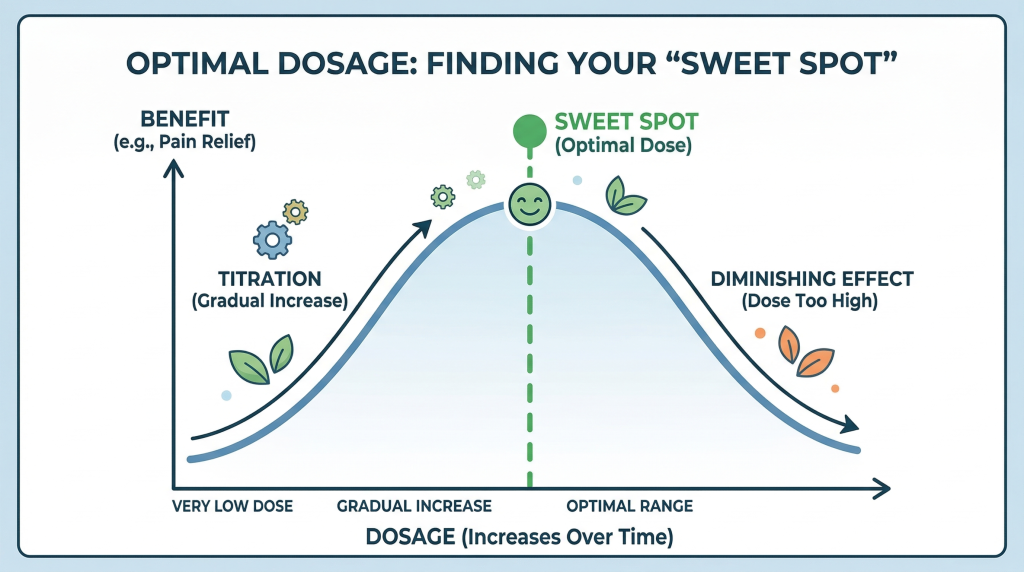
A bell curve graph showing Low-Dose Naltrexone (LDN) titration, highlighting the "sweet spot" where pain relief is highest before benefits diminish at higher doses.

Treatment typically begins at a very low dose nightly, with gradual increases every two to three weeks, depending on how you respond.

One of the most important things to understand about LDN is that more is not necessarily better. There is what clinicians describe as a “sweet spot”, an optimal dose where the benefit peaks. Going above that range can actually diminish the effect. This is why individualized, carefully supervised titration matters.

LDN is generally well tolerated. The most commonly reported side effects are vivid dreams, mild insomnia, or light nausea, but they are usually transient and dose-dependent. Importantly, LDN cannot be used concurrently with opioid medications, as it would block their effect.

What Happened with Debbie

Debbie began LDN nightly. After minimal change, we increased the dose and within days, her burning pain had begun to decrease substantially.

At her two-month follow-up, she described the change this way: she could still feel her face, but the sensation was no longer unpleasant or painful. After years of burning, that distinction was everything.

“She could still feel her face – but the sensation was no longer unpleasant or painful.”

Common Misconceptions About Post-Surgical Pain

Patients with persistent pain after facial or jaw surgery often encounter frustrating responses from providers who haven’t yet connected the dots between mechanism and treatment. Here is what we often hear and what the evidence actually says:

“If the surgery worked, you should be pain-free.”

Structural success does not always equal pain resolution. Neuropathic and nociplastic pain can persist independently of tissue healing.

“There is nothing left to try.”

Mechanism-based options like LDN are often not explored until later in a patient’s journey – if at all. They represent a distinct category from conventional neuropathic medications.

“It may be psychological.”

Nociplastic pain involves measurable central nervous system changes. It is not “in your head” – though behavioral and psychological factors can influence how any pain is experienced, as they do with all chronic conditions.

Who May Benefit from This Approach

Low-dose naltrexone may be an appropriate consideration for you if you experience:

  • Persistent burning or aching pain following TMJ surgery
  • Post-surgical facial pain with negative or stable imaging
  • Neuropathic facial pain that has not responded to standard medications
  • Persistent idiopathic facial pain
  • Burning mouth syndrome
  • Chronic headache or orofacial pain with a centrally mediated component

Patient selection and dose titration are essential. This is not a first-line treatment for acute or clearly structural pain. Instead, it is a targeted option for a specific mechanism.

Our Approach: Finding the “Why” Before the “What”

At New York TMJ & Orofacial Pain, we do not begin with a treatment. We begin with a question: what is actually driving your pain?

For patients like Debbie, that question led to an answer that changed everything. Her pain was not structural. It was neurological. And once we understood the mechanism, we could target it directly.

That same principle applies across the full range of conditions we treat. Whether the pain stems from muscle dysfunction, joint pathology, nerve sensitization, or a combination of factors, our goal is always the same: identify the true cause and build a plan around it, not around generic protocols.

LDN is one tool within that framework. It is not right for every patient. But for the right patient, it can offer relief that nothing else has.

Are You Experiencing Persistent Facial Pain in the NYC Metropolitan Area?

If you have had facial or jaw surgery, or if you’ve been living with facial pain that no one has been able to explain, you deserve more than temporary relief. You deserve answers.

At New York TMJ & Orofacial Pain, we specialize exclusively in diagnosing and treating TMJ disorders and orofacial pain. We take the time to identify the true cause of your symptoms and build a treatment plan that directly addresses it.

We have four convenient locations across the region, staffed with experienced orofacial pain specialists:

  • Midtown Manhattan
  • White Plains
  • Hauppauge, Long Island
  • Springfield, New Jersey

Contact us today to schedule a comprehensive evaluation.

https://www.nytmj.com/contact-us-locations/

About the Author

Dr. John Dinan is a board-certified Orofacial Pain specialist dedicated to the treatment of TMJ/TMD disorders and related conditions. He practices in our Manhattan and Springfield, NJ offices.

Learn more about Dr. Dinan →

Learn about our treatments →

Read: Trigeminal Neuralgia and the Experience of Tooth Pain →
 

Categories
Bruxism Case Studies Persistent Toothache TMJ

Pain And The Brain – They’re Inseparable 

As an orofacial pain specialist,  I treat patients who suffer from facial pain and the pain symptoms associated with Temporomandibular Disorders (commonly referred to as TMJ), I think about pain, a lot.

A great deal of new scientific knowledge has been gained in my field in the past several years. Being familiar with this knowledge is an essential part of how I make difficult decisions about my patients’ pain problems. However, taking advantage of this knowledge is only part of it. My years of experience and knowledge of the right questions to ask are what enable me to figure out the “why” of a patient’s pain problem.

Case Study – Robin

Robin, a 43-year old woman, came to my office because she was experiencing tooth and jaw pain that seemed to have come from nowhere. She had always taken good care of her teeth at home and visited her dentist twice a year for routine cleanings and monitoring.

Robin was experiencing pain – and it was getting worse. She had already been to her dentist. Her dentist sent her to see a root canal specialist. Neither professional was able to detect anything to explain her pain, and, as a result, no treatment was rendered. Yet, her pain was getting worse.

When I first met her, Robin was using over-the-counter pain medication and avoided chewing on the painful side of her mouth. Her jaw felt stiff and tight. At times it felt like her jaw muscles were cramping. The simple acts of smiling and talking prompted her pain to flare. She was not yet miserable but was clearly heading in that direction.

Sometimes Robin’s pain would vanish for hours but then return with a vengeance. There was no discernible pattern.

Before I proceed, it’s essential for you to understand a few facts about pain. Contrary to what you may think…

  • Pain can occur without tissue damage.
  • The intensity of pain can have little to do with the seriousness of the problem.
  • Every pain experience starts in the brain, regardless of its origin or severity.
  • The intensity of pain is ultimately the opinion of your brain (and your brain is not always your friend).

Back To Robin

After an examination, it was clear to me (despite Robin’s high level of suffering) that no clear-cut physical findings existed to tie her pain to a specific tooth or jaw joint/muscle compromise. Sore jaw and neck muscles were the only recognizable finding.

Robin’s level of suffering appeared to be more profound than were my physical findings. 

Pain & The Brain – The Right Questions To Ask 

At his point, I asked Robin some very specific questions designed to identify the presence of any risk factors that could potentially be impacting her pain thresholds, and causing her jaw and neck muscle discomfort.

As I gathered her medical history, I was not surprised to find out that Robin experienced long-standing sleep deprivation and chronic, painful gastrointestinal problems. And that she was taking care of her aging mother and had a job, which required her attention 24/7.

When I put it all together, it was clear that Robin lived in a state of emotional distress. Essentially, she was ready for battle on an ongoing basis. Next, I looked at her for other clues and found them: raised shoulders, crossed arms, shallow quick breathing, and an acquired behavior of keeping her jaw muscles braced, usually with her teeth clenched, as well.

I concluded that Robin’s tendencies and behaviors had fatigued her jaw and neck muscles to the point where she experienced pain. And the tooth pain she experienced was actually “referred pain”, originating in her jaw and neck.

Essentially the parts of her nervous system that are responsible for maintaining normal pain thresholds and allowing the brain to interpret incoming nerve transmissions correctly were failing. This led to what is called a state of sensitization. In this state, normal life activities, such as opening your mouth, eating, smiling, and talking can lead to pain – even in the absence of apparent tissue injury.

Pain Is In Your Head

I carefully explained to Robin why her pain had developed at the same time validated that the pain was real. Many people in Robin’s situation have been told, “your pain is all in your head.”

But not the way they mean it.

I then outlined what I refer to as the “60/40 rule of care”. I was going to direct 40% of her treatment, which included physical therapy, muscle injections, and medication. She was going to be responsible for the other 60%. She was to do 20 minutes of physical exercise every other day, make an effort to get more sleep, and begin to pay attention to her diet to avoid heightened gastric distress.

Robin also agreed to address issues at her job, and most importantly, to pay attention to changing her stressful breathing patterns and postures driven and shaped by her challenging life.

Pain & The Brain – How Is Robin Now?

Although Robin cannot escape all of the risk factors of her life, she is now able to change the way her body and her breathing react to them.

Like many patients with her type of pain scenario, she has responded well to the strategies we put into place. She acknowledges that her participation in the process has been critical.

Today, when flare-ups occur, Robin now understands in those moments her brain is not her friend. And she is learning how to change her brain’s opinion – quickly. 


Pain issues and sleep challenges do not have to be lifetime afflictions. You need someone who listens and possesses the knowledge and compassion to get your pain and sleep problems under control.

I am that someone – and you’re in the right place.
Dr. Donald Tanenbaum, DDS MPH

SCHEDULE A CONSULTATION


Categories
Case Studies Jaw Problems TMJ

Successful TMJ Treatment – How Long Will It Last?

Two Case Studies

As a dentist who specializes in TMJ problems, my patients often ask me how long the positive outcomes of their successful TMJ treatment will last. It can be challenging to answer this question due to the fact that most patients simply stop coming into the office for care when their pain or jaw function problems have gone away. That leaves me to assume that their goals have been reached and they no longer need my care.

Or so I hope.

Many patients arrive at my office because they’re suffering because of compromised temporomandibular joints (TMJs) and associated arthritic changes, inflammation, or ligament and cartilage injuries. Others have tendinitis and or muscle pain. These are not easy cases to treat.

But, when the pain and discomfort have been reduced and jaw function improved to the degree that a patient no longer comes in for care, I am curious as to whether he or she is still feeling good a few years down the road.

Two recent encounters with former patients not only satisfied my curiosity but also reinforced my theory that when assisted by practical and time-tested TMJ treatment, Mother Nature can do a remarkable job of healing. 

TMJ Treatment Case Study – Patricia

When Patricia first came into my office, she was 44-years old and had been suffering for many years from a painful, locking right TM joint. She finally decided to seek care when one morning she woke up and her jaw was locked to the point where she couldn’t insert even a pinky finger between her top and bottom teeth. She went to a specialist who ordered an MRI and concluded that the only option was surgery.

Patricia then sought me out for a second opinion. After I listened to her history, performed a physical exam, and reviewed her MRI results, I had to agree that a surgical approach was probably her best option.

However, Patricia was firmly opposed to surgery and persuaded me to try an alternative path of care. We settled on a course of TMJ treatment that included oral appliance therapy, physical therapy, BOTOX® muscle injections, a steroid joint injection, and instructions that guided her full participation in the process.

I’m happy to report that the non-surgical treatment worked. After a few months, Patricia stopped coming in for TMJ treatment altogether. I had to assume that she was still feeling better.

A couple of years after her last appointment I happened to be at a party and ran into her. She introduced me to her husband this way: “This is the guy who fixed my TMJ!”

And later that evening I noticed she was laughing and comfortably eating. I was assured then that success had indeed been realized. In Patricia’s case, the combination of treatment, her participation, and nature’s healing process got the job done.

TMJ Treatment Case Study – Susan

Susan was 45-years old when she became my patient. She’d been suffering from wicked migraines for years. Medication and a regimen of BOTOX® injections every three months had provided a bit of relief. But she had a feeling that her migraines were somehow related to her jaw muscles and that’s what brought her to me for TMJ treatment.

Many mornings when she woke up her teeth were clamped tightly together. And almost every day she was aware of what she could only describe as a “bracing” feeling in her jaw.

Like many people who suffer from jaw muscle tension, I suspected that Susan’s stress-filled 18-hour days were the culprit. She was in a perpetual state of “fight or flight” as if she always was ready for battle.

I agreed; Susan’s jaw muscle tension was a likely contributor to the severity of her migraines.

Susan’s treatment protocol included a custom-designed oral appliance to wear at night, a series of daily jaw and neck exercises, and daily self-directed muscle massage. I encouraged her to also pay careful attention to the pace and manner of her breathing during the day, especially while she was at work.

With TMJ treatment in place, Susan agreed to return in four months for a re-evaluation. But she never did.

Almost two years later as I was waiting in line to buy a movie ticket, I noticed Susan was also in line. She apologized for not coming into the office for a re-evaluation and told me that her migraines were now few and far between. She had followed the plan of treatment I designed and her jaw muscles were much less symptomatic and her migraines much less severe.

In Conclusion

If you commit to being an active participant in your care, the benefits of TMJ treatment can last for years. And, even if you’re someone who has suffered for decades from jaw problems, it’s never too late to seek an answer.


Learn more about TMJ treatment here.

Categories
Case Studies Facial Pain Jaw Problems TMJ

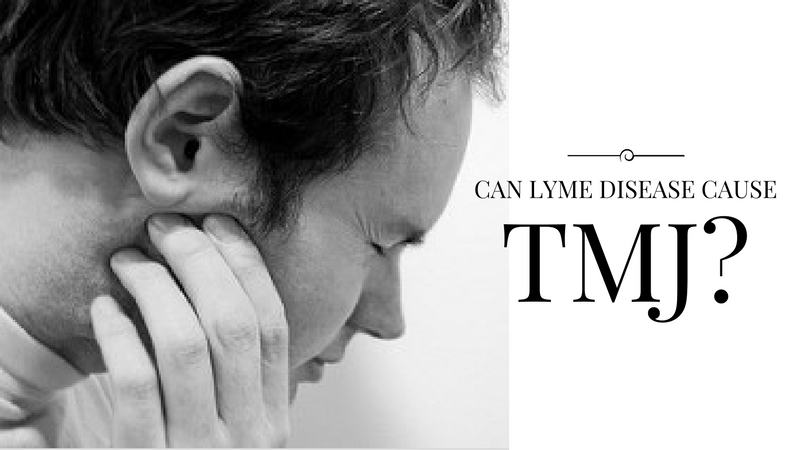
Can Lyme Disease Cause TMJ? – 3 Case Studies

As a specialist in orofacial pain and TMJ for over 30 years, it’s my conclusion that the impact of Lyme Disease on the peripheral and central nervous systems can produce nerve and muscle pain that mimics the symptoms of TMJ. But can Lyme Disease cause TMJ?

Starting in the early 90’s many patients have visited my office exhibiting the symptoms of TMJ – jaw pain, limited jaw opening, and severe facial pain. But upon evaluation, I did not find the common histories and risk factors that typically cause the muscle strain and inflammation associated with TMJ problems.

Lyme Disease infects over 300,000 people in the United States every year. But making a diagnosis is extremely difficult due to the fact that the only blood tests available are unpredictable. On top of that, only 25-50% of infected people ever develop the telltale rash associated with a deer tick bite (the tick that carries Lyme).

If left untreated, Lyme can cause facial tics (contraction and twitching of muscles), jaw pain, headaches in the temples, neck stiffness, and episodes of pain during talking and smiling. Very similar, if not identical to TMJ. 

The three case studies that follow prompted me to ask this question:

Can Lyme Disease Cause TMJ?

3 Case Studies

Case Study #1: John

In 1992 I treated a patient named John. John was a 38-year-old landscape gardener who worked at a golf course on the East End of Long Island. His complaints were acute jaw pain, limited jaw opening, and an inability to bring his teeth together in a consistent way.

At first glance, it seemed that John had the type of jaw problem that I see every day in my office so I prescribed the course of treatment that helps most of my patients. But it didn’t help him. Then I discovered that John had been diagnosed with Lyme Disease.

Case Study #2: Anne

A recent patient named Anne. She is a 52-year old female. She describes her symptoms this way: “I have pain in my face that can be so intense that I have thought about going out on disability.”

Ann’s pain is triggered whenever she talks. And her jaw muscles feel as if they’re “pulling all the time”. At times her teeth ache. And when the frames of her glasses press on her temples, the pain escalates. Anne’s facial and jaw symptoms have been present for seven months and are accompanied by exhaustion, disabling headaches, and what she describes as “bizarre sensations in my body”.

As with John, my evaluation did not suggest the reason for Anne’s suffering was a typical TMJ problem. But evaluations don’t always indicate Lyme, either. Due to the fact that she takes long walks in the Connecticut woods and because she remembers getting bitten by insects (she never had the telltale rash) her infectious disease doctor has considered starting her on antibiotic therapy for Lyme Disease.

Case Study #3: Sue

Another patient named Sue, a 45-year old female, came in with jaw problems, too. She had been diagnosed with Lyme disease seven years earlier. Sue felt sure that her Lyme had been “successfully treated with alternative remedies.” But still, she suffers from tight jaw muscles, intense pain when she lays her face on a pillow, fragile emotions that prompt daily outbursts of crying, and “raging pain in my face and jaw”. She was sure she had TMJ but never imagined that the effects of Lyme Disease cause TMJ symptoms.

Sue also suffers from bouts of intense back pain with a nerve-like character, that comes on suddenly and as quickly passes.

As noted, Sue believes that her Lyme Disease has already been “cured” by alternative remedies. But as in the cases of John and Anne, my evaluation provided no evidence of the typical causes of TMJ symptoms. With her belief in alternative treatments, it is no surprise that Anne is very reluctant to try antibiotic therapy. But she is about ready to move in that direction.

Did Lyme Disease Cause TMJ Symptoms In John, Sue, or Anne?

The outcome of these cases remains to be determined, but they are very similar to many other confirmed cases of Lyme Disease I have encountered since 1992 when I first began to wonder if can Lyme Disease cause TMJ symptoms. 

It is my conclusion, therefore, that the impact of Lyme Disease on the peripheral and central nervous systems can produce nerve and muscle pain that mimics the symptoms of TMJ. I am hopeful that better testing, control of the deer tick population, more effective treatments, and even perhaps a vaccine is on the horizon for these suffering patients. 

If you would like to add your comments please feel free to do so below.

Live or work in New York City or on Long Island? You can schedule a consultation with me here or call 212-265-0110.

Categories
Case Studies Sleep Apnea Snoring

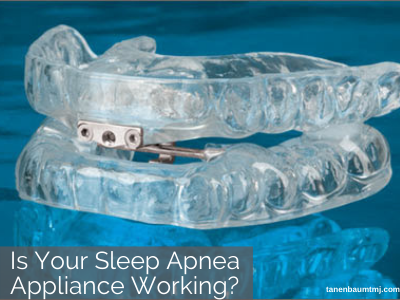
Is Your Sleep Apnea Appliance Working?

Snoring and obstructive sleep apnea are not only disruptive to your bed partner; they may also be the cause of many other illnesses. And as we have seen in the news recently, can result in deadly vehicle accidents. If you have opted to wear an oral appliance at night for snoring and/or sleep apnea (as opposed to using a CPAP machine) you may have noticed that it’s not working as well as it did when it was first fitted by your dentist. So, how do you know if your sleep apnea appliance is working?

John: A Case Study

My patient John is a 45-year old who had chosen to wear a sleep appliance to spare his wife from the disrupted sleep she was experiencing as “he snored like a jackhammer.” However, after a period of time his snoring (and consequently his wife’s nighttime annoyance) had reappeared.

John came to my office and we sat down to talk. He confessed that he had gained a whopping 15 pounds over nine months, so it wasn’t surprising that the appliance was no longer effective. I subsequently corrected the fit of his appliance (basically moving it slightly forward), which took care of his nightly jackhammer snoring (and probably saved his marriage!). But, another problem developed.

John began experiencing morning jaw tension and an awkward bite, which lasted for about an hour. Another visit to the office and a bit more adjustment took care of the issue. Now John is sleeping peacefully and not worried about a TMJ problem. So, if you use an oral appliance to manage sleep apnea/snoring, and your weight varies you should be going back to your dentist to reset the appliance

How To Determine If Your Oral Appliance Is Working

For those snoring without sleep apnea, your bed partner feedback will certainly alert you as to when the appliance is not working, but how do you know if you live alone? If you sleep alone and are wearing an appliance to protect the tissues in the back of your throat from the consequences of snoring over time, monitoring is key.

How To Monitor Snoring and Apnea With Technology

There are a number of mobile apps that can monitor your snoring at night. The best ones are SnoreLab and SnoringU.

For those with obstructive sleep apnea (with or without a bed partner) the absolute best way to know if your appliance is working properly is to use a pulse oximeter on two consecutive nights. A pulse oximeter will measure your blood oxygen levels while you are sleeping. If there is less than optimal oxygen your blood, then your appliance needs to be adjusted. The pulse oximeter can be purchased online or provided by your dentist.

Even more information can be obtained through using a HST (home sleep test), which is often covered under insurance plans and obtained through a sleep clinic or your dentist.

Important: technologies such as FitBit and JawBone cannot be used for monitoring oral appliances and Basis Peak and Microsoft Band, though sensing body motion and monitoring heart rate, also come up short.

The message is clear…don’t assume that once fitted, your oral appliance will always maintain its effectiveness. It’s necessary to have it monitored at least once, preferably twice, every year.


Dr. Donald Tanenbaum is a specialist with offices in New York City and Long Island, NY. He is uniquely qualified to diagnose and treat problems associated with facial painTMJ, headaches and sleep apnea.