Manhattan

212-265-0110

White Plains

914-227-2305

Springfield, NJ

973-315-7830

Hauppauge

631-265-3136
Categories
Facial Pain Jaw Problems Orofacial Pain Persistent Toothache Referred Pain TMJ

The Secret Behind Unexplained Toothaches & Facial Pain


There’s a good chance you landed here because you’ve been suffering from an unexplained toothache, a persistent sinus pain that won’t leave you alone, or an annoying earache that makes you wince every time you chew for a long time. These symptoms have likely sent you on multiple visits to healthcare professionals, each one leaving you with more questions than answers.

But what if the source of your pain is not where you’re feeling it?

Your puzzling array of symptoms just may be due to problems with your temporomandibular joints (TMJs) and associated muscles. Your TMJs and jaw muscles play a fundamental role in the basic movements of your jaw—talking, chewing, yawning, and even expressing emotions. When this joint and its corresponding muscles and ligaments become strained, unstable, and or overworked, the resulting condition is known as temporomandibular disorder or TMD.

When a TMD problem is not considered as a source of pain in teeth, the ear and/or sinus, for example, the result can be ongoing evaluations and treatments that address the location of the pain symptoms but not the origin. When the location of the pain complaint is not the true origin, the term referred pain is commonly used.

Referred Pain & Its Relationship To TMD Problems

Referred pain is pain perceived at a location other than the origin of the painful stimulus. It is the result of a network of interconnecting sensory nerves that are persistently over-excited. For example, when there is an injury or pathology at one site in the network, it is possible that when the signal is interpreted in the brain, mistakes are made as to the true origin of the problem. As a result, pain is often experienced at a distance from the true origin. (E.g., pain from a heart problem is experienced in the shoulder or jaw)

So, how does this relate to the structures of the jaw?

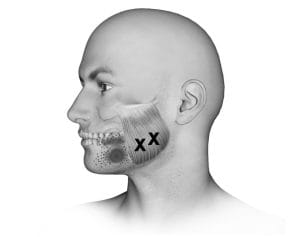
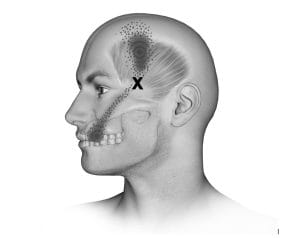
When your jaw muscles (masseters and temporalis) are persistently overworked, they become sore, extremely sensitive, and knotted. These areas are known as trigger points. When activated, trigger points can send pain signals to places far from their origins, resulting in referred pain. Jaw overuse behaviors such as clenching your teeth during the day, biting your nails, chewing your pens, etc., can lead to the formation and activation of these trigger points, leading to referred pain in areas such as your teeth, ears, or sinuses.
The Secret Behind Unexplained Toothaches & Facial Pain
Referred Pain to the Teeth, Ear, Sinus, and Face from the Masseter Muscle
Referred Pain to the Teeth, Ear, Sinus, and Face from the Temporalis Muscle

Orofacial Pain Specialists Understand What You’re Going Through

As part of an Orofacial Pain practice, my colleagues and I are well-versed in the nuances of this disorder. For many of our patients, merely validating their pain and helping them understand the concept of referred pain gets them moving in the right direction on the road to recovery.

If you’re nodding your head right now, thinking, “That’s me!” I encourage you to seek the care of an Orofacial Pain specialist. Your treatment plan might include education, awareness strategies to reduce jaw overuse behaviors and fatiguing postures, oral appliances, exercises, and/or relaxation techniques to address daily worries and stress. In addition,  physical therapy can also be helpful, along with muscle injections, to break up the trigger points that are driving your pain.

How To Get Help Now

If you live in the NYC metro area and are ready to uncover the root of your Orofacial Pain, we are here to guide you. Take the first decisive step by scheduling a consultation at one of our convenient offices in Manhattan, White Plains, New Jersey and on Long Island. Together, we’ll get to the bottom of what’s causing your suffering and get you on the road to recovery.

If you’re outside the NYC metro area, the American Board of Orofacial Pain website has a national directory of Orofacial Pain specialists.

Find out more about TMJ pain:
TMJ Headaches & Migraines
Pain & The Brain

Categories
Persistent Toothache

Why Do You Have A Toothache After A Root Canal?


As a board-certified Orofacial Pain specialist, I focus entirely on caring for patients who suffer from facial and unexplained tooth pain. Every week, I see someone in our office seeking our help. Sometimes, the problem is they still have a toothache after a root canal, and the reason why has been unclear.

Before I get into what can cause a toothache after a root canal, let’s discuss what a root canal is in the first place. A root canal is a dental procedure to remove inflamed or infected nerve tissue on the inside of a tooth. The compromised nerve tissue or pulp is removed, the space occupied by the pulp (the canal) is carefully cleaned and disinfected, and then the empty canal space is filled and sealed.

Root canal treatment is designed to eliminate inflamed or infected pulp tissue, removing bacteria at the same time. When accomplished properly, reinfection is unlikely, and the tooth will remain asymptomatic and stable.

Around 95% of patients who have a root canal never again feel pain in the treated tooth. But what happens to the 5% of people who still have a toothache after a root canal? If that’s you, you’re in the right place.

Did This Happen To You?

One day, you woke up with a terrible toothache. You took some Ibuprofen and powered through your day. But you were still in pain a few days later. So you see your dentist, who tells you, “You need a root canal.”

You weren’t excited about having a root canal, but you were looking forward to your tooth pain being a thing of the past. But that’s not what happened.

Your pain persisted for another week, so you went back to your dentist, who told you: “Everything looks good. Try to be patient while it heals.” But the pain never went away. What’s going on?

Before I go any further, I want to emphasize this:

If your dentist recommends a root canal after a thorough examination and x-rays, don’t resist! Remember, 95% of root canals are completely successful. In the rare cases when they’re not, one of these three scenarios likely holds the explanation:

3 Common Causes Of Persistent Toothache After A Root Canal

Scenario 1:  The root canal was necessary, but it didn’t get rid of your toothache

Under this scenario, your dentist accurately diagnosed the cause of your toothache and appropriately recommended root canal therapy. However, your pain persists.

At this point, your dentist may send you to an endodontist to take a look. Endodontists are root canal specialists who typically have advanced diagnostic tools in their offices, such as 3D cone beam imaging and highly magnifying operating microscopes.

The endodontist will look for clues to explain why you still have a toothache. They may detect a crack in your tooth that wasn’t visible in the x-rays at your dentist’s office. Or they find a lingering infection that needs to be removed in a curved part of the root that wasn’t fully cleaned the first time. Or, there may be another canal that needs to be treated that hadn’t been detected.

If this is your scenario, you’re in luck! You may have to endure a bit more time in the dental chair,  but your pain will resolve, and your life will go on.

Scenario 2:  The root canal was necessary, but a different kind of pain emerged

You may have heard about a strange phenomenon called phantom limb pain. Phantom limb pain is when someone who has lost a limb still feels pain in the limb, even though it’s gone! A similar thing can happen in dentistry when pain continues to be experienced in a tooth after the nerve tissue and pulp that we mentioned above are removed.

Fortunately, the incidence of phantom tooth pain after a root canal is much lower than that of phantom limb pain after an amputation. In both cases, however, research has suggested that, at times, removal of dental pulp can cause a nerve injury that leads to persistent pain. The formal term for phantom tooth pain is Post Traumatic Trigeminal Nerve Pain or PTTNP. The trigeminal nerve is the cranial nerve responsible for sensations in teeth.

Unfortunately, there can be a delay in making this diagnosis because your previous exams and x-rays suggest there’s nothing wrong despite your pain. Your frustration understandably grows as you can end up feeling that, somehow, it’s your fault.

At this point, your dentist or endodontist might refer you to an Orofacial Pain specialist like the doctors at our practice. Orofacial Pain specialists have advanced training in diagnosing and treating unexplained toothaches and fully understand the complexities of trigeminal nerve pain. The education and care they can provide with oral and topical medications are often the first steps toward pain relief.

If a referral to an Orofacial Pain specialist isn’t suggested – ask!

Scenario 3: It turns out your root canal wasn’t necessary

Before you read on, I can’t express this enough: 95% of root canals are necessary and successful!

But occasionally, a non-tooth-related condition can cause pain that mimics a bad toothache, and no amount of root canal therapy will help. It may be hard to appreciate, but your toothache from day one may have been caused by something that didn’t originate in your tooth. As a result, the root canal failed to get rid of the pain.

Less obvious causes for a lingering toothache after a root canal is referred pain from your jaw muscles. When these muscles become fatigued from constant bruxism or fatiguing head posture, it can actually cause pain in a tooth. As Orofacial Pain specialists, we commonly see patients who were diagnosed with a TMJ problem or a chronic neck problem and report persistent tooth pain. Nearly 18% of the population suffers from a TMJ disorder, so this scenario is commonly seen in our practice.

Thankfully, we have strategies to get rid of that lingering tooth pain. Treatment can be a combination of strategies that include changing daytime jaw overuse behaviors and fatiguing head postures, exercises, medications, muscle injections, and custom oral appliances.

There can be other medical causes of persistent toothaches. They are rare but should be mentioned: Lyme disease, cardiovascular problems,  sinus infections, salivary gland pathology, trigeminal neuralgia, and intracranial diseases inclusive of brain tumors. Orofacial Pain specialists have been trained in very specific ways to listen to the symptoms and stories of pain, looking for clues to make alternative diagnoses or referrals to medical colleagues to broaden out the evaluation process.

In Conclusion

If you have a lingering toothache after a root canal and neither your dentist nor an endodontist can figure out why, request a referral to an Orofacial Pain specialist.
If you’re located in the NYC metro area, we have offices in Manhattan, White Plains, Long Island, and New Jersey. Click here for exact locations and contact info.

Outside our area? Check the directory of the American Board of Orofacial Pain for a specialist in your area with Diplomate designation.

You may also be interested in:
What Is A Root Canal?
What Is Referred Pain?
More About Persistent Toothaches

Dr. John E. Dinan is a Diplomate of the American Board of Orofacial Pain and the American Board of Dental Sleep Medicine. He is part of the team at New York TMJ and Orofacial Pain team, practicing in our Manhattan and Springfield, NJ offices.


Categories
Persistent Toothache Referred Pain

What To Do If A Dentist Won’t Treat Your Toothache

Now and then, we in the dental field see patients who suffer from toothaches that don’t seem to be caused by a tooth. If you have pain that feels like it’s coming from a tooth, but your dentist won’t treat your toothache, it can be a very frustrating situation for you and for your dentist.

(Note, you may also be seeing a dental professional such as a periodontist or an endodontist. For this article, I refer to them all as dentists).

In a situation like the above, where it’s unclear why you have pain, there are two options.

Option One: “Wait And See”

When a toothache presents in an unusual way or won’t go away even after treatment has been performed, your dentist may ask you to give it some time. The hope is that your symptoms will lessen, become more recognizable, or the examination findings become more revealing.

It’s important for you, the patient, to understand why your dentist chooses this wait and see approach, especially when you’re in pain and just want some relief. It’s not because your dentist won’t treat your toothache, it’s because additional clues to the cause of often only appear after a bit of time has gone by.

In this case, your dentist might ask you some unusual questions, such as if you have been having other medical problems, sleep difficulties, a recent virus or even cancer-related therapies including chemotherapy. This is all in an effort to get a clearer understanding of why you have a toothache when there’s nothing that indicates there’s something wrong with your tooth.

During the wait and see period, your dentist won’t treat your toothache because they want you to suffer. In fact, they may offer short term pain medications to make you more comfortable and make stay in touch with you. 

Option Two: “Treat Me Now Or I’m Leaving!”

Most dentists that won’t treat your toothache don’t want to put you through treatment if they are not convinced, without a doubt, that your pain is the result of decay or a root problem. If you are adamant about wanting your tooth to be treated and your dentist won’t do it, you can move along to a different dentist. However, it’s likely you’ll hear, “let’s wait and see” again.

There’s always a chance you could find a dentist you can convince to treat the tooth, despite the results of an exam and x-rays. 

Try to understand that even if your dentist won’t treat it right away, they really do want to fix your toothache problem. They want you to feel better and be able to get on with your life. They have no vested interest in seeing you suffer.  

If you insist on being treated and your dentist agrees (despite having no clear evidence that your tooth is in trouble) and the result is your toothache then goes away – great!

However, if your toothache does not go away even after treatment, your problem has just become a lot more complicated. Add to that the time and money you have invested – and you’re not going to be very happy.

Toothaches That Are Not Caused By Teeth 

If your dentist won’t treat your toothache, it’s important you find out what they think could be the cause. It may sound weird, but tooth pain can be triggered by factors that have very little to do with the nerve in that aching tooth! Here are just a few possibilities:

  • Neck and/or jaw muscle problems, such as tightness, spasm, and fatigue – can be caused by life tensions, bad posture, aggressive tooth clenching, degenerative cervical spine conditions, and more. When muscles are in trouble this way for a prolonged length of time, the result is what can feel like a real toothache.
  • Sinus problems can make your upper teeth hurt – sometimes acutely.
  • Nerve problems often labeled as neuralgia or neuritis can create intense tooth pain.
  • Various medical conditions including systemic inflammatory diseases, migraines, autoimmune conditions, Lyme disease, and other infectious diseases.
  • Brain tumors can lead to toothache symptoms.
  • Past chemotherapy and/or radiation treatment in the head or neck area can lead to toothache symptoms.

What To Do If A Dentist Won’t Treat Your Toothache

If your dentist won’t treat your toothache dentist won’t treat it because the reason is unclear, there are three tests you should expect:

  1. A careful exam and x-rays. Sometimes 3D scans can be helpful, too, to uncover what’s wrong.
  2. Testing your teeth with hot and cold, percussion and mobility tests, and nerve testing with a pulp stimulator.
  3. Local anesthetic injections to isolate the source of the pain.

If these tests do not identify a specific tooth that is the cause of your toothache, your dentist should ask you more questions. They should validate that your pain is real and explain why they believe the source could be somewhere else. 

The Bottom Line

If your dentist and you both want to start work on a tooth, despite being unsure if the treatment will eliminate your toothache, be prepared to consider other sources of the pain if the toothache lingers. Remember, if your dentist won’t treat your toothache, they probably have a very good reason.


Learn more about persistent toothache and referred pain.


Categories
Bruxism Case Studies Persistent Toothache TMJ

Pain And The Brain – They’re Inseparable 

As an orofacial pain specialist,  I treat patients who suffer from facial pain and the pain symptoms associated with Temporomandibular Disorders (commonly referred to as TMJ), I think about pain, a lot.

A great deal of new scientific knowledge has been gained in my field in the past several years. Being familiar with this knowledge is an essential part of how I make difficult decisions about my patients’ pain problems. However, taking advantage of this knowledge is only part of it. My years of experience and knowledge of the right questions to ask are what enable me to figure out the “why” of a patient’s pain problem.

Case Study – Robin

Robin, a 43-year old woman, came to my office because she was experiencing tooth and jaw pain that seemed to have come from nowhere. She had always taken good care of her teeth at home and visited her dentist twice a year for routine cleanings and monitoring.

Robin was experiencing pain – and it was getting worse. She had already been to her dentist. Her dentist sent her to see a root canal specialist. Neither professional was able to detect anything to explain her pain, and, as a result, no treatment was rendered. Yet, her pain was getting worse.

When I first met her, Robin was using over-the-counter pain medication and avoided chewing on the painful side of her mouth. Her jaw felt stiff and tight. At times it felt like her jaw muscles were cramping. The simple acts of smiling and talking prompted her pain to flare. She was not yet miserable but was clearly heading in that direction.

Sometimes Robin’s pain would vanish for hours but then return with a vengeance. There was no discernible pattern.

Before I proceed, it’s essential for you to understand a few facts about pain. Contrary to what you may think…

  • Pain can occur without tissue damage.
  • The intensity of pain can have little to do with the seriousness of the problem.
  • Every pain experience starts in the brain, regardless of its origin or severity.
  • The intensity of pain is ultimately the opinion of your brain (and your brain is not always your friend).

Back To Robin

After an examination, it was clear to me (despite Robin’s high level of suffering) that no clear-cut physical findings existed to tie her pain to a specific tooth or jaw joint/muscle compromise. Sore jaw and neck muscles were the only recognizable finding.

Robin’s level of suffering appeared to be more profound than were my physical findings. 

Pain & The Brain – The Right Questions To Ask 

At his point, I asked Robin some very specific questions designed to identify the presence of any risk factors that could potentially be impacting her pain thresholds, and causing her jaw and neck muscle discomfort.

As I gathered her medical history, I was not surprised to find out that Robin experienced long-standing sleep deprivation and chronic, painful gastrointestinal problems. And that she was taking care of her aging mother and had a job, which required her attention 24/7.

When I put it all together, it was clear that Robin lived in a state of emotional distress. Essentially, she was ready for battle on an ongoing basis. Next, I looked at her for other clues and found them: raised shoulders, crossed arms, shallow quick breathing, and an acquired behavior of keeping her jaw muscles braced, usually with her teeth clenched, as well.

I concluded that Robin’s tendencies and behaviors had fatigued her jaw and neck muscles to the point where she experienced pain. And the tooth pain she experienced was actually “referred pain”, originating in her jaw and neck.

Essentially the parts of her nervous system that are responsible for maintaining normal pain thresholds and allowing the brain to interpret incoming nerve transmissions correctly were failing. This led to what is called a state of sensitization. In this state, normal life activities, such as opening your mouth, eating, smiling, and talking can lead to pain – even in the absence of apparent tissue injury.

Pain Is In Your Head

I carefully explained to Robin why her pain had developed at the same time validated that the pain was real. Many people in Robin’s situation have been told, “your pain is all in your head.”

But not the way they mean it.

I then outlined what I refer to as the “60/40 rule of care”. I was going to direct 40% of her treatment, which included physical therapy, muscle injections, and medication. She was going to be responsible for the other 60%. She was to do 20 minutes of physical exercise every other day, make an effort to get more sleep, and begin to pay attention to her diet to avoid heightened gastric distress.

Robin also agreed to address issues at her job, and most importantly, to pay attention to changing her stressful breathing patterns and postures driven and shaped by her challenging life.

Pain & The Brain – How Is Robin Now?

Although Robin cannot escape all of the risk factors of her life, she is now able to change the way her body and her breathing react to them.

Like many patients with her type of pain scenario, she has responded well to the strategies we put into place. She acknowledges that her participation in the process has been critical.

Today, when flare-ups occur, Robin now understands in those moments her brain is not her friend. And she is learning how to change her brain’s opinion – quickly. 


Pain issues and sleep challenges do not have to be lifetime afflictions. You need someone who listens and possesses the knowledge and compassion to get your pain and sleep problems under control.

I am that someone – and you’re in the right place.
Dr. Donald Tanenbaum, DDS MPH

SCHEDULE A CONSULTATION


Categories
Bruxism Persistent Toothache TMJ

8 Surprising Reasons Your Teeth Are Sensitive

One of the most common questions about dentistry that people ask on Google is this: “Why are my teeth so sensitive?”.

Unfortunately, there’s no simple answer to this question. There could be any number of reasons why your teeth are sensitive, some of which may surprise you. In the following article, I list 8 reasons your teeth are sensitive and a brief explanation of each. Does one apply to you?

8 Reasons Your Teeth Are Sensitive

1. Your Toothpaste Is Too Abrasive

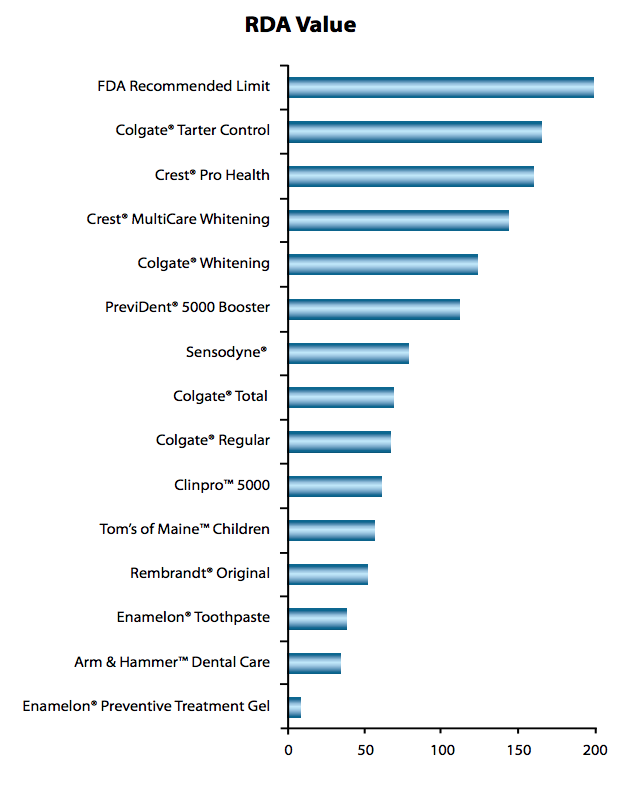
In order for toothpaste manufacturers to gain approval from the FDA they must measure and report the abrasiveness of their products. However, they are not required to report the information to consumers. To help you find out how your favorite toothpaste stacks up, refer to the chart below. Your teeth are sensitive perhaps because of the toothpaste you’ve been using.

2. You’ve Been Using Whitening Toothpaste

Whitening toothpastes often contain chemicals that help to remove surface stains and therefore, make your teeth much whiter. However, these chemicals can damage the surface of your teeth. Several whitening toothpastes have received the American Dental Associations’ (ADA) Seal of Acceptance. However, it is recommended that you consult your dentist before using whitening toothpaste to avoid damage. So, if you’ve been brushing with whitening toothpaste and your teeth are sensitive, whitening toothpaste may be the culprit.

3. There’s Too Much Acid In Your Diet

Citric acid, such as what’s found in lemons, oranges, and grapefruits, can be very damaging to your tooth enamel. It’s not hard to understand how too much citric acid could cause erosion of your teeth enamel and therefore, sensitive teeth.

On the other hand, most people don’t realize that many popular beverages, many of which don’t seem to be acidic, are very acidic. My colleague, New York dentist Michael Sinkin, warns: “…many vitamin waters, energy drinks, and sports drinks are highly acidic and if consumed in large quantities can cause your teeth’s structure to break down.” 

So, how can you find out if your favorite beverage contains enough acid to be the reason your teeth are sensitive? Check the pH! pH is the measure of acidity on a scale of 1-14. The lower the number the higher the acidity; tooth enamel begins to dissolve at pH 5.3.

The chart below shows the pH of some popular beverages. If you’ve been gulping Gatorade at the gym or if you slug down a Red Bull every afternoon to fight tiredness, those beverages may be the cause of your sensitive teeth.

Source:
http://michaelsinkindds.com/is-your-favorite-beverage-eroding-your-tooth-enamel/

4. You’re A Swisher!

The next time you drink a soda, juice, or a glass of wine, take note if you swish it around in your mouth before you swallow. Many people swish their beverages without realizing it, which can create a loss of tooth enamel and sensitize the teeth’s dentin and cementin. Wine connoisseurs in particular, who swish in order to better experience the nuances of vintages, are at especially at risk. It’s OK to swish a little, but try keeping it to a minimum.

5. Your Teeth Need A Cleaning

Even people with the means to go to their dentist two or three times a year often avoid it because of dental fear. You can floss and brush twice a day, every day, but it’s nearly impossible to remove all the tartar and plaque that will build up on your teeth naturally. When plaque builds up around and under your gums, it will cause inflammation, and therefore, sensitive teeth.

If you haven’t been to the dentist for a while you could be surprised to discover that most practices now are hyper-aware of how anxious some patients can be, even when they come in just for a simple cleaning. Dental fear is nothing to be ashamed of, so discuss it with your dentist and get those teeth cleaned!

6. You Breathe Through Your Mouth

Chronic sinusitis from allergies or a deviated septum can cause you to continually breathe through your mouth instead of through your nose. An article in RDH, The National Magazine For Dental Hygiene Professionals, states: “Mouth breathing affects the pH of the entire body… meaning the saliva.”

In other words, breathing through your mouth over a long period of time can actually make your saliva more acidic and could be the reason your teeth are sensitive. The best advice is to see an ENT (an Ear, Nose and Throat doctor) as soon as possible.

7. Your Jaw Muscles Are Being Overused

I’ve been treating patients who have tooth and jaw problems that stem from overworked jaw muscles for over 35 years. If you hold tension in your face and keep your teeth clenched together during the day, your jaw muscles are being overworked. Overworked jaw muscles can cause headaches, facial pain, persistent toothache, and sensitive teeth. Try to relax your jaw, especially when you’re working at your desk. For more help, read Problems of the Jaw.

8. You Grind Your Teeth While You’re Sleeping

Nighttime teeth grinding, also called Bruxism, is a common phenomenon that causes your jaw muscles to over-contract. In fact, some people grind their teeth so ferociously that they actually sprain their jaw ligaments, which is why their teeth are sensitive.

My practice is full of people who suffer from bruxism and just want to feel better. Our first step is to figure out what’s causing the grinding. Only once the underlying reasons are discovered can we put in place a treatment plan to eliminate the grinding and therefore, its damaging efforts.

Did you figure out why your teeth are sensitive? Whatever the cause, keep in mind that your sensitive teeth are a sign that something is going on. Don’t ignore it.

(Note: If the cause of your tooth sensitivity is related to overuse behaviors or nighttime teeth grinding and you live in the NYC metro area, please feel free to (212)-265-0110 for a consultation. If you’re outside my area, you can go to www.aaop.org  and find a Diplomate in your area.)

Read More:
Tooth Whitening/Bleaching: Treatment Considerations for Dentists and Their Patients

Categories
Persistent Toothache

A Toothache Can Be Caused By Arthritis


Though it seems strange, a toothache can be caused by arthritis. This was what happened to one of my patients this past year. It all started when John began to experience acute pain in an upper right molar. His dentist could not find a reason for the pain, since upon evaluation there was no decay or other problem apparent. So John was sent home with instructions to use Advil or Tylenol and hope for the best.

But John’s tooth pain persisted. He returned to his dentist’s office where more x-rays were taken and a root canal procedure was scheduled, albeit reluctantly. But even after the root canal, John’s tooth still ached and at times a neighboring tooth seemed to hurt, as well. John’s complaints ultimately led to the extraction of the offending right molar.

Then John started to experience pain in the extraction site and the teeth surrounding it. To make matters even worse, the same scenario began to unfold on his left side. And still, his dental team (comprised now of a number of specialists) found nothing on x-rays or during examination to explain it.

John’s suffering grew to the degree that the quality of his life was completely compromised. In desperation, he agreed to yet another root canal and subsequent tooth extraction. No change.

By this time there was no doubt that the source of John’s wicked tooth pain had to be of non-tooth origin. His persistence in seeking care and his unwavering belief that “there must be something wrong with my tooth” led him finally to me.

We found the answer to John’s suffering and was buried in his medical history. About one year before his tooth problems began, he had sought care for multiple joint pain throughout his body. The diagnosis was a (systemic) inflammatory condition called Spondyloarthropathy, which causes pain similar to what is associated with arthritis. A rheumatologist prescribed a few months on Enbrel, a medication used to treat inflammatory autoimmune conditions, and John’s body pain symptoms went into remission.

Let’s discuss arthritis for a brief moment: Arthritis essentially means “inflammation within a joint.” This same type of inflammation can occur in tendons and ligaments, the attachment sites in muscles and joints that keep us moving and functioning. Ligaments are also what attach your teeth to their bony sockets. They are called periodontal ligaments. Therefore, unexplained tooth pain can be due to an irritable periodontal ligament.

John’s medical history was the key to finally figuring out why he experienced acute tooth (and tooth site) pain that did not respond to conventional dental treatment. His tooth pain was the result of irritated periodontal ligaments. It took only three weeks back on Enbrel for John’s tooth site pain to go away. If his arthritis condition flares-up again, his tooth pain may reemerge. But, for now John is pain-free and able to enjoy his life again.

Here’s the moral of the story: As a patient you must share your medical history with any doctor who is having difficulty with a diagnosis. And as medical professionals, we must remember to ask all the right questions, request records and collaborate with other doctors on behalf of our patients.

Pain is real and no stone should be left unturned to find the source.

Live or work in New York City or on Long Island? You can schedule a consultation with me here or call 212-265-0110.

Categories
Persistent Toothache Referred Pain

Lingering Toothache After Root Canal

When the recommendation has been made for wisdom teeth removal, and the patient has (or has experienced TMJ problems), some very important factors must be considered because TMJ problems and wisdom teeth removal sometimes don’t play nice with each other. The trauma to the jaw during surgery can make TMJ problems flare and potentially cause longer-term problems including pain, additional joint noises and more challenging joint locking problems.

Consider the following case: An 18-year old female is preparing to go off to college in the fall. Although she is experiencing no pain symptoms associated with her wisdom teeth, her dentist and consulting oral surgeon have made a recommendation to have all four removed, in order to avoid potential problems while she’s away at college.

The patient and her parents are concerned that her recently stabilized TMJ problem (clicking, pain and sporadic morning locking) will flare up as a result of the extraction process. Is this a legitimate concern, or excessive worry?

Since TMJ problems are orthopedic in nature it is logical to assume that a difficult extraction event can cause a managed TMJ problem to resurface. This is particularly relevant if the patient mainly had joint problems that required care. Females more than males are at risk due to the fact that their TMJ structures are biologically more susceptible sprain and strain.

The following is my recommended list of questions that should be discussed before the patient goes ahead with the wisdom teeth extraction.

1. Should the teeth be left in place for a year or two to ensure further healing of the TMJ problem?

2. Should two teeth be taken out initially, instead of all four? (A lengthy surgery could therefore be avoided.)

3. Should a local anesthetic alone be used so that the patient could communicate with the surgeon if in fact she felt that the jaw was being stressed, or should sedation/general anesthetics be used to relax the patient’s muscles and diminish muscle tension due to fear.

4. Should an intravenous steroid be routinely used to minimize any potential muscle/ joint inflammation, which would lead to post-extraction pain, and excessive/prolonged limited jaw motion.

Clearly there are no easy answers to these questions. The important message is that if your son or daughter is in this position, please be proactive and ask the difficult questions.

Some more questions to consider:

  • Is the jaw clicking and/or locking due to instability of the joint ligaments or movement of the shock-absorbing disc?
  • Are the wisdom teeth impacted in bone, are they fully or partially erupted, and if impacted, are they lying on their sides? (If they are lying on their sides, it will likely require more time and more bone removal to be extracted).
  • Is there inflammation of the gum tissues surrounding or overlying the wisdom teeth? Or is the plan to remove them designed to prevent possible acute periods of pain while the patient is at school or traveling overseas for an extended period of time?
  • Is there concern that the erupting wisdom teeth may cause undesirable tooth movement after orthodontics has been completed?
  • Does the patient’s gender and age make a difference in the outcome?

Patients with TMJ histories must be handled thoughtfully, and with an open mind. Remember, the removal of wisdom teeth is most often an elective procedure. Delaying their extraction may carry with it additional risks, but a patient with a history of TMJ problems, (particularly a young female) is always at risk during the extraction process.

Categories
Persistent Toothache

Lingering Toothache – Is It A Sprained Ligament?

Fortunately for those of us who have experienced a lingering toothache, relief typically follows a visit to the dentist. Whether a filling, a crown (cap) or root canal therapy was necessary, pain reduction is common within 24-48 hours. But when a toothache won’t go away in spite of the fact that the tooth pulp is healthy based on examination and x- ray investigation, believe it or not, it may be due to a sprained ligament.

To understand how a toothache can be the result of a sprained ligament, a quick review off the anatomy of a tooth is essential:

Every tooth in the mouth is anchored to the bone in which it sits by a structure called the periodontal ligament or PDL. This ligament is no different than any other ligament in the body, and when healthy, is responsible for maintaining the tooth in a stable position. This ligament, which is mainly composed of water, also acts as a shock absorber. The PDL is teeming with nerve endings, which gives it a great capacity to guide our chewing movements and tell the brain how much force to exert based upon the consistency of food in the mouth.

In addition, the PDL is the “GPS system” of the oral cavity and is so fine-tuned in its functioning that it can find a small fish bone in the midst of a mouthful of food. This capability helps protect the teeth and the surrounding soft tissues from injury that could otherwise occur during normal function.

  • Tooth pain is typically the first symptom of a PDL sprain. Common ways that sprains happen are:
  • Biting on food that is harder than anticipated
  • Impact from an expanding airbag
  • Chin trauma that forced the teeth together
  • An accidental collision with a baby’s head
  • Dental or oral surgery
  • Daytime overuse such as nail biting or pencil chewing
  • Nighttime clenching or tooth grinding (bruxism)

Once sprained, these ligaments may take some time to heal simply because it is difficult, if not impossible, to avoid using the tooth or teeth involved during chewing, speaking, and even at times, swallowing. Over time if the PDL is continually insulted, the tiny nerve endings in the ligament will become sensitized (similar to being sunburned) and as a result pain levels will increase and often spread to the surrounding gum tissue and neighboring teeth. And, if daytime overuse behaviors continue and/or sleep bruxism persists, the pain will likely continue.

Because this problem is not in the tooth pulp, or due to compromise of hard tooth structure, any dental efforts to fix the problem will likely lead to even more exacerbation of the pain. Like all ligaments if a sprain occurs, rest and support are often needed in order for healing to occur.

The key therefore is to identify why the sprain occurred before treatment is planned. If due to a single and identifiable event, time is the best therapy as healing will usually occur. Taking an anti-inflammatory medication like Advil or Aleve for five to seven days can also help along with avoidance of chewing on the painful tooth. If you suspect that night clenching or grinding of the teeth is the cause, then the use of an oral appliance  while sleeping may be the best remedy.

At times trauma to a tooth may cause ligament pain that lingers and becomes chronic due to nerve endings that begin to fire spontaneously even when provoked by normal daily activities like speaking, swallowing and eating even soft foods. These situations may  require medications that work to quiet irritable nerve endings. The most important thing to remember is that these problems are not solved by root canal therapy and this direction of care should be avoided.

Live or work in New York City or on Long Island? You can schedule a consultation with me here or call 212-265-0110