Manhattan

212-265-0110

White Plains

914-227-2305

Springfield, NJ

973-315-7830

Hauppauge

631-265-3136
Categories
Facial Pain

Low-dose Naltrexone Neuropathic Facial Pain


The Jaw Surgery Worked – But the Pain Didn’t Go Away

What low-dose naltrexone can do for persistent neuropathic facial pain

Your jaw surgery went well. The imaging looks fine. Your surgeon says everything healed the way it should.

And yet, you have pain. It aches along your jaw. The sensation feels, as one of our patients put it, like “my skin is sunburnt” – even though nothing is visibly wrong.

If this sounds familiar, you are not imagining it. And you are not alone.

Persistent pain after facial or jaw surgery is a recognized clinical reality. It has a name, a mechanism, and – importantly – treatment options that go beyond what most patients are ever offered.

Your Pain Is Real. And It Has a Medical Explanation.

One of the most disorienting experiences our patients describe is being told that everything looks fine, yet they still live with daily pain.

When surgery corrects a structural problem, but pain continues, the issue often isn’t structural at all. It’s neurological. The nervous system, particularly the pain-signaling pathways, can remain in an activated state long after the original source of injury has been addressed.

This is called neuropathic pain – pain that originates in your nervous system itself, not in damaged tissue. In some cases, it takes on a more complex form called nociplastic pain, a term from the International Association for the Study of Pain that describes pain arising from altered signaling in the central nervous system, without ongoing tissue damage to account for it.

In plain terms: your brain’s pain system has become hypersensitive. It keeps sending pain signals even after the original problem has been treated. This is not a character flaw, a low pain threshold, or something you should simply push through. It is a measurable, treatable condition.

A Case We Treated: Debbie’s Story

“Debbie” was a 52-year-old woman from the New York City area who came to us with a problem that had no easy answer.

Two years earlier, she had undergone bilateral TMJ total joint replacement – a significant surgery to address severe, progressive jaw degeneration. The procedure went well. Her jaw opened better. Imaging confirmed the prosthetics were stable. By every measurable standard, surgery was a success.

But Debbie was in constant pain.

She described a burning sensation along both sides of her jaw and temples. It was relentless, unpleasant, and unlike anything she had experienced before the surgery. She had tried NSAIDs, benzodiazepines, opioids, and anticonvulsant medications. None helped. Several caused side effects severe enough to stop.

When she arrived at our practice, the examination revealed something important: light touch to the affected areas caused heightened sensitivity and a kind of distorted sensation. This told us that her issue wasn’t structural, but neurological. Her pain wasn’t coming from the joint. It was coming from a sensitized nervous system.

This is where a mechanism-based approach – asking not just what is causing pain, but how and why her pain system had become dysregulated – becomes essential.

Introducing Low-Dose Naltrexone (LDN)

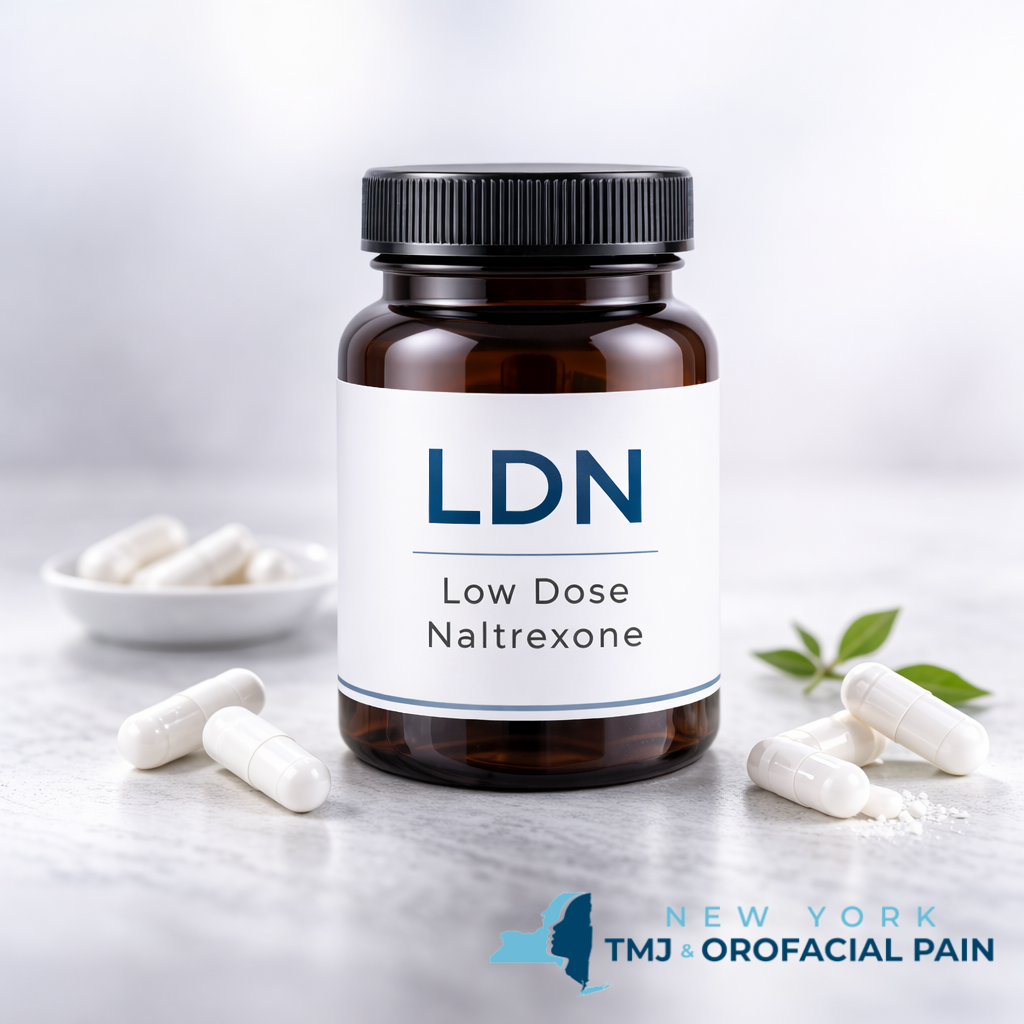
Low-dose naltrexone (LDN) bottle used in the treatment of neuropathic facial pain and centrally mediated pain disorders
Low-dose naltrexone is used off-label for neuropathic and centrally mediated facial pain conditions.

What Is Low-Dose Naltrexone (LDN?)

Naltrexone is a medication with a long track record in addiction medicine, typically prescribed at 50 to 100 mg daily. Low-dose naltrexone (LDN) refers to the same medication prescribed at a fraction of that dose – generally 1.5 to 6 mg daily – where it appears to work through an entirely different set of mechanisms. LDN is obtained through a compounding pharmacy and used off-label for centrally mediated and neuropathic pain conditions.

Naltrexone is a medication with a long track record in addiction medicine when used in large doses. But at a fraction of that dose, it appears to work through an entirely different set of mechanisms, ones that are particularly relevant to persistent, centrally mediated pain.

This low-dose application is called Low-Dose Naltrexone (LDN).

How Low-Dose Naltrexone Works: Two Mechanisms That Matter

1. Low-Dose Naltrexone helps your body produce more of its own natural pain-relievers.

At low doses, naltrexone temporarily and mildly blocks the body’s opioid receptors for a few hours. The body responds by producing more endorphins, which are its own natural pain-modulating molecules. When the mild blockade resolves, those elevated endorphins flood back into the system. The result is a net increase in the body’s own pain-relief capacity.

2. It calms an overactivated immune response in the brain.

The central nervous system contains immune cells called microglia. In patients with chronic or neuropathic pain, microglia can become chronically activated, releasing inflammatory signals that amplify pain. LDN appears to reduce this microglial activation, quieting the neuroinflammatory response that keeps pain pathways in a heightened state.

Together, these two mechanisms address something many conventional pain medications do not: the underlying nervous system dysregulation driving persistent pain.

How Low-Dose Naltrexone Is Prescribed

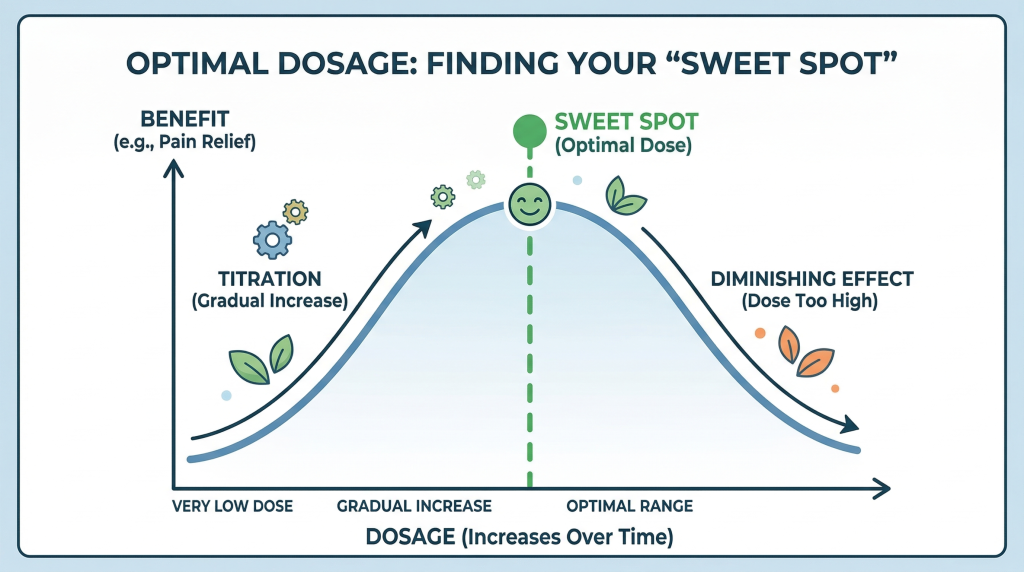
A bell curve graph showing Low-Dose Naltrexone (LDN) titration, highlighting the "sweet spot" where pain relief is highest before benefits diminish at higher doses.

Treatment typically begins at a very low dose nightly, with gradual increases every two to three weeks, depending on how you respond.

One of the most important things to understand about LDN is that more is not necessarily better. There is what clinicians describe as a “sweet spot”, an optimal dose where the benefit peaks. Going above that range can actually diminish the effect. This is why individualized, carefully supervised titration matters.

LDN is generally well tolerated. The most commonly reported side effects are vivid dreams, mild insomnia, or light nausea, but they are usually transient and dose-dependent. Importantly, LDN cannot be used concurrently with opioid medications, as it would block their effect.

What Happened with Debbie

Debbie began LDN nightly. After minimal change, we increased the dose and within days, her burning pain had begun to decrease substantially.

At her two-month follow-up, she described the change this way: she could still feel her face, but the sensation was no longer unpleasant or painful. After years of burning, that distinction was everything.

“She could still feel her face – but the sensation was no longer unpleasant or painful.”

Common Misconceptions About Post-Surgical Pain

Patients with persistent pain after facial or jaw surgery often encounter frustrating responses from providers who haven’t yet connected the dots between mechanism and treatment. Here is what we often hear and what the evidence actually says:

“If the surgery worked, you should be pain-free.”

Structural success does not always equal pain resolution. Neuropathic and nociplastic pain can persist independently of tissue healing.

“There is nothing left to try.”

Mechanism-based options like LDN are often not explored until later in a patient’s journey – if at all. They represent a distinct category from conventional neuropathic medications.

“It may be psychological.”

Nociplastic pain involves measurable central nervous system changes. It is not “in your head” – though behavioral and psychological factors can influence how any pain is experienced, as they do with all chronic conditions.

Who May Benefit from This Approach

Low-dose naltrexone may be an appropriate consideration for you if you experience:

  • Persistent burning or aching pain following TMJ surgery
  • Post-surgical facial pain with negative or stable imaging
  • Neuropathic facial pain that has not responded to standard medications
  • Persistent idiopathic facial pain
  • Burning mouth syndrome
  • Chronic headache or orofacial pain with a centrally mediated component

Patient selection and dose titration are essential. This is not a first-line treatment for acute or clearly structural pain. Instead, it is a targeted option for a specific mechanism.

Our Approach: Finding the “Why” Before the “What”

At New York TMJ & Orofacial Pain, we do not begin with a treatment. We begin with a question: what is actually driving your pain?

For patients like Debbie, that question led to an answer that changed everything. Her pain was not structural. It was neurological. And once we understood the mechanism, we could target it directly.

That same principle applies across the full range of conditions we treat. Whether the pain stems from muscle dysfunction, joint pathology, nerve sensitization, or a combination of factors, our goal is always the same: identify the true cause and build a plan around it, not around generic protocols.

LDN is one tool within that framework. It is not right for every patient. But for the right patient, it can offer relief that nothing else has.

Are You Experiencing Persistent Facial Pain in the NYC Metropolitan Area?

If you have had facial or jaw surgery, or if you’ve been living with facial pain that no one has been able to explain, you deserve more than temporary relief. You deserve answers.

At New York TMJ & Orofacial Pain, we specialize exclusively in diagnosing and treating TMJ disorders and orofacial pain. We take the time to identify the true cause of your symptoms and build a treatment plan that directly addresses it.

We have four convenient locations across the region, staffed with experienced orofacial pain specialists:

  • Midtown Manhattan
  • White Plains
  • Hauppauge, Long Island
  • Springfield, New Jersey

Contact us today to schedule a comprehensive evaluation.

https://www.nytmj.com/contact-us-locations/

About the Author

Dr. John Dinan is a Diplomate of the American Board of Orofacial Pain and the American Board of Dental Sleep Medicine, with offices serving the New York City metropolitan area.

Learn more about Dr. Dinan →

Learn about our treatments →

Read: Trigeminal Neuralgia and the Experience of Tooth Pain →


Categories
Nightguards & Oral Appliances

Can a Store-Bought Nightguard Change Your Bite?


The answer is: Yes.

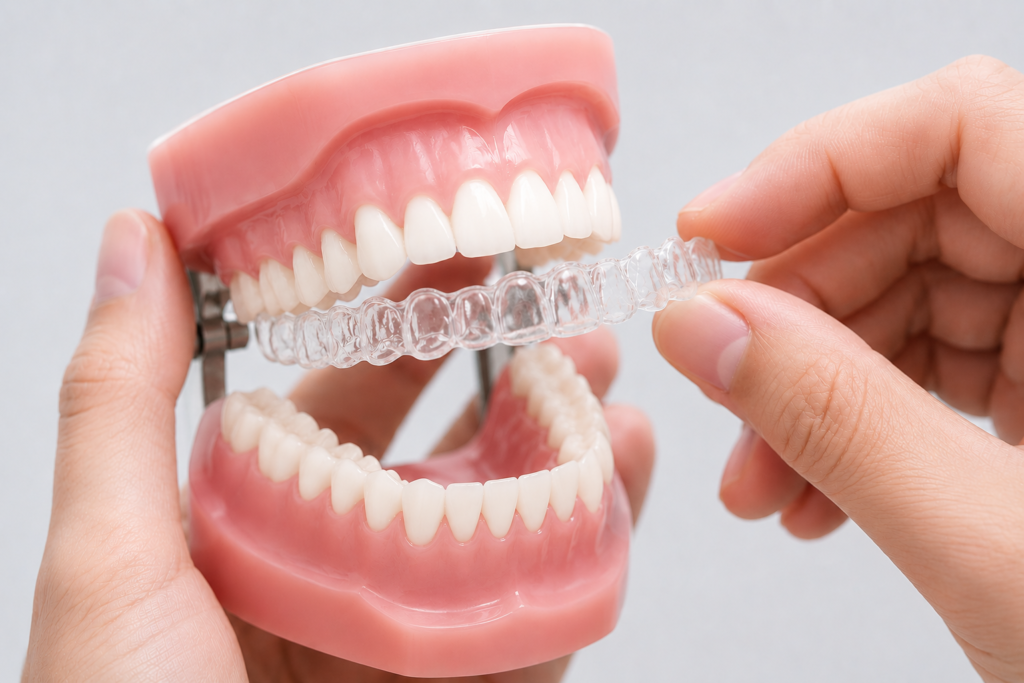
A store-bought nightguard can change your bite, sometimes significantly, if it does not fit well or does not cover all of your teeth. These changes can lead to new discomfort, shifting bite patterns, or jaw and muscle pain.

Many people turn to store-bought nightguards hoping to reduce clenching or protect their teeth. Unfortunately, these over-the-counter guards can sometimes create new problems, including changes in how the bite fits together. This most often occurs when the nightguard does not cover all of the teeth or does not fit the bite correctly, allowing some teeth to rise or shift over time.

Questions People Often Ask About Store-Bought Nightguards

Q: Can a store-bought nightguard change my bite?
A: Yes. If the nightguard does not fit well or does not cover all your teeth, it can gradually shift your bite.

Q: Why do my teeth feel different after using a nightguard?
A: Over-the-counter nightguards may place uneven pressure on the teeth or leave some teeth uncovered, which can cause subtle movement over time.

Q: Will my bite go back to normal if I stop using the nightguard?
A: In many cases it will. Bite changes often improve once you discontinue the poorly fitting appliance and receive the right guidance.

Q: When should I see a TMJ specialist?
A: If your bite no longer feels right, your front teeth no longer meet, or you feel new jaw discomfort after using a nightguard, it is time to see a specialist.

We See This More Often Than Many People Realize

At New York TMJ & Orofacial Pain, we regularly meet people who try to help themselves by buying a nightguard from a pharmacy or online. These nightguards seem harmless and easy to use, but they are not always the right solution.

Jessica was one of those patients.

After a long dental visit left her jaw sore, she bought a store-bought nightguard hoping it would ease tension and protect her teeth. Instead, her bite slowly began to change. Her front teeth no longer met the way they used to, chewing felt different, and her jaw muscles remained tender.

She eventually saw an orthodontist, who recognized that the problem was not orthodontic and referred her to our practice in the New York City metropolitan area.

When Jessica arrived, we found that the store-bought nightguard she had used covered only some of her teeth. Over time, the uncovered teeth had begun to rise out of their proper position, which caused her bite to shift.

Jessica is far from alone.

Why Store-Bought Nightguards Can Shift Your Bite

Nightguards are not all the same, and they do not all protect your teeth in the same way. Here are the main reasons store-bought versions can cause trouble.

  • They often do not fit very well
    If a nightguard does not match your bite, even slight pressure changes can lead to tooth or jaw muscle changes over time.
  • They are typically soft and chewable
    Many people chew on soft nightguards while asleep without realizing it. This increases muscle strain and reinforces clenching habits.
  • They rarely cover all of your teeth
    This is the biggest concern. When back teeth are not covered, they may slowly rise upward. This changes the way the teeth meet and can create a noticeably different bite pattern. Jessica experienced exactly this.

Research has shown that certain types of nightguards, especially those that do not cover all of the teeth, can contribute to unwanted bite changes. (For a detailed review, see this article from the  British Dental Journal.)

What This Looks Like (A Simple Visual Guide)

How Bite Changes Happen Over Time


Bite with a store-bought nightguard in place, showing that the back teeth are not fully covered.
A normal bite where the upper and lower teeth meet evenly.
Bite with a store-bought nightguard in place, showing that the back teeth are not fully covered.
With a store-bought nightguard in place, the back teeth may not be fully covered.
Diagram showing how uncovered back teeth can slowly rise over time when a nightguard does not cover them.
Over time, teeth that are not covered by the nightguard can slowly rise, changing the bite.
Diagram showing how only the back teeth touch and the front teeth no longer meet after long-term use of a store-bought nightguard.
Eventually, only the back teeth may touch, and the front teeth may no longer meet.

How We Helped Jessica Recover

The first and most important step was stopping the store-bought nightguard. Once she discontinued it, we focused on calming irritated muscles and reducing the clenching patterns that had made her symptoms worse.

Over the next several months, her bite began improving. We monitored how her teeth settled and collaborated with her orthodontist once her bite stabilized. When the time is right, a custom-made nightguard that covers all of her teeth will help protect her long-term without altering her bite.

Jessica felt relieved once she understood what had happened and had a clear plan forward.

If Your Bite Has Changed After Using a Nightguard, You Are Not Alone

People from all over the NYC metro area come to us with concerns like these. They may feel confused or frustrated when a nightguard they purchased to protect their teeth ends up causing new symptoms. The reassuring news is that many bite changes improve once the right steps are taken.

When to Seek Care

A professional evaluation is recommended if you notice that your bite suddenly feels different, your front teeth no longer meet, only one side of your teeth touches, your jaw muscles feel tense or tired, the nightguard seems to make symptoms worse, or you are unsure whether the appliance is helping or harming you.

If you are in the New York City metropolitan area, our team can help determine what is happening and guide you toward the safest and most effective treatment.

Why People Choose Us

At New York TMJ & Orofacial Pain, we focus exclusively on TMJ disorders, orofacial pain, bite changes, bruxism, and appliance-related complications. Our practice is led by board-certified specialists in orofacial pain, providing evidence-based care in a calm and supportive environment.

Patients seek us out when symptoms are confusing or when treatments they tried elsewhere, such as store-bought nightguards, have made things worse. We coordinate closely with your general dentist, orthodontist, or other providers to ensure your care is safe, effective, and well-managed.

Looking for an orofacial pain specialist outside the NYC metro area

Use this directory to find a board-certified specialist near you. Simply go to this website and enter your location and country.

Frequently Asked Questions

Q: Can a store-bought nightguard really change my bite?
A: Yes. If it does not fit well or does not cover all of your teeth, it can gradually shift the bite.

Q: Is this permanent?
A: In many cases, no. Bite changes often improve once the appliance is discontinued, although some situations may require orthodontic or restorative support.

Q: What should I do first?
A: Stop using the store-bought nightguard and schedule a professional evaluation to understand what is happening.

Q: Are custom nightguards safer?
A: Yes. Custom appliances are designed to protect the teeth and jaw without altering the way the bite comes together.

Q: If my bite feels off, does that mean something is wrong?
A: Not always, but it is a sign that the situation needs to be evaluated sooner rather than later.

Q: How long does recovery take?
A: Improvements can begin within weeks to months after discontinuing a poorly fitting appliance, especially when the right care plan is in place.


Related Reading

Categories
TMJ

Relief from Burning Mouth Syndrome: The Capsaicin Approach

Have you ever bitten into a spicy dish and immediately felt your mouth light up with heat? Now, picture that same burning sensation lingering in your mouth every day, even without the spices. This frustrating condition is known as Burning Mouth Syndrome (BMS), and it can be a real torment if you’re dealing with it. Typically, it feels like a searing pain on the top side of your tongue, and sometimes, it might seem like it’s emerging out of nowhere.

A Surprising Solution from Spicy Food

Interestingly, a component commonly found in spicy food could offer you some relief. Let’s talk about capsaicin – it’s the substance that gives chili peppers their fiery kick. To give you a perspective, imagine a friend who orders their dish “Thai spicy” and ends up with a tomato-red face, sweating profusely. That reaction is thanks to capsaicin, which activates certain receptors in our bodies that are responsible for heat and pain sensations.

For those experiencing Burning Mouth Syndrome, applying capsaicin directly to the area of discomfort might seem a bit counterintuitive – like trying to douse a flame with gasoline. But here’s the fascinating part: capsaicin can actually dial down the pain over time.

How Can Capsaicin Help You?

Capsaicin works by repeatedly firing up the heat and pain receptors (known as TRPV1 receptors), and over time, these nerves exhaust their supply of Substance P, which is crucial for ferrying pain signals to our brain. So, by stripping down Substance P, your nerves become less adept at communicating pain — meaning you experience less discomfort from BMS.

This mechanism is somewhat akin to developing a tolerance for spicy food. Regularly braving spicy dishes can train your receptors to be less sensitive, making spicy foods more bearable. Turning to topical capsaicin treatment has yielded promising outcomes for individuals with Burning Mouth Syndrome, effectively diminishing symptoms.

Exploring Other Options

Capsaicin is not the only path to relief. Topical and oral medications or therapeutic strategies such as Cognitive Behavioral Therapy for Pain Management can be effective as well. These alternatives can also provide significant relief and enhance the quality of life for those grappling with BMS.

In Summary

Living with Burning Mouth Syndrome can be taxing, but there are manageable solutions out there, with capsaicin being a notably surprising one. If you or a loved one is battling this condition, looking into capsaicin treatment or consulting a specialist in Orofacial Pain could be a game-changer.

Remember, you’re not in this alone, and finding the right treatment could dramatically uplift your daily experience.

I’d genuinely appreciate your thoughts or any experiences you’d be willing to share about this condition.

Categories
Headaches TMJ

Does Teeth Clenching Cause Your Morning Headaches?

Or Is It Something Else….

Is this you?

Every day, you wake up with a pounding headache in your temples. It’s been going on for months. In an attempt to identify what’s causing your headaches, you jump online and come across more than a few web pages that suggest they could be caused by nighttime teeth clenching, also called Night Bruxism.

I’m John Dinan, an Orofacial Pain specialist practicing in the New York City metropolitan area. Orofacial pain is a dental specialty that helps people suffering from unexplained pain in their head, face, or neck.

Does Teeth Clenching Cause Your Morning Headaches?

Identifying the Cause: Teeth Clenching or More?

Morning headaches can indeed be related to nighttime teeth clenching, particularly if your pain is felt in the sides of your head. Here’s why: Your temporalis muscles, which cover the sides of your head up to the edges of your eye sockets, allow your jaw to open and close. When you clench your teeth for hours every night, your temporalis muscles can become very sore, resulting in pain in your temples when you wake up.

Other Contributors to Morning Headaches

Not every morning headache is caused by teeth clenching. There are dozens of conditions that can result in morning headaches. So, it’s essential to rule out other possible causes before scheduling an appointment with an Orofacial Pain specialist.

Does Teeth Clenching Cause Your Morning Headaches?

  • Poor Sleep : Sleep is essential to health, and according to the American Academy of Sleep Medicine, adults should get at least 7 hours of sleep per night. Sadly, most people simply do not allow themselves enough time for sleep, and this lack of sleep over time can lead to health problems such as cardiovascular disease, depression, diabetes, and pain.

    Sleep hygiene best practices include going to sleep at the same time every night, making sure your bedroom is quiet, dark, relaxing, and a comfortable temperature, removing electronic devices from the bedroom such as TVs, computers, and smartphones, avoiding large meals, and drinking caffeine or alcohol before bedtime.

Does Teeth Clenching Cause Your Morning Headaches?

  • Migraine : Migraines are characterized by recurrent, often disabling, headache attacks and affect about 12% of Americans. Many people who get migraines go to bed feeling fine but wake up with a throbbing headache, sensitivity to light and sound, and nausea.If your morning headaches sound like this, you may have a migraine condition. Happily, migraines can be successfully treated by your primary care provider or a neurologist.

Does Teeth Clenching Cause Your Morning Headaches?

  • Alcohol & Caffeine : A typical alcohol hangover is characterized by a wicked headache the next morning. However, caffeine withdrawal symptoms can cause morning headaches, too. Within 24 hours of having your last cup of coffee, your body may start to experience withdrawal symptoms, including headaches upon awakening, as the effects of yesterday morning’s coffee wear off. And, of course, many illicit drugs have withdrawal side effects, including morning headaches.

    If you suspect alcohol, caffeine, or other drugs may be causing your headaches, it’s time to reduce or stop and see if they subside.

Does Teeth Clenching Cause Your Morning Headaches?

  • The ‘Headache Bucket’ Theory : Envision a metaphorical bucket representing your capacity for headaches. Various elements contribute to this ‘headache bucket’ — including poor sleep, migraines, and sleep bruxism — each adding to the overall burden. When your bucket overflows, you experience a headache. It’s important to realize that even if sleep bruxism isn’t the primary issue, it could still play a significant role in amassing the volume that leads to your pain.

Does Teeth Clenching Cause Your Morning Headaches?

Moving Forward: Steps to Alleviate Your Pain :

Let’s confront these causes together. When other potential reasons have been excluded or are being managed, yet the headaches persist upon waking, it’s time to consult an Orofacial Pain specialist. If teeth grinding emerges as a contributory factor, rest assured, there is a suite of effective treatments on hand, ranging from conservative self-care approaches to sophisticated therapeutic interventions.

Does Teeth Clenching Cause Your Morning Headaches?

Taking Action: Don’t Let Headaches Hold Your Mornings Hostage :

The pathway to alleviating your morning headache lies in a proactive approach—explore each cause, seek professional advice, and embrace the treatments that resonate with your needs. Reflect on your sleep habits and substance intake, and consult a specialist for personalized guidance.

Dr. John Dinan, DMD MS is a board-certified Orofacial Pain specialist at New York TMJ & Orofacial Pain.

If you live in the NYC metropolitan area and are suffering from TMJ symptoms, feel free to contact us and make an appointment to see one of our Orofacial Pain specialists.

Categories
Tinnitus

Is Your TMJ Pain Actually A Migraine?


If you’re one of the millions of people who suffer from persistent jaw pain and unexplained headaches, there’s a good chance your dentist has diagnosed your condition as TMD (temporomandibular joint disorder). But when the treatments that work for most people, such as oral appliances, exercises, and relaxation techniques, don’t work for you, your symptoms may stem from an entirely different condition.

I’m Dr. John E. Dinan, one of the board-certified Orofacial Pain specialists at New York TMJ & Orofacial Pain. Orofacial pain specialists like me focus on the needs of patients who have jaw disorders, persistent toothaches, nerve pain disorders, and headaches – what most people call TMJ.

For years, patients have come to our practice having been diagnosed with TMJ pain and disorders only to discover they were facing something entirely different – migraine. Let me tell you about two such patients whom I’ll call “Nora” and “Veronica.”

Nora’s Story

Nora, 36, had been living with pain for over two decades. Every month during her menstrual cycle, she experienced excruciating and throbbing pain in her right temple and jaw. These episodes brought with them heightened sensitivity to light and sound. She told us that the pain was so awful that it actually made her nauseous.

Nora’s agony lasted for 48 to 72 hours before it finally subsided, only to return the next month. She also heard a clicking sound in her right temporomandibular joint (TMJ) when she opened her mouth wide. Nora had been diagnosed with TMJ many years before coming to our office. Numerous types of oral appliances gave her no relief. The only thing that helped was Ibuprofen, but it only reduced her pain by about half.

When we reviewed her dental records and x-rays, we discovered that her jaw and temporomandibular joint were normal.

Veronica’s Story

Veronica, 24, arrived at our office, also having been diagnosed with TMJ. For five years, she had experienced severe throbbing pain two to three times every month in front of her right ear and under her right eye. Like Nora, Veronica’s dental records and x-rays showed no definite jaw issues. Unlike Laura, her pain was not accompanied by jaw clicking.

Veronica’s pain episodes typically lasted between 24 and 48 hours and were accompanied by heightened sensitivity to light and sound and periods of nausea.

How We Arrived At Our Diagnosis

At our practice, the method of diagnosis is focused first on listening carefully to our patients’ stories. Next is a comprehensive medical and dental history assessment and an examination and imaging.

In the end, it was apparent that both patients did not have TMJ; they had migraine. The misdiagnosis had led to ineffective treatments and endless suffering.

Symptoms Of Migraine

Migraine affects about 12% of the population and is characterized by a combination of the following:

  • Moderate-to-severe pain intensity
  • Pain that pulses
  • Gets worse from physical activity
  • Includes nausea and/or vomiting
  • Sensitivity to light and sound
  • Pain periods from four to 72 hours


About a third of migraine sufferers also experience visual, auditory, and sensory changes right before a migraine.

When we compared Nora’s and Veronica’s symptoms to the list above, it confirmed our suspicions: the issue was migraine, not TMJ.

Next, Treatment

Both patients were ecstatic when we explained to them that they experienced migraine, and it is treatable. After years of their lives disrupted by pain, they finally could see a light at the end of the tunnel. We prescribed sumatriptan, a medication known to alleviate migraine-related symptoms such as nausea, vomiting, and light and sound sensitivity. Some patients discover their migraines vanish entirely, and others find their symptoms less intense with sumatriptan.

Great News!

Nora and Veronica both got relief from their pain attacks with sumatriptan (which further confirmed the diagnosis of migraine). They now see their primary care physician for their long-term management and prescriptions.

From a doctor’s point of view, it is a great joy to see patients emerge from the disabling impact of chronic pain. Nora’s and Veronica’s stories highlight the importance of an accurate diagnosis. While we couldn’t change the past, we opened the door for them to have a brighter future.

Conclusion

If you can relate to Nora’s and Veronica’s stories and live in the NYC metropolitan area, feel free to reach out to us. We’re here to listen to you and help you on your journey to getting relief. Click here for our office contact information.

If you’re outside the NYC region, you can locate an Orofacial Pain specialist in your area by going to the American Board of Orofacial Pain directory. Click here.