Manhattan

212-265-0110

White Plains

914-227-2305

Springfield, NJ

973-315-7830

Hauppauge

631-265-3136
Categories
Children & TMJ Orofacial Pain

Jaw Pain in Your Teenager: What Parents Need to Know About Evaluation and Treatment


If your teenager has been dealing with jaw pain, headaches, or clicking in the jaw, you have probably already been to the dentist. You may have seen a pediatrician or an ENT as well. And you may have come away with a nightguard, a referral, or simply reassurance that things would improve on their own.

When that hasn’t happened, the question becomes: what should evaluation and treatment actually look like?

In our practice, which serves families from Manhattan, Westchester County, Long Island, and northern New Jersey, these are among the most common questions we hear from parents navigating this process for the first time.

Part 1 of this guide covers the reasons TMJ problems so often begin during the teen years. This post focuses on what comes next: what a proper evaluation involves, how TMJ disorders are treated in adolescents, and what you can expect from specialized care.

Read Part 1 to learn the main reasons for TMJ in teens.

What Is Different About a TMJ Evaluation Compared to a Regular Dental Visit?

A TMJ evaluation conducted by an orofacial pain specialist looks at far more than teeth and bite alignment. It is a comprehensive assessment of everything that may be contributing to your child’s symptoms.

That means the conversation comes first. Before any physical examination, a thorough specialist will want to understand your child’s full history: when the symptoms began, how they have changed over time, what makes them better or worse, what treatments have already been tried, and what is going on in their life right now. Sleep patterns, stress levels, school demands, athletic schedules, medications, and orthodontic history are all relevant.

This is not incidental. In TMJ care, the context of your child’s life is often as diagnostically important as the clinical findings. Two teenagers can have identical joint findings on imaging and have completely different treatment needs based on what is driving their symptoms. That context is what we are looking for.

What Does the Physical Examination Involve?

A thorough TMJ evaluation goes well beyond a standard dental exam. The specialist examines jaw muscle tenderness, range of motion, joint mechanics, and disc position, alongside a full review of sleep, stress, medications, and orthodontic history. Many families tell us it is the first time anyone has looked at the complete picture.

Once the history is established, the specialist will conduct a structured physical exam. This typically includes assessment of how wide the mouth opens, whether the jaw deviates to one side during opening, palpation of the jaw muscles and surrounding structures to identify areas of tenderness, and evaluation of the joint itself for clicking, popping, or restricted movement.

The muscles of the face, jaw, neck, and temples are examined carefully, since many TMJ symptoms originate in the muscles rather than the joint itself. A teenager who has been clenching heavily due to stress or medication side effects may have significant muscle tenderness that explains much of their pain. Finding that is often a turning point for families who have been searching for answers for a long time.

Imaging may also be part of the evaluation. Panoramic X-rays provide a broad overview of the jaw structures. In cases where more detail is needed, cone beam CT or MRI may be recommended to assess the joint anatomy and disc position more precisely.

If this feels more thorough than anything your child has experienced at a routine dental visit, that is by design. Most parents tell us it is the first time anyone has looked at the full picture.

Why Does the Specialist Ask So Many Questions About Life Outside the Jaw?

This is something parents often notice and occasionally find puzzling. The answer is that TMJ disorders in teenagers are rarely caused by a single structural problem. They develop when multiple contributing factors converge.

A teenager who is under significant academic pressure, sleeping poorly, taking an SSRI for anxiety, and wearing clear aligners is dealing with four separate inputs that all increase jaw muscle activity or joint stress. Treating only the joint, without recognizing those inputs, is likely to produce limited or temporary results.

The orofacial pain approach asks: what is going on in this child’s life that is contributing to this? That question shapes the entire treatment plan.

For adolescents in the New York City metropolitan area, where academic demands are intense and schedules leave little room for recovery, these contributing factors are especially common. Understanding which ones are active in your child’s life is what makes treatment effective rather than generic.

How Is TMJ Treated in Teenagers?

Most parents are surprised to find that treatment is less complicated than they expected, and that the most effective first steps are often the least invasive.

Behavioral guidance and habit modification are typically the foundation of treatment. This includes instruction in jaw relaxation techniques, guidance on reducing parafunctional habits like clenching and tooth contact during the day, and education about sleep positioning and screen use before bed. These changes are evidence-based and can produce significant symptom improvement on their own.

Physical therapy is frequently recommended, particularly when muscle tightness or restricted jaw opening is a significant part of the picture. A physical therapist trained in orofacial conditions can work on jaw mobility, muscle release, and postural factors that contribute to jaw loading.

Oral appliance therapy involves a custom-fitted device worn over the teeth, most commonly during sleep, that reduces muscle activity and protects the joint from the forces of clenching and grinding. For teenagers in active orthodontic treatment, the timing and design of any appliance needs to be coordinated carefully with the orthodontist.

Medication management is used when appropriate. This may include short-term anti-inflammatory medication, muscle relaxants, or other targeted therapies depending on what is driving the symptoms. In teenagers on SSRIs or stimulants whose jaw symptoms are clearly medication-related, communication with the prescribing physician about possible adjustments is part of the plan.

Collaborative care is often necessary. TMJ disorders in teenagers frequently intersect with migraine, sleep problems, anxiety, and orthodontic treatment. An orofacial pain specialist who works in coordination with neurologists, sleep specialists, mental health providers, and orthodontists produces better outcomes than any single provider working in isolation.

More advanced interventions, including injections such as trigger point therapy or botulinum toxin, are available when conservative approaches have not produced sufficient relief. These are not the starting point, but they are part of the toolkit when needed.

How Long Does TMJ Treatment Last for a Teenager?

There is no single answer, because treatment length depends on what is driving the symptoms and how many contributing factors are present.

For teenagers with primarily muscular symptoms and identifiable triggers such as stress, poor sleep, or medication side effects, meaningful improvement often occurs within weeks of beginning behavioral changes and conservative therapy.

For teenagers with disc displacement, more complex joint involvement, or multiple overlapping conditions such as TMJ and migraine together, treatment is longer and requires more coordination. Progress is typically gradual and non-linear. Flare-ups can occur and do not necessarily mean treatment is failing. That is worth knowing going in, so that a difficult week does not feel like the plan is not working.

In our practice, we regularly see teenagers who have been dealing with jaw pain for months or even years before finding their way to a specialist. The earlier your child is evaluated, the better the outcome tends to be. Symptoms that are caught early are significantly easier to address than those that have had time to become chronic.

What Are ICR and JIA, and When Should They Be on your Radar?

Most TMJ problems in teenagers involve the muscles or the disc inside the joint, both of which respond well to conservative care. However, two less common conditions are worth knowing about if you have noticed changes beyond pain, particularly shifts in how your child’s bite fits together or changes in their facial profile.

Idiopathic Condylar Resorption (ICR) is a condition in which the rounded part of the jaw joint gradually breaks down. It most commonly affects females between the ages of 15 and 35, and hormonal influences are believed to play a significant role. Changes in bite and jaw appearance are often among the first visible signs, sometimes before significant pain develops.

Juvenile Idiopathic Arthritis (JIA) is a systemic autoimmune disease that frequently involves the jaw joints, sometimes producing similar patterns of progressive change.

If you have noticed any of these changes in your child, it is worth mentioning them at their evaluation. Catching either condition early makes a meaningful difference in how it is managed.

Is Your Child Dealing With Jaw Problems in the New York City Metropolitan Area?

If you are in Manhattan, Westchester County, Long Island, or northern New Jersey and your child has been dealing with jaw pain, TMJ symptoms, or related headaches, you deserve answers, not just temporary relief.

At New York TMJ & Orofacial Pain, we specialize exclusively in diagnosing and treating TMJ disorders and orofacial pain. We take time to identify the true cause of your child’s symptoms and build a treatment plan that directly addresses it.

We have 4 locations: Midtown Manhattan, White Plains, Hauppauge, and Springfield, NJ.

We regularly see patients from Nassau County, Suffolk County, and across the five boroughs, in addition to our immediate practice communities.

Contact us today to schedule a comprehensive evaluation. →


About the Author

Dr. John Dinan is a board-certified Orofacial Pain specialist dedicated to the treatment of TMJ/TMD disorders and related conditions. He practices at New York TMJ & Orofacial Pain’s Manhattan and Springfield, NJ locations.

Frequently Asked Questions

What does a TMJ evaluation for a teenager involve?
A thorough evaluation looks beyond the jaw joint. It covers sleep quality, stress levels, current medications, orthodontic history, and headache patterns, alongside a physical exam of the jaw muscles, joint mechanics, and range of motion. Imaging may also be part of the assessment. The goal is to understand the full picture before recommending treatment, not to apply a standard protocol.

How is TMJ treated in teenagers?
Treatment for most teenagers begins with conservative, non-invasive approaches: behavioral guidance, jaw relaxation techniques, physical therapy, oral appliance therapy when appropriate, and medication management when indicated. More advanced interventions are available but are not the starting point. The approach is individualized based on what is driving your child’s symptoms.

How long does TMJ treatment take in a teenager?
It depends on what is driving the symptoms. Teenagers with primarily muscular symptoms and identifiable triggers often see meaningful improvement within weeks. More complex cases involving disc displacement, migraine overlap, or multiple contributing factors take longer. Early intervention consistently produces better outcomes than waiting.

What is idiopathic condylar resorption, and how do I know if my child has it?
ICR is a condition in which the rounded part of the jaw joint gradually breaks down. It most commonly affects females between ages 15 and 35. The most noticeable signs are often changes in bite alignment or facial profile rather than pain. If your child’s bite has shifted or their chin appears to be receding, an evaluation with an orofacial pain specialist is warranted.

Do we need a referral to see a TMJ specialist in New York?
A referral is not required to schedule an evaluation at New York TMJ & Orofacial Pain. Many patients come directly after researching their symptoms. That said, referrals from dentists, neurologists, ENTs, and pediatricians are common and welcome.

We are located in New Jersey. Can we still see a TMJ specialist at NYTMJ?
Yes. New York TMJ & Orofacial Pain has a location in Springfield, NJ, in addition to offices in Midtown Manhattan, White Plains, and Hauppauge. Patients from across northern and central New Jersey, Westchester County, Nassau County, Suffolk County, and the five boroughs regularly seek care at our practice.

We don’t live in the New York City metropolitan region. How can we find a TMJ specialist in our area?
The American Board of Orofacial Pain maintains a searchable directory of board-certified TMJ and orofacial pain specialists across the country. You can search for a specialist near you here. Board certification ensures the provider has met rigorous standards in the diagnosis and treatment of TMJ disorders and related conditions.
Categories
Children & TMJ Facial Pain Orofacial Pain TMJ

Jaw Pain in Your Teenager: Why Is It Happening?


Your child started mentioning jaw pain a few months ago. Maybe they said their jaw clicks when they eat. Maybe they’ve been waking up with headaches, or complaining of ear pain their pediatrician can’t explain.

You brought it up at their next dental appointment. The dentist checked their teeth, said everything looked fine, and suggested a nightguard.

You tried the nightguard. The complaints kept coming.

If this sounds familiar, here’s something that may help: jaw pain and TMJ symptoms are well documented in adolescents and young adults. When they show up during this period of life, there are usually very specific, identifiable reasons why. And the right specialist can find them.

In the New York City metropolitan area, where academic pressure runs high and schedules are often relentless, we see this pattern regularly in our busy orofacial pain practice. Teens and young adults from Manhattan, Westchester County, Long Island, and northern New Jersey arrive having already been to their dentist, their pediatrician, and sometimes an ENT or neurologist. They are not getting answers. In many cases, the missing piece is a specialist trained specifically in orofacial pain.

What Is TMJ?

TMJ, or temporomandibular disorder (TMD), is a condition involving the jaw joint, the muscles that control jaw movement, and the surrounding tissues. It commonly produces jaw pain, clicking, headaches, ear fullness, and facial muscle tension. In adolescents, it is frequently triggered by a combination of hormonal changes, stress, sleep disruption, orthodontic treatment, and certain medications.

In teens and young adults, TMD most often shows up as some combination of the following:

  • Jaw pain or soreness, especially in the morning or after eating
  • Clicking, popping, or grinding sounds in the jaw
  • Headaches, often starting at the temples or behind the eyes
  • Ear fullness, ringing, or pain without an ear infection
  • Difficulty opening the mouth fully or comfortably
  • Facial muscle tension or fatigue

These symptoms are real, and they should not be something your child simply has to live with.

Why Does TMD So Often Start During the Teen Years?

Adolescence creates a convergence of factors that can push a vulnerable jaw system toward symptoms. Hormones shift significantly. Sleep patterns change. Stress levels rise. Orthodontic treatment is often in progress. And for many teens today, new medications enter the picture for the first time.

None of these factors alone necessarily causes TMD. But when several of them are present at once, they can tip a previously quiet jaw problem into an active, painful one.

Understanding which factors are driving your child’s symptoms is the starting point for effective care.

Why Are Girls More Likely to Develop TMD During Puberty?

TMD affects women significantly more often than men, and the difference is largely believed to be hormonal.

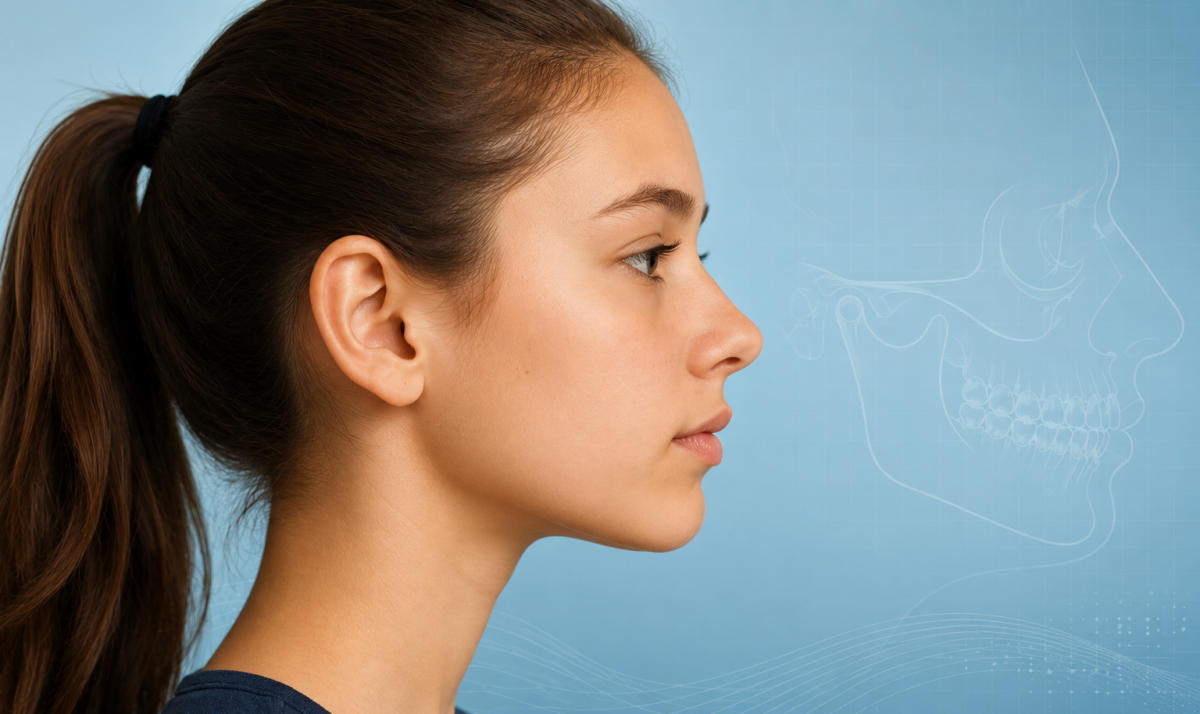
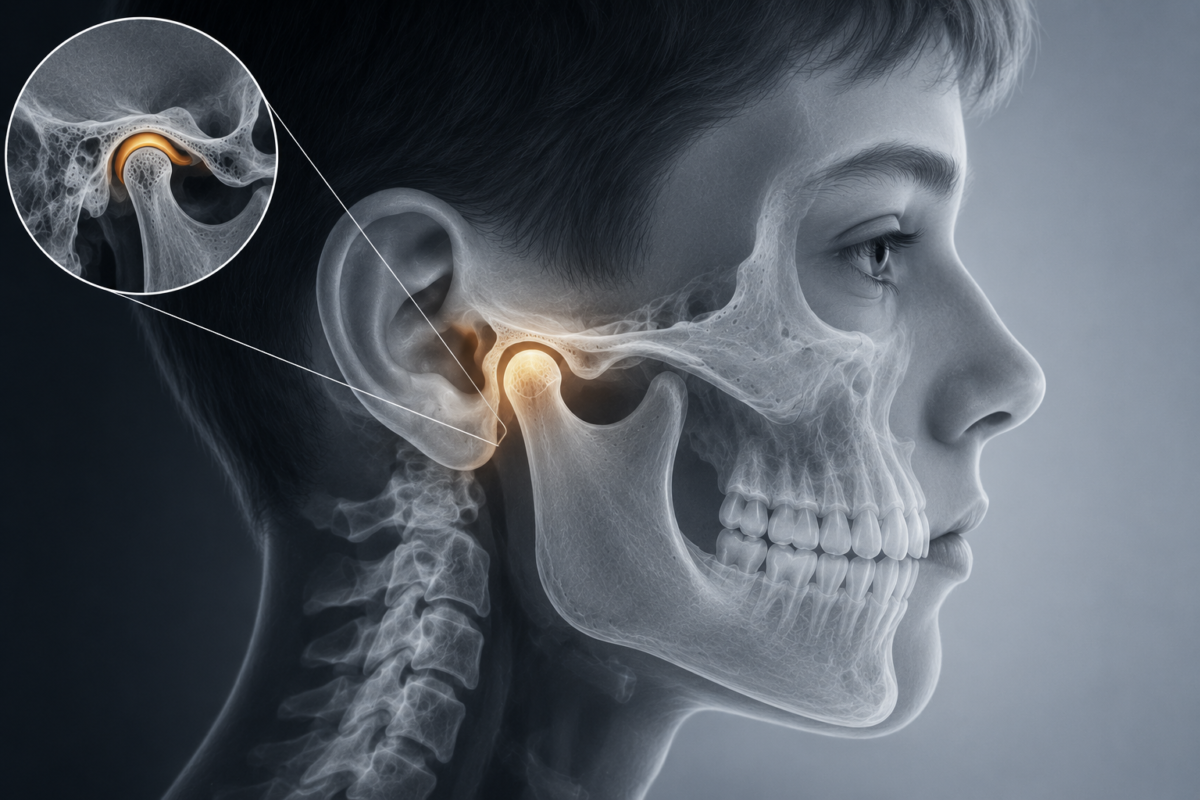
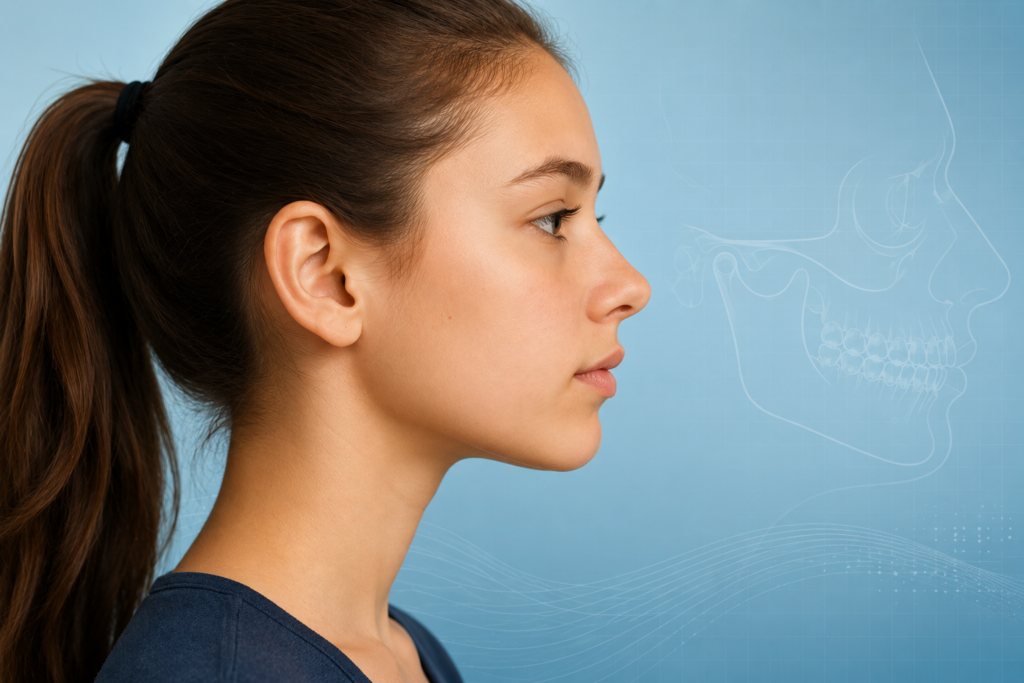
Side profile of a teenage girl with a jaw anatomy illustration overlay highlighting the temporomandibular joint and bite structure

The jaw joint contains receptors for estrogen, the primary female sex hormone. As estrogen levels fluctuate, the ligaments supporting the joint can become more lax, making the joint less stable and more prone to problems.

Puberty triggers major hormonal shifts, and it is not coincidental that TMJ clicking and early jaw symptoms often first appear during this window. If your daughter’s jaw symptoms started in middle school or early high school, this hormonal connection may be part of the explanation.

Can a Teenager Have Both TMD and Migraine at the Same Time?

Yes, and it is more common than most parents expect. Many parents bring their child to our practice complaining of “headaches and jaw pain,” and assume the jaw is causing both.

Sometimes that is true. But a pattern we see frequently is that the child is actually dealing with two distinct but overlapping conditions: TMD and migraine. Both involve the trigeminal nerve, which governs sensation in the face and jaw. When one condition flares, it can amplify the other.

Migraine commonly begins during the teen years and early adulthood, overlapping almost exactly with the typical window for early TMD onset.

If your child has been treated for headaches and jaw pain without meaningful improvement, it is worth making sure both conditions have been formally evaluated. Treating only one when both are present often leaves a significant part of the problem unaddressed.

Can Braces or Aligners Make TMD Worse?

Orthodontic treatment does not cause TMD. That is well established in the research, and it is important to say plainly.

However, there are meaningful nuances that parents should understand.

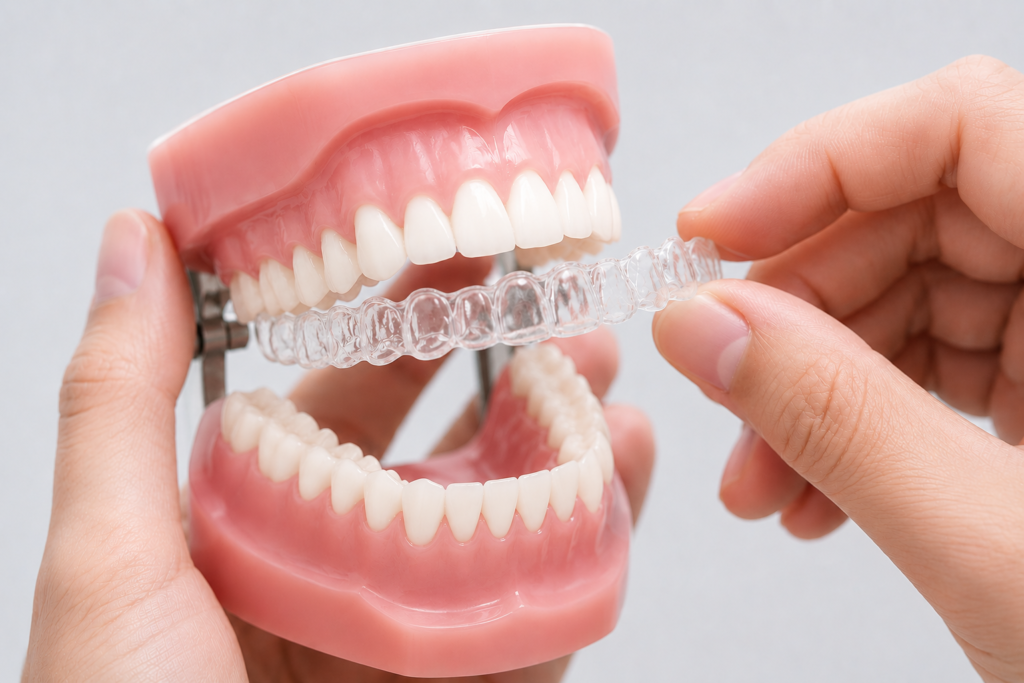
Orthodontic forces change the feedback that teeth send to the jaw muscles. In some patients, the continuous presence of clear aligners between the teeth appears to increase tooth contact awareness and clenching activity. For teens who are already predisposed to jaw problems, orthodontic treatment can sometimes be what converts a subclinical condition into an active, symptomatic one.

Clear aligner therapy in an adolescent patient with temporomandibular disorder considerations
Clear aligner therapy may contribute to increased tooth contact awareness or symptom aggravation in susceptible TMD patients.

This does not mean your child should avoid or stop orthodontic treatment. It means two things. First, children starting orthodontic treatment should be evaluated by an orofacial pain specialist for existing TMD symptoms beforehand. Second, jaw pain that develops or worsens during orthodontic treatment should be evaluated by an orofacial pain specialist, not simply managed with over-the-counter pain relief or reassurance that it will pass.

In some cases, active orthodontic treatment limits the TMD therapies available, and those trade-offs need to be considered by a specialist.

Can ADHD Medication or Antidepressants Cause Jaw Clenching?

Yes. This is a connection many families are not aware of, and it can be directly relevant to your child’s symptoms.

SSRIs, a common class of antidepressants that includes sertraline, escitalopram, and fluoxetine, are associated with a significant increase in bruxism, meaning clenching and grinding, both during sleep and while awake. This side effect can begin within weeks of starting the medication.

Stimulant medications prescribed for ADHD, including both amphetamine-based and methylphenidate-based drugs, are also strongly associated with increased daytime jaw clenching.

If your child began experiencing jaw pain or muscle tension shortly after starting a new medication, that connection is worth raising with their prescribing physician and with an orofacial pain specialist.

In some situations, alternative medications may be available. In others, the better path is managing the jaw symptoms directly while continuing the medication that is helping with the underlying condition.

How Does Poor Sleep Make Teen TMD Symptoms Worse?

Poor sleep is one of the strongest predictors of chronic pain, including TMD. When your child is not sleeping adequately, their muscles recover more slowly, their pain sensitivity increases, and their body is less equipped to manage the jaw problems that are already present.

During adolescence, the body’s internal clock naturally shifts toward a later sleep phase, making it biologically harder for teens to fall asleep early. The American Academy of Sleep Medicine recommends that teenagers get 8 to 10 hours of sleep per night. Given typical school start times, most adolescents fall well short of that.

Screen use before bed worsens the problem by suppressing melatonin and increasing physiologic arousal, pushing sleep onset even later.

If your child has jaw pain and is also consistently under-sleeping, the sleep deficit is not incidental. It is likely contributing to their symptoms and interfering with recovery.

Does Stress Really Cause Physical Jaw Pain?

It can be tempting to hear “stress is contributing to this” and interpret it as a suggestion that the pain is not real. That is not what it means.

Psychosocial stress, whether from academic pressure, social demands, athletic expectations, or the chronic low-grade stress that comes with constant social media exposure, has real physiologic effects. It activates jaw and facial muscles. It increases clenching. It raises systemic inflammation. And it disrupts sleep, which compounds everything else.

For many adolescents in Westchester County, Manhattan, and the surrounding suburbs, this kind of sustained pressure is a daily reality, and it shows up in the jaw.

Helping your child build skills for physiologic self-regulation, including jaw relaxation techniques, diaphragmatic breathing, and consistent sleep habits, is a legitimate and evidence-based part of managing TMD. Mental health support, when appropriate, is also part of the picture.

Read Part 2 to learn about treatment for TMD in teens.

Is Your Child Experiencing TMJ or Jaw Pain Symptoms in the New York City Metropolitan Area?

If you are in Manhattan, Westchester County, Long Island, or northern New Jersey and your child has been dealing with jaw pain, TMJ symptoms, or related headaches, you deserve answers, not just temporary relief.

At New York TMJ & Orofacial Pain, we specialize exclusively in diagnosing and treating TMJ disorders and orofacial pain. We take time to identify the true cause of your child’s symptoms and build a treatment plan that directly addresses it.

We have 4 locations: Midtown Manhattan, White Plains, Hauppauge, and Springfield, NJ.

Contact us today to schedule a comprehensive evaluation.


About Our Practice →
Treatments We Provide →
What to Expect at Your First Visit →

About the Author

Dr. John Dinan is a board-certified Orofacial Pain specialist dedicated to the treatment of TMJ/TMD disorders and related conditions. He practices at New York TMJ & Orofacial Pain’s Manhattan and Springfield, NJ locations.
Frequently Asked Questions about Jaw Pain in Teenagers

Can TMD go away on its own in teenagers?
In some mild cases, symptoms improve with reduced stress, better sleep, and behavioral changes. However, TMD that persists beyond a few weeks, or that is associated with jaw clicking, bite changes, or recurring headaches, warrants a formal evaluation. Waiting without a diagnosis risks missing a condition that responds much better to early intervention.

What kind of doctor treats TMD in children and teenagers?
An orofacial pain specialist is the appropriate provider for diagnosing and treating TMD. This is a board-certified dental specialty focused specifically on jaw disorders, facial pain, and related conditions. General dentists and orthodontists are not typically trained in comprehensive TMD diagnosis.

Can braces cause TMJ problems?
The research is clear that orthodontic treatment does not cause TMD. However, in teenagers who are already predisposed, the forces and appliances involved in orthodontic treatment can sometimes activate symptoms that were previously quiet. Any jaw pain arising during orthodontic treatment should be evaluated, not assumed to be normal soreness.

Is jaw clicking in teenagers serious?
Jaw clicking on its own, without pain or limited opening, is common and often benign. However, clicking that is accompanied by pain, occurs on one side only, or is associated with changes in how the bite fits together is worth evaluating. Clicking can be an early sign of disc displacement inside the jaw joint.

Why does my teenager’s jaw hurt more in the morning?
Morning jaw pain is frequently a sign of nighttime clenching or bruxism during sleep. The jaw muscles work throughout the night and wake up fatigued and sore, much like any overworked muscle. This pattern is worth mentioning to an orofacial pain specialist, as it is highly treatable.

Can anxiety or depression contribute to TMD symptoms in teens?
Yes. Anxiety and depression increase muscle tension, disrupt sleep, and in many cases involve medications (such as SSRIs) that independently raise the risk of clenching. Addressing mental health as part of a comprehensive TMD plan is not a suggestion that the pain is psychological. It is simply treating the whole picture.

Further Reading

TMJ Problems During Invisalign Treatment

The Connection Between Pain And Sleep

3 Tips To Reduce Jaw Problems From Aligners

Categories
Bruxism Children & TMJ TMJ

Your Child Is Grinding His Teeth – What Should You Do?

Is this familiar? 

You think your child is fast asleep, then suddenly, a screeching sound is coming out of his/her bedroom. What could be causing it? The most likely explanation is your child is grinding his teeth – an activity clinically known as sleep bruxism.

Sleep bruxism, which is often associated with jaw pain (TMJ), is the most common problem seen in my practice for the past 30 years. As a result, I know first-hand that a little information goes a long way to help parents understand what is happening and what can be done about it.

When A Child Grinds His Teeth, What’s Happening?

The first thing to understand is that a certain level of jaw movement during sleep is normal for most people. It’s called Rhythmic Masticatory Muscle Activity, or RMMA. Some people who grind their teeth experience higher levels of RMMA, which can result in tooth damage and jaw pain problems.

Much research has been done in the past few years on teeth grinding and sleep bruxism. One significant finding is that in many people who grind during sleep, their brain is becoming aroused and causing sleep to be fragmented. The result is the body’s fight-or-flight system becomes activated. In tandem, jaw motion (RMMA) increases and teeth grinding is often the result. 

Teeth Grinding in Children Under 10-Years Old

Newborn baby sleep with teddy bear

If your child is under ten-years-old and grinding his teeth, it’s likely during the time when his baby teeth are being lost. If you hear the telltale screeching sound that indicates your child is grinding his teeth, look for evidence of tooth wear. If you see it, a visit to your child’s dentist is highly recommended. Also, ask your child if he is experiencing jaw symptoms such as joint popping, cracking, locking, or pain. If the answer is yes, it’s time to see the dentist.

Teeth Grinding In Adolescents & Teens

child grinding his teeth, adolescent grinding his teeth, sleep bruxism, TMJ, dr tanenbaum

We have many clues about why adolescents and teens grind their teeth during sleep. Current theories include:

1. Large tonsils, a big tongue that clogs the airway, a small lower jaw, blocked nasal passages, or a long floppy soft palate can cause breathing problems during sleep, and, in turn, causes a drop in blood oxygen. The brain awakens and activates the body’s fight-or-flight system increasing the likelihood of sleep bruxism.  

2. Adrenaline – During times of stress and anxiety, the level of adrenaline (catecholamines) in the bloodstream increases. For adolescents and teens who experience long-term anxiety, high adrenaline levels have been shown to induce sleep bruxism.

3. Chronic Pain – Migraines, gastrointestinal disorders, and back and neck pain set up ideal conditions for sleep disturbances and can lead to teeth grinding.

4. ADD/ADHD Medications – Medications such as Adderall, Concerta, and Strattera stimulate the fight or flight part of a child’s nervous system and result in sleep disturbances.

5. Caffeine – Many adolescents and teens drink coffee and high caffeine beverages during the day and into the evening. Caffeine has been proven to be a contributing factor to disturbed sleep patterns.

6. Nicotine – Nicotine is a stimulant. It’s widely known to contribute to sleep problems. The use of e-cigarettes, which are very high in nicotine, is particularly prevalent among adolescents and teens and can be a direct cause of sleep problems. 

7. Not Enough Sleep – With the obligations of school and extracurricular activities, many young people are under a tremendous amount of pressure. They put in long hours and don’t get enough sleep. Others simply stay up late playing video games or communicating on social networks. Sleep quality is ultimately impacted, leading to restless nights of tossing and turning and the emergence of sleep bruxism.

What You Should Do:

By now, you can understand if your child is grinding his teeth, there are multiple risk factors. The good news is that teeth grinding is treatable and can be managed. There is a wide array of options at our disposal to help manage the problems caused by sleep bruxism for children who grind their teeth including oral appliances, jaw exercises, meditation, acupuncture, medication, and even BOTOX®.

But here’s the key – managing your child’s sleep bruxism will not cure it. It will, however, help him get through some tough periods. Meanwhile, the medical community continues to pursue a better understanding of the underlying causes of nighttime brain arousals.

If your child is grinding his teeth and you’re concerned, his dentist or orthodontist should be able to help. If the situation is dire, you can find someone in your area who focuses on Sleep Bruxism, such as a member of the American Academy of Orofacial PainAAOP. Choose a professional designated Diplomate

Categories
Children & TMJ Jaw Problems TMJ

9 Causes Of TMJ Problems In Teens & College Students

A Guide For Parents

I’m a dentist who focuses exclusively on treating people who suffer from jaw, tooth and head pain due to what’s commonly known as TMJ. Some of my patients tell me that they grind and clench their teeth all night (called sleep bruxism); some tell me they clench all day (called awake bruxism). Millions of people, in fact, suffer from bruxism and as a result, many experience jaw pain, headaches, toothaches, and ear pain. A surprising trend was uncovered during a recent review of my patient roster. We have seen a significant increase in young patients (between the ages of 16 and 25) who arrive at my office with complaints of a headache, intense jaw pain, and or daily facial pain. Why are there so many cases of TMJ problems in teens and college students and why do so many young people experience jaw and facial pain problems? What puts their jaw muscles and TM joints so at risk? Here are the nine most common risk factors:

9 Causes Of TMJ Problems In Teens & College Students

  • Screen-Related Activities: Countless hours with the head down while studying, playing video games, surfing the web, using social media, texting, etc. Neck tension is the result and is a risk factor that can prompt jaw problems.
  • ADD/ADHD Medications: These medications are stimulants, and although they’re usually taken early in the day, the effects often linger well into the evening. Stimulants, in general, tighten muscles and the jaw can be impacted.
  • Caffeine: Overconsumption and/or frequent consumption of coffee, Red Bull, or other high caffeine beverages keep the heart rate up and adrenaline pumping.  Muscles are therefore at risk to maintain high levels of tension.
  • Nicotine: Another stimulant now consumed in high milligram doses in nicotine e-cigarettes which are popular mainly with college students, and young college grads. One vape cartridge apparently holds as much nicotine as three packs of cigarettes. Nicotine is a stimulant and can increase muscle pain.
  • Breathing Problems: Persistent allergies, sinus problems, and asthma often disrupt sleep and are associated with bruxism.
  • Airway Problems: Airflow can be blocked during sleep due to large tonsils, weight gain, or oral/jaw anatomy. Fragmented sleep has been associated with sleep bruxism.
  • Pain: Chronic pain is a significant source of sleep disruption. Neck and back pain and gastrointestinal pain can often fragment sleep, predisposing to more sleep bruxism activity.
  • Daytime Habits: Daytime habits such as nail and cuticle biting, pen chewing, excessive gum chewing, lip and cheek biting, and teeth grinding and clenching. All these behaviors can fatigue jaw muscles.
  • Anxiety & Psychological Disorders: Young patients often struggle to cope with life’s challenges and experience ongoing anxiety, which can lead to the onset of jaw tension and pain.

What’s A Parent To Do?

If your child complains about facial or jaw pain and you can say “Yes!” to at least two of the common risk factors listed above, it’s important to do something about it before it gets worse.

If you live in the New York metropolitan area, I invite you to make an appointment for a consultation at my office. We are thorough, compassionate and have many tools at our disposal to help your child.

If you are located outside the New York area, you can find a practitioner in near you on the website of The American Academy of Orofacial Pain. Choose a doctor who is listed as Diplomate.

I welcome your questions and comments.

Pain issues and sleep challenges do not have to be lifetime afflictions. You need someone who listens and possesses the knowledge and compassion to get your pain and sleep problems under control.

I am that someone – and you’re in the right place.
Dr. Donald Tanenbaum, DDS MPH

SCHEDULE A CONSULTATION


Categories
Bruxism Children & TMJ Jaw Problems TMJ

Teeth Grinding in Children, Adolescents, and Teens

Teeth grinding is the first thing that parents think of when they discover signs of wear on their children’s teeth. And while teeth grinding in children, adolescents, and teens is common (which I’ll explain later in this article), it is not always the reason that teeth become worn. In many cases, frequent consumption of highly acidic beverages is what causes tooth wear in young people.

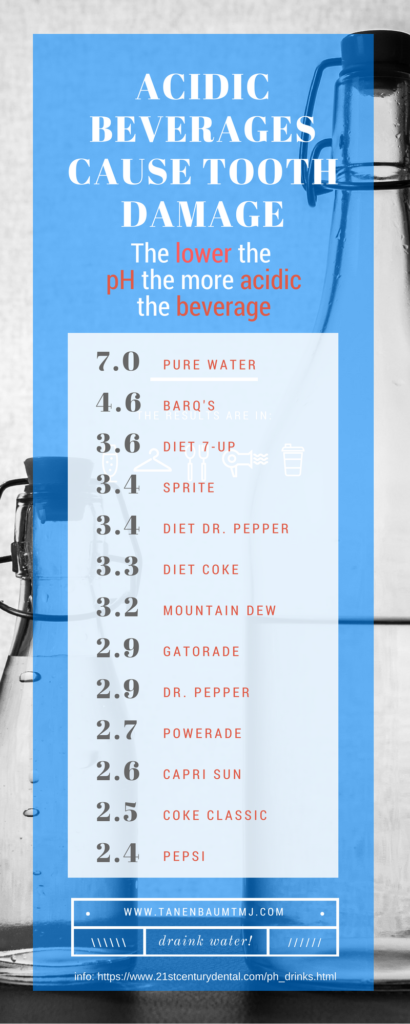
To understand why acidic beverages cause tooth destruction, it’s important to know what pH means.pH is the measure of the acidity and alkalinity of a liquid. The more acidic a liquid, the more damaging it is to your teeth.

Acidic beverages such as soda pop break can down tooth enamel, which is the outer protective coating of your teeth. When tooth enamel breaks down, dentin, the underlying tooth material, is exposed. Because dentin wears down six times faster than enamel, daily exposure to acidic beverages can cause enormous damage to teeth.

Most of the popular beverages in the U.S. are highly acidic, as you can see from the chart below. Sadly, these are also the beverages most preferred by young people. To make matters worse, it’s common for them to vigorously swish beverages from side to side in their mouths before swallowing, making the potential for tooth destruction even more probable.


Teeth Grinding in Children, Adolescents & Teens Donald Tanenbaum


When parents who are concerned about their children’s worn teeth come to my office, the first thing I look for is signs of highly developed and bulky jaw muscles. That is the hallmark of teeth grinding and clenching. If I don’t see those signs, then frequent acid exposure is most likely to be the cause.

Teeth Grinding in Children, Adolescents, and Teens

Teeth grinding in children, adolescents, and teens causes a different type of destruction. Grinding and clenching produces frictional wear as opposed to the erosion of tooth enamel caused by acid.

Grinding and clenching behavior usually occurs during sleep and, because of that, is called sleep bruxism. Sleep bruxism affects approximately 5%-10% of young people, and the number is growing.  

The underlying reasons for teeth grinding in children, adolescents, and teens remains unclear, but we believe it is likely to be related to fragmented sleep accompanied by frequent brain arousals. The cause can include (but is not limited to) insomnia, generalized states of daily anxiety, medications such as those used to treat AHD/ADHD, and obstructed breathing due to large tonsils, and/or small lower jaw profiles.

If you’ve noticed your children’s teeth are showing signs of wear, such as chips (or if they’re beginning to look smaller), it’s important to see your dentist as soon as possible. If acidic beverages are the cause of the problems, until that risk factor is addressed, the potential for excessive tooth destruction will go unchecked – and likely lead to extensive dental in the future.

Remember, the best beverage is water!