When the issue is joint instability, not tightness
If your jaw opens very wide, clicks frequently, and feels loose or fatigued, TMJ hypermobility may be the underlying cause. This type of TMJ disorder is driven by joint instability, not restriction, and requires a specialized approach to treatment.
When Your Symptoms Do Not Fit the Usual Pattern
Most people assume TMJ problems come from a jaw that is tight or stuck.
But some patients experience the opposite.
Your jaw may open very wide. You may hear clicking or feel shifting in the joint. Instead of restriction, it can feel loose or unreliable. The muscles around it often feel constantly tired or sore, even when you are not doing much.
If this sounds familiar, TMJ hypermobility may be part of the picture. The issue is not too little movement. It is too much. In our practice in the New York City metropolitan area, we see this pattern more often than many patients expect.
The Role of TMJ Hypermobility – Why the Jaw Becomes Painful
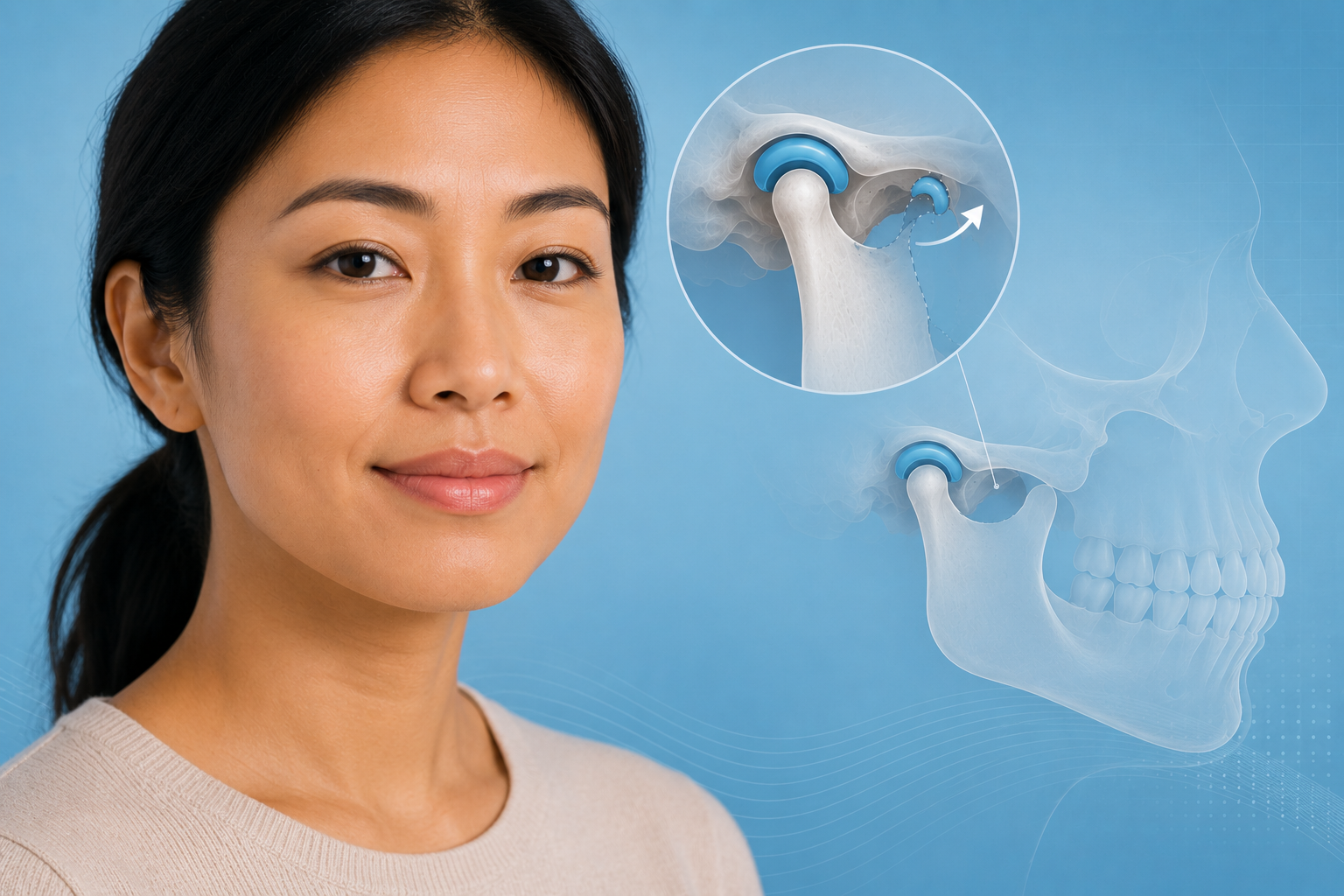
Hypermobility means your joints move beyond the normal range.
For some people, that simply means they are flexible. For others, it reflects a connective tissue condition such as Ehlers-Danlos Syndrome.
These conditions affect collagen, the material that gives structure and support to ligaments and joints. When collagen is more elastic than it should be, the joint is not held as firmly. It moves more than it should, and the body has to compensate.
In TMJ hypermobility, that compensation falls on the muscles.
Why the Jaw Becomes Painful
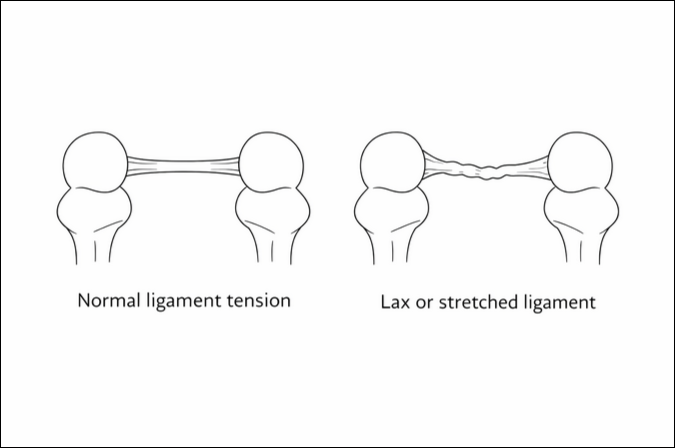
When the joint lacks stability, the muscles step in to control it.
At first, this works. Over time, it becomes a problem.
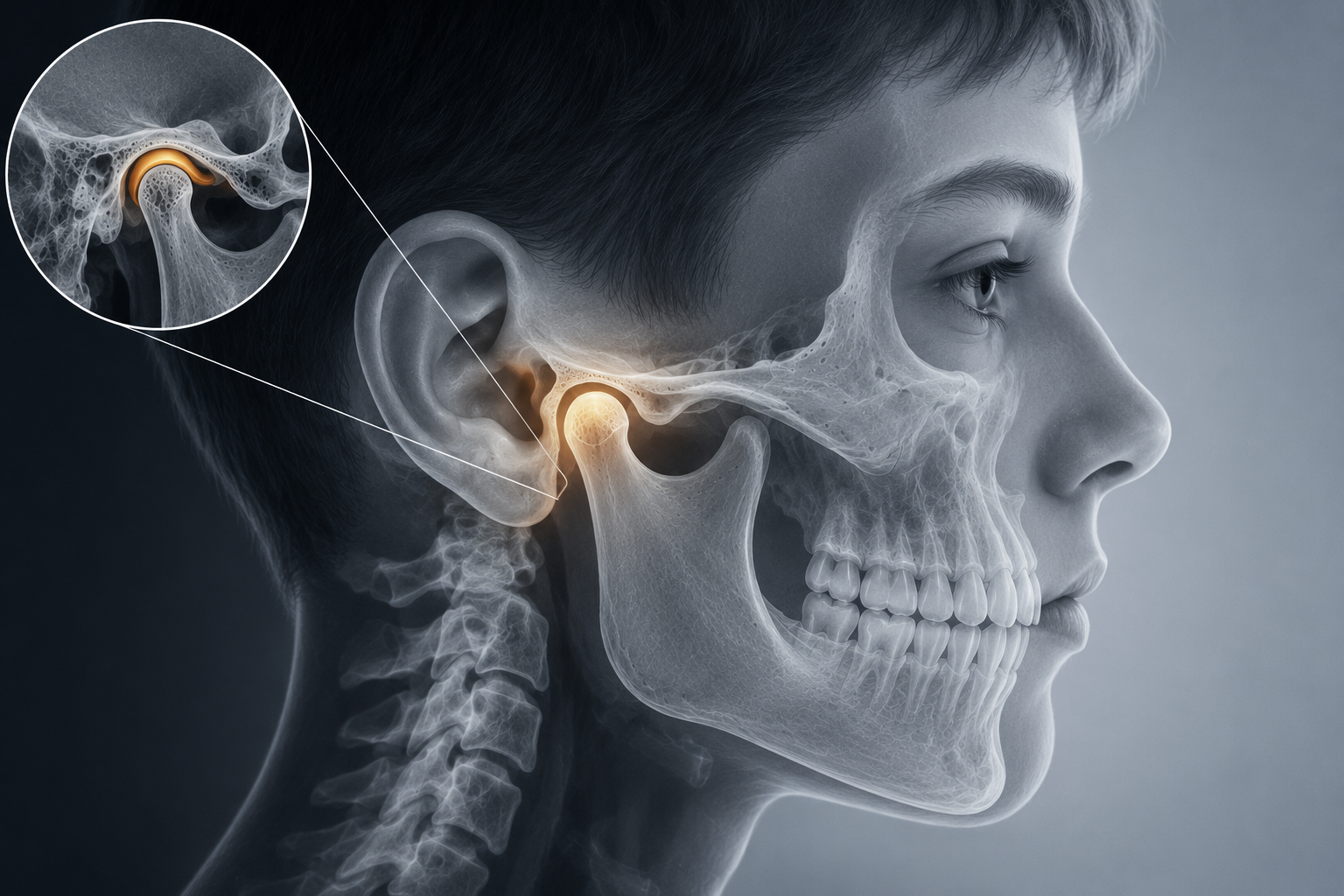
The muscles are constantly active, trying to keep the joint steady. This leads to fatigue, soreness, and persistent discomfort. Many patients also notice clicking or popping, which often reflects instability inside the joint rather than something harmless.
This is what makes TMJ hypermobility different.
Instead of a jaw that cannot open enough, this is a joint that moves too much and lacks control.
A Common Pattern
In our practice, we often see patients who have always been “flexible.”
They may have a history of joint issues in other parts of the body. Ankles that sprain easily. Shoulders that feel unstable. Pain that takes longer than expected to resolve.
Some already have a diagnosis of hypermobility or Ehlers-Danlos Syndrome. Others have never connected these patterns before.
When the connection is made, their jaw symptoms finally start to make sense.
Why Treatment Has Not Worked
Many patients with TMJ hypermobility have already tried treatment.
They are often told to relax their muscles or adjust their bite. Sometimes this helps temporarily, but the symptoms return.
That is because the underlying issue is instability.
In a hypermobile joint, small strains do not fully resolve. The joint remains less supported, and the muscles continue to compensate. Over time, they become overworked and sensitive.
This does not mean improvement is not possible. It means the approach needs to change.
Treatment Focus: Stability and Control
The goal is not to change the underlying connective tissue.
The goal is to improve stability and reduce strain on the system.
This often involves reducing clenching and jaw tension during the day and protecting the joint at night with an oral appliance. Patients are also guided to avoid extreme opening, such as wide yawning or large bites.
Physical therapy plays an important role, but the focus is different. Instead of just relaxing muscles, the emphasis is on controlled strengthening and stabilization.
When muscle pain is persistent, targeted treatments may be used to help calm the system.
In some cases, therapies that support ligament strength may also be considered.
Setting the Right Expectations
With hypermobility or Ehlers-Danlos Syndrome, the underlying tissue does not change.
But that does not mean nothing can improve.
When treatment focuses on stability, protection, and control, patients often experience less pain, better function, and more confidence in how their jaw feels.
When to Seek Evaluation
If your jaw opens unusually wide, clicks along with pain or fatigue, or has not improved with previous care, it may be worth a more specialized evaluation.
This is especially true if you have been diagnosed with hypermobility or Ehlers-Danlos Syndrome, or suspect that you may be more flexible than average.
Moving Forward
If your symptoms have never quite fit the typical TMJ pattern, there is usually a reason.
Recognizing that TMJ hypermobility is often the turning point in getting the right diagnosis and treatment.
DO YOU HAVE TMJ AND A HYPERMOBILITY DISORDER IN THE NEW YORK CITY METROPOLITAN AREA?
If your jaw opens very wide, clicks frequently, and feels loose or fatigued, TMJ hypermobility may be the underlying cause. This type of TMJ disorder is driven by joint instability, not restriction, and requires a specialized approach to treatment.
At New York TMJ & Orofacial Pain, we specialize in diagnosing and treating TMJ disorders and orofacial pain. We take the time to understand what is actually driving your symptoms and build a treatment plan around it.
Our team of orofacial pain specialists provides evidence-based, individualized care at our locations in the NYC metropolitan area. We work closely with each patient and often other healthcare providers to restore comfort and function.
If your symptoms have persisted despite reassurance or prior treatment, a more specialized evaluation can make all the difference.
About Our Practice →
Treatments We Provide →
What to Expect at Your First Visit →