Manhattan

212-265-0110

White Plains

914-227-2305

Springfield, NJ

973-315-7830

Hauppauge

631-265-3136
Categories
Bruxism Jaw Problems TMJ

Does The TMJNext Generation Device Work?

Every now and then a new product will hit the market that’s designed to assist in the management of the chronic pain problems that impact the lives of millions of people every year. And when it comes to pain caused by TMJ/TMD problems, one such product is The TMJNext Generation™ Device. Having been sold in Europe for the past few years, this device is now available in the U.S. It is being aggressively marketed not only to dentists but to other healthcare practitioners, as well. As a result, many physical therapists, chiropractors, physicians and wellness clinics are advertising that they provide the device. As a board-certified orofacial pain specialist, I’m often asked, “Does the TMJNext Generation work?

Does The TMJNext Generation Device Work?

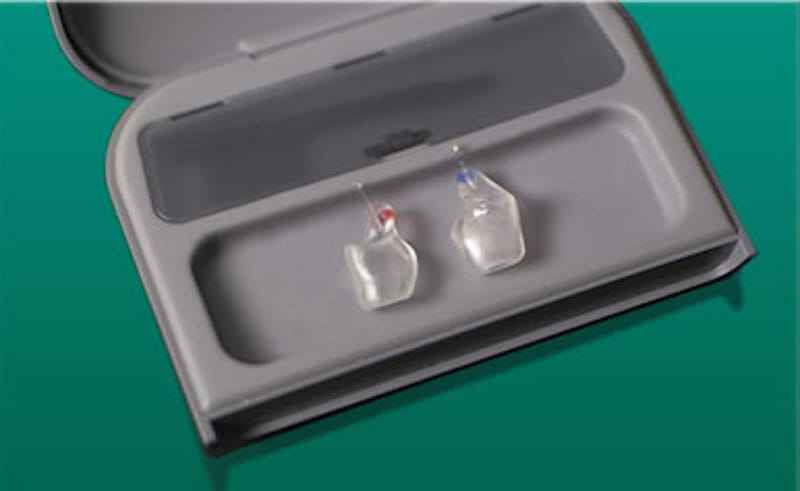
The TMJNext Generation™ Device is an ear insert which has been designed to create awareness in the patient of his or her jaw position. Here’s how it works:

First, impressions of your ear canals must be made. Although your dentist may have recommended the TMJNext Generation™, you may be referred to an audiologist (or another type of health care professional) that is willing to assume the liability of making the impressions, which may be outside of the scope of practice.

The impressions are made while your jaw is in a relaxed posture with your teeth apart. In this posture, your ear canal will assume certain dimensions in volume and shape. These dimensions get smaller when you bring your teeth together or clench them.

The ear canal impressions will be used to create custom ear inserts for you. The inserts feel comfortable when your jaw is in a resting posture, but when you bring your teeth together you feel an unpleasant pressure on the devices. The theory is that the uncomfortable feeling will get your attention and you will immediately relax your jaw. It’s like having a pebble in your shoe that makes it uncomfortable to walk.

For some people, the devices might serve as a sort of reminder to keep their jaw muscles loose. In this way, TMJNext Generation™ is essentially a biofeedback device. Anything that can help you keep your jaw loose during the day can be part of overall TMJ/TMD therapy.

Here’s the rub: Countless people who suffer from TMJ/TMD problems have NO NEED for daytime awareness because their jaw is always in a restful position during the day. It is at night while they are asleep that their grinding and clenching happens. For them, these devices could represent an unjustified expense. If physicians, chiropractors, physical therapists, and dentists who have limited expertise in the management of jaw problems are making decisions about the use of The TMJNext Generation™ Device, I’m afraid that overutilization is a real concern. So, does the TMJNext Generation device work?

As of today I have not found scientific articles that provide an understanding as to how these devices could stop or diminish the impact of sleep-related teeth grinding and clenching (bruxism) which is the way many patients get in trouble. Since the devices can apply unpleasant pressure on the jaw joints during a grind or clench, one would have to assume that the irritation would merely wake the wearer up, as opposed to helping him or her stop the activity altogether. I don’t think that would have a favorable long-term outcome.

My limited distribution of these devices at the present time precludes an endorsement or negative commentary. As always, I believe that a careful assessment must be done to adequately understand the type of jaw problem of each patient and what the initiating and perpetuating factors appear to be.

Only with that information can the treating professional guide the patient with sound advice.

Photo credit: http://tmjnextgen.com/

Dr. Donald Tanenbaum is a specialist with offices in New York City and Long Island, NY. He is uniquely qualified to diagnose and treat problems associated with facial painTMJ and sleep apnea.

Categories
Jaw Problems TMJ

Can TMJ Patients Get Better?

As an orofacial pain specialist, I’m often asked, “Can TMJ patients get better?” In the past several months, I’ve had the opportunity to host a number of dental residents in my practice as part of their formal training program. At the same time, I’ve worked with a number of practicing dentists from around the country who want to broaden their pain education. From this experience, two things have become very apparent to me.

First, Id like to focus on the dental residents, who for the most part, are recent graduates. They all have very limited practical knowledge about TMD/TMJ problems and have apparently been told in dental school that TMJ patients cannot get better.

There is no reason why recent dental graduates should think that TMD/TMJ patients can never get better and here is why: these problems, though at times attached to challenging patient personalities, are essentially orthopedic in nature. This means that they involve muscles, tendons and joints. When viewed this way the most common diagnoses include muscle strains, muscle fatigue, muscle soreness, joint sprains, inflammation, and ligament- and bone-related compromises (which can include arthritis of one form or another).

The key then is to determine the primary cause of the compromise and whether or not there are other factors responsible for perpetuating the problem. This is where the evaluation process becomes so important and is not accomplished by pen and paper questions, but rather by sitting down and having real conversations with real patients.

Time and listening are whats necessary to gather the information essential to making the right determinations. Once achieved, TMJ/TMD problems can be addressed with understandable and practical therapies that involve and require both doctor and patient participation. The time and listening formula are what distinguishes one practice from another.

So, Can TMJ Patients Get Better?

Whether the recommended treatment is medication, education, dietary caution, exercises, injections, oral appliances, physical therapy, meditation or surgery, the process of healing can be quick, or can span months.

In my experience I estimate that half of TMJ/TMD problems are straightforward and solved with education and home therapies, one quarter are moderately complicated (but can respond wonderfully to formal treatment), and one-quarter are challenging cases impacted by the nature of the patients tissue injuries and his or her medical, social, and/or behavioral profile. I suspect that common knee problems carry with them the same statistics.

After spending a day in my office dental residents often say I never knew these patients could be helped.or I was told in dental school that caring for these patients is unrewarding and endless.These comments indicate that TMJ/TMD problems are a mystery for our young graduates. Unless dental schools start getting out the right message, nothing will change. In the interim, however, it is encouraging to see how many patients can be helped despite being told somewhere in their travels that there is no answer to their problem.

Practicing dentists with an interest in this area is another story entirely. They often end up in continuing education programs where the instructors preach unscientific dogma about how fixing a patients teeth and bite will fix the problem. After they attempt this often-complicated approach a few times in their practices, they usually realize that it simply doesnt work. At this point, its very common for the dentist to stop treating TMJ/TMD problems entirely, leaving behind some very discontented patients.

Long ago I was fortunate to discover that the vast numbers of patients who get relief do so without their teeth being ground-down or built-up. Today I see the frustration on the faces of dentists who have tried these seductive approaches and when their patients don’t get better, realized that they were missing something.

The bottom line is that these problems are not big mysteries but rather understandable by practitioners, like myself, who have spent the time to learn and embrace the fact that jaw-related problems are orthopedic problems in nature and the accompanying pain emerges for specific (and often common) reasons. My practice continues to listen to, guide and educate our patients so they can be part of their healing process. And I hope that the time I spend with new graduates and practicing dentists will help to expand their understanding, as well.

Dr. Donald Tanenbaum is a specialist with offices in New York City and Long Island, NY. He is uniquely qualified to diagnose and treat problems associated with facial painTMJ and sleep apnea.

Categories
Bruxism Facial Pain Jaw Problems TMJ

BOTOX® Is Effective For Facial Pain Treatment


As an orofacial pain specialist for over 30 years, I have had many opportunities to think about why people develop facial pain problems and what I can do to get them out of trouble. The majority of patients who come my way suffer from pain that is muscle-based and in turn is caused by any number of factors. I have found that BOTOX® is effective for facial pain treatment, especially when other strategies have failed.

In order to determine who is a good candidate for BOTOX® therapy, I must first investigate the cause of the muscle stress in the first place. Usually, I discover that my patient is experiencing one (or more) of the following:

  • Poor sleep quantity and quality.
  • Repetitive work postures fatiguing the neck and shoulder region.
  • Behaviors repeated throughout the day which tightens the jaw, neck and shoulder muscles.
  • Emotional upset and challenging life circumstances.
  • Shallow and fast chest breathing patterns.
  • Excessive consumption of stimulants in beverages and food.
  • Stimulant-based medications.
  • Poor breathing at night while sleeping.
  • Autoimmune problems, which lower pain thresholds.
  • Physical exercise choices that continually stress the neck muscles such as spinning classes.

When BOTOX® Is Effective For Facial Pain Treatment

BOTOX® is proving to be another way to break the cycle of chronic pain. A series of injections are administered into the jaw muscles, upper neck muscles and across the forehead. The goal is to reduce or eliminate the pain, which in turn often imparts a new sense of optimism to my patients who have suffered for years, many believing that there was no solution.

In addition to relieving pain, BOTOX® is helpful for patients who experience nighttime teeth clenching and grinding. After treatment, there is a period of time when the muscles simply cannot contract as aggressively. And although the cause of the bruxing isn’t eliminated, many people discover that the achy, tight jaw that they normally wake up with is gone.

BOTOX® is not a miracle drug but it is becoming an increasingly important part of my toolbox to help my patients get better. Do you have questions about BOTOX® therapy? Please use the comment box below.

Dr. Donald Tanenbaum is a specialist with offices in New York City and Long Island, NY. He is uniquely qualified to diagnose and treat problems associated with facial painTMJ and sleep apnea.

Categories
Jaw Problems TMJ

Effective At-Home Treatments for TMJ & Painful Jaw Muscles


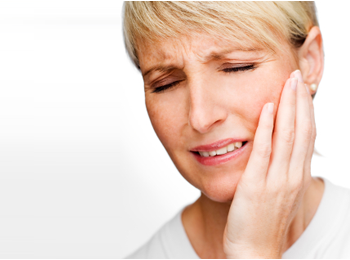
Do you suffer from TMJ symptoms, jaw pain, or both? As a board-certified orofacial pain specialist or TMJ doctor, I have many tools at my disposal for patients who suffer from tight, painful jaw muscles. Over the years I’ve recommended (and developed) a number of relaxation techniques and massages for TMJ and jaw muscle pain. If you notice yourself opening and closing your mouth all day long to stretch out your jaw muscles, you probably have a TMJ problem. Try some of these at-home treatments for TMJ and painful jaw muscles.

2 TMJ Relaxation Techniques and Breathing Exercises

Most people with ongoing jaw pain and tightness tend to breathe with shallow chest movements during the day. As a matter of fact, if you suffer from any kind of muscle pain you’re probably already breathing too fast. When you breathe too fast, you create an imbalance of oxygen and carbon dioxide in your body. This sets you up for more even muscle pain and fatigue.

The following techniques will help you slow your breathing and help your muscles relax:

1. With your lips lightly touching, place your tongue gently on the roof of your mouth behind your front teeth, or gently against the back of your lower front teeth. Then, bring air in through your nose and extend your belly outward. Hold this for 3 seconds then exhale through your mouth while parting your lips slightly. Repeat 6 times. (You can do this once every hour.)

2. With your lips lightly touching, gently place your tongue gently against your lower front teeth, upper front teeth, or just float it in no particular position. Breathe in through your nose for 4 seconds filling your belly. Then, exhale through your lips or nose for 4 seconds. Pause for 2 seconds. Repeat 6 times over a 1-minute period. This will help you train yourself to slow down your breathing. Perform once every hour whenever you need it.

2 Massages for TMJ and Sore Jaw Muscles

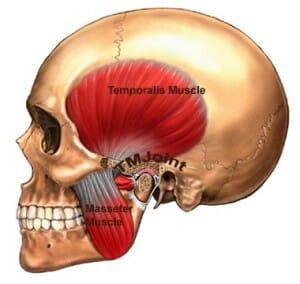
A sore jaw indicates that your jaw muscle health has been compromised and is likely due to the accumulation of an irritating substance that forms in response to muscle overuse, such as lactic acid. The key here is to increase the blood flow to your sore muscles which in turn brings fresh oxygen and nutrients to the affected areas. The Temporalis and the Masseter are the two most important muscles for you to focus on.

massage for TMJ, temporalis and masseter

1. Perform this massage with your mouth hanging slightly open, and your head relaxed: with your index and your middle finger, massage the sore areas in your temporalis and masseter muscles in a circular motion for 6 seconds on the right side, and 6 seconds on the left. If you can, do both sides at the same time. Press firmly, but not so hard that tears come to your eyes. After massaging your muscles, open your mouth to its fullest non-painful position and then close it slowly. Repeat 6 times.

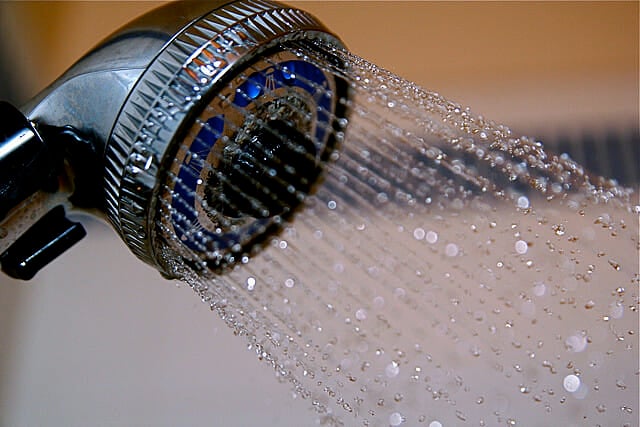
2. I find this one is best done in the shower. Open your mouth halfway and place the pad of your index finger on the most rear upper tooth on one side. Then slide your index finger off that tooth and move it toward your cheek in an upward direction. You should run into a wall of bone. That is where your jaw muscle attaches and it is likely to be very tender. Once you’ve found the tender region, push your index finger inward and hold for at least 30 seconds before releasing. Then switch to the other side and repeat. Massage each side 2 times. (You can also move your index finger in a circular pattern instead of maintaining constant pressure.)

3 Exercises for Sore Jaws

1. This exercise is designed to release tension in the muscles that enable you to open and close your jaw. Place your tongue as far back as possible on the roof of your mouth. Now, try to open your mouth, keeping your tongue in this position (the range of motion will be very limited). While your tongue remains in place, position your thumb under your chin and attempt to open your mouth against the resistance of your thumb. Maintain this resistance for 3 seconds before releasing. Repeat this 6 times. This exercise can be performed up to 6 times per day.

2. Here’s another technique that many of my patients find helpful: blow air into your cheek on one side and hold it for 6 seconds. Then switch to the other side and do the same thing. This can be done 6 times per day.

3. You can also do some tongue exercises to loosen your tight jaw muscles. With your lips sealed, move your tongue in a complete circle 6 times to the right and then 6 times to the left. Then take 6 cleansing belly breaths as described above and repeat the tongue movements 2 more times.

If At-Home Treatments For TMJ Don’t Work…

Tight jaw muscles can produce serious pain. If you are suffering, and the above at-home treatments for TMJ don’t work after doing them for over a week, please contact your dentist or an orofacial pain specialist in your area. You can find a provider in your area by going to the American Academy of Orofacial Pain.

Good Luck!

Dr. Donald Tanenbaum is a board-certified orofacial pain specialist with offices in New York City and Long Island, NY. He is uniquely qualified to diagnose and treat problems associated with facial painTMJ, headaches and sleep apnea.

Live or work in New York City or on Long Island? You can schedule a consultation with here or call 212-265-0110.

Categories
Jaw Problems

6 Foods That Can Break Your Jaw

Just this week I treated two patients who unfortunately chose to eat foods that not only are known to often cause fractured teeth but also can at the same time create significant jaw injuries. Now, a particular food can’t actually “break” your jaw, but an injury in the jaw joint (TMJ) can certainly feel like it.

To start the conversation, picture this: the jaw joints (or “hinges”) and the attached ligaments allow you to open and close your mouth. The attached muscles and tendons provide the power for this movement. So, if you think about the jaw as an orthopedic system (just like the knee) it is subject to sprains, strains, ligament stretch, slipped cartilage and inflammation that at times can be severe. When you bite into or munch repetitively on hard or large food substances, you can cause significant painful damage to your delicate jaw joints.

Here are the top offenders:

1. Bagels
In New York City the unquestionable leading offender is the bagel. But it’s not the hot steamy variety that has just come out of the oven or the fake-out options in the grocery store such as Lender’s Bagels. The problems come from the overly-toasted, crisp beauties that are consumed daily with cream cheese or stacked high with tomatoes, onions and favorite delicacies and eaten like a sandwich.

The most treacherous situation occurs when a college student has no choice but to grab a 3-day old, shiny bagel wrapped in cellophane and then tries to eat it as he or she runs between classes. Inevitably, I find myself providing care to students returning for the Thanksgiving or Christmas break. And this week is no exception.

2. Biscotti
Next in line are those irresistible biscotti cookies that land on your table after overindulging at your favorite Italian restaurant. The coffee or tea is on the table for dunking, but what are the chances that you will dunk the biscotti before sinking your teeth into one of those “jaw crackers?” You first encounter firmness but that doesn’t deter you from trying to break off a piece with your front teeth. With each successive effort to win the battle, you are one step closer to traumatized and sprained TMJs.

For those who have been on the cusp of this occurrence you know exactly what I am talking about. For those of you have met your match and subsequently suffered with jaw pain, limited jaw motion or joint noise, I suspect you have since become dunkers.

3. Sourdough Pretzels
Not far behind biscotti is a snacking favorite, the infamous Sourdough Pretzel. While it’s OK to eat just one or two, something compels most of us to finish the entire bag even though our jaws begin to rebel after 10 minutes. The end results are tired jaw muscles, a headache in the temples, or a painful TMJ that prevents you from eating a normal diet for a few weeks.

4. Chocolate
Chocolate delicacies are also on the Jaw Breakers list. How many of you have bitten into a piece of chocolate that you anticipated would be soft? Unfortunately by the time your brain realizes that you are up against a piece of concrete your jaw muscles have contracted with such force that your TMJs are pushed beyond their limit. The end result has been reported as “I heard an explosion in my jaw joint and since then I can’t open my mouth or bring my teeth together properly!”

And don’t forget about the frozen Snickers and Milky Way bars that have been left in the freezer for a few months. One wrong decision here may become a midnight snack you would like to forget.

5. Sandwiches
Last but not least is that oversized burger on a bun or Panini sandwich. Though soft in consistency, the need to open your mouth like an alligator is all it may take to end up reaching for Advil to ease the sharp pain radiating into your ear or in severe cases, spending the next few hours in the emergency room with your jaw stuck in an open position.

6. Candy-Covered Apples
These ruby colored beauties on a stick are particularly dangerous because they look so delicious. Almost impossible to easily bit into, they have caused jaw problems for years, particularly around Halloween.

In Conclusion

Try to exercise some good judgment and restraint when contemplating your next bite. This is particularly true for women whose joint ligaments are more vulnerable to stretch and whose muscles are more prone to fatigue. If you sense you are pushing your luck, you are probably right!

Seek care if you have suffered the consequence of an overzealous bite, particularly if several weeks have passed and you’re still suffering.

Live or work in New York City or on Long Island? You can schedule a consultation with me here or call 212-265-0110.

Categories
Jaw Problems

Lockjaw – What To Do When You Can’t Open Your Mouth

The clinical term “lockjaw” refers to a specific problem that can be the sign of a serious bacterial infection called Tetanus. Happily, due of the widespread use of the vaccine, it is extremely rare today for anyone in the U.S to develop it. But the expression “Lockjaw” lives on and is today what most people use to describe the scary feeling of waking up in the morning unable being unable to open your mouth without extreme pain.

In most cases, the causes of this kind of lockjaw are not because of a disease, but are usually related to overuse of the jaw muscle, which work much like a hinge. But that fact doesn’t mean that the average person doesn’t get very panicky when his or her mouth just won’t open without extreme pain.

If you were vaccinated for Tetanus as a child and you haven’t experienced any trauma or injury to your jaw, it’s likely that you can’t open your mouth because your jaw muscles are in spasm. Here are a few tips that should help ease the pain, help you open your mouth, and get you on your way:

Lockjaw: What To Do When You Can’t Open Your Mouth

First Thing In The Morning
If you wake up with jaw muscles which are in spasm and you can’t open your mouth or can only open it slightly, it’s a sign that you have either been overusing your jaw muscles during the day or you have been aggressively grinding or clenching your teeth during of the night. Unfortunately, grinding (also called bruxing) and clenching are common in today’s high-paced world especially for people who spend most of their working hours at a computer. Here’s what to do:

Lockjaw in the Morning
Use Moist Heat: Get into a hot shower and while the water is running on your face, gently massage your temples and your jaw. Do this for five minutes. Take a break and then do it for five more minutes. This simple method should ease the muscle spasms enough for you to gently ease your mouth open without pain.

What To Do During the Day To Avoid Lockjaw
Start to pay attention to behaviors or habits that overwork your jaw muscles and work to change them. These are commonly

  • Nail biting
  • Cuticle gnawing
  • Chewing on pens or pencils
  • Biting your lips or cheeks
  • Clenching or grinding your teeth (especially while you are working at your computer)

When To See Your Dentist
If you are experiencing a locked jaw most mornings, and if you feel or hear “clicking” in the joint your jaw joint is probably “slipping.” This is a more serious problem that needs medical attention right away.

Aside from being really frightening most cases of lockjaw are not serious. Try to change some of your habits and you will probably experience a reduction in the occurrence of this painful problem.

Dr. Donald Tanenbaum is a specialist with offices in New York City and Long Island, NY. He is uniquely qualified to diagnose and treat facial pain associated with jaw problems, and TMJ. Find out more at www.nytmj.com

Live or work in New York City or on Long Island? You can schedule a consultation with me here or call 212-265-0110

Categories
BOTOX® Bruxism Jaw Problems

Case Study: 10 Years of Teeth Clenching

Last week a 44-year old woman came in to see me concerned with the fact that the her face had become more and more “square-shaped” over the past ten years. She openly revealed that working full time and raising three kids had been no easy task for her and that she often went through the entire day with her teeth clenched. I explained to her that those ten years of teeth clenching had essentially been causing her to make a “fist in her face” for all those years. With that kind of daily stress on the muscles, it’s no wonder that her face had changed!

The end result of her clenching behavior was that she had “buffed” her jaw muscles. They bulged outwardly just like your biceps would as a result of lifting weights every day over a prolonged period of time. Remarkably, my patient never experienced any pain in her face or her jaws, which probably would have caused her to seek help sooner. The issue for her now, however, was the change in her appearance.

My examination (not surprisingly) revealed that she had bulky and powerful jaw muscles (masseter) that bulged outwardly when her teeth were clenched together. Even the muscles in her temples bulged! Over the decade this patient had actually increased the size and number of muscle fibers giving her a ‘Clint Eastwood’ look.

The first hurdle in treatment was to get the patient to actually change her acquired behavior and learn to live in the world with her teeth apart during the day. The clenching tendency that she had developed was likely the result of trying to cope with her daily stresses, some of which were not under her control. Relaxation and breathing techniques were reviewed, and she began to use an oral appliance during the day to create awareness. This was the first part of the plan. As experience has taught me, just stopping new muscle building does not effectively reduce the bulk of jaw muscles in a predictable fashion. Once built, these muscles tend to stay large as a result of normal daily activities. So what next?

BOTOX® Injections:
In order to actually decrease the size of her well-built muscles, we needed to reduce the ability of these muscles to contract forcefully on a day-to-day basis. This is where BOTOX® can really help. We administered three BOTOX® injections into the patient’s masseter muscles; each injection session approximately three months apart. With time, the BOTOX® led to muscle atrophy (size reduction and less strength) without compromise of eating or talking along the way. The result was a return to a more normal jaw profile.

To assure a lasting result my patient has to continue participating. This means teeth apart during the day and wearing the bite plate appliance at night (to diminish the impact of her night clenching). Some simple jaw stretching exercises are also required to keep the jaw muscles supple.

Although it took almost one full year from start to finish, this cosmetic makeover has truly made a difference in slimming my patients’ facial profile that was the end result of years of muscle building. This is probably the only time that reducing muscle bulk actually can make someone look better!

BOTOX® for teeth grinding is in the news! I was recently interviewed on ABC’s Good Morning America on the topic, Can BOTOX® be used to treat teeth grinding?  Click the link to watch the segment.

Categories
Jaw Problems TMJ

4 Medications For TMJ Problems

As a TMJ specialist, there are times when medications are an important part of the treatment strategy. Though side effects must be kept in mind, there are medications that are often extremely helpful for short periods of time. So, for many TMJ sufferers, I have found that there are some medications that work rather well to address pain, muscle tension, and jaw motion restrictions.

However, it’s the way that these medications are used that differentiates their effectiveness. The following information should be very helpful to those considering (or currently) taking medications for a TMJ problem.

1. Advil (Ibuprophen) and Aleve (Naproxen): For pain, particularly when inflammation is present. Very important! Advil and Aleve are not muscle relaxants, in spite of what many people believe. They are classified as non-steroidal anti-inflammatory drugs and designed to reduce inflammation in joints and muscles. Most important: For individuals who have had jaw problems for an extended period of time, these medications must be taken for 2-4 weeks in order to be maximally beneficial. At the same time, the factors that caused the inflammation must be addressed or the medications will have limited benefit.

For some inflammatory problems associated with the temporomandibular joints specifically, these medications may be necessary for 8-12 weeks just like they would be required for this duration for inflamed and painful knees. Because Advil and Aleve can upset the stomach and kidneys, care must be taken when extended use is prescribed. Alleve has been recently recommended to be the anti-inflammatory of choice for those at risk for a heart attack or have a history of heart problems .

2. Tylenol (Acetaminophen): For pain when inflammation is not present. Acetaminophen is a different class of drug than Advil and Aleve and is not an anti-inflammatory medication. It is an analgesic that is effective to relieve pain when inflammation is not present. Your doctor must monitor long-term use of Acetaminophen as it can induce headaches and can compromise liver function (particularly in individuals that consume alcohol daily).

3. Muscle Relaxants: Commonly known muscle relaxants are Flexeril, Soma, Skelaxin, Zanaflex and Robaxin. This class of drug can only be obtained with a prescription. Muscle relaxants can be used both during the day and at night before going to bed. Because some people experience fatigue when using them particularly during the day, we often need to try several types to get the right one.

Muscle relaxants can also be used while taking other products such as Aleve, Advil and other prescription anti-inflammatory options. The time frame over which these medications are taken is variable but can be used for many months (particularly when taken only at bedtime).

An added bonus for patients taking muscle relaxants is that they promote restful sleep and can often reduce the intensity of nighttime grinding and clenching of the teeth.

4. Anti-Anxiety Medication: When anxiety and worry are driving muscle tension and pain in the face and jaw it is not uncommon to prescribe small doses of anti-anxiety medications for a short period of time to be taken during the day, at bedtime, or both. These medications work in the brain and help reduce the ability of muscles to “brace” as a consequence of life events, thoughts, and or emotions.

The commonly known medications in this category are Valium, Xanax, Klonopin, and Ativan. These are controlled substances, available by prescription only, and registered in a national data bank to help prevent overuse and abuse.

When taken at bedtime they are very effective (in short term periods) in reducing tooth grinding and clenching and the consequent symptoms of pain and muscle tension in the morning. My patients often report that anti-anxiety medication “takes the edge of my pain and muscle tension.”

So, for TMJ sufferers, medications have proven to be very helpful in breaking the “pain cycle” and allowing other therapies to begin to work for long-term relief. The key is using the right one, careful monitoring, and short-term use.

Live or work in New York City or on Long Island? You can schedule a consultation with me here or call 212-265-0110

Categories
Jaw Problems

Trigger Point Injections For Jaw Muscle Pain

Amidst the commonly used therapies to address jaw muscle pain is a technique called muscle trigger point injections (sometimes referred to as “needling”).

Trigger point injection therapy was developed over 50 years ago and has been effectively used to treat muscle pain in the back, neck and jaw ever since. This technique mechanically breaks up the knots (trigger points) that form as a result of muscle fatigue, strain, injury and overuse (in my practice, that means teeth clenching and grinding). Once formed, trigger points can remain latent and not produce symptoms, but when they become active they are capable of producing intense muscle pain.

The Needling Process

Because trigger points form at predictable locations, we can use the needling process to mechanically stimulate the affected muscle, as if the muscle was being “tenderized” and actually “break up” the knots in the muscle. Often local anesthetic (lidocaine) is used so that the site of injection is less tender the next day.

Trigger point injections can be very valuable in the treatment of jaw muscle pain, which characterizes TMJ syndrome, one of the specialties of my practice. But, in order to be effective, a series of trigger point injections is necessary if benefit is to be obtained. Treatment sessions can be spaced weekly and delivered three to four times.

My patients are sent home with a series of stretching exercises, which are critical following the injections and must be performed daily. In addition, careful attention must be given to identifying factors that will likely perpetuate the problem (such as teeth grinding and jaw clenching). For many patients, monthly trigger point injection sessions are preferred over long term the medications that would be necessary if their muscle pain escalated to troublesome levels. What’s more, trigger point injections can be safely used during pregnancy (without local anesthetic).

The majority of my patients who suffer from the debilitating effects of severe jaw muscle pain benefit greatly from this simple therapy. And, trigger point injections, combined with other treatments, are extremely helpful in the long-term management of jaw muscle pain.

Dr. Donald Tanenbaum is a specialist with offices in New York City and Long Island, NY. He is uniquely qualified to diagnose and treat facial pain associated with jaw problemsTMJreferred painnerve pain, and migraines. Find out more at www.nytmj.com.

Categories
Jaw Problems TMJ

Indoor Cycling Classes Can Cause Jaw Pain and TMJ

Over the past few years in my practice we have seen an increasingly number of female patients who are committed fans of high intensity indoor cycling workouts (sometimes called “spinning”) such as Soul Cycle. They have been arriving complaining of jaw pain, limited jaw motion, and jaw clicking, all the typical signs of TMJ or Temporomandibular Disorder. What we’ve determined is that these popular high intensity indoor cycling programs may be detrimental over time for some women, particularly as they relate to the upper neck muscles.

Indoor Cycling and TMJ – What’s the Connection?

Many TMJ disorders start in the muscles of the head and neck region. Tight, fatigued, and overused neck muscles can cause changes in head position and consequently changes in the tone of jaw muscles and the position of the lower jaw (even when at rest). Over time these subtle changes can cause jaw pain and tightness. In addition, there are trigger points in the neck muscles that when active can refer pain to the jaw and lead to muscle contracture of the jaw muscles, leading to diminished jaw motion and sometimes changes in how the teeth come together.

By working one’s upper body while pedaling a stationary bicycle, the head and jaw posture is often strained in a way that can lead to extreme muscle fatigue. The head weighs about 18 lbs. and in the midst of an intense cycling class this 18 lb. ball is hanging forward and bouncing around. As a result of this challenge to the biomechanics and physiology of the neck, muscle pain and at times even nerve pain, can emerge in the face and jaw, a condition commonly referred to as TMJ.

Case Study: TMJ and Soul Cycle

Knowledge of how the neck works is important in understanding why TMJ problems can be caused by intense indoor cycling classes. My patient Nancy is a perfect example. She is 27 years old and recently came to see me complaining of severe jaw pain, limited jaw motion, and jaw clicking. A thorough interview revealed that the only change in Nancy’s daily routine was the inclusion of three to four Soul Cycle classes per week. Discussion also revealed that she had been experiencing jaw tension during class that often lingered for hours afterward. What started out as a short-term symptom had evolved into even more troublesome problems. I recommended that she give herself a break from Soul Cycle, engage in a short regimen of physical therapy, and take anti-inflammatory medication for a limited period of time. We’re happy to report that today Nancy’s jaw problems have been resolved.

I recognize that intense indoor cycling fitness programs such as Soul Cycle can have tremendous personal and physical benefits. What should be kept in mind is this: many classes every week over a long period of time may actually put your jaw at risk. And what good is a fit body if you can barely open your mouth?

Live or work in New York City or on Long Island? You can schedule a consultation with me here or call 212-265-0110

Dr. Donald Tanenbaum is a specialist with offices in New York City and Long Island, NY. He is uniquely qualified to diagnose and treat facial pain associated with jaw problems, TMJ, referred pain, nerve pain, and migraines. Find out more at https://www.nytmj.com/about-dr-tanenbaum/.

Categories
Jaw Problems Tinnitus

TMJ TMD and Tinnitus

Case Study: Barry

In past blogs I made reference to the relationship between jaw problems, TMD and the occurrence of Tinnitus (ringing in the ears). Though I don’t believe that the majority of Tinnitus problems relate to the jaw, there are unquestionably a number of specific Tinnitus complaints that occur as a result of muscle problems in the jaw and upper neck.

The relationship exists as a result of the shared nerve pathways between structures in and associated with the ear and those of the jaw and neck. Tense, inflamed, and hyperactive jaw and neck muscles can adversely impact the Eustachian tube, the tympanic membrane, and the malleus bone, all critical ear structures. In the presence of ongoing TMD problems, aggressive clenching, night bruxism, neck tension, and ear symptoms inclusive of tinnitus can therefore surface. The typical Tinnitus patterns that my patients describe are often present on awakening, vary in intensity from day to day and at times are influenced by opening and closing the mouth, chewing, and jaw/head positions.

Recently Barry, 55 years old, came to the office concerned about his escalating Tinnitus. He was referred from his ENT doctor, as are many of my Tinnitus patients. The tenderness of his jaw, neck, and facial muscles, along with his admitted history of teeth clenching indicated muscles that were in crisis and potentially a driving force behind the Tinnitus.

I starting him on treatment including a combination of muscle injections, dry needling techniques, self-muscle massage, and an oral appliance. This has reduce Barry’s Tinnitus by at least 50%. As a result he is no longer using the Xanax on a daily basis, something that he had come to rely on for a number of months! With the optimism that has been created I will likely continue to see Barry for another month or two to reinforce the achieved benefits.

If your Tinnitus search has reached the end of the line, exploration of a possible muscle origin may not be a bad option.

Dr. Donald Tanenbaum is a specialist with offices in New York City and Long Island, NY. He is uniquely qualified to diagnose and treat facial pain associated with jaw problemsTMJreferred painnerve pain, and migraines. Find out more at www.nytmj.com.

Categories
Facial Pain Jaw Problems Referred Pain

2 Techniques to Help You Relax During Difficult Times

Time for yourself during difficult times….

For many of us on the Northeast coast, the last two weeks have tested our physical and mental fortitude in ways that we have never experienced. Despite our best attempts to stay upbeat and positive, the loss of lives, property, businesses, and income have been a tough pill to swallow. As a result of these ongoing stressors that have no easy answers and unpredictable outcomes that have not yet been determined, many of us have felt like we have lost control of our ways of life and daily routines.

Unfortunately when we lose control of our world and our efforts to restore order are met with obstacles that are tough if not impossible to budge, a price is often paid both emotionally and physically. The impact on your body is often seen as symptoms such as headaches, neck aches, back pain, stomach distress, rashes, high blood pressure, and jaw pain. Some of these symptoms occur as a result of the loss of regulation in critical body systems or the loss of quality sleep while others occur due to behaviors that develop during the day as a response to your brain being under constant siege. Specifically shallow breathing and bracing of the jaw, face, and neck muscles are common occurrences when humans are faced with challenging life circumstances.

With the knowledge that there are no easy fixes to the situations many of us are facing, here are some simple concepts and techniques that can be employed simply.

1) Take stock of your body posture frequently during the day. Are your shoulders raised? Are you creasing your brow? Are you jutting your jaw forward or bracing your jaw muscles? Are your teeth resting together or worse still are you clenching your teeth together as you attempt to accomplish a physical task, or is this activity accompanying an unpleasant thought? Are you holding your breath???

If so here is an easy technique to follow. Whether you are sitting or standing throughout the day, make a conscious effort to wet your lips and let the lips lightly touch each other with your teeth part. In this posture you can let your tongue gently touch the inside surface of the lower front teeth or place the tip of your tongue on the roof of your mouth. Once in this position, breath slowly through your nose holding the gentle lip seal. Fill your belly with air (not your chest), hold for 2 seconds and then blow the air out through your lips over 3 seconds. Then repeat this sequence 6 times. At the same time make sure your shoulders are down, your hands unclenched, and your forehead held without tension. To stay reminded of this muscle relaxation technique, place some reminder stickers on critical places like cell phones, computers, the dashboard of your car or watch face, for example. Every time you see these reminders repeat this breathing cycle. You will find the effort calming within several hours or a few short days…

2) Once you have mastered the techniques above, try the following. Once every hour, isolate one minute. During this minute attempt the following. Try to take 6 breaths during this minute, 10 seconds each.  Proceed like this:  With your lips sealed, Breath air in through your nose, filling your belly, taking 4 seconds to do this. Then exhale air through your slightly parted lips, taking 4 seconds to do this. Then pause for 2 seconds. This is the first 10-second breath. Now repeat five more times…though this is difficult to master you will find that you will look forward to this minute. It is your place to calm the mind.

Remember, taking a few moments for yourself during these difficult times will enable you to remain capable of helping others in need.

Dr. Donald Tanenbaum is a specialist with offices in New York City and Long Island, NY. He is uniquely qualified to diagnose and treat facial pain associated with jaw problemsTMJreferred painnerve pain, and migraines. Find out more at www.nytmj.com.

Categories
Jaw Problems

Case Study: Jaw Locking All Day With Tremendous Pain

A patient came to my office four months ago complaining that she woke up every morning with her jaw in a locked position. It was so bad that her morning routine starting by standing in the shower bathing her jaw with hot water until her jaw popped open. Then she could start her day.

Her problem however didn’t stop with this unlocking event. Her jaw would click and then lock numerous times during the day and she had no choice but to manually force it open. Each unlocking effort was accompanied with pain that intensified as the day passed. She also had to support her jaw with her hand in order to chew and she worried that her lockjaw problem would interfere with her ability to talk and fulfill her professional responsibilities as a teacher.

Remarkably her problem seemingly just started one morning. There was no history of trauma, no recent dental visits, and no underlying medical problems that could be responsible for the onset of the jaw clicking and locking. It just started one day and then took over her life.

Treating Locked Jaw

Just like a knee problem, the nature of my patient’s problem was related to compromised cartilage and unstable ligaments in the jaw joint. These problems are “orthopedic” in nature and require treatment that is similar to those used for injured knees and or ankles The treatment planned was designed to stop further injury, stabilize the joint and give the body a chance to heal.

The treatment for this patient had three parts:

• An oral appliance (orthotic) designed to prevent joint locking, relax the jaw muscles, and reduce joint inflammation.

• Exercises and physical therapy to help improve and restore proper jaw mechanics, muscle coordination, and stability of the ligaments

• Daytime behavior modification strategies to ease postural strains on the jaw and neck muscles and jaw joints

The Outcome

After four months of treatment, my patient has responded well with no morning jaw locking, no pain, better eating capacity and optimism that this problem was not going to compromise her ability to hold a teaching job. Though not ‘cured’, her orthopedic problem had stabilized and she was in her own words “better” and not in need of ongoing care in my office. Maintaining a home program would likely be all that she needed to stay comfortable and avoid future problematic situations.

This ability to help patients “get their lives back on track” never gets old and continues to be a source of my daily efforts when patients come seeking advice, guidance and care.

Dr. Donald Tanenbaum is a specialist with offices in New York City and Long Island, NY. He is uniquely qualified to diagnose and treat facial pain associated with jaw problemsTMJreferred painnerve pain, and migraines. Find out more at www.nytmj.com.

Categories
Case Studies Facial Pain Jaw Problems TMJ

Case Study: High-Powered Executive Wakes Up With A Locked Jaw

Last week a new patient came in for a consultation. She had been having pain in her jaw for quite awhile, but had ignored it. Like many of my new patients, what made her suddenly take it seriously was the terribly frightening experience of waking up with a locked jaw. Eventually her jaw loosened up enough for her to call her dentist and be referred to me. Understandably, she was pretty scared when she walked in the door.

Here’s the backstory:

This patient is a highly successful businesswoman in her early 50’s. She has a high level job as an executive for an international garment manufacturer and manages a large group of employees. She had a lot of responsibility at work, and obligations at home managing the lives of teenage children and watching out for the welfare of her aging parents. As if this was not enough, her daily struggle with a chronic digestion ailment made the challenges of life all the more difficult.

What I was able to uncover in my conversation with this patient was that unbeknownst to her, she had been resting her teeth together and clenching her teeth for a very long time, not just at night, but during the day, as well. From asking the right questions, she realized that she was maintaining a tooth contact position when working on her daily financial reports, when dealing with her bosses, and even when she was on the phone with clients.

Over time, this action of “making a fist in your face” can begin to fatigue the jaw muscles and result in the “locked jaw” and pain that this patient experienced.

You see, the mind-body connection is very strong. When you are under stress for a long period of time, the brain becomes understandably upset. As a result, the brain is unable to maintain control over blood flow, muscle tension, and nerve discharges that are essential for muscle comfort. Loss of this control therefore ultimately leads to an accumulation of irritating chemicals in your muscles like lactic acid, and others that lead to pain and muscle tightening.

In the presence of this irritating chemical environment the nerves that run through your muscles fire excessively and cause pain along with a muscle tightening result. In essence a brain under emotional siege, sets the stage for muscles to falter.

My patient left the office beginning to understand what happened to her jaw. The first thing she has to do is to begin the process of changing the destructive behaviors that had led to her jaw problems. To accomplish this she was provided with strategies designed to relax her jaw, which included a series of  breathing exercises that she must do………… but that easily fits into her day.

Beyond treatment therefore, understanding the mind-body connection is the first step to stopping damaging behaviors such as day tooth contact or clenching that often have unpleasant outcomes.

Dr. Donald Tanenbaum is a specialist with offices in New York City and Long Island, NY. He is uniquely qualified to diagnose and treat facial pain associated with jaw problemsTMJreferred painnerve pain, and migraines. Find out more at www.nytmj.com.

Categories
Facial Pain Jaw Problems

Creams for Face Pain and Jaw Pain

Are there any topical creams that I can use to decrease my face and jaw pain?

A patient recently came to the office with a cream rub that she had been rubbing into her jaw and facial muscles. Although the cream smelled terrible, she thought it was helping. The question is then, do these creams work?

According to research performed on over-the-counter TOPICAL PAIN RELIEF products, creams designed to relieve muscle pain are generally safe, can provide short-term benefit but do not provide long-term relief. The reason these products have only limited usefulness is likely related to the fact that they do not penetrate deeply enough into the muscles.

The most common types of creams contain these basic ingredients:

• Menthol (a counter-irritant)

• Salicylates (aspirin)

• Capsaicin (a pain reliever found in hot pepper)

Menthol: Common products such as Flexall 454, Icy Hot, and Biofreeze contain menthol, wintergreen, or eucalyptus oil that makes the skin feel hot or cold and provides a distraction from the pain. Patients who come into my office tell me these products either provide temporary relief, or do not help at all. Generally these counter-irritant products are rubbed into the jaw muscles 3-4 times a day. When using these products on the face, care must be exercised to avoid contact with the eyes or lips.

Salicylates: The common ingredient found in aspirin, Salicylates are most effective when taken orally. Research indicates that the effectiveness of salicylates decreases to a significant degree when used as a topical cream. Bengay, Aspercreme, and Sportscreme contain this ingredient and are commonly used by my patients.

Capsaicin: A compound found in chili peppers, capsaicin causes a hot, burning sensation when applied to the skin. This topical rub actually depletes a chemical in nerve cells responsible for sending pain signals to the brain. Common products that use this compound are Capzasin, and Zostrix. These products, however, can be risky when applied to the face, as they can cause intense burning and irritation should they get in the eyes, or on the lips.

As expected, some patients swear by these products despite what the research reports. In my opinion there is likely some placebo effect taking place to account for at least 1/3 of the pain relief experienced by patients using these rubs. Additionally, the physical act of rubbing and massaging the facial muscles when applying these products can also provide relief by increasing blood circulation to the area.

In summary, self-help actions can go a long way toward reducing face and jaw pain. Despite poor scientific evidence, these creams can provide some degree of benefit and are recommended as part of an overall self care plan.

Live or work in New York City or on Long Island? You can schedule a consultation with me here or call 212-265-0110

Categories
Jaw Problems TMJ Women & Pain

Estrogen, Pain, and TMJ

Why is TMJ Disorder So Prevalent Among Women?

Not only is there a clear dominance of TMJ in women, but also the severity of the problem is often at a level virtually never seen in men. This scenario is frequently seen in the case of teenage girls, suggesting that the problems we are confronted with could be hormonal. Some research has unveiled a link between TMJ and estrogen, which could shed light on the dominance of TMJ in women.

Take the example of Mary, a 17-year-old female who came to my practice. Mary’s problems started when she was 12 years old with the onset of non-painful TM joint noises that did not interfere with eating or jaw function. Over time, pain emerged and her bite began to change, altering her profile and appearance. Before long her pain was so debilitating and her bite so altered, that there was no choice but to seek surgical treatment. Both TM joints had “dissolved away” and her jaw profile and bite had to be reestablished.

How could this happen with no history of trauma and no apparent underlying medical disease? The role of hormones, estrogen in particular, has been identified. Research has shown that Estrogen:

  • Impacts the body’s natural pain fighters (endorphins)
  • Increases inflammation in the Temporomandibular Joints
  • Compromises the strength and adaptive ability of all ligaments

These factors, coupled with lower endurance capacity in female jaw muscles, are all that is likely needed for difficult problems to arise. Additionally, research suggests there may be specific genetic predispositions that lead to unprovoked TMJ in women.

Though the treatment that Mary had received has restored function, jaw stability, and reduced her pain, there is still much to learn about gender specific jaw problems.

Dr. Donald Tanenbaum has been practicing in New York City and Long Island for over 20 years. He is uniquely qualified to diagnose and treat bruxism, TMJ and TMD problems, Sleep Apnea, facial pain, muscle pain disorders, nerve pain disorders, tension headaches, and snoring. Learn more about Dr. Tanenbaum here.

Categories
Jaw Problems

Jaw Problems Can Be Caused By Overuse

Recently, while walking through a residential neighborhood in NYC I wandered into a food market to pick up some essentials for the week. As I approached the checkout counter I happened to notice a display for something called JawliPop.

I stopped dead in my tracks.

JawliPops are the biggest jawbreaker candies that I have ever seen–the size of a small softball but as hard as a chunk of concrete! I couldn’t imagine who would find this hunk of sugar appealing, but according to the gal behind the register they are big sellers.

Intrigued as to how someone would negotiate this rock solid mass, I bought one (figuring if it was inedible it could be used to have a catch with my youngest daughter!).

Once unwrapped, it was clear that no human could either put the entire thing in their mouth or bite through the hard outer shell. The only option would be to lick the surface like a lollipop until one day, likely months later, it would be reduced to a manageable size jawbreaker. Made of pure, unadulterated sugar, this new candy was destined to be a dentist’s dream (amongst other favorites like Sugar Daddy’s and Tootsie Rolls).

Beyond the destruction to the teeth, the JawliPop is likely to be a major menace to the health and comfort of the jaw muscles and temporomandibular joints. Considering that the overuse of gum often leads to painful and fatigued jaw muscles, you can be sure the effort required to conquer this sugary orb is not worth it.

If you never thought overusing your tongue muscle would create jaw pain, try sticking your tongue out for a few minutes while moving it to the right and left in a circular motion. Imagine doing that daily for as long as it takes to get through the JawliPop. Still up for this giant sugary challenge?

Many jaw related problems are caused by overuse activities. Whether the overuse is chewing gum, biting pens, pencils, nails, or cuticles, singing, clenching or grinding of the teeth or playing musical instruments, these repetitive motions can injure the muscles, ligaments and tendons of your jaw. Once injured, the potential for pain and/or functional problems arises and can become persistent—something I doubt the makers of JawliPop had in mind.

For those of you who may have purchased the JawliPop, I suggest an alternate use for this grandest of all jawbreakers! Anyone up for a game of catch??

If you enjoyed this blog post, please consider subscribing. Thank You!

Dr. Donald Tanenbaum has been practicing in New York City and Long Island for over 20 years. He is uniquely qualified to diagnose and treat Sleep Apnea, facial pain, TMJ and TMD problems, muscle pain disorders, nerve pain disorders, tension headaches, and snoring. Learn more here