
Manhattan

212-265-0110

White Plains

914-227-2305

Springfield, NJ

973-315-7830

Hauppauge

631-265-3136
Categories
Facial Pain TMJ

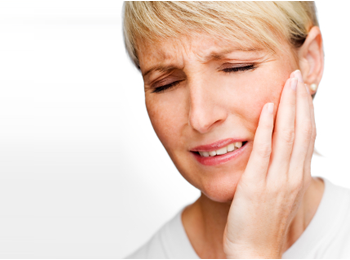
Chronic Facial Pain More Debilitating Than Back Pain

A lot of times people deal with aches and pains by simply ignoring it, or taking an aspirin in the morning before heading out to work. In many cases aches and pains are the unfortunate byproducts of getting older or working hard. For some patients, they look at having a TMJ problem in a similar fashion. They’ll take a couple aspirin, massage their jaw muscles or maybe switch to soup for a day, and then try to ignore it. But did you know that TMJ disorders can be among the most debilitating forms of pain people can suffer?

According to a recent study by University College in London, orofacial pain is any type of pain that occurs in the region of the face, including the mouth, jaw (TMJ), nose, ears, eyes, neck, and head are considered more debilitating to its sufferers than those suffering with chronic back pain or headaches. When compared, those who suffered from facial pain reported higher levels of disability and limitation than those who suffered from backaches or headaches by a margin of more than 19%.

Dr. Leeson, a member of the pain study, said. “These initial results suggest that chronic orofacial pain can have a significant impact on patient’s lives, affecting their normal daily activities, ability to work and causing marked disability.”

Though creating high levels of suffering, help is available for these problems. Rather than suffer through the pain and jeopardize your ability to perform at your job, or to have a fulfilling life, consulting with an orofacial pain specialist is the first step in getting relief. It is not uncommon for patients who have been suffering for months or even years to find considerable relief from the nonsurgical therapies that are commonly employed. If, however, care is not provided, these problems can become rather complex and challenging to manage.

Dr. Donald Tanenbaum is a specialist with offices in New York City and Long Island, NY. He is uniquely qualified to diagnose and treat facial pain associated with jaw problemsTMJreferred painnerve pain, and migraines. Find out more at www.nytmj.com.
Categories
Jaw Problems TMJ Women & Pain

Estrogen, Pain, and TMJ

Why is TMJ Disorder So Prevalent Among Women?

Not only is there a clear dominance of TMJ in women, but also the severity of the problem is often at a level virtually never seen in men. This scenario is frequently seen in the case of teenage girls, suggesting that the problems we are confronted with could be hormonal. Some research has unveiled a link between TMJ and estrogen, which could shed light on the dominance of TMJ in women.

Take the example of Mary, a 17-year-old female who came to my practice. Mary’s problems started when she was 12 years old with the onset of non-painful TM joint noises that did not interfere with eating or jaw function. Over time, pain emerged and her bite began to change, altering her profile and appearance. Before long her pain was so debilitating and her bite so altered, that there was no choice but to seek surgical treatment. Both TM joints had “dissolved away” and her jaw profile and bite had to be reestablished.

How could this happen with no history of trauma and no apparent underlying medical disease? The role of hormones, estrogen in particular, has been identified. Research has shown that Estrogen:

  • Impacts the body’s natural pain fighters (endorphins)
  • Increases inflammation in the Temporomandibular Joints
  • Compromises the strength and adaptive ability of all ligaments

These factors, coupled with lower endurance capacity in female jaw muscles, are all that is likely needed for difficult problems to arise. Additionally, research suggests there may be specific genetic predispositions that lead to unprovoked TMJ in women.

Though the treatment that Mary had received has restored function, jaw stability, and reduced her pain, there is still much to learn about gender specific jaw problems.

Dr. Donald Tanenbaum has been practicing in New York City and Long Island for over 20 years. He is uniquely qualified to diagnose and treat bruxism, TMJ and TMD problems, Sleep Apnea, facial pain, muscle pain disorders, nerve pain disorders, tension headaches, and snoring. Learn more about Dr. Tanenbaum here.

Categories
TMJ

What is a TMJ Doctor?

Because many common symptoms of TMJ problems often can be the result of other medical conditions, those who represent themselves as “TMJ Doctors” (or “TMJ Specialists”) must be able to not only recognize common TMJ problems, but also must be adequately trained and have sufficient past experience to enable them to accurately diagnose the vast number of other problems that can produce these common TMJ symptoms:

  • Facial and jaw pain
  • Diminished jaw motion
  • Facial and temporal headaches
  • Jaw muscle spasm and tension

Whether the symptoms you are concerned about are due to a facial migraine, a nerve pain problem, disease in a salivary gland or sinus, a thyroid condition, brain tumor, or strained Temporomandibular joints and jaw muscles, the “TMJ Doctor” you see must be skilled in making what is called a “differential diagnosis.” From a patient’s perspective, that means you need to know with a degree of medical certainty that your ‘TMJ’ problem is truly due to a local muscle and joint problem, and not due, instead, to some underlying medical disease process.

In today’s world, particularly in communities with access to major medical centers, hospitals or universities, you should expect your “TMJ Doctor” to have an academic appointment or faculty position at one of those institutions. He or she should also be involved with teaching, lecturing, and/or publishing, as these positions and efforts are a clear indication that there is a commitment to learning and advancement of knowledge.

Most important, don’t be fooled by the ‘TMJ Doctor” who has high-tech computerized  equipment that (allegedly) determines whether your bite is bad or if your jaw is in the wrong position. Though imaging technology (CT scans and MRI’s) is often important in making an accurate diagnosis, the vast majority of all TMJ problems can be diagnosed accurately with a careful history and examination. The adage, “The diagnosis is in the history if the doctor chooses to listen” holds true in just about all these situations.

Lastly, because most TMJ problems respond to treatment over time and with supportive measures to heal the injured TM joints and muscles, treatment most commonly should not require changes to your teeth or bite. If your “TMJ Doctor” recommends ongoing bite adjustments (grinding the tooth surfaces with a drill), crowns to fix your bite, or extensive orthodontics as the primary focus of care, these should be looked at suspiciously, and you should definitely seek a second opinion.

Categories
TMJ

The Most Important Equipment in a TMJ Doctor’s Office

Modern technology, such as imaging, has led to wonderful advances in diagnosing medical problems, but for certain patients with TMJ/TMD* complaints, TMJ doctors can better understand individual patients by simply listening and looking. That’s why the most important equipment in the office is the doctor’s ears.

How is that? Simply put, most jaw disorders are rooted in a muscle problem, and the key to resolving the issue is for the TMJ doctor to understand what has compromised the muscle in the first place. With all symptoms of TMD—pain, tightness, restricted motion, sense of bite change, odd sensations in the face—there must be an explanation for why the muscles are fatigued, irritated, or contracted to the point where these symptoms emerge. Electronic diagnostic and treatment equipment is useful for TMJ doctors, but it doesn’t always reveal the ‘why’ of the problem the way simply speaking to the patient can.

Unless there has been an identifiable trauma (accident), recent dental changes, or an underlying medical problem that leads to muscle pain or spasm, the majority of all TMD muscle problems that we see stem from life challenges, conflicts, emotions, and learned behaviors. Some of these emotional or behavior triggers can include:

  • Gum chewing
  • Nail biting
  • Biting on pen caps, straws, or plastic items
  • Phone cradling
  • Leaning forward for long periods of time

Information about these common habits can only be gathered by engaging the patient in a conversation. In the words of famous physician Sir William Osler: “The diagnosis is in the history if we choose to listen, but most of us are deaf.”

TMJ doctors’ goal is to listen first, look second, and then integrate the information gathered to treat our patients. I suspect this formula will outlive many of the high tech diagnostic tools that continue to entice the dental practitioner looking to treat the patient with TMD.

*To understand the usage of TMJ and TMD in this article, please click here.

Dr. Donald Tanenbaum has been practicing in New York City and Long Island for over 20 years. He is uniquely qualified to diagnose and treat bruxism, TMJ and TMD problems, Sleep Apnea, facial pain, muscle pain disorders, nerve pain disorders, tension headaches, and snoring. Learn more about Dr. Tanenbaum here.