Manhattan

212-265-0110

White Plains

914-227-2305

Springfield, NJ

973-315-7830

Hauppauge

631-265-3136
Categories
Headaches Jaw Problems Nightguards & Oral Appliances Orofacial Pain Sleep Apnea TMJ

How To Evaluate Yourself For TMJ

Note: This article explains how to evaluate yourself for TMJ, what you can do about it, and how to determine when you need to get some professional help.

This past year’s pandemic challenges have led more people to seek care for TMJ problems than ever before. In fact, you may be reading this article because you’ve had your first experience of TMJ during the past year.

If you suffer from these kinds of problems, there are some steps you can take to relieve your symptoms. But before you try to evaluate yourself for TMJ, you must first understand the risk factors that led to your jaw being in trouble in the first place.

As an orofacial pain specialist for the past 35 years, I have treated thousands of patients who came to me suffering from jaw problems. They usually arrive at my office with complaints of jaw pain or stiffness, headaches in their temples, or facial pain that, in some cases, is taking over their lives. Many have limited jaw opening, joint popping and/or cracking. Some even experience locked jaws upon waking up in the morning.

While a traumatic event such as a car accident or an underlying medical disorder or treatment can be the culprit, for most people a wide variety of risk factors can cause TMJ pain problems. It is my job to properly diagnose, identify the causes, help my patients cope with TMJ – and eventually, get better.

Before You Evaluate Yourself For TMJ, You Must Understand What TMJ Is

The most important thing to understand about TMJ problems is that they are orthopedic in nature. Just like any other muscle and joint structure in your body – knees and shoulders, for example – if they become overworked, sprained, fatigued or injured, pain and instability will arise. Your jaw muscles and jaw joints (TMJs) are no different. An orthopedic problem can’t be treated until what is causing the pain is identified. It’s the same for TMJ problems.

How To Evaluate Yourself For TMJ – Identify The Cause & Make Changes

TMJ problems can involve your muscles, joints or both. To evaluate yourself for TMJ joint problems, pay attention to whether the pain is in front of your ear when you move your jaw or touch the area and if your jaw joints click, pop and/or lock. If you can answer yes to both questions, you should not try to cure yourself. See a dentist with experience in TMJ care or a TMJ specialist in your area right away. (There’s a link at the bottom of this page to the American Academy of Orofacial Pain, where you can find a specialist in your area.)

To evaluate yourself for TMJ muscle problems, you would probably describe your symptoms as soreness, stiffness, spasms or achiness. If you push your fingers firmly along your jawline or into your temples, you will experience more pain than you expected. Your jaw motion may be limited but it’s not accompanied by joint clicking or popping sounds.

If you’ve determined your TMJ problem is of the muscle variety, your next step is to figure out why and how your muscles became so irritable in the first place. To do so, you’ll need to do a little investigating to find out what is happening in your life during the day and at night.

6 Daytime Behaviors & Postures That Could Be Causing Your TMJ Problems

Starting today, pay careful attention to your daytime behaviors and postures, particularly while you’re working. Working behaviors and postures are some of the leading causes of TMJ problems. And, working at home is a big reason for the considerable increase of people seeking care during the past year.

When you evaluate yourself for TMJ of the muscle variety, look for these six common daytime behaviors that could be causing your jaw or neck muscles to fatigued:

  • Your head leans forward while you work at your computer.
  • You consistently look down at your phone.
  • You hold your breath or take shallow quick breaths with your mouth open.
  •  You brace your jaw muscles (but your teeth are not clenched).
  • You often keep your teeth clenched.
  •  You bite your nails and/or cuticles, cheeks, lips or tongue.

Did you identify any of the six behaviors or postures above during your workday? If you said yes, believe it or not, that is good news! Because if you can start eliminating them right away. And there’s a pretty good chance you can start feeling better right away, too.

Start by paying attention to your breathing patterns. If you discover that you hold your breath or breathe shallowly, go online and search for “restful breathing techniques.” You’ll see a lot of results and almost any you choose will help. Also, take more breaks. And make some adjustments to your workstation to improve your head posture. (Here’s a helpful guide). Also, download a reminder app such as Time Out for Mac that will help you remember to take breaks.

5 Nighttime Factors That Could Be Causing Your TMJ Problems

An essential step in evaluating yourself for TMJ is identifying what is happening to your jaw muscles, jaw joints or neck muscles while you’re asleep. This, understandably, is not easy – but it’s definitely doable. If you consistently wake up with jaw or neck pain, tightness in your jaw, or headaches – you can assume one or more of the following four factors are present:

  • Insomnia – You have trouble falling asleep or staying asleep.
  • Fragmented Sleep – Your sleep is full of lots of small arousals. Your brain wakes you up numerous times during the night.
  • Inadequate Sleep – You routinely get less than the recommended hours of sleep. (See the link at the bottom of this page to determine what is recommended for your age group).
  • Bruxism – You clench and/or grind your teeth while you sleep.
  • Breathing Problems – You struggle with breathing due to nasal or other airway restrictions while you sleep.

If you suspect factors 1, 2 or 3, try one or more of the following:

  • Take melatonin at bedtime.
  • Don’t drink coffee after noon.
  • Don’t use your electronic devices late into the evening.
  • Stop all work-related activities one hour before going to bed.
  • Read a good book.
  • Exercise in the morning instead of after work.
  • Eat dinner earlier.
  • Practice some breathing exercises before you get into bed.
  • Try some gentle stretching or yoga before bed.

If you suspect factor 3 – Bruxism – this is for you:

If you wake up occasionally with sore teeth but nothing more severe than that, consider purchasing an over-the-counter oral appliance at your local pharmacy. (Note: there are many terms for oral appliances such as mouthguards, bite plates, and teeth protectors – they all mean pretty much the same thing.)

If your symptoms get better after wearing your over-the-counter oral appliance at night for several weeks, your next step is to visit your dentist to be fitted for a custom oral appliance. This is very important because wearing an oral appliance over a long period of time that is not custom-fitted can lead to complications such as shifting teeth, bite changes and even airway obstruction.

If your symptoms do not get better after wearing your over-the-counter oral appliance it’s time for you to get some professional help. Make an appointment with your dentist or an orofacial pain specialist. (See the link at the bottom of this page to the American Academy of Orofacial Pain to find an orofacial pain specialist).

If you suspect Factor 4 – Breathing Problems – here’s what to do:

If your self-evaluation for TMJ leads you to suspect you have a nighttime breathing problem – it may be sleep apnea and you must see a sleep professional right away. Your struggle to breathe at night is likely reducing airflow and causing your blood oxygen to lower. That places excess stress on your body.

You should opt for an overnight sleep evaluation monitored by a professional. (Link here to find a sleep center near you.) If the sleep evaluation indicates you do have a sleep breathing disorder such as apnea, there are many options for you after the sleep study. You may be told to sleep on your side, wear nasal strips, use a custom-made oral appliance, or lose weight. Many people find that a continuous positive airway pressure (CPAP) machine is a lifesaver. (Read: What Is CPAP?) In severe cases, nasal surgery, orthodontics, jaw advancement or another correction surgery may be the solution.

How To Evaluate Yourself For TMJ – In Conclusion

Let’s say you have been able to get your TMJ problems under control by changing one or more of the six daytime behaviors above. That is great. And even if your nighttime behaviors are of the Factors 1, 2, or 3 variety and you tried some of the simple solutions I recommend, there’s a chance you’re already feeling better.

TMJ problems, however, are often caused by several risk factors. For you, relief may only be achieved with a professional approach. Take a little bit of time to find a trained orofacial pain practitioner in your area and you should be able to get on the road to feeling better very soon.

Helpful Links:

American Academy Of Orofacial Pain (Look for a provider with Diplomate status)

How Many Hours Of Sleep Are Enough For Good Health?

Categories
Jaw Problems

What Causes Lockjaw?

Suffice it to say, if you wake up one morning and your jaw is locked shut, you’re going to be extremely frightened. You have lockjaw clinically known as trismus. As a TMJ and orofacial pain specialist, I see many patients every year with lockjaw. So, what causes lockjaw, and is there anything you can do about it?  

Before I answer that questions, I need to explain a bit about how our jaws work. The jaw joint is essentially a hinge and is controlled by four muscles: 1) the masseter 2) the temporalis 3) the internal pterygoid 4) the external pterygoid. These names may sound like extinct dinosaur species, but they are very delicate muscles that together perform the important job of opening and closing the jaw and moving it from side to side.

There are two causes of lockjaw –  jaw muscle spasms or impaired, incapacitated or shortened jaw muscles. To determine if your jaw is opening normally try this – open your mouth and insert three full fingers horizontally with your fingertips facing into your mouth. If they fit easily, you’re in good shape. If they don’t, read on:

What Causes Lockjaw Is A Variety Of Behaviors & Conditions  

Here’s what can cause lockjaw:

1) Daytime Behavior

When over-used, your jaw muscles, just like most other muscles in your body, can become fatigued and go into spasm. This results in pain, limited motion, or both. If you’re a gym rat, you’ve probably experienced that sensation from over-working your hamstring or calf muscle – limited motion, pain, or both. Your jaw muscles behave in exactly the same way.

Many types of daytime behavior can cause lockjaw. Your jaw muscles can become fatigued from excessive gum chewing, prolonged contact between your upper and lower teeth, frequent nail-biting, and if you keep your teeth clenched for long periods of time.

Prolonged tension in your upper neck can also cause lockjaw. Your jaw muscles can become shortened then it’s impossible for you to fully open your mouth. If you’re under a tremendous amount of stress, feel anger, discontent, worry, anxiety, or fear during a long period of time can be the cause of lockjaw symptoms. 

However, millions of people chew gum, clench their teeth, and bite their nails and they don’t develop the symptoms of lockjaw. In my field, orofacial pain, we consider those behaviors risk factors – as opposed to being the cause of lockjaw symptoms. 

2. Temporomandibular Joint (TMJ) Problems
Your jaw joints are also known as TM joints, are literally hinges that allow your top teeth and your bottom teeth to move independently of each other. Problems that arise in the TM joints can lead to jaw pain, jaw clicking, and lockjaw, to name just a few. The cause of lockjaw symptoms in these cases is a result of pain, muscle tightening, spasms, or mechanical interferences in the hinge itself. 

3. Jaw Trauma
Trauma, such as from an auto accident or sports mishap, that has caused a fracture, inflammation, muscle bruising, hematoma formation, a sprain in the TM joint can cause lockjaw. A change in the joint’s anatomy can cause it as well.

4. Cancer Therapy
Cancer therapy, such as radiation to address head or neck cancer, can cause the jaw and neck muscles to become less flexible and lead to symptoms of lockjaw. 

5. Head Or Neck Tumors

Certain tumors in jaw muscles and/or in the TM joint can cause lockjaw symptoms, as well. Tumors in the throat, larynx, pharynx, thyroid, parotid gland, or ear can also be culprits.

6. Tetanus
Most people already know that tetanus can cause lockjaw. Thankfully, modern medicine has made tetanus very rare in the United States today. It’s a bacterial infection that causes muscle spasms that most often start in the jaw then progress to the rest of the body. 

7. Other Infections
Infections such as those associated with impacted wisdom teeth, infected tonsil, or infected salivary glands can also cause lockjaw. 

8. Dental Work

Dentists often need to use a mandibular block injection with a local anesthetic to comfortably treat a patient’s lower molar tooth or to remove a lower wisdom tooth. Mandibular block injections are performed millions of times a day with no problems. But on rare occasions, a patient may wake up unable to open their mouth. This is sometimes accompanied by jaw pain that can last for a few days after the injection. The cause of lockjaw, in this case, is trauma to a nearby muscle, bleeding, too much anesthetic or a slowly-developing infection.

How Lockjaw Symptoms Are Diagnosed

To diagnose lockjaw, your doctor needs to identify the cause or risk factors associated with the symptoms. Every lockjaw situation is accompanied by some limited jaw motion. Some lockjaw symptoms include pain and soreness. Sometimes there is no pain at all – just restricted motion. A clicking jaw joint that suddenly doesn’t click anymore can be a clue, too. Your doctor may order x-rays, a CAT scan or an MRI of your TM joints, your head and/or neck depending upon the clues uncovered from your history and exam.

Every patient is different and in order for your medical professional to discover in your case what causes lockjaw it’s critical that you explain in detail what was going on right before your symptoms emerged. 

How Lockjaw Is Treated

Once your doctor has figured out what causes lockjaw in your case, he or she will develop a treatment plan tailored for you. Your plan might include jaw exercises, warm moist heat applications, anti-inflammatory medication  or antibiotics for a short period of time. Physical therapy may be recommended, as well.

For you, what causes lockjaw is only the start. A full recovery can take several months. It’s important to be patient. 

Categories
Jaw Problems

Lockjaw – What To Do When You Can’t Open Your Mouth

The clinical term “lockjaw” refers to a specific problem that can be the sign of a serious bacterial infection called Tetanus. Happily, due of the widespread use of the vaccine, it is extremely rare today for anyone in the U.S to develop it. But the expression “Lockjaw” lives on and is today what most people use to describe the scary feeling of waking up in the morning unable being unable to open your mouth without extreme pain.

In most cases, the causes of this kind of lockjaw are not because of a disease, but are usually related to overuse of the jaw muscle, which work much like a hinge. But that fact doesn’t mean that the average person doesn’t get very panicky when his or her mouth just won’t open without extreme pain.

If you were vaccinated for Tetanus as a child and you haven’t experienced any trauma or injury to your jaw, it’s likely that you can’t open your mouth because your jaw muscles are in spasm. Here are a few tips that should help ease the pain, help you open your mouth, and get you on your way:

Lockjaw: What To Do When You Can’t Open Your Mouth

First Thing In The Morning
If you wake up with jaw muscles which are in spasm and you can’t open your mouth or can only open it slightly, it’s a sign that you have either been overusing your jaw muscles during the day or you have been aggressively grinding or clenching your teeth during of the night. Unfortunately, grinding (also called bruxing) and clenching are common in today’s high-paced world especially for people who spend most of their working hours at a computer. Here’s what to do:

Lockjaw in the Morning
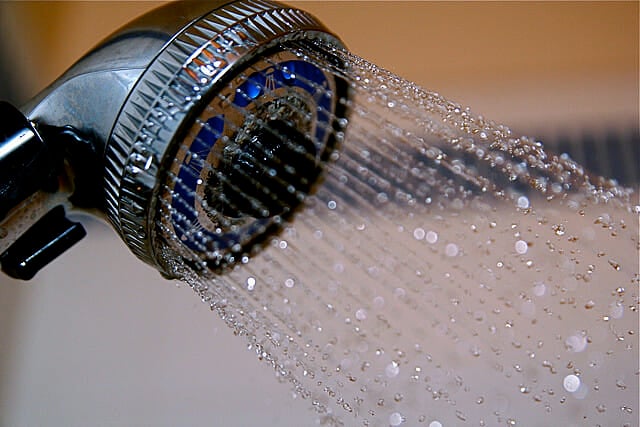
Use Moist Heat: Get into a hot shower and while the water is running on your face, gently massage your temples and your jaw. Do this for five minutes. Take a break and then do it for five more minutes. This simple method should ease the muscle spasms enough for you to gently ease your mouth open without pain.

What To Do During the Day To Avoid Lockjaw
Start to pay attention to behaviors or habits that overwork your jaw muscles and work to change them. These are commonly

  • Nail biting
  • Cuticle gnawing
  • Chewing on pens or pencils
  • Biting your lips or cheeks
  • Clenching or grinding your teeth (especially while you are working at your computer)

When To See Your Dentist
If you are experiencing a locked jaw most mornings, and if you feel or hear “clicking” in the joint your jaw joint is probably “slipping.” This is a more serious problem that needs medical attention right away.

Aside from being really frightening most cases of lockjaw are not serious. Try to change some of your habits and you will probably experience a reduction in the occurrence of this painful problem.

Dr. Donald Tanenbaum is a specialist with offices in New York City and Long Island, NY. He is uniquely qualified to diagnose and treat facial pain associated with jaw problems, and TMJ. Find out more at www.nytmj.com

Live or work in New York City or on Long Island? You can schedule a consultation with me here or call 212-265-0110

Categories
Jaw Problems

Case Study: Jaw Locking All Day With Tremendous Pain

A patient came to my office four months ago complaining that she woke up every morning with her jaw in a locked position. It was so bad that her morning routine starting by standing in the shower bathing her jaw with hot water until her jaw popped open. Then she could start her day.

Her problem however didn’t stop with this unlocking event. Her jaw would click and then lock numerous times during the day and she had no choice but to manually force it open. Each unlocking effort was accompanied with pain that intensified as the day passed. She also had to support her jaw with her hand in order to chew and she worried that her lockjaw problem would interfere with her ability to talk and fulfill her professional responsibilities as a teacher.

Remarkably her problem seemingly just started one morning. There was no history of trauma, no recent dental visits, and no underlying medical problems that could be responsible for the onset of the jaw clicking and locking. It just started one day and then took over her life.

Treating Locked Jaw

Just like a knee problem, the nature of my patient’s problem was related to compromised cartilage and unstable ligaments in the jaw joint. These problems are “orthopedic” in nature and require treatment that is similar to those used for injured knees and or ankles The treatment planned was designed to stop further injury, stabilize the joint and give the body a chance to heal.

The treatment for this patient had three parts:

• An oral appliance (orthotic) designed to prevent joint locking, relax the jaw muscles, and reduce joint inflammation.

• Exercises and physical therapy to help improve and restore proper jaw mechanics, muscle coordination, and stability of the ligaments

• Daytime behavior modification strategies to ease postural strains on the jaw and neck muscles and jaw joints

The Outcome

After four months of treatment, my patient has responded well with no morning jaw locking, no pain, better eating capacity and optimism that this problem was not going to compromise her ability to hold a teaching job. Though not ‘cured’, her orthopedic problem had stabilized and she was in her own words “better” and not in need of ongoing care in my office. Maintaining a home program would likely be all that she needed to stay comfortable and avoid future problematic situations.

This ability to help patients “get their lives back on track” never gets old and continues to be a source of my daily efforts when patients come seeking advice, guidance and care.

Dr. Donald Tanenbaum is a specialist with offices in New York City and Long Island, NY. He is uniquely qualified to diagnose and treat facial pain associated with jaw problemsTMJreferred painnerve pain, and migraines. Find out more at www.nytmj.com.

Categories
Case Studies Facial Pain Jaw Problems TMJ

Case Study: High-Powered Executive Wakes Up With A Locked Jaw

Last week a new patient came in for a consultation. She had been having pain in her jaw for quite awhile, but had ignored it. Like many of my new patients, what made her suddenly take it seriously was the terribly frightening experience of waking up with a locked jaw. Eventually her jaw loosened up enough for her to call her dentist and be referred to me. Understandably, she was pretty scared when she walked in the door.

Here’s the backstory:

This patient is a highly successful businesswoman in her early 50’s. She has a high level job as an executive for an international garment manufacturer and manages a large group of employees. She had a lot of responsibility at work, and obligations at home managing the lives of teenage children and watching out for the welfare of her aging parents. As if this was not enough, her daily struggle with a chronic digestion ailment made the challenges of life all the more difficult.

What I was able to uncover in my conversation with this patient was that unbeknownst to her, she had been resting her teeth together and clenching her teeth for a very long time, not just at night, but during the day, as well. From asking the right questions, she realized that she was maintaining a tooth contact position when working on her daily financial reports, when dealing with her bosses, and even when she was on the phone with clients.

Over time, this action of “making a fist in your face” can begin to fatigue the jaw muscles and result in the “locked jaw” and pain that this patient experienced.

You see, the mind-body connection is very strong. When you are under stress for a long period of time, the brain becomes understandably upset. As a result, the brain is unable to maintain control over blood flow, muscle tension, and nerve discharges that are essential for muscle comfort. Loss of this control therefore ultimately leads to an accumulation of irritating chemicals in your muscles like lactic acid, and others that lead to pain and muscle tightening.

In the presence of this irritating chemical environment the nerves that run through your muscles fire excessively and cause pain along with a muscle tightening result. In essence a brain under emotional siege, sets the stage for muscles to falter.

My patient left the office beginning to understand what happened to her jaw. The first thing she has to do is to begin the process of changing the destructive behaviors that had led to her jaw problems. To accomplish this she was provided with strategies designed to relax her jaw, which included a series of  breathing exercises that she must do………… but that easily fits into her day.

Beyond treatment therefore, understanding the mind-body connection is the first step to stopping damaging behaviors such as day tooth contact or clenching that often have unpleasant outcomes.

Dr. Donald Tanenbaum is a specialist with offices in New York City and Long Island, NY. He is uniquely qualified to diagnose and treat facial pain associated with jaw problemsTMJreferred painnerve pain, and migraines. Find out more at www.nytmj.com.