
Editor’s Note Updated 2025: This article remains part of our archive. For the most current overview of the TMJ and tinnitus connection, visit: https://www.nytmj.com/tinnitus-jaw-connection/
My dental practice has a unique focus. The majority of our patients come to us suffering from TMJ problems. The TM joint is the hinge connecting your jaw to the temporal bones of your skull, which are located in front of each ear. The healthy function of this joint enables you to chew, talk and yawn. When the joint is inflamed, strained, or unstable it can cause pain, limited jaw movement, and a variety of jaw noises during motion. When the muscles that move the TM joint are compromised, similar symptoms may result, as well.
There is a connection between tinnitus and TMJ problems, too, and we see patients in my practice looking for relief. But before I get into the explanation of how tinnitus and TMJ are linked, I want to be sure you understand the nature and causes of tinnitus itself.
The connection between tinnitus and TMJ is real.
What Is Tinnitus?
Tinnitus Definition: The annoying sensation of hearing a sound when no external sound is present. Patients describe these sounds with words such as ringing, humming, buzzing, roaring, clicking, and hissing. This sensation is constant for some people and intermittent for others, and it can be in one or both ears. For some sufferers, the intensity of the sounds can vary from day to day while for others it is without fluctuation in intensity.
What Causes Tinnitus?
There are many known causes of tinnitus that include identifiable damage to the inner ear hair cells, age-related hearing loss, exposure to loud noises, earwax blockage, and changes in the health of the bones in the middle ear. Less commonly, tinnitus can be associated with Meniere’s disease, trauma to the head and neck region, and/or TMJ disorders. For some people, however, the cause is never discovered.
What Is The Connection Between Tinnitus And TMJ problems?
TMJ problems are essentially orthopedic in nature. The common symptoms of TMJ are many and can include pain in the jaw muscles or specifically in the jaw joints, limited jaw motion, jaw muscle tension and tightness, jaw joint clicking, popping and or locking, headache pain in the temples, and/or a bite that doesn’t feel normal. Tinnitus is a less common symptom. When TMJ problems, however, affect the ear, symptoms can be pain, stuffiness, and/or tinnitus.
The onset of these symptoms may be due to underlying medical disorders, emotional stress which drives muscle tension, disrupted sleep, traumatic events, periods of sustained jaw opening, sleep bruxism, and daily overuse behaviors and or neck postures. All of these factors can result in joint sprains, muscle strains, muscle spasms and /or inflammation. Less common origins include a “bad bite.”
Why TMJ Problems Can Lead To Tinnitus (Or Make It Worse)
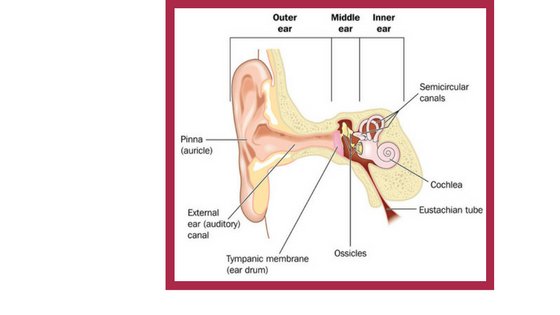
1. The nerves that serve the jaw muscles and jaw joint are also responsible for the function and tone of muscles that determine the size of the Eustachian tube and tone of the tympanic membrane. Alterations in the function of these two structures can be responsible for tinnitus.
2. There is one specific ligament connecting a middle ear bone (the malleus) to the jawbone. When a TMJ problem changes the position of the lower jaw the malleus can be altered in its function due to ligamentous traction and that can lead to tinnitus.
3. The main nerve supply from the TM Joint has been shown to have connections to parts of the brain involved with hearing and the interpretation of sound. If TMJ problems alter the function of this nerve, it‘s quite possible that the brain will interpret normal sounds as abnormal and patients report tinnitus.
4. Worth mentioning is that because TMJ problems are often associated with neck problems, evaluations of the neck must be also part of an overall assessment. There is evidence that nerve endings in the neck make connections to the hearing centers of the brain. Ear symptoms, therefore, have been shown to emerge as a result of long-standing neck problems or those created by acute trauma.
Determining If A TMJ Problem Is Driving Tinnitus Symptoms
Try to determine if your tinnitus symptoms are influenced by moving your jaw (chewing, yawning, talking, opening it widely, sticking it forward). If you notice a link, then it’s very possible that TMJ problems are at the root of your tinnitus. The same is true for head and neck movements.
TMJ Neck Treatment To Help Tinnitus
If your tinnitus is related to your jaw or neck, dealing with these problems will be very helpful. There are a host of treatment strategies available including reducing overuse behaviors and or postures (such as teeth grinding, nail-biting, frequent computer work), exercises, home TENS therapy, muscle injections or dry needling techniques, BOTOX®, the use of oral appliances to support your jaw joints and jaw muscles (especially at night), physical therapy, medications, meditation, mindfulness training, and diaphragmatic breathing instruction.
These treatments, if found to be helpful, may require several weeks or months to see maximum results.
Summary
As I mentioned before, tinnitus can be caused by damage to your inner ear, hearing loss, exposure to loud noises, earwax blockage, and more. If your doctor has not found a link between your symptoms to any of the above, it may be time for an assessment of your jaw and neck structures. There may, indeed, be a connection between your tinnitus and TMJ problems.
Here’s a directory of orofacial pain professionals around the world: American Academy of Orofacial Pain.
You can get more information about TMJ and ear problems here: TMJ and its Relationship to Ear Problems and Sinus Symptoms
Live or work in New York City or on Long Island? You can schedule a consultation with me here or call 212-265-0110.
Dr. Donald Tanenbaum is a dentist with offices in New York City and Long Island, NY. He is uniquely qualified to diagnose and treat facial pain associated with jaw problems, TMJ, referred pain, nerve pain, and migraines. You can contact the office here.

