Manhattan

212-265-0110

White Plains

914-227-2305

Springfield, NJ

973-315-7830

Hauppauge

631-265-3136
Categories
Nightguards & Oral Appliances

Can a Store-Bought Nightguard Change Your Bite?


The answer is: Yes.

A store-bought nightguard can change your bite, sometimes significantly, if it does not fit well or does not cover all of your teeth. These changes can lead to new discomfort, shifting bite patterns, or jaw and muscle pain.

Many people turn to store-bought nightguards hoping to reduce clenching or protect their teeth. Unfortunately, these over-the-counter guards can sometimes create new problems, including changes in how the bite fits together. This most often occurs when the nightguard does not cover all of the teeth or does not fit the bite correctly, allowing some teeth to rise or shift over time.

Questions People Often Ask About Store-Bought Nightguards

Q: Can a store-bought nightguard change my bite?
A: Yes. If the nightguard does not fit well or does not cover all your teeth, it can gradually shift your bite.

Q: Why do my teeth feel different after using a nightguard?
A: Over-the-counter nightguards may place uneven pressure on the teeth or leave some teeth uncovered, which can cause subtle movement over time.

Q: Will my bite go back to normal if I stop using the nightguard?
A: In many cases it will. Bite changes often improve once you discontinue the poorly fitting appliance and receive the right guidance.

Q: When should I see a TMJ specialist?
A: If your bite no longer feels right, your front teeth no longer meet, or you feel new jaw discomfort after using a nightguard, it is time to see a specialist.

We See This More Often Than Many People Realize

At New York TMJ & Orofacial Pain, we regularly meet people who try to help themselves by buying a nightguard from a pharmacy or online. These nightguards seem harmless and easy to use, but they are not always the right solution.

Jessica was one of those patients.

After a long dental visit left her jaw sore, she bought a store-bought nightguard hoping it would ease tension and protect her teeth. Instead, her bite slowly began to change. Her front teeth no longer met the way they used to, chewing felt different, and her jaw muscles remained tender.

She eventually saw an orthodontist, who recognized that the problem was not orthodontic and referred her to our practice in the New York City metropolitan area.

When Jessica arrived, we found that the store-bought nightguard she had used covered only some of her teeth. Over time, the uncovered teeth had begun to rise out of their proper position, which caused her bite to shift.

Jessica is far from alone.

Why Store-Bought Nightguards Can Shift Your Bite

Nightguards are not all the same, and they do not all protect your teeth in the same way. Here are the main reasons store-bought versions can cause trouble.

  • They often do not fit very well
    If a nightguard does not match your bite, even slight pressure changes can lead to tooth or jaw muscle changes over time.
  • They are typically soft and chewable
    Many people chew on soft nightguards while asleep without realizing it. This increases muscle strain and reinforces clenching habits.
  • They rarely cover all of your teeth
    This is the biggest concern. When back teeth are not covered, they may slowly rise upward. This changes the way the teeth meet and can create a noticeably different bite pattern. Jessica experienced exactly this.

Research has shown that certain types of nightguards, especially those that do not cover all of the teeth, can contribute to unwanted bite changes. (For a detailed review, see this article from the  British Dental Journal.)

What This Looks Like (A Simple Visual Guide)

How Bite Changes Happen Over Time

 

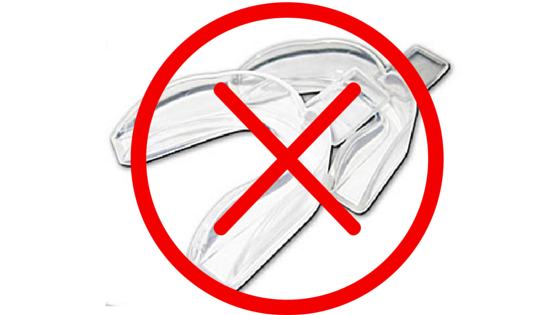
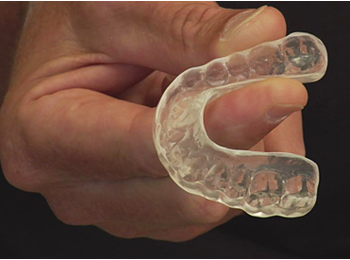
Bite with a store-bought nightguard in place, showing that the back teeth are not fully covered.
A normal bite where the upper and lower teeth meet evenly.
Bite with a store-bought nightguard in place, showing that the back teeth are not fully covered.
With a store-bought nightguard in place, the back teeth may not be fully covered.
Diagram showing how uncovered back teeth can slowly rise over time when a nightguard does not cover them.
Over time, teeth that are not covered by the nightguard can slowly rise, changing the bite.
Diagram showing how only the back teeth touch and the front teeth no longer meet after long-term use of a store-bought nightguard.
Eventually, only the back teeth may touch, and the front teeth may no longer meet.

How We Helped Jessica Recover

The first and most important step was stopping the store-bought nightguard. Once she discontinued it, we focused on calming irritated muscles and reducing the clenching patterns that had made her symptoms worse.

Over the next several months, her bite began improving. We monitored how her teeth settled and collaborated with her orthodontist once her bite stabilized. When the time is right, a custom-made nightguard that covers all of her teeth will help protect her long-term without altering her bite.

Jessica felt relieved once she understood what had happened and had a clear plan forward.

If Your Bite Has Changed After Using a Nightguard, You Are Not Alone

People from all over the NYC metro area come to us with concerns like these. They may feel confused or frustrated when a nightguard they purchased to protect their teeth ends up causing new symptoms. The reassuring news is that many bite changes improve once the right steps are taken.

When to Seek Care

A professional evaluation is recommended if you notice that your bite suddenly feels different, your front teeth no longer meet, only one side of your teeth touches, your jaw muscles feel tense or tired, the nightguard seems to make symptoms worse, or you are unsure whether the appliance is helping or harming you.

If you are in the New York City metropolitan area, our team can help determine what is happening and guide you toward the safest and most effective treatment.

Why People Choose Us

At New York TMJ & Orofacial Pain, we focus exclusively on TMJ disorders, orofacial pain, bite changes, bruxism, and appliance-related complications. Our practice is led by board-certified specialists in orofacial pain, providing evidence-based care in a calm and supportive environment.

Patients seek us out when symptoms are confusing or when treatments they tried elsewhere, such as store-bought nightguards, have made things worse. We coordinate closely with your general dentist, orthodontist, or other providers to ensure your care is safe, effective, and well-managed.

Looking for an orofacial pain specialist outside the NYC metro area

Use this directory to find a board-certified specialist near you. Simply go to this website and enter your location and country.

Frequently Asked Questions

Q: Can a store-bought nightguard really change my bite?
A: Yes. If it does not fit well or does not cover all of your teeth, it can gradually shift the bite.

Q: Is this permanent?
A: In many cases, no. Bite changes often improve once the appliance is discontinued, although some situations may require orthodontic or restorative support.

Q: What should I do first?
A: Stop using the store-bought nightguard and schedule a professional evaluation to understand what is happening.

Q: Are custom nightguards safer?
A: Yes. Custom appliances are designed to protect the teeth and jaw without altering the way the bite comes together.

Q: If my bite feels off, does that mean something is wrong?
A: Not always, but it is a sign that the situation needs to be evaluated sooner rather than later.

Q: How long does recovery take?
A: Improvements can begin within weeks to months after discontinuing a poorly fitting appliance, especially when the right care plan is in place.
 

Related Reading

Categories
Nightguards & Oral Appliances TMJ

Can Mouth Guards Cure TMJ?

Patients will often come to me suffering from symptoms of TMJ and looking for solutions that don’t involve medication or surgery. Symptoms such as facial pain, headaches in the temples, inability to open to the mouth widely, sensitive teeth, or aching and throbbing jaw muscles can be unbearable. There are numerous remedies, for jaw related symptoms that include massages, home exercises, physical therapy, modified diets, and changes in daytime behaviors/postures. At times an oral appliance is an important part of care. These devices are commonly used for the treatment of TMJ problems and can be used in a number of different ways.

What is an oral appliance?

An oral appliance is a device that fits over your teeth with the intent of reducing tooth wear, tooth mobility, tooth sensitivity, muscle pain and soreness and joint pain and instability. At times but not frequently these devices are designed to “align the jaw.”  They can also be used to discourage some of the daytime behaviors many patients don’t realize they’re doing, such as resting their teeth together, clenching their teeth, or biting their nails or cuticles. These appliances can be worn at night and/or during the day

In general the intent of these appliances is based on the problems experienced by patients.

Night guards: Most commonly these appliances are chosen by dentists to address tooth wear, soreness, and mobility that occur as a result of night clenching or grinding of the teeth. Many patients that develop tooth wear do not even realize that they have a problem and often deny grinding their teeth at night. These devices when used in patients without active symptoms (just wear of the teeth) don’t require much adjustment and should be brought by the patient when they return to the dentist for tooth cleaning visits. Typically these devices are custom fit so that they are retentive, not too thick, and modifiable over time. Over the counter devices sold in pharmacies and online are for the most part inadequate, as they are often too thick, poorly retentive, and inadequately cover all of the teeth. As a result these devices can often prompt more clenching, and/or allow tooth shift.

Night appliances to address TMJ problems: Based on the specific jaw problem that is diagnosed (muscle soreness, morning temporal headaches, limited jaw opening in the morning…etc) oral appliances at night are designed to reduce overuse and loading forces to the TM Joints and jaw muscles. The biting surface of the appliance is therefore designed and modified to most efficiently address the problems at hand. Most commonly the biting surfaces are flat but, at times, inclines and ramps are used to confront unstable joint ligaments and displaced discs. When used in patients with active symptoms, these appliances require frequent modifications requiring patient follow-up visits.

Day appliances to address TMJ Problems: At times there is necessity to have a patient wear an appliance during the day. For the most part these appliances are needed when there is extreme instability in a TM joint that has led to clicking, locking, and pain problems. These appliances are not worn all day and virtually never during chewing. At other times, oral appliances worn during the day hours can be used to get in the way of day behaviors and/or remind patients that during the day the jaw should be hanging in a rest position with the teeth apart.

How about oral appliances to re-align the jaw? This concept of jaw re-alignment to address a TMJ problem remains controversial. To date there is no science to support the concept that a poor bite or mal-aligned jaw is responsible for the emergence of TMJ symptoms. At most a bad bite or mal-aligned jaw may be a risk factor but with no more weight than other risk factors such as; female gender, gum chewing, clenching, night grinding, or stress. As long as there remain millions of people with bad bites and asymmetric jaws without symptoms this concept has to be viewed with skepticism. In addition, if an appliance were to be made to re-align the jaw, it would require the patient to bite or rest on it when in the mouth to hold the jaw in the ‘better’ position. This action of course would violate the principle that the jaws should hang at rest during the day. Clearly this option must be chosen with great care.

From an overall perspective the concept of curing a TMJ problem with an oral appliance is probably a bit of a stretch. Their use however is a critical part of TMJ treatment!

These appliances are extremely helpful in reducing the damage from night clenching or grinding. They work by diminishing the forces exerted on the TM joints and by diminishing the amount of contracture that can be generated in the jaw muscles.  Night guards are most effective when custom fit, and adjusted over the course of time. Or you can purchase a generic set at a drug store. Obviously, custom-made night guards that have been conformed to your individual bite-print are more effective in treating TMJ symptoms, but the trade-off is that they’re more expensive.

  • Bite Splints: This form of therapy uses a mouth guard to physically correct the bite, rather than just relieve pain or reduce damage to the teeth. Bite splints are best for you if you have more extreme TMJ symptoms that need correcting in order to have a hope for any long-term relief. The primary difference between a bite splint and a night guard is that bite splints are worn around the clock, 24-7. It’s a full commitment to correcting the misalignment issues that are causing your TMJ.

So, can mouth guards cure your TMJ? The short answer is: Yes. In some cases, particularly with corrective bite splints, you can realign your bite over the course of time and eliminate those painful TMJ symptoms. In other cases, mouth guards can relieve your symptoms to the point where you feel very little pain or discomfort at all.

If you or someone you know is experiencing persistent or acute pain in the face or jaw, we invite you to set up a consultation with one of our Orofacial Pain specialists in the NYC metropolitan area. Our office locations and contact information are below.

Categories
Headaches Jaw Problems Nightguards & Oral Appliances Orofacial Pain TMJ

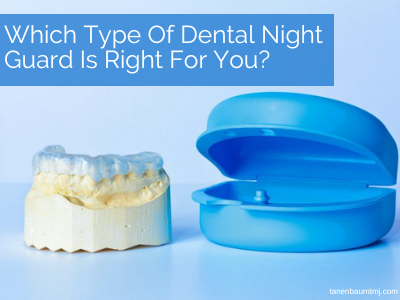
Which Type Of Dental Night Guard Is Right For You?

As an orofacial pain specialist, patients come to me when they’re suffering from the painful symptoms of a temporomandibular disorder, which you may know as TMJ. TMJ refers to the temporomandibular joint, the joint that enables you to open and close your mouth. Many new patients who come to my office have been wearing a standard dental night guard (sometimes called an oral appliance, occlusal splint, or mouth guard) while they sleep, but their symptoms are not improving or even getting worse. Before I explain which type of dental night guard is right for you, I want to make sure you understand TMJ and its causes.

First, What Causes TMJ?

Symptoms of jaw (TMJ) problems often arise due to sleep bruxism, a condition characterized by constantly grinding or clenching your teeth during sleep. Sleep bruxism affects about 10% of adults and up to 15% of children.

The American Dental Association has been surveying dentists about TMJ since the beginning of the pandemic. More than 70% report a significant increase of patients who are grinding and clenching their teeth both during sleep and while awake (called awake bruxism) – many of whom never had the issue before. Some patients even have cracked or broken teeth as a result of bruxing. Bruxism is thought to be related to several risk factors, including high-stress levels – so it comes as no surprise that this increase coincides with the pandemic.

How To Determine Which Type of Dental Night Guard Is Right For You

If you’re like many people, your dentist may have informed you that your teeth are becoming flat and worn-down because of grinding and clenching while you’re asleep. Your dentist may have recommended you start wearing a dental night guard while you sleep, or you may have already purchased one over-the-counter at your pharmacy.

If this sounds familiar, the standard type of night guard made by your dentist is probably adequate. However, over-the-counter night guards must be used with caution and for a limited amount of time because they can cause your teeth to shift.

However, if you’re one of those people who have a sense that something’s wrong because your teeth are sore, or your jaw muscles feel tight when you wake up in the morning, or if you have any of the symptoms listed below, a standard guard made by your dentist or an over-the-counter night guard you buy at a pharmacy is probably not the dental night guard that’s right for you.

All Dental Night Guards Are Not The Same

TMJ problems often involve the structures of your temporomandibular joints and usually require more evaluation and different types of dental night guards for your specific problem. If you suffer from any of the TMJ symptoms below, a standard dental night guard will likely not address your specific problem and could even make your problems worse.

Symptoms of TMJ:

  • Difficulty opening your mouth
  • Pain (beyond soreness or discomfort) when opening/closing your mouth
  • Jaw pain when you eat
  • Clicking or popping in your jaw during movement
  • A sense that your jaw is locked
  • A feeling that your bite is “off”
  • Daily pain and tension in your face
  • Headaches when you wake up
  • Tension or pain in your neck

Like other joint systems in your body, TM joint problems are orthopedic problems. There are ligaments that support your jaw joints and shock-absorbing discs that cushion them. And, there’s also a lubrication system that keeps your TMJs moist and nourished. These all can become compromised due to teeth grinding and clenching, whether it happens while you’re asleep, during the day, or both.

The result is often injury to your TMJs resulting in sprains, instability and painful inflammation. Sometimes, the pressure of grinding and clenching can even cause one of your shock-absorbing discs to change and cause joint noises, lockjaw and pain.

What To Do Next

Your next step is to make an appointment with an orofacial pain specialist. An orofacial pain specialist will likely provide you with a clear understanding of your problem (a specific diagnosis beyond “you have TMJ.”). And explain why your jaw muscles and joints are in trouble and what treatments are available in addition to a dental night guard. Many factors can give rise to a TMJ problem, so you will likely be asked questions about your medical health, mental health, sleep, dental history, and about you as a person.

Based on the information gathered and an examination, there’s a good chance your orofacial pain specialist will fabricate a dental night guard that’s right for you – designed to address your specific orthopedic problem – not just to protect your teeth. Factors like the thickness of the night guard, its surface (flat or designed to prevent shifting of the lower jaw), its use on the upper or lower teeth, and where the support is provided are just some of the factors that will be considered.

To find an orofacial pain specialist in your area, ask your dentist for a referral or check the directory at the American Board of Orofacial Pain website.

Your Dental Night Guard Needs To Be Monitored

A diagnosis beyond “You have TMJ” is essential in designing a night guard that will reduce strain and injury to your jaw muscles and tendons, joint ligaments, shock-absorbing discs and lubrication systems. Here’s the most important thing to understand: regardless of whether your dental night guard was designed by your dentist or an orofacial pain specialist, it will not stop your bruxism. When properly designed, your night guard will instead reduce the impact on your teeth, muscles and TMJs caused by your grinding and clenching. In essence, it lets you clench or grind in a “better neighborhood” with the goal of keeping more injury from occurring while you work on reducing the risk factors that caused your jaw to be in trouble in the first place.

And, because a well-constructed dental night guard redistributes force, it must be monitored and adjusted while healing occurs and your symptoms change. It’s essential to go in for regularly scheduled reassessments and modifications to maximize the potential for treatment to be successful.

So, Which Type Of Dental Night Guard Is Right For You?

If you wake up with any of the TMJ symptoms above – even if you’ve been wearing a dental night guard, do not give up hope! A more specific diagnosis, a better understanding of why you have the problem, and a night guard designed to address your individual symptoms may well be the answer. Based upon the nature of your problem, more comprehensive care is usually part of the plan, which may include exercises, stress-reducing activities such as mediation or yoga, medication, dry needling and trigger point injections, BOTOX® injections or joint injections. These decisions are best made by an orofacial pain specialist.

Feel better!

Learn more about TMJ and bruxism here

Categories
Headaches Jaw Problems Nightguards & Oral Appliances Orofacial Pain Sleep Apnea TMJ

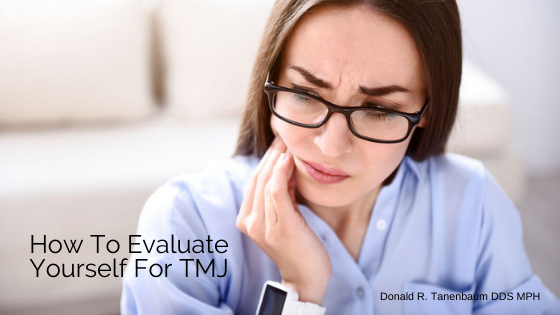
How To Evaluate Yourself For TMJ

Note: This article explains how to evaluate yourself for TMJ, what you can do about it, and how to determine when you need to get some professional help.

This past year’s pandemic challenges have led more people to seek care for TMJ problems than ever before. In fact, you may be reading this article because you’ve had your first experience of TMJ during the past year.

If you suffer from these kinds of problems, there are some steps you can take to relieve your symptoms. But before you try to evaluate yourself for TMJ, you must first understand the risk factors that led to your jaw being in trouble in the first place.

As an orofacial pain specialist for the past 35 years, I have treated thousands of patients who came to me suffering from jaw problems. They usually arrive at my office with complaints of jaw pain or stiffness, headaches in their temples, or facial pain that, in some cases, is taking over their lives. Many have limited jaw opening, joint popping and/or cracking. Some even experience locked jaws upon waking up in the morning.

While a traumatic event such as a car accident or an underlying medical disorder or treatment can be the culprit, for most people a wide variety of risk factors can cause TMJ pain problems. It is my job to properly diagnose, identify the causes, help my patients cope with TMJ – and eventually, get better.

Before You Evaluate Yourself For TMJ, You Must Understand What TMJ Is

The most important thing to understand about TMJ problems is that they are orthopedic in nature. Just like any other muscle and joint structure in your body – knees and shoulders, for example – if they become overworked, sprained, fatigued or injured, pain and instability will arise. Your jaw muscles and jaw joints (TMJs) are no different. An orthopedic problem can’t be treated until what is causing the pain is identified. It’s the same for TMJ problems.

How To Evaluate Yourself For TMJ – Identify The Cause & Make Changes

TMJ problems can involve your muscles, joints or both. To evaluate yourself for TMJ joint problems, pay attention to whether the pain is in front of your ear when you move your jaw or touch the area and if your jaw joints click, pop and/or lock. If you can answer yes to both questions, you should not try to cure yourself. See a dentist with experience in TMJ care or a TMJ specialist in your area right away. (There’s a link at the bottom of this page to the American Academy of Orofacial Pain, where you can find a specialist in your area.)

To evaluate yourself for TMJ muscle problems, you would probably describe your symptoms as soreness, stiffness, spasms or achiness. If you push your fingers firmly along your jawline or into your temples, you will experience more pain than you expected. Your jaw motion may be limited but it’s not accompanied by joint clicking or popping sounds.

If you’ve determined your TMJ problem is of the muscle variety, your next step is to figure out why and how your muscles became so irritable in the first place. To do so, you’ll need to do a little investigating to find out what is happening in your life during the day and at night.

6 Daytime Behaviors & Postures That Could Be Causing Your TMJ Problems

Starting today, pay careful attention to your daytime behaviors and postures, particularly while you’re working. Working behaviors and postures are some of the leading causes of TMJ problems. And, working at home is a big reason for the considerable increase of people seeking care during the past year.

When you evaluate yourself for TMJ of the muscle variety, look for these six common daytime behaviors that could be causing your jaw or neck muscles to fatigued:

  • Your head leans forward while you work at your computer.
  • You consistently look down at your phone.
  • You hold your breath or take shallow quick breaths with your mouth open.
  •  You brace your jaw muscles (but your teeth are not clenched).
  • You often keep your teeth clenched.
  •  You bite your nails and/or cuticles, cheeks, lips or tongue.

Did you identify any of the six behaviors or postures above during your workday? If you said yes, believe it or not, that is good news! Because if you can start eliminating them right away. And there’s a pretty good chance you can start feeling better right away, too.

Start by paying attention to your breathing patterns. If you discover that you hold your breath or breathe shallowly, go online and search for “restful breathing techniques.” You’ll see a lot of results and almost any you choose will help. Also, take more breaks. And make some adjustments to your workstation to improve your head posture. (Here’s a helpful guide). Also, download a reminder app such as Time Out for Mac that will help you remember to take breaks.

5 Nighttime Factors That Could Be Causing Your TMJ Problems

An essential step in evaluating yourself for TMJ is identifying what is happening to your jaw muscles, jaw joints or neck muscles while you’re asleep. This, understandably, is not easy – but it’s definitely doable. If you consistently wake up with jaw or neck pain, tightness in your jaw, or headaches – you can assume one or more of the following four factors are present:

  • Insomnia – You have trouble falling asleep or staying asleep.
  • Fragmented Sleep – Your sleep is full of lots of small arousals. Your brain wakes you up numerous times during the night.
  • Inadequate Sleep – You routinely get less than the recommended hours of sleep. (See the link at the bottom of this page to determine what is recommended for your age group).
  • Bruxism – You clench and/or grind your teeth while you sleep.
  • Breathing Problems – You struggle with breathing due to nasal or other airway restrictions while you sleep.

If you suspect factors 1, 2 or 3, try one or more of the following:

  • Take melatonin at bedtime.
  • Don’t drink coffee after noon.
  • Don’t use your electronic devices late into the evening.
  • Stop all work-related activities one hour before going to bed.
  • Read a good book.
  • Exercise in the morning instead of after work.
  • Eat dinner earlier.
  • Practice some breathing exercises before you get into bed.
  • Try some gentle stretching or yoga before bed.

If you suspect factor 3 – Bruxism – this is for you:

If you wake up occasionally with sore teeth but nothing more severe than that, consider purchasing an over-the-counter oral appliance at your local pharmacy. (Note: there are many terms for oral appliances such as mouthguards, bite plates, and teeth protectors – they all mean pretty much the same thing.)

If your symptoms get better after wearing your over-the-counter oral appliance at night for several weeks, your next step is to visit your dentist to be fitted for a custom oral appliance. This is very important because wearing an oral appliance over a long period of time that is not custom-fitted can lead to complications such as shifting teeth, bite changes and even airway obstruction.

If your symptoms do not get better after wearing your over-the-counter oral appliance it’s time for you to get some professional help. Make an appointment with your dentist or an orofacial pain specialist. (See the link at the bottom of this page to the American Academy of Orofacial Pain to find an orofacial pain specialist).

If you suspect Factor 4 – Breathing Problems – here’s what to do:

If your self-evaluation for TMJ leads you to suspect you have a nighttime breathing problem – it may be sleep apnea and you must see a sleep professional right away. Your struggle to breathe at night is likely reducing airflow and causing your blood oxygen to lower. That places excess stress on your body.

You should opt for an overnight sleep evaluation monitored by a professional. (Link here to find a sleep center near you.) If the sleep evaluation indicates you do have a sleep breathing disorder such as apnea, there are many options for you after the sleep study. You may be told to sleep on your side, wear nasal strips, use a custom-made oral appliance, or lose weight. Many people find that a continuous positive airway pressure (CPAP) machine is a lifesaver. (Read: What Is CPAP?) In severe cases, nasal surgery, orthodontics, jaw advancement or another correction surgery may be the solution.

How To Evaluate Yourself For TMJ – In Conclusion

Let’s say you have been able to get your TMJ problems under control by changing one or more of the six daytime behaviors above. That is great. And even if your nighttime behaviors are of the Factors 1, 2, or 3 variety and you tried some of the simple solutions I recommend, there’s a chance you’re already feeling better.

TMJ problems, however, are often caused by several risk factors. For you, relief may only be achieved with a professional approach. Take a little bit of time to find a trained orofacial pain practitioner in your area and you should be able to get on the road to feeling better very soon.

Helpful Links:

American Academy Of Orofacial Pain (Look for a provider with Diplomate status)

How Many Hours Of Sleep Are Enough For Good Health?

Categories
Nightguards & Oral Appliances

Tips To Make a Night Guard Last

A nightguard is an oral appliance that is used to protect teeth from grinding and clenching. These conditions lead to excessive
forces being applied to teeth, which can lead to wear and structural damage.

Teeth grinding tends to occur during sleep, so most people with the condition are not even aware of it until a roommate or partner lets them know about their noisy habit. Teeth grinding is believed to be caused by a variety of factors like overactive jaw muscles, stress, a poor bite or emotional issues.

Taking care of your nightguard

A nightguard helps to cushion the forces applied to teeth due to teeth grinding. The appliance is inserted into the mouth and it protects teeth during sleep. Properly maintaining your nightguard allows you to increase its longevity. Here are some things you should be doing to keep your nightguard in good condition:

  • Rinse it out in the morning: Nightguards should be rinsed with cool water in the morning to remove any plaque and saliva that accumulated on them during sleep.
  • Clean it with a toothbrush: A toothbrush should be used to clean the night guard each day. There is no need to use any toothpaste since the abrasives in it can damage the appliance, leading to it wearing down faster. Gently brush the night guard with a toothbrush and rinse it with cool water.
  • Air dry after use: Nightguards should be dried before being stored in a case. Find a clean, cool area to air dry it and place it on a paper towel. It takes about half an hour for most nightguards to dry out.
  • Store it in the proper case: Nightguards typically come with a storage case provided by a dentist. These cases are designed to keep the appliance germ-free and clean, so use it as directed.
  • Deep clean as needed: Regardless of how well nightguards are cleaned, bacteria will accumulate on their surfaces over time. Some of these bacteria can lead to illnesses when allowed to grow to unhealthy levels. A deep cleaning helps to remove bacteria building up on the appliance. This involves soaking the appliance in denture solution for about an hour or soaking it in antibacterial mouthwash for the same amount of time. Be careful not to overdo it since excessive soaking can damage the appliance

Protect your teeth with a nightguard

Often wake up in the morning with your teeth hurting, a headache or a sore jaw? It might be the result of teeth grinding. The habit will eventually lead to many of your teeth becoming damaged due to the excessive forces they are regularly exposed to. A nightguard helps to protect your teeth against these forces.

Give us a call or visit our New York clinic so our dentist can evaluate your condition. Treatments can be performed, and the dentist can provide you with a customized nightguard.

Categories
Nightguards & Oral Appliances

Use a Night Guard to Protect Your Teeth While Sleeping


If you habitually grind your teeth while sleeping, wearing a night guard each night is a great way to protect them. These devices reduce the stress put on teeth when grinding, and this leads to less damage as a result of bruxism.

How a night guard protects your teeth

Night guards do not actually do anything to prevent or treat bruxism. Teeth grinding is often the result of another condition the patient is dealing with, like stress, emotional issues or overactive jaw muscles. The only way to treat bruxism is by addressing the underlying cause. Given how hard it can be to diagnose the cause of bruxism (especially if the cause is non-physical), dentists often recommend using a night guard to minimize the damage being done to the patient’s teeth while the condition is being treated.

Why bruxism is bad for teeth

Teeth grinding leads to a person’s teeth enamel becoming damaged, and that can lead to a host of dental issues. Teeth enamel is the strongest part of the human body. It serves as a barrier that protects teeth from things that can damage them, like acids produced by bacteria that live in the oral cavity.

The enamel protects the inner layers of a tooth, like the dentin and pulp chamber. The pulp chamber houses a tooth’s soft tissue and nerves. People often experience consistent toothaches once the contents are exposed to saliva, food particles and bacteria.

Teeth grinding literally does what the name implies. If left untreated, it will wear a tooth down until it reaches the pulp chamber. The patient would experience unbearable pain at that point, and the dentist might need to remove the affected teeth to end the pain.

By wearing a night guard, patients can reduce the damage done to their teeth if they grind them while sleeping. The night guard absorbs a huge portion of the forces generated by their jaw, and instead of teeth enamel being worn down, the mouth guard is worn down instead.

Selecting the right night guard

Patients have two main options when it comes to selecting a mouth guard for bruxism:

1. Stock mouth guard

These are the cheapest alternative for those who grind their teeth. They are a one-size-fits-all kind of device, so patients should not expect the most comfortable fit. A stock appliance that does not fit properly can lead to the person’s teeth being misaligned, which in turn can lead to even greater forces being exerted on their teeth.

People who go this route should at least get no-impression, custom-fit devices.

2. Customized mouth guard

These are customized for the patient by a dentist and provide a much better fit than alternatives. They reduce the effects of bruxism and can even improve the alignment of the wearer’s teeth. These devices are made in a dental lab, so it can take a couple of weeks before they are ready.

Dealing with bruxism? Talk to a dentist about treatment and getting a customized mouth guard.

Categories
BOTOX® Bruxism Jaw Problems Nightguards & Oral Appliances Orofacial Pain

BOTOX® For Jaw Problems – Who To Trust

The effectiveness of BOTOX® to erase the signs of aging is well-known. But BOTOX®, as you may have heard, can be used to treat a number of medical conditions, as well. As the popularity of BOTOX® has grown so has the number of people who are willing to inject it. BOTOX® for jaw problems, including symptoms associated with TMJ (temporomandibular joint dysfunction), is no exception.

If you’re reading this article you’re possibly experiencing jaw pain or know someone who is. I’ve been treating patients for jaw problems for over 30 years, and during most of that time, I depended upon oral appliances (also called tooth protectors, night guards, or bite plates) as part of first-line therapy to help my patients. Countless people are a tremendous amount of relief from the devices and some won’t consider sleeping without them.

Unfortunately, a small percentage of people do not get relief from first-line TMJ treatment, and some of them develop even more jaw symptoms when using them. If you’re one of these folks, you may be considering injections of BOTOX® for jaw problems as many others are, too.

However, it’s critical for you to understand that BOTOX®, like the oral appliances that help so many of my patients, will not cure your jaw problem. You must address the reasons your jaw got into trouble in the first place.

For BOTOX® for jaw problems to work effectively, it must be injected into both the masseter and temporalis muscles. And, the injections will likely need to be repeated for a time at three-month intervals. Your jaw is a complex structure and is integral to the quality of your life.

You need to be extremely careful about who you choose to administer BOTOX® injections. In some cases, BOTOX® doesn’t work and may even do more harm than good.

BOTOX® For Jaw Problems Is A Serious Decision

First, it’s critical that you are evaluated by an experienced orofacial pain specialist before you have BOTOX® injected into your delicate jaw muscles. Orofacial pain specialists have a specific focus on jaw problems and they have the experience, education, skill and knowledge to determine if BOTOX® for jaw problems will help you.

Here are five scenarios where BOTOX® for jaw problems can be appropriate:

1. You Overuse Your Jaw Muscles

When jaw muscles become overworked, over-built, and consequently, sore and painful, it can be for a variety of reasons. Most people know that TMJ symptoms can be caused by grinding and clenching your teeth at night. But, there are a lot of other causes of TMJ that happen during the day such as gum chewing, nail or cuticle biting, gnawing on pens or pencils, or even bracing your jaw muscles as you work, especially when you sit for hours at a computer.

I do administer BOTOX® for jaw problems in my practice, but not before I work closely with a patient and help them modify or eliminate the overuse behaviors that caused their problems in the first place. Many strategies including muscle-stretching exercises, breathing exercises, and relaxation techniques are very effective and non-invasive. If the overuse behaviors are not addressed and changed, BOTOX® for jaw problems has little – or no – benefit.

2. Your Jaw Muscles Bulge

BOTOX® for jaw problems is predictably effective when a patient’s jaw muscles are so overbuilt that they bulge even when they’re contracted. 

3. You Have Jaw Pain Only On One Side

If your jaw pain is not the same on both sides, before you choose BOTOX® injections, you must be examined by a medical professional who is educated and experienced in the relationships between teeth, bite and jaw postures and how they influence muscle health, overdevelopment and pain. BOTOX® injections must be placed strategically and it’s critical that the correct amount is injected into each muscle site. It’s critical that the person administering the injections has a great deal of expertise.

4. If You Have A Locked Jaw

It requires some deep investigating to determine when and if BOTOX® injections are the right treatment for patients whose jaw locks frequently or has been locked for a while. A locked jaw can be due to a myriad of factors. Figuring out why it’s happening in the first place is critical before you consider BOTOX® for jaw problems. Only an experienced orofacial or TMJ specialist can make the right decision

5. Your Jaw Is Clicking

Constant clicking in the jaw joint is usually due to a problem in the ligaments, bones and/or cartilage. Although a clicking jaw can be caused by overuse behaviors like the ones stated above, BOTOX® for jaw problems won’t help if the clicking has become persistent. In fact, BOTOX® can cause even more jaw clicking. If your jaw is clicking and it’s accompanied by pain, a thorough examination by an orofacial pain specialist is your first step. The last thing you need is more problems.

Conclusion

I have been treating patients with jaw problems for over 35 years and BOTOX® or jaw problems is becoming more and more important. But it’s only one of the ways I help my suffering patients. The instinct I’ve developed from my years in practice combined with my focus on science enables me to determine when, and if, BOTOX® is the correct treatment option in each case, where it should be injected and the correct amount of medicine to use.

If you’re considering BOTOX® for jaw problems related to TMJ, lockjaw, clicking or pain, please let an experienced orofacial pain specialist evaluate you before making the decision.  To find an orofacial pain specialist in your area, link here.

I was interviewed on Good Morning America about BOTOX® for jaw problems. Click here to view the interview.

Categories
Jaw Problems Nightguards & Oral Appliances Orofacial Pain TMJ

TMJ From Scuba Diving Or Snorkeling

During this time of year, it is common for my practice to see many patients who experience symptoms of TMJ from scuba diving or snorkeling. In fact, it has been reported that between 15%-20% of the people who scuba dive or snorkel have some level of jaw problem.

To find out why you first must understand the temporomandibular joints (TM’s) and how they function. Your TMJs are the hinges that connect your upper jaw to your lower jaw. They enable you to open and close your mouth in a smooth, unrestricted way. When functioning properly, your TMJ’s allow you to chew, talk, and yawn in comfort.

But because the TMJ’s are moved by muscles and stabilized by ligaments, any problem with those muscles and ligaments will have a negative effect on the function of your jaw and your comfort. People whose TMJs are overworked may experience pain, limited jaw opening, joint noises, and sometimes even a change in the way their teeth come together. The symptoms are very similar to an overworked knee.

TMJ From Scuba Diving Or Snorkeling Is Very Common. Here’s Why:

Whether you scuba dive or snorkel, your lower jaw must come forward to secure your breathing mouthpiece in place. It’s a very awkward position and when held for a long period of time, it fatigues your muscles and strains your ligaments. The result can be soreness, pain, and limited jaw function.

New divers are at the greatest risk for TMJ from scuba diving or snorkeling. The novice has a tendency to fiercely grip down on the mouthpiece for fear of it slipping out of place. This forceful clenching can set jaw problems into motion. And a poorly fitted mouthpiece is often a culprit, too.

Prevention & Treatment of TMJ from Scuba Diving Or Snorkeling

As an orofacial pain specialist, I have some advice for you if you are a new or inexperienced diver here’s some advice: try to maintain a loose grip on your mouthpiece and always make sure it fits properly. (If you suspect it doesn’t…don’t use it! Trade it in ASAP.) If mild symptoms start to occur, don’t dive for a day or two. Try anti-inflammatory medications such as Advil or Aleve, if tolerated. And ice packs on painful areas for seven minutes several times a day can also help.

If experiencing severe symptoms and just a day or two off from diving doesn’t improve your condition, you should see a dentist who focuses on temporomandibular disorder. TMJ is the result of tired, tight, injured or sore muscles, inflamed tendons, or compromised ligaments, bone and cartilage. As a result, TMJ treatment is similar to what is offered by an orthopedist when managing a knee problem.

Here are some of the ways we treat patients with TMJ from scuba diving or snorkeling at my practice:

  • Limiting the overuse of the jaw by dietary restrictions
  • Identifying strategies to reduce daytime habits that may prevent healing such as clenching, nail and cuticle biting, gum chewing
  • Medications to reduce inflammation and muscle tension
  • Supporting the injured joints or muscles with an oral appliance
  • Home jaw exercises and self-massage of jaw muscles 
  • Physical therapy if needed
  • Trigger point injections for pain and tension in the jaw muscles

It’s best to avoid TMJ from scuba diving or snorkeling by taking precautions such as loosening the grip on your mouthpiece and making sure it fits properly. Stop your diving activities if symptoms start and seek care to assure healing. The vast majority of our patients do heal and happily resume their diving activities after several months.

Live or work in New York City or on Long Island? You can schedule a consultation with me here or call 212-265-0110.

Categories
Jaw Problems Nightguards & Oral Appliances TMJ

3 Reasons Why TMJ Problems Get Worse During Pregnancy

As a board-certified orofacial pain specialist, the majority of people who pass through my door have TMJ problems, and 80% of them are women. The reasons that women are more prone to TMJ problems are very complex (a subject that I cover elsewhere on my website). Happily, I can report that after a treatment period of approximately three to four months, most of my female patients experience diminished and sometimes even the complete elimination of their symptoms. It is not unusual, however, for some women that were symptom-free for a long period of time to find their way back to my office when they’re expecting a baby. That’s because TMJ problems get worse during pregnancy.

Why do TMJ problems get worse during pregnancy? There are 3 main reasons:

  1. Sleep Disruption

    Most women discover pretty early on in pregnancy that their favorite position is no longer comfortable. In many cases, she can’t even find one sleep position that’s comfortable. Add to being uncomfortable, the frequent need to get up to urinate during the night and you have a situation that wreaks havoc on the sleep cycle. Disrupted sleep and brain arousals during the night seem to increase the likelihood of tooth grinding and clenching. Therefore, the pregnant woman that experienced jaw problems in the past is certainly now at risk again. The result is the typical list of TMJ problems: pain, jaw stiffness, morning headaches and jaw clicking and/or locking.
  2. Morning Sickness
    For many women, unrelenting nausea and frequent vomiting characterize the early stages of pregnancy. Vomiting itself puts extreme pressure on the shoulder and neck muscles and causes the jaw to be violently thrust forward. Frequent vomiting can cause the jaw ligaments to be sprained and the jaw muscles to be strained. A traumatized jaw joint can be painful, stiff, and mechanically challenged. Although morning sickness usually lasts only a short time, that can be just long enough for TMJ problems to start or to reoccur.
  3. The Relaxin Hormone
    Relaxin is a very helpful hormone. It helps ligaments in the pelvis stretchier to accommodate the delivery of a baby. The ligaments become more “lax”. During the later stages of pregnancy, relaxin becomes more and more elevated in the bloodstream. While relaxin’s main job is to prepare the pelvis, it also can make the ligaments in other parts of the body more elastic, including the jaw. Here’s a frightening scenario that is experienced by many pregnant women: A visit to the dentist for a routine cleaning becomes a nightmare when her jaw gets stuck in the open position. Hello, relaxin! Relaxin has made the jaw ligaments unstable and allowed the joint to open wider than normal. Sometimes assistance is even needed to get the jaw closed and that can result in pain and soreness for days, or even weeks. The fear of this scary event happening again is very stressful. (In these cases I teach some simple exercises that are very helpful.)

If you’re pregnant, have had TMJ problems in the past, and suspect that they are beginning to resurface, see your dentist before it gets worse. A custom-fitted nightguard, a routine of jaw exercises, and some general relaxation techniques may just be what you need to relieve the symptoms and allow you to enjoy the rest of your pregnancy.

If you are experiencing postpartum TMJ problems, please link to Postpartum TMJ Pain – What Causes It & How To Get Relief.


If you liked this article, please consider subscribing to my blog. Thank you!

Dr. Donald Tanenbaum is a specialist with offices in New York City and Long Island, NY. He is uniquely qualified to diagnose and treat problems associated with TMJ, jaw problemsbruxism, and more.

Live or work in New York City or on Long Island? You can schedule a consultation with me here or call 212-265-0110

Categories
Bruxism Nightguards & Oral Appliances TMJ

Why It’s A Bad Idea To Use Whitening Trays For Bruxism

I recently came across an online press release with this compelling title:
Teeth Whitening Trays From ProDental Functions As A Night Guard Against Teeth Grinding.

The press release goes on to state:
These teeth whitening trays help to stop the condition of teeth grinding which happens drastically at night when persons sleep.”

In my 30+ years as an orofacial pain specialist, I’ve treated thousands of people who suffer from the effects of teeth grinding and I will tell you right now: it is a very bad idea to use whitening trays for bruxism.

Teeth grinding and clenching (clinically known as sleep bruxism) are caused by brain arousal during sleep. What causes the brain to become aroused? There is no easy answer. It could be any number of things: daily stress, a crying baby, chronic pain, breathing problems, too much light, a snoring bed partner…and the list goes on.

Medical practitioners face a big challenge when attempting to identify the exact cause of nighttime brain arousal. In my practice, the goal is to reduce, or even stop, nightly grinding. But that can happen only once the exact cause has been identified. This takes time and determination.

In the interim, most of my patients wear custom-fitted bruxism devices (also called oral appliances) at night. These bruxism devices protect teeth from the destructive impact of constant grinding and clenching. They diminish the loading forces placed on the jaw joints and diminish the contracture force of the jaw muscles.

However, bruxism appliances must be custom-fitted to do their job!

If you’re considering the use of whitening trays to treat your teeth grinding, as the above press release suggests, please beware. You may actually make your condition worse. Here’s why:

3 Reasons Why It’s A Bad Idea To Use Whitening Trays For Bruxism

1. Whitening Trays Are Too Loose

Whitening trays will rarely fit your teeth perfectly. In fact, they are designed to fit somewhat loose and because of that fact, they flop around in your mouth. You must clench your teeth to keep them in place. And the last thing you need is more teeth clenching.

2. Whitening Trays Are Too Short

Whitening trays that are designed for mass utilization will never extend all the way back to your rear teeth. As a result, when you clench or grind your teeth with one of these trays in place, all the force is shifted forward. Though it sounds like a good idea to prevent the back teeth from being engaged when clenching and grinding, this pattern of contact actually puts more pressure on your TM joints. Over time this can cause additional jaw stiffness, pain and even joint clicking and locking (which may not have been present before starting to wear the trays). And not only that; trays which do not cover rear teeth may cause your bite to change over time, adding another difficult problem to fix.

3. Whitening Trays Are Too Soft

Whitening trays are made of a soft, pliable material which encourages more grinding and clenching. Patients call them “chew toys” when describing how they feel. In addition, because these soft trays don’t hold your teeth in place they can cause spaces to develop in between your back teeth. If this happens to you, you’ll forever be fishing food out from between your teeth with your tongue, further aggravating your jaw.

The Takeaway:

If you wake up in the morning with jaw pain, muscle stiffness, jaw clicking or locking, or sore teeth, you likely have sleep bruxism. You may be tempted to try the teeth whitening tray solution. After all, it seems to be adequate and inexpensive. But that decision will most likely lead to more problems with your teeth and jaw.

Please, take my advice: don’t be the victim of a phony pitch that can come back to bite you with a hefty dental bill later. Seek help from an experienced practitioner.

To find a dentist in your area that concentrates on sleep bruxism problems, visit The American Academy of Orofacial Pain at http://www.aaop.org/.

Live or work in New York City or on Long Island? You can schedule a consultation with me here or call 212-265-0110

Categories
Bruxism Nightguards & Oral Appliances TMJ

Biteplates Need To Be Monitored

Thousands of people every year are prescribed biteplates by their dentists. There are two common scenarios that prompt a dentist to make this recommendation.

Scenario 1: Tooth Grinding

You went to your dentist for a routine appointment and you were told that there is evidence that you are grinding your teeth at night  (sleep bruxism). Your dentist may in fact show you areas of tooth wear on your teeth. You have no jaw or tooth  pain, which is good, but a biteplate is made to protect your teeth at night while you sleep. This biteplates may be made of hard acrylic, dual laminate materials with a soft inside and hard outer shell, or may be totally soft and pliable.

Since you have no symptoms of jaw or tooth pain, there is no need to do anything else. Your dentist should ask you to bring it with you when you go in for a routine tooth cleaning  appointment. Overtime it may have to be remade due to wear and tear, or adjusted if new dental restorations have been placed.

Scenario 2: Jaw Pain, Stiffness, and more…

You are experiencing pain/tightness/stiffness in the jaw muscles, pain in the Temporomandibular Joints (TMJ’s), or clicking that is new or getting worse. Your symptoms may be worse in the morning as many people often wake up with symptoms of jaw pain, diminished jaw motion, and even a jaw that feels locked and out of place. Your dentist will in this situation commonly make a biteplate that can be modified over time as your symptoms change. It may have a flat biting surface or inclines to address your specific problem.

These adjustable biteplates need to be monitored as your condition improves, or if it is not helping to reduce symptoms. Just like an orthopedic splint for the knee,  problems, modifications, or changes are required overtime as the situation dictates.

If your jaw problem was due to a specific trauma or injury  (sports related/eating/accidental) which lead to a joint sprain, muscle strain, or joint inflammation, as healing occurs you will likely wear the appliance less until you don’t need it at all.

However, if your jaw pain, locked jaw, decreased motion, sore teeth, or headaches resulted from persistent and aggressive sleep bruxism , then long term use of the biteplate may be required. Periodic visits to the dentist will be required to determine when, and if the biteplate use can be reduced or eliminated. Regardless of the reasons that you needed a biteplate to begin with, please make sure your dentist monitors its use at least once a year.

Learn more about biteplates and oral appliances.

Dr. Donald Tanenbaum is a specialist with offices in New York City and Long Island, NY. He is uniquely qualified to diagnose and treat facial pain associated with jaw problemsTMJreferred painnerve pain, and migraines. Find out more at www.nytmj.com.

Categories
Nightguards & Oral Appliances Sleep Apnea Snoring

Who is Monitoring Your Snoring or Sleep Apnea Appliance?

Based on the number of emails I weekly receive advertising courses for dentists to learn how to make and provide oral appliances for snoring and sleep apnea I can only assume that an increasing number of adults are receiving these devices. Though these devices can provide great benefit socially (allowing bed partners to sleep in the same room) and medically by reducing the risk of heart related problems, once inserted these devices must be monitored.

Why You Should Always Monitor Oral Appliances

    1. Is the oral appliance doing what it is intended to do? For the simple snoring patient the answer is easy. For the apnea patient, the answer is a guess unless a follow up sleep study (home test or laboratory) is done. Just the cessation or reduction of snoring may not mean that the apnea condition has been adequately addressed. The dentist who puts in the device must direct the follow up process.


    1. These appliances can cause tooth shift, opening spaces between teeth leading to food traps, and lead to movement of front teeth that were straightened with braces. These problems can be eliminated or minimized with follow-up visits.


    1. In approximately 15 percent of patients that wear these appliances over one year, there is a good chance that a bite change will occur not allowing the back teeth to hit as they once did. Heavy contacts are put on the front teeth with likely consequences such as chipping and reduced mobility. Follow-up visits can not only prevent this from happening but if noticed, modifications can be made with regard to how often the appliance is worn and where the position is set.


  1. In some people these appliances can lead to jaw problems such as muscle or joint pain, joint noises, and even limitations in jaw motion and functional abilities. Since the jaw is an orthopedic system, healing will then be dependent on making appropriate changes, which can only be determined by follow-up visits.

The Take Home Message About Monitoring Oral Appliances

If your dentist is not insisting on follow-up visits, speak up and get back on his or her schedule. Also, these appliances do not last forever! Replacement is usually necessary after 3 -5 years based on normal wear and tear.

Dr. Donald Tanenbaum is a specialist with offices in New York City and Long Island, NY. He is uniquely qualified to diagnose and treat facial pain associated with jaw problemsTMJreferred painnerve pain, and migraines. Find out more at www.nytmj.com.

Categories
Nightguards & Oral Appliances TMJ

Can Mouth Guards Cure TMJ?

Patients will often come to me suffering from symptoms of TMJ and looking for solutions that don’t involve medication or surgery. Symptoms such as facial pain, headaches in the temples, inability to open to the mouth widely, sensitive teeth, or aching and throbbing jaw muscles can be unbearable. There are numerous remedies, for jaw related symptoms that include massages, home exercises, physical therapy, modified diets, and changes in daytime behaviors/postures. At times an oral appliance is an important part of care. These devices are commonly used for the treatment of TMJ problems and can be used in a number of different ways.

What is an oral appliance?

An oral appliance is a device that fits over your teeth with the intent of reducing tooth wear, tooth mobility, tooth sensitivity, muscle pain and soreness and joint pain and instability. At times but not frequently these devices are designed to “align the jaw.”  They can also be used to discourage some of the daytime behaviors many patients don’t realize they’re doing, such as resting their teeth together, clenching their teeth, or biting their nails or cuticles. These appliances can be worn at night and/or during the day

In general the intent of these appliances is based on the problems experienced by patients.

Night guards: Most commonly these appliances are chosen by dentists to address tooth wear, soreness, and mobility that occur as a result of night clenching or grinding of the teeth. Many patients that develop tooth wear do not even realize that they have a problem and often deny grinding their teeth at night. These devices when used in patients without active symptoms (just wear of the teeth) don’t require much adjustment and should be brought by the patient when they return to the dentist for tooth cleaning visits. Typically these devices are custom fit so that they are retentive, not too thick, and modifiable over time. Over the counter devices sold in pharmacies and online are for the most part inadequate, as they are often too thick, poorly retentive, and inadequately cover all of the teeth. As a result these devices can often prompt more clenching, and/or allow tooth shift.

Night appliances to address TMJ problems: Based on the specific jaw problem that is diagnosed (muscle soreness, morning temporal headaches, limited jaw opening in the morning…etc) oral appliances at night are designed to reduce overuse and loading forces to the TM Joints and jaw muscles. The biting surface of the appliance is therefore designed and modified to most efficiently address the problems at hand. Most commonly the biting surfaces are flat but, at times, inclines and ramps are used to confront unstable joint ligaments and displaced discs. When used in patients with active symptoms, these appliances require frequent modifications requiring patient follow-up visits.

Day appliances to address TMJ Problems: At times there is necessity to have a patient wear an appliance during the day. For the most part these appliances are needed when there is extreme instability in a TM joint that has led to clicking, locking, and pain problems. These appliances are not worn all day and virtually never during chewing. At other times, oral appliances worn during the day hours can be used to get in the way of day behaviors and/or remind patients that during the day the jaw should be hanging in a rest position with the teeth apart.

How about oral appliances to re-align the jaw? This concept of jaw re-alignment to address a TMJ problem remains controversial. To date there is no science to support the concept that a poor bite or mal-aligned jaw is responsible for the emergence of TMJ symptoms. At most a bad bite or mal-aligned jaw may be a risk factor but with no more weight than other risk factors such as; female gender, gum chewing, clenching, night grinding, or stress. As long as there remain millions of people with bad bites and asymmetric jaws without symptoms this concept has to be viewed with skepticism. In addition, if an appliance were to be made to re-align the jaw, it would require the patient to bite or rest on it when in the mouth to hold the jaw in the ‘better’ position. This action of course would violate the principle that the jaws should hang at rest during the day. Clearly this option must be chosen with great care.

From an overall perspective the concept of curing a TMJ problem with an oral appliance is probably a bit of a stretch. Their use however is a critical part of TMJ treatment!

These appliances are extremely helpful in reducing the damage from night clenching or grinding. They work by diminishing the forces exerted on the TM joints and by diminishing the amount of contracture that can be generated in the jaw muscles.  Night guards are most effective when custom fit, and adjusted over the course of time. Or you can purchase a generic set at a drug store. Obviously, custom-made night guards that have been conformed to your individual bite-print are more effective in treating TMJ symptoms, but the trade-off is that they’re more expensive.

  • Bite Splints: This form of therapy uses a mouth guard to physically correct the bite, rather than just relieve pain or reduce damage to the teeth. Bite splints are best for you if you have more extreme TMJ symptoms that need correcting in order to have a hope for any long-term relief. The primary difference between a bite splint and a night guard is that bite splints are worn around the clock, 24-7. It’s a full commitment to correcting the misalignment issues that are causing your TMJ.

So, can mouth guards cure your TMJ? The short answer is: Yes. In some cases, particularly with corrective bite splints, you can realign your bite over the course of time and eliminate those painful TMJ symptoms. In other cases, mouth guards can relieve your symptoms to the point where you feel very little pain or discomfort at all. Stop in to our office and see Dr. Donald T. Tanenbaum for a consultation, fitting, and to end your suffering today.

Learn more about Dr. Tanenbaum’s unique qualifications and expertise, here.

Live or work in New York City or on Long Island? You can schedule a consultation with me here or call 212-265-0110

Categories
Bruxism Nightguards & Oral Appliances TMJ

Mouthguards & Nightguards: How Long Do They Need to Be Worn?

This is a common question asked by patients in my practice. The answer to this question is based mainly on the reason it was recommended in the first place! So, if you are wondering if you will have to wear your nightguard forever, here are some common scenarios. There’s a good chance that one of them fits your situation exactly:

Scenario 1: You have no teeth grinding symptoms, but your dentist notices that your teeth are worn or chipped or that fillings and caps previously placed look worn.

The dentist then informs you that you have been grinding your teeth at night. You’re shocked! You have no pain in your teeth, no jaw muscle soreness in the morning, and you haven’t noticed any other signs to indicate that you are grinding your teeth. Your dentist recommends that you wear a nightguard while you’re sleeping, warning of the problems that will develop if you don’t wear it.

Now here’s the important thing: If you move ahead and get the nightguard, bring it with you and show it to the dentist when you go in for your twice-a-year dental cleaning. If the nightguard exhibits grooves and notches cut into the acrylic, then you have been grinding and you should continue to use it. If, however, there is no evidence of wear and tear, it’s probably in your best interest to bring this to the attention of the dentist and discontinue using it.

Scenario 2: You make an appointment with your dentist because “out of nowhere” your jaw muscles and teeth are aching in the morning.

You mention to your dentist that stress levels have been high in your life and will likely stay that way for an undetermined period of time. A TMJ nightguard is advised and you wear it for a while and notice that the achiness in the morning has decreased.

What next? This all depends on what is going on in your life: stress, fragile emotions, disrupted sleep, etc. As these factors may drive the night grinding it is probably advisable to stay with the nightguard until things calm down. Once life is calm and if your morning symptoms have gone away, you can begin to reduce the number of days the nightguard is worn during the week.

Over time you will likely find that you no longer need the nightguard. Keep in mind, if life issues arise again, the grinding will likely return and you may need the nightguard again, so don’t throw it away!

Scenario 3: You not only have morning jaw muscle soreness, but your teeth ache and you have persistent facial pain during the day. In addition, you feel that you can’t open your mouth wide and chewing has become a chore because your jaw joints click and/or lock.

This scenario suggests that you may have a more significant jaw problem often called ‘TMJ’. Unlike the first two scenarios, the level of muscle and joint compromise is more significant with TMJ. And beyond the night grind there are likely other factors that have led to and are perpetuating the symptoms. In this situation the use of a nightguard at night will likely be for an extended period of time (maybe forever).

I have many patients who return to my office 3-6 years after they were last seen looking to get their nightguard repaired or replaced. Many of these patients tried to stop wearing it when they felt better, but the symptoms began again. In this situation I ask my patient to visit me at least once a year to help maintain the integrity of the device and make sure it is doing the right thing and not causing harm.

Note: There are many different names for dental nightguards:

  • Nightguard
  • Mouthguard
  • Oral Appliance
  • Splint

There are many different types as well. The decision to pick one type over another is usually made by your dentist based on your diagnosis.

If you have more questions about TMJ, and you live or work in New York City or on Long Island, schedule a consultation with me here or call 212-265-0110

Thank You!

Dr. Donald Tanenbaum has been practicing in New York City and Long Island for over 20 years. He is uniquely qualified to diagnose and treat bruxism, TMJ and TMD problems, Sleep Apnea, facial pain,  muscle pain disorders, nerve pain disorders, tension headaches, and snoring. Learn more about Dr. Tanenbaum here.