Manhattan

212-265-0110

White Plains

914-227-2305

Springfield, NJ

973-315-7830

Hauppauge

631-265-3136
Categories
Persistent Toothache Referred Pain

What To Do If A Dentist Won’t Treat Your Toothache

Now and then, we in the dental field see patients who suffer from toothaches that don’t seem to be caused by a tooth. If you have pain that feels like it’s coming from a tooth, but your dentist won’t treat your toothache, it can be a very frustrating situation for you and for your dentist.

(Note, you may also be seeing a dental professional such as a periodontist or an endodontist. For this article, I refer to them all as dentists).

In a situation like the above, where it’s unclear why you have pain, there are two options.

Option One: “Wait And See”

When a toothache presents in an unusual way or won’t go away even after treatment has been performed, your dentist may ask you to give it some time. The hope is that your symptoms will lessen, become more recognizable, or the examination findings become more revealing.

It’s important for you, the patient, to understand why your dentist chooses this wait and see approach, especially when you’re in pain and just want some relief. It’s not because your dentist won’t treat your toothache, it’s because additional clues to the cause of often only appear after a bit of time has gone by.

In this case, your dentist might ask you some unusual questions, such as if you have been having other medical problems, sleep difficulties, a recent virus or even cancer-related therapies including chemotherapy. This is all in an effort to get a clearer understanding of why you have a toothache when there’s nothing that indicates there’s something wrong with your tooth.

During the wait and see period, your dentist won’t treat your toothache because they want you to suffer. In fact, they may offer short term pain medications to make you more comfortable and make stay in touch with you. 

Option Two: “Treat Me Now Or I’m Leaving!”

Most dentists that won’t treat your toothache don’t want to put you through treatment if they are not convinced, without a doubt, that your pain is the result of decay or a root problem. If you are adamant about wanting your tooth to be treated and your dentist won’t do it, you can move along to a different dentist. However, it’s likely you’ll hear, “let’s wait and see” again.

There’s always a chance you could find a dentist you can convince to treat the tooth, despite the results of an exam and x-rays. 

Try to understand that even if your dentist won’t treat it right away, they really do want to fix your toothache problem. They want you to feel better and be able to get on with your life. They have no vested interest in seeing you suffer.  

If you insist on being treated and your dentist agrees (despite having no clear evidence that your tooth is in trouble) and the result is your toothache then goes away – great!

However, if your toothache does not go away even after treatment, your problem has just become a lot more complicated. Add to that the time and money you have invested – and you’re not going to be very happy.

Toothaches That Are Not Caused By Teeth 

If your dentist won’t treat your toothache, it’s important you find out what they think could be the cause. It may sound weird, but tooth pain can be triggered by factors that have very little to do with the nerve in that aching tooth! Here are just a few possibilities:

  • Neck and/or jaw muscle problems, such as tightness, spasm, and fatigue – can be caused by life tensions, bad posture, aggressive tooth clenching, degenerative cervical spine conditions, and more. When muscles are in trouble this way for a prolonged length of time, the result is what can feel like a real toothache.
  • Sinus problems can make your upper teeth hurt – sometimes acutely.
  • Nerve problems often labeled as neuralgia or neuritis can create intense tooth pain.
  • Various medical conditions including systemic inflammatory diseases, migraines, autoimmune conditions, Lyme disease, and other infectious diseases.
  • Brain tumors can lead to toothache symptoms.
  • Past chemotherapy and/or radiation treatment in the head or neck area can lead to toothache symptoms.

What To Do If A Dentist Won’t Treat Your Toothache

If your dentist won’t treat your toothache dentist won’t treat it because the reason is unclear, there are three tests you should expect:

  1. A careful exam and x-rays. Sometimes 3D scans can be helpful, too, to uncover what’s wrong.
  2. Testing your teeth with hot and cold, percussion and mobility tests, and nerve testing with a pulp stimulator.
  3. Local anesthetic injections to isolate the source of the pain.

If these tests do not identify a specific tooth that is the cause of your toothache, your dentist should ask you more questions. They should validate that your pain is real and explain why they believe the source could be somewhere else. 

The Bottom Line

If your dentist and you both want to start work on a tooth, despite being unsure if the treatment will eliminate your toothache, be prepared to consider other sources of the pain if the toothache lingers. Remember, if your dentist won’t treat your toothache, they probably have a very good reason.


Learn more about persistent toothache and referred pain.


Categories
Bruxism Case Studies Persistent Toothache TMJ

Pain And The Brain – They’re Inseparable 

As an orofacial pain specialist,  I treat patients who suffer from facial pain and the pain symptoms associated with Temporomandibular Disorders (commonly referred to as TMJ), I think about pain, a lot.

A great deal of new scientific knowledge has been gained in my field in the past several years. Being familiar with this knowledge is an essential part of how I make difficult decisions about my patients’ pain problems. However, taking advantage of this knowledge is only part of it. My years of experience and knowledge of the right questions to ask are what enable me to figure out the “why” of a patient’s pain problem.

Case Study – Robin

Robin, a 43-year old woman, came to my office because she was experiencing tooth and jaw pain that seemed to have come from nowhere. She had always taken good care of her teeth at home and visited her dentist twice a year for routine cleanings and monitoring.

Robin was experiencing pain – and it was getting worse. She had already been to her dentist. Her dentist sent her to see a root canal specialist. Neither professional was able to detect anything to explain her pain, and, as a result, no treatment was rendered. Yet, her pain was getting worse.

When I first met her, Robin was using over-the-counter pain medication and avoided chewing on the painful side of her mouth. Her jaw felt stiff and tight. At times it felt like her jaw muscles were cramping. The simple acts of smiling and talking prompted her pain to flare. She was not yet miserable but was clearly heading in that direction.

Sometimes Robin’s pain would vanish for hours but then return with a vengeance. There was no discernible pattern.

Before I proceed, it’s essential for you to understand a few facts about pain. Contrary to what you may think…

  • Pain can occur without tissue damage.
  • The intensity of pain can have little to do with the seriousness of the problem.
  • Every pain experience starts in the brain, regardless of its origin or severity.
  • The intensity of pain is ultimately the opinion of your brain (and your brain is not always your friend).

Back To Robin

After an examination, it was clear to me (despite Robin’s high level of suffering) that no clear-cut physical findings existed to tie her pain to a specific tooth or jaw joint/muscle compromise. Sore jaw and neck muscles were the only recognizable finding.

Robin’s level of suffering appeared to be more profound than were my physical findings. 

Pain & The Brain – The Right Questions To Ask 

At his point, I asked Robin some very specific questions designed to identify the presence of any risk factors that could potentially be impacting her pain thresholds, and causing her jaw and neck muscle discomfort.

As I gathered her medical history, I was not surprised to find out that Robin experienced long-standing sleep deprivation and chronic, painful gastrointestinal problems. And that she was taking care of her aging mother and had a job, which required her attention 24/7.

When I put it all together, it was clear that Robin lived in a state of emotional distress. Essentially, she was ready for battle on an ongoing basis. Next, I looked at her for other clues and found them: raised shoulders, crossed arms, shallow quick breathing, and an acquired behavior of keeping her jaw muscles braced, usually with her teeth clenched, as well.

I concluded that Robin’s tendencies and behaviors had fatigued her jaw and neck muscles to the point where she experienced pain. And the tooth pain she experienced was actually “referred pain”, originating in her jaw and neck.

Essentially the parts of her nervous system that are responsible for maintaining normal pain thresholds and allowing the brain to interpret incoming nerve transmissions correctly were failing. This led to what is called a state of sensitization. In this state, normal life activities, such as opening your mouth, eating, smiling, and talking can lead to pain – even in the absence of apparent tissue injury.

Pain Is In Your Head

I carefully explained to Robin why her pain had developed at the same time validated that the pain was real. Many people in Robin’s situation have been told, “your pain is all in your head.”

But not the way they mean it.

I then outlined what I refer to as the “60/40 rule of care”. I was going to direct 40% of her treatment, which included physical therapy, muscle injections, and medication. She was going to be responsible for the other 60%. She was to do 20 minutes of physical exercise every other day, make an effort to get more sleep, and begin to pay attention to her diet to avoid heightened gastric distress.

Robin also agreed to address issues at her job, and most importantly, to pay attention to changing her stressful breathing patterns and postures driven and shaped by her challenging life.

Pain & The Brain – How Is Robin Now?

Although Robin cannot escape all of the risk factors of her life, she is now able to change the way her body and her breathing react to them.

Like many patients with her type of pain scenario, she has responded well to the strategies we put into place. She acknowledges that her participation in the process has been critical.

Today, when flare-ups occur, Robin now understands in those moments her brain is not her friend. And she is learning how to change her brain’s opinion – quickly. 


Pain issues and sleep challenges do not have to be lifetime afflictions. You need someone who listens and possesses the knowledge and compassion to get your pain and sleep problems under control.

I am that someone – and you’re in the right place.
Dr. Donald Tanenbaum, DDS MPH

SCHEDULE A CONSULTATION


Categories
Bruxism Persistent Toothache TMJ

8 Surprising Reasons Your Teeth Are Sensitive

One of the most common questions about dentistry that people ask on Google is this: “Why are my teeth so sensitive?”.

Unfortunately, there’s no simple answer to this question. There could be any number of reasons why your teeth are sensitive, some of which may surprise you. In the following article, I list 8 reasons your teeth are sensitive and a brief explanation of each. Does one apply to you?

8 Reasons Your Teeth Are Sensitive

1. Your Toothpaste Is Too Abrasive

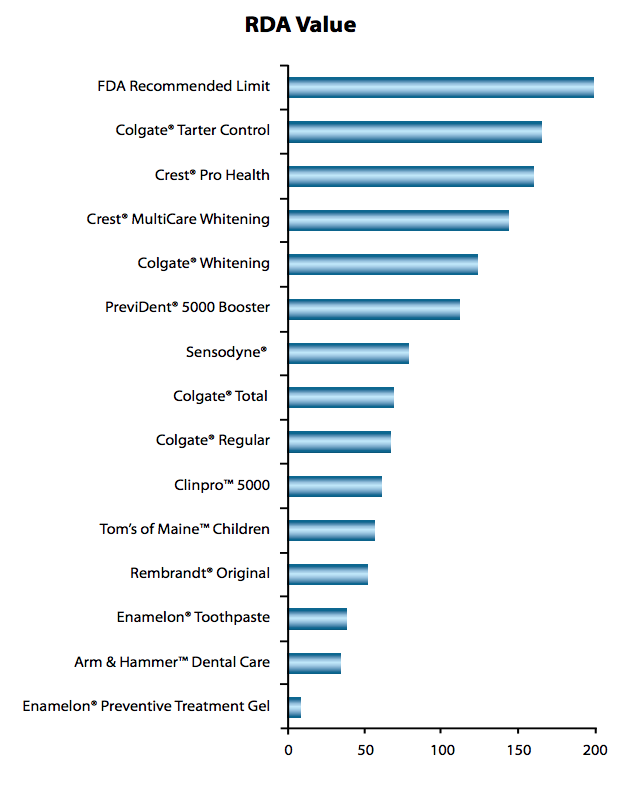
In order for toothpaste manufacturers to gain approval from the FDA they must measure and report the abrasiveness of their products. However, they are not required to report the information to consumers. To help you find out how your favorite toothpaste stacks up, refer to the chart below. Your teeth are sensitive perhaps because of the toothpaste you’ve been using.

2. You’ve Been Using Whitening Toothpaste

Whitening toothpastes often contain chemicals that help to remove surface stains and therefore, make your teeth much whiter. However, these chemicals can damage the surface of your teeth. Several whitening toothpastes have received the American Dental Associations’ (ADA) Seal of Acceptance. However, it is recommended that you consult your dentist before using whitening toothpaste to avoid damage. So, if you’ve been brushing with whitening toothpaste and your teeth are sensitive, whitening toothpaste may be the culprit.

3. There’s Too Much Acid In Your Diet

Citric acid, such as what’s found in lemons, oranges, and grapefruits, can be very damaging to your tooth enamel. It’s not hard to understand how too much citric acid could cause erosion of your teeth enamel and therefore, sensitive teeth.

On the other hand, most people don’t realize that many popular beverages, many of which don’t seem to be acidic, are very acidic. My colleague, New York dentist Michael Sinkin, warns: “…many vitamin waters, energy drinks, and sports drinks are highly acidic and if consumed in large quantities can cause your teeth’s structure to break down.” 

So, how can you find out if your favorite beverage contains enough acid to be the reason your teeth are sensitive? Check the pH! pH is the measure of acidity on a scale of 1-14. The lower the number the higher the acidity; tooth enamel begins to dissolve at pH 5.3.

The chart below shows the pH of some popular beverages. If you’ve been gulping Gatorade at the gym or if you slug down a Red Bull every afternoon to fight tiredness, those beverages may be the cause of your sensitive teeth.

Source:
http://michaelsinkindds.com/is-your-favorite-beverage-eroding-your-tooth-enamel/

4. You’re A Swisher!

The next time you drink a soda, juice, or a glass of wine, take note if you swish it around in your mouth before you swallow. Many people swish their beverages without realizing it, which can create a loss of tooth enamel and sensitize the teeth’s dentin and cementin. Wine connoisseurs in particular, who swish in order to better experience the nuances of vintages, are at especially at risk. It’s OK to swish a little, but try keeping it to a minimum.

5. Your Teeth Need A Cleaning

Even people with the means to go to their dentist two or three times a year often avoid it because of dental fear. You can floss and brush twice a day, every day, but it’s nearly impossible to remove all the tartar and plaque that will build up on your teeth naturally. When plaque builds up around and under your gums, it will cause inflammation, and therefore, sensitive teeth.

If you haven’t been to the dentist for a while you could be surprised to discover that most practices now are hyper-aware of how anxious some patients can be, even when they come in just for a simple cleaning. Dental fear is nothing to be ashamed of, so discuss it with your dentist and get those teeth cleaned!

6. You Breathe Through Your Mouth

Chronic sinusitis from allergies or a deviated septum can cause you to continually breathe through your mouth instead of through your nose. An article in RDH, The National Magazine For Dental Hygiene Professionals, states: “Mouth breathing affects the pH of the entire body… meaning the saliva.”

In other words, breathing through your mouth over a long period of time can actually make your saliva more acidic and could be the reason your teeth are sensitive. The best advice is to see an ENT (an Ear, Nose and Throat doctor) as soon as possible.

7. Your Jaw Muscles Are Being Overused

I’ve been treating patients who have tooth and jaw problems that stem from overworked jaw muscles for over 35 years. If you hold tension in your face and keep your teeth clenched together during the day, your jaw muscles are being overworked. Overworked jaw muscles can cause headaches, facial pain, persistent toothache, and sensitive teeth. Try to relax your jaw, especially when you’re working at your desk. For more help, read Problems of the Jaw.

8. You Grind Your Teeth While You’re Sleeping

Nighttime teeth grinding, also called Bruxism, is a common phenomenon that causes your jaw muscles to over-contract. In fact, some people grind their teeth so ferociously that they actually sprain their jaw ligaments, which is why their teeth are sensitive.

My practice is full of people who suffer from bruxism and just want to feel better. Our first step is to figure out what’s causing the grinding. Only once the underlying reasons are discovered can we put in place a treatment plan to eliminate the grinding and therefore, its damaging efforts.

Did you figure out why your teeth are sensitive? Whatever the cause, keep in mind that your sensitive teeth are a sign that something is going on. Don’t ignore it.

(Note: If the cause of your tooth sensitivity is related to overuse behaviors or nighttime teeth grinding and you live in the NYC metro area, please feel free to (212)-265-0110 for a consultation. If you’re outside my area, you can go to www.aaop.org  and find a Diplomate in your area.)

Read More:
Tooth Whitening/Bleaching: Treatment Considerations for Dentists and Their Patients

Categories
Persistent Toothache

A Toothache Can Be Caused By Arthritis


Though it seems strange, a toothache can be caused by arthritis. This was what happened to one of my patients this past year. It all started when John began to experience acute pain in an upper right molar. His dentist could not find a reason for the pain, since upon evaluation there was no decay or other problem apparent. So John was sent home with instructions to use Advil or Tylenol and hope for the best.

But John’s tooth pain persisted. He returned to his dentist’s office where more x-rays were taken and a root canal procedure was scheduled, albeit reluctantly. But even after the root canal, John’s tooth still ached and at times a neighboring tooth seemed to hurt, as well. John’s complaints ultimately led to the extraction of the offending right molar.

Then John started to experience pain in the extraction site and the teeth surrounding it. To make matters even worse, the same scenario began to unfold on his left side. And still, his dental team (comprised now of a number of specialists) found nothing on x-rays or during examination to explain it.

John’s suffering grew to the degree that the quality of his life was completely compromised. In desperation, he agreed to yet another root canal and subsequent tooth extraction. No change.

By this time there was no doubt that the source of John’s wicked tooth pain had to be of non-tooth origin. His persistence in seeking care and his unwavering belief that “there must be something wrong with my tooth” led him finally to me.

We found the answer to John’s suffering and was buried in his medical history. About one year before his tooth problems began, he had sought care for multiple joint pain throughout his body. The diagnosis was a (systemic) inflammatory condition called Spondyloarthropathy, which causes pain similar to what is associated with arthritis. A rheumatologist prescribed a few months on Enbrel, a medication used to treat inflammatory autoimmune conditions, and John’s body pain symptoms went into remission.

Let’s discuss arthritis for a brief moment: Arthritis essentially means “inflammation within a joint.” This same type of inflammation can occur in tendons and ligaments, the attachment sites in muscles and joints that keep us moving and functioning. Ligaments are also what attach your teeth to their bony sockets. They are called periodontal ligaments. Therefore, unexplained tooth pain can be due to an irritable periodontal ligament.

John’s medical history was the key to finally figuring out why he experienced acute tooth (and tooth site) pain that did not respond to conventional dental treatment. His tooth pain was the result of irritated periodontal ligaments. It took only three weeks back on Enbrel for John’s tooth site pain to go away. If his arthritis condition flares-up again, his tooth pain may reemerge. But, for now John is pain-free and able to enjoy his life again.

Here’s the moral of the story: As a patient you must share your medical history with any doctor who is having difficulty with a diagnosis. And as medical professionals, we must remember to ask all the right questions, request records and collaborate with other doctors on behalf of our patients.

Pain is real and no stone should be left unturned to find the source.

Live or work in New York City or on Long Island? You can schedule a consultation with me here or call 212-265-0110.

Categories
Persistent Toothache Referred Pain

Lingering Toothache After Root Canal

When the recommendation has been made for wisdom teeth removal, and the patient has (or has experienced TMJ problems), some very important factors must be considered because TMJ problems and wisdom teeth removal sometimes don’t play nice with each other. The trauma to the jaw during surgery can make TMJ problems flare and potentially cause longer-term problems including pain, additional joint noises and more challenging joint locking problems.

Consider the following case: An 18-year old female is preparing to go off to college in the fall. Although she is experiencing no pain symptoms associated with her wisdom teeth, her dentist and consulting oral surgeon have made a recommendation to have all four removed, in order to avoid potential problems while she’s away at college.

The patient and her parents are concerned that her recently stabilized TMJ problem (clicking, pain and sporadic morning locking) will flare up as a result of the extraction process. Is this a legitimate concern, or excessive worry?

Since TMJ problems are orthopedic in nature it is logical to assume that a difficult extraction event can cause a managed TMJ problem to resurface. This is particularly relevant if the patient mainly had joint problems that required care. Females more than males are at risk due to the fact that their TMJ structures are biologically more susceptible sprain and strain.

The following is my recommended list of questions that should be discussed before the patient goes ahead with the wisdom teeth extraction.

1. Should the teeth be left in place for a year or two to ensure further healing of the TMJ problem?

2. Should two teeth be taken out initially, instead of all four? (A lengthy surgery could therefore be avoided.)

3. Should a local anesthetic alone be used so that the patient could communicate with the surgeon if in fact she felt that the jaw was being stressed, or should sedation/general anesthetics be used to relax the patient’s muscles and diminish muscle tension due to fear.

4. Should an intravenous steroid be routinely used to minimize any potential muscle/ joint inflammation, which would lead to post-extraction pain, and excessive/prolonged limited jaw motion.

Clearly there are no easy answers to these questions. The important message is that if your son or daughter is in this position, please be proactive and ask the difficult questions.

Some more questions to consider:

  • Is the jaw clicking and/or locking due to instability of the joint ligaments or movement of the shock-absorbing disc?
  • Are the wisdom teeth impacted in bone, are they fully or partially erupted, and if impacted, are they lying on their sides? (If they are lying on their sides, it will likely require more time and more bone removal to be extracted).
  • Is there inflammation of the gum tissues surrounding or overlying the wisdom teeth? Or is the plan to remove them designed to prevent possible acute periods of pain while the patient is at school or traveling overseas for an extended period of time?
  • Is there concern that the erupting wisdom teeth may cause undesirable tooth movement after orthodontics has been completed?
  • Does the patient’s gender and age make a difference in the outcome?

Patients with TMJ histories must be handled thoughtfully, and with an open mind. Remember, the removal of wisdom teeth is most often an elective procedure. Delaying their extraction may carry with it additional risks, but a patient with a history of TMJ problems, (particularly a young female) is always at risk during the extraction process.

Categories
Referred Pain

When a Painful Toothache Won’t Go Away

I recently treated a 35 year old woman who was referred to my practice because she had a persistent toothache that continued though she already had a new filling placed, had her bite adjusted, and was constantly taking Advil and Tylenol. Based on how she described her tooth pain symptoms (variable in terms of the severity, frequency, and not related to eating or hot or cold fluids), I suspected that her pain was coming from somewhere, but not from her tooth!

You may ask how this that possible? To have a toothache that is not caused by a tooth? To begin to understand how you can experience pain in one area that is being caused by a problem somewhere else, it is important to become familiar with the concept of referred pain.

Referred pain is best understood when you consider the most common symptom reported by patients that are about to have or are in the midst of having a heart attack: pain in the left arm, the left side of the jaw, and under the chin. All caused by signals being sent by the heart muscle. You can only imagine that 100 years ago, before this connection was understood, doctors and community healers probably went to great lengths to sooth these left sided symptoms only to often fail with dire consequences.

The knowledge we have gained about referred pain through medical research not only has helped us recognize the signs of a heart attack, but have enabled us to also understand puzzling toothaches, face pains, ear symptoms, and other problems that often elude quick solutions. Getting back to the young woman with toothache: my evaluation uncovered that her symptoms were due to referred pain from the muscles of her upper neck! My patient was dumbfounded. How could the source of her painful toothache be her neck? But soon after her care began, her symptoms diminished and she is now happily toothache-free.

The care I applied was a combination of:

• Changing learned behaviors (posture, especially)

• Home exercises

• Physiotherapy

• Injections

It is routine to be asked by one of our patients, “Why does my ear, tooth, face, and eye hurt when I have been told by my physician and dentist that there is nothing wrong and they don’t see anything?” If this describes you, I assure you, you’re not “crazy.” Referred pain is real.

Muscle referred pain is just one of many topics I will be sharing on this blog. It is my hopes that these discussions will provide the insight and knowledge that you need to get proper care and guidance as you seek information to address your pain or that of other people in your life.