Manhattan

212-265-0110

White Plains

914-227-2305

Springfield, NJ

973-315-7830

Hauppauge

631-265-3136
Categories
Sleep Apnea Snoring Women & Pain

Snoring Is Not Funny

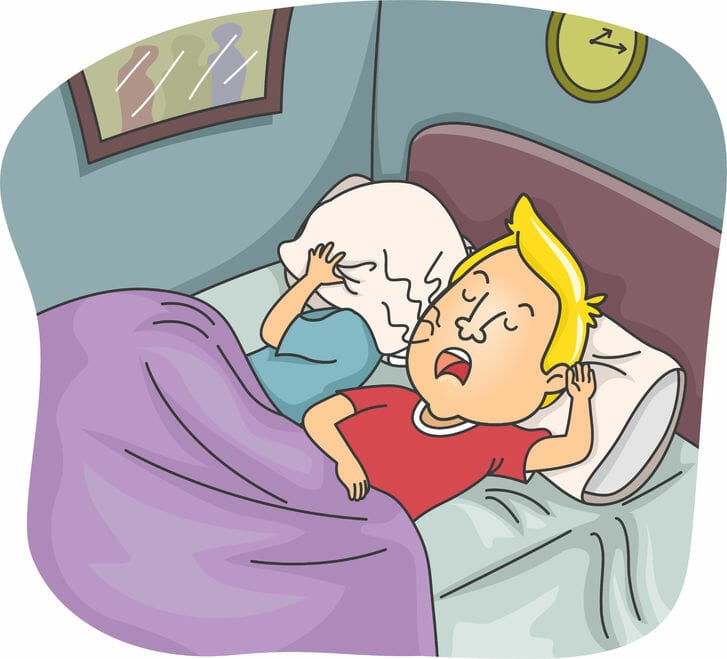
For years snoring has prompted humorous cartoon depictions of bed partners sorting out their different views of the problem and hilarious videos revealing what the non-snoring bed partner will resort to in order to get a good night’s sleep.

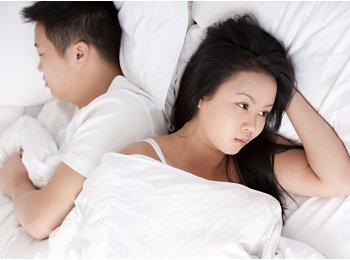
The problem with snoring, however, is that both parties – the snorer and snoree (what I call the person who is forced to listen to the noise) are ultimately impacted. Sometimes severely.

Let’s start with the snorer. Although snoring was once regarded as merely an annoyance, research now shows that it is actually the result of airway turbulence, often accompanied by obstructive sleep apnea or upper airway resistance syndrome. Both conditions cause sleep arousals and lead to less than refreshing sleep and excessive daytime drowsiness.

Snoring Is Much More Than An Annoyance

People who have obstructive sleep apnea experience episodes (sometimes lots of them) when their breathing completely stops while they’re asleep. Breathing only resumes when a drop in blood oxygen wakes up the brain and causes them to take a breath. This repetitive cycle of stopping breathing and loss of oxygen to the brain often leads to injury and inflammation in the lining of the blood vessels and cardiac tissue, which makes snorers more susceptible to heart attacks and strokes.

And if that’s not enough, snorers with obstructive sleep apnea airway problems are more likely to have gastrointestinal reflux (heartburn) and experience brain matter degeneration, which is one of the causes of Alzheimer’s disease.

Sadly, the majority of snorers do not realize that their snoring is more than just an annoyance and, therefore, never even think to seek care. The link between snoring and cardiac problems, reflux, and brain degeneration is proof that it’s much more than a social annoyance. Plus, even if the snorer does not have an airway problem, research shows that the vibrational trauma created by snoring will eventually lead to tissue floppiness in the pharynx, which leads to more snoring noise, combined with injury to the nerves that help maintain airway health.

It’s obvious that snoring carries serious health risks for the snorer. But what about the poor snoree?

The Majority Of Snorees Are Women

The majority of snorers are men and, therefore, women are the majority of snorees. Countless women suffer a considerable toll due to the disrupted sleep caused every night by their snoring bed partner. And it’s loud. A snorer’s roar can reach the decibel levels of a construction jackhammer. Imagine trying to sleep with a jackhammer being operated in your bedroom.

For the snoree, constant sleep arousals can lead to chronic muscle and joint pain (TMJ problems included), headaches, daytime sleepiness, and cognitive impairment – to name just a few. In addition, we have evidence that fragmented sleep with multiple arousals can also be responsible for tooth grinding when sleeping.

CPAP Is Not The Only Option

Putting this all together makes a real case for snorers to realize that by not seeking care they’re going way beyond simply being insensitive to their bed partners. Happily, medical professionals now have many ways to treat snoring including oral appliances, which are an extremely helpful therapy for snoring and obstructive apnea. CPAP is not the only option!

So, if you’re a snorer it’s time to get help. Not only is it a smart decision for your health, it’s a smart decision for your relationship, too.

Related Articles by Dr. Tanenbaum:
The Connection Between Sleep Apnea & TMJ 

Snorers! Now A Sleep Study Can Be Done in Your Own Home 

Categories
Case Studies Sleep Apnea Snoring

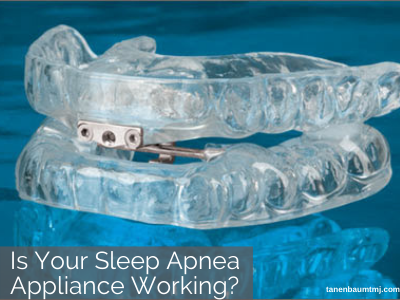
Is Your Sleep Apnea Appliance Working?

Snoring and obstructive sleep apnea are not only disruptive to your bed partner; they may also be the cause of many other illnesses. And as we have seen in the news recently, can result in deadly vehicle accidents. If you have opted to wear an oral appliance at night for snoring and/or sleep apnea (as opposed to using a CPAP machine) you may have noticed that it’s not working as well as it did when it was first fitted by your dentist. So, how do you know if your sleep apnea appliance is working?

John: A Case Study

My patient John is a 45-year old who had chosen to wear a sleep appliance to spare his wife from the disrupted sleep she was experiencing as “he snored like a jackhammer.” However, after a period of time his snoring (and consequently his wife’s nighttime annoyance) had reappeared.

John came to my office and we sat down to talk. He confessed that he had gained a whopping 15 pounds over nine months, so it wasn’t surprising that the appliance was no longer effective. I subsequently corrected the fit of his appliance (basically moving it slightly forward), which took care of his nightly jackhammer snoring (and probably saved his marriage!). But, another problem developed.

John began experiencing morning jaw tension and an awkward bite, which lasted for about an hour. Another visit to the office and a bit more adjustment took care of the issue. Now John is sleeping peacefully and not worried about a TMJ problem. So, if you use an oral appliance to manage sleep apnea/snoring, and your weight varies you should be going back to your dentist to reset the appliance

How To Determine If Your Oral Appliance Is Working

For those snoring without sleep apnea, your bed partner feedback will certainly alert you as to when the appliance is not working, but how do you know if you live alone? If you sleep alone and are wearing an appliance to protect the tissues in the back of your throat from the consequences of snoring over time, monitoring is key.

How To Monitor Snoring and Apnea With Technology

There are a number of mobile apps that can monitor your snoring at night. The best ones are SnoreLab and SnoringU.

For those with obstructive sleep apnea (with or without a bed partner) the absolute best way to know if your appliance is working properly is to use a pulse oximeter on two consecutive nights. A pulse oximeter will measure your blood oxygen levels while you are sleeping. If there is less than optimal oxygen your blood, then your appliance needs to be adjusted. The pulse oximeter can be purchased online or provided by your dentist.

Even more information can be obtained through using a HST (home sleep test), which is often covered under insurance plans and obtained through a sleep clinic or your dentist.

Important: technologies such as FitBit and JawBone cannot be used for monitoring oral appliances and Basis Peak and Microsoft Band, though sensing body motion and monitoring heart rate, also come up short.

The message is clear…don’t assume that once fitted, your oral appliance will always maintain its effectiveness. It’s necessary to have it monitored at least once, preferably twice, every year.


Dr. Donald Tanenbaum is a specialist with offices in New York City and Long Island, NY. He is uniquely qualified to diagnose and treat problems associated with facial painTMJ, headaches and sleep apnea.

Categories
Sleep Apnea

Communter Train Operators To Be Treated For Sleep Apnea

[NOTE: This post was previously published on October 15, 2014. In light of the recent announcement that Metro-North railroad will be starting a pilot project in January 2015 to test drivers for sleep apnea, I thought I’d post it again.

“The railroad’s 410 train operators and 20 more in training will be screened for the sleep disorder by a Metro-North health department,” according to the New York Post. “Those recommended for additional screening after the initial evaluation will be referred to a company that specializes in sleep disorders, according to the MTA.”

This is truly good news for anyone who uses the railroad every day to commute to and from work. Yes, the public is becoming more aware of the dangers of sleep disorders, but unfortunately, it sometimes takes a horrific accident such as this one to get things moving.

On the morning of December 1, 2013 a Metro North derailment in the Bronx cost four passengers their lives and injured 59 more, many seriously. Although the National Transportation Safety Board has not determined the exact cause of the accident, the agency has stated that the driver suffers from a condition called Obstructive Sleep Apnea, also known as OSA.

OSA is characterized by excessive daytime sleepiness, which is a result of night after night of poor quality sleep. When you have OSA your airway is partially blocked and your breathing repeatedly stops and starts multiple times during the night. Your blood oxygen level drops causing your brain to be aroused – essentially waking you up.

The airway obstruction and thus the drop in blood oxygen levels can be caused by a number of risk factors of which you may have one or more:

  • Excessive weight
  • Large tongue
  • Big tonsils
  • Small lower jaws that fall backwards while sleeping
  • Long and floppy soft palates and uvulas.

If you snore, stop breathing, and toss and turn all night, it’s likely that you have OSA. Certainly if you are awakened frequently throughout the night, you will be exhausted when you get up and more exhausted as the day wears on.

Obstructive Sleep Apnea Treatment

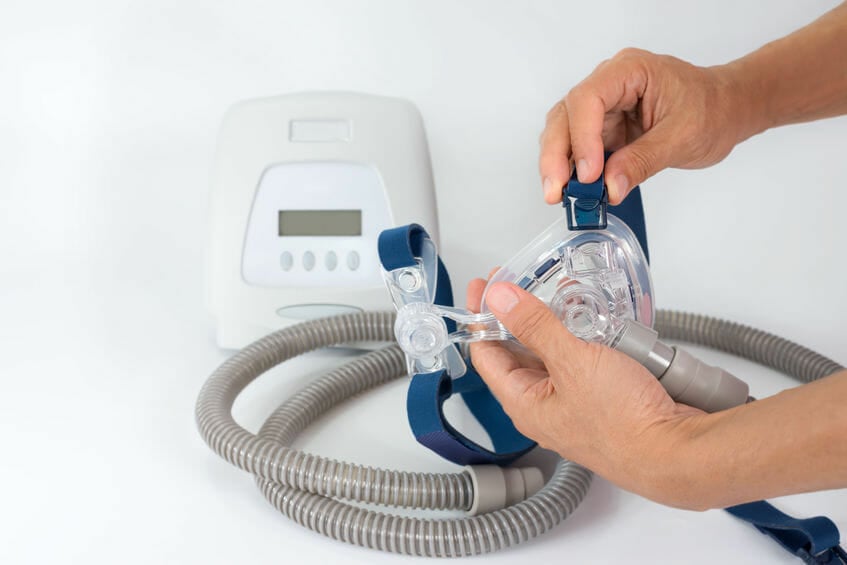
Medical care for OSA is focused on encouraging patients to lose weight, a change in sleeping position, and even surgery in some cases. Tonsils, the uvula, and even the size of the tongue can be adjusted. But, the most common therapy is called C-PAP (continuous positive airway pressure) which involves the nightly use of a mask which is connected to a small machine that sits next to your bed.

As an alternative, or in addition to C-PAP, are oral appliances, which bring the jaw forward and move the tongue away from the airway. Ongoing research has shown that these appliances not only work well, but compared to C-PAP may be easier for patients to deal with night after night. Happily, there are now ways to test whether an oral appliance would be a good option for you (ahead of time while in your own bed!).

My Opinion About OSA Related Accidents

Let’s get back to last year’s Metro North accident. The driver reported that he had gone into a “daze” as the train careened many miles above the speed limit toward the curve. Before the accident, doctors had diagnosed him as obese and having hypothyroidism, high cholesterol, low testosterone, vitamin D deficiencies, B12 deficiencies, and mild high-frequency hearing loss.

But the driver had never been screened or examined for Obstructive Sleep Apnea until after the accident!

It’s impossible to ascertain how many deadly vehicle accidents are related to undiagnosed or poorly treated OSA. We will likely never know.

I believe that it should be mandatory for all drivers of public transportation vehicles (and all truck drivers who spend long hours on the road) to be tested and treated for OSA. Imagine…oral appliances could find their way into the overnight supplies carried by truck drivers who park at rest stops, pilots who sleep at airports, and train conductors who similarly catch a few hours of sleep during the course of their work schedules.

We have the tools, now is the time to become more effective educators and providers of care and keep the public safe from these mostly avoidable deadly disasters.

Read more about the Metro North accident here: http://www.huffingtonpost.com/2014/04/07/metro-north-driver_n_5107612.html

Dr. Donald Tanenbaum is a specialist with offices in New York City and Long Island, NY. He is uniquely qualified to diagnose and treat problems associated with Obstructive Sleep Apnea

Categories
Sleep Apnea Snoring

Snorers! Now A Sleep Study Can Be Done in Your Own Home

Snoring, long considered to be no more than a social nuisance, is now seen by the medical community as a possible sign of more serious health conditions. In order, however, to determine whether a patient’s snoring indicates a more serious disorder, like obstructive sleep apnea, overnight sleep studies are critical to obtain. The problem of course is that many patients are resistant to spending the night at a Sleep Clinic, and after hearing nightmare stories from friends and family that have spent restless nights lying awake in a sleep lab, refuse to schedule an appointment.

It is not uncommon therefore to be confronted by this familiar story. The patient, a man in his mid-thirties or forties, married, with children has a history of snoring.  With some gain of weight his nightly snoring has become so disruptive that his wife routinely leaves the bedroom halfway through the night. On vacations, it’s necessary to reserve two rooms instead of one just because of the snoring. Basically, dad disturbs the sleep of the entire family.

Upset and exhausted, the wife finally convinces her husband to see his physician, which he does, though reluctantly. The physician then suggests a Sleep Study, which involves a night away from home at a Sleep Center. This is where the problems really start as men often refuse to spend the night away from home, particularly since they don’t even think they have a problem and deny that they snore in the first place. So, the snoring goes on, the family suffers and more importantly the snorer may be at risk for health consequences down the road.

But, there is good news for snorers and their families. In the past 10 years advances in technology have brought sleep testing equipment to the bedroom. At-home Sleep Study equipment has been proven to provide reliable data and is currently a service that has been embraced by medical insurance carriers. In fact home studies are often being required prior to the more formal and traditional study done in a sleep lab. Although physicians have traditionally been thought of as the primary health care provider to advise patients with snoring and more serious airway problems (like apnea), dentists have begun to play a critical role in terms of assessment, and more importantly in motivating patients to pursue comprehensive evaluations inclusive of overnight sleep testing.

What then  would indicate that a home study is needed?

In order for your doctor to ascertain if you are a candidate for a Sleep Study, he or she will ask you questions about your health, and how you routinely feel during the day and on arising in the morning. Pen and pencil questionnaires may also be given to you which ask questions about:

  • Daytime sleepiness
  • General fatigue levels
  • Frequency of sleep arousal
  • Morning headaches
  • Irritability in the morning or daytime moodiness
  • Problems concentrating during the day
  • GERD
  • Hypertension

If your answers indicate that a Sleep Study is recommended, your doctor  will set in motion a process to pre-certify the home study through your insurance company.

The testing equipment will either be obtained at a local sleep center or it will be shipped directly to your home. The equipment is easy to use and very self -explanatory. You will need to use it for only one night, then return it so that the data can be read and interpreted by a board-certified sleep physician. A report is then sent to your doctor who will then be able to make a recommendation based upon the findings.

In my practice, depending on what the Sleep Study indicates, recommendations for additional consultation or treatment will follow. Snoring that does not carry with it other health concerns can be treated with an oral appliance. Apnea if present can be treated in a number of ways depending on the severity identified on the overnight study. Oral appliances certainly are one option that can be explored.

The goal: Healthy airways and maybe save a few marriages along the way!

To learn more about Oral Appliances for Sleep Apena Treatment, consider reading some of my other recent blogs:

Dr. Donald Tanenbaum is a specialist with offices in New York City and Long Island, NY. He is uniquely qualified to diagnose and treat facial pain associated with jaw problemsTMJreferred painnerve pain, and migraines. Find out more at www.nytmj.com.

Categories
Sleep Apnea Snoring

Treatment for Sleep Apnea May Assist in Weight Loss

While on a recent airplane flight to Chicago, I was unfortunately sitting across from a young man around thirty years old who was sleeping fitfully. From his outward appearance he was not overly tall, likely about 5’11” but clearly overweight particularly in the midsection.

With each breath came a snoring (or roaring) sound accompanied occasionally by a gasp for air. It was clear that this young gentleman had the appearance of obstructive sleep apnea and one can only wonder about his future if he did not address this problem with weight loss or medical intervention.

This scenario of young men and women snoring excessively is played out daily across America and the reason most of the time is obesity. Though there are many individuals that snore and develop obstructive sleep apnea, due to large tonsils and small airways due to thin necks and set back lower jaws, the problem is most commonly seen in overweight people.

For these individuals their calorie intake continues to exceed the calories they burn with the end result of fat being deposited in the neck and airway along with their midsections. Once established these patterns of weight gain are hard to reverse taking tremendous self control and discipline.

The end result unfortunately is not only a disturbed bed partner and daytime fatigue but new evidence suggests that a persistent obstructive sleep apnea condition can weaken the body’s immune system and increase the risk for cancer, as the results of a recent study published in the American Journal of Respiratory and Critical Care Management suggests.

What is also interesting is that once an obstructive sleep apnea problem has been established with the associated oxygen deficits while sleeping, there is also a disruption of the delicate hormonal balance that controls appetite and hunger patterns.

As a result it has been shown that moderate to severe obstructive sleep apnea conditions often impair weight loss efforts despite caloric control and increased exercise. As a result of this reality, a great number of patients in our office are using oral appliance therapy while sleeping and as a result are breathing better and losing the weight that they were unable to previously shed. As an end result, their improved airway capacity will most certainly reduce their risk of cancer in the future and help all of us rest peacefully on our next airplane flight.

Categories
Sleep Apnea Snoring

Is Snoring Causing Your Child’s Behavioral Problems?

In very young children and even in infants, sleep-inhibiting breathing such as sleep apnea, mouth breathing, and even snoring may affect more than just a healthy night’s sleep.

According to a recent New York Times article, a study conducted by Karen Bonuck, PhD., at the Albert Einstein College of Medicine at Yeshiva University found that sleep-inhibiting breathing starting in infancy and early development is causing more than just problems with sleeping and staying awake during the day. This longitudinal study tested 11,000 children (controlling for future behavioral problems caused by events such as maternal smoking and prematurity) found a definitive link between children with sleeping problems during early development and later behavioral problems.

Sleep-inhibiting breathing leads to a poor night’s rest for your child potentially providing their brain with too little oxygen or too much carbon dioxide. This could seriously affect the prefrontal cortex area of the brain which is directly linked to behavioral decision-making.

Parents need to pay attention to their child’s breathing at night, even as early as infancy. A good night’s sleep restores what a developing brain has lost during the day.

If you feel your child is having a problem with snoring, sleep apnea, or mouth breathing, do not hesitate to contact me. Learn more about Dr. Tanenbaum here.

Categories
Sleep Apnea Snoring

Snoring and Weight – Yes, There Is a Connection

My patients often ask me about the relationship between snoring and weight gain. Snoring undoubtedly can be a result of obesity, and obesity can also be a result of snoring. Confused?

Fact: Obesity Causes Snoring

More than 30% of Americans are considered obese, which is having a BMI (Body Mass Index) of 30 or more. Excess weight, regardless of its amount or origin, has many effects on your breathing, and in many cases causes snoring.

Though it may feel like all the weight you’ve gained is stored in one or two areas, extra layers of fat actually distribute themselves all over your body! When excess is deposited around the throat and neck area, it can narrow the airway, causing airflow turbulence leading to that annoying snoring sound. Also, as you gain weight, fat displaces muscle tissue and you lose muscle tone. As a result the soft palate and other soft tissue in the throat become floppy and snoring levels rise.

Causes of Snoring

  • Body fat around the throat and neck
  • Loss of muscle tone in the throat and soft palate region
  • Obstructed nasal passages
  • Large tongue

Sleep Apnea and Obesity

Along with snoring, individuals who are overweight are more likely to develop sleep apnea. Sleep apnea is a serious medical condition characterized by periods during sleep when your breathing stops completely. As a result your brain is aroused and you wake up. Sometimes breathing can stop for up to 10 seconds! These stoppages in breathing can happen as many as 100 times a night leaving you exhausted in the morning and at risk for heart problems.

Fact: Snoring Causes Obesity

Believe it or not, snoring could actually be the cause of your weight gain or your inability to lose weight.

Nightly snoring prevents you from getting a good night’s sleep, leaving you feeling tired and run-down during the day. This lack of energy can keep you from going on that pre-work run or makes you choose the elevator over the stairs. The bottom line is that the weight you’ve gained is a result of sleep deprivation.

In addition in a University of Chicago study, young and healthy students were deprived of sleep for six nights in a row. The sleep deprivation resulted in measurable metabolic changes, one of which was increased hunger and appetite! As your body relies on the energy it gets from a good night’s sleep, if you aren’t getting enough sleep, your body will crave the energy from somewhere else: usually your refrigerator!

Clearly there is a direct relationship between snoring , a poor nights sleep and overeating!

Is There a Snoring Remedy?

If you’re an overweight snorer, the first step is to try to lose weight. But, if you are so sleep deprived that weight loss is impossible, other options are available. Thousands of suffering snorers (and their partners) have seen extraordinary results from using an oral appliance at night.

Using a custom-made oral appliance (mouth guard) overnight keeps your jaw forward, making air flow into your throat easier. Oral appliances can be used alone, with a CPAP mask, or as an alternate sleep device when using the CPAP becomes monotonous. Most people find that using an oral appliance greatly reduces and even eliminates their snoring.

Please share this article with anyone you care about (or his/her partner) who is dragging around during the day because of a snoring problem at night.

Dr. Donald Tanenbaum has been practicing in New York City and Long Island for over 20 years. He is uniquely qualified to diagnose and treat Sleep Apnea, facial pain, TMJ and TMD problems, muscle pain disorders, nerve pain disorders, tension headaches, and snoring. Learn more here

Categories
Sleep Apnea Snoring

Oral Appliance Saves Marriage

Recently, a 52 year old female patient told me about her experience with CPAP. She has a history of loud and disruptive snoring, which ultimately caused her husband to sleep in a separate bedroom.

After being evaluated at a sleep lab, she was diagnosed with mild to moderate Obstructive Sleep Apnea (OSA) and was prescribed a CPAP device. Thanks to the CPAP, her snoring was gone, but her husband still slept in the next room–he refused to get into bed with Darth Vadar. Now it was the cumbersome CPAP mask was causing her love life to suffer.

We made her an oral appliance to use nightly as an alternative to the CPAP. Presently, husband and wife are happy again.

Dr. Donald Tanenbaum has been practicing in New York City and Long Island for over 20 years. He is uniquely qualified to diagnose and treat Sleep Apnea, facial pain, TMJ and TMD problems, muscle pain disorders, nerve pain disorders, tension headaches, and snoring. Learn more here

Categories
Sleep Apnea Snoring

What is CPAP?

CPAP, or Continuous Positive Airway Pressure, is the primary therapy used to manage a condition called Obstructive Sleep Apnea (OSA). As the airway narrows during sleep in individuals with OSA, the CPAP device is designed to provide a constant flow of compressed air under pressure to keep the airway open.

Often called the most effective nonsurgical treatment for obstructive sleep apnea, wearing a CPAP mask at night can improve the quality of sleep. Nightly use of the CPAP machine can also reduce high blood pressure, daytime sleepiness and snoring.

Though the CPAP machine can provide great results, it is NOT the right solution for everyone. As a matter of fact, many people find CPAP to be uncomfortable, preventing them from falling or staying asleep. As a result, according to the American Sleep Apnea Association, 60% of CPAP users discontinue use within one year because of discomfort or side effects.

Drawbacks of CPAP include:

• Can cause excessive dreaming and nightmares
• The mask often causes skin irritation
• The mask or nasal attachments often slip out of position while sleeping, diminishing the effectiveness of the device
• The airway hoses can wrap themselves around the wearers head
• The mask creates a sense of claustrophobia
• The machine is loud and can disrupt you or your sleep partner

Alternative to CPAP

An alternative to a CPAP machine is a custom fitted oral appliance which can be used to prevent snoring and to treat mild to moderate sleep apnea. Scientific studies have shown that properly constructed and adjusted oral appliances have the capacity to consistently facilitate nighttime air flow into the lungs thereby reducing the risk of stroke and high blood pressure developing in individuals with this medical condition.

An oral appliance works one of two ways. The first and most commonly utilized type of oral appliance repositions the jaw forward, carrying the tongue out of the airway . This type of appliance attaches directly to the teeth of the upper and lower dental arches. With the tongue forward the patency of the airway increases. The second type which is infrequently used is called a tongue retaining device. This appliance attaches only to the tongue and via a suction mechanism, the tongue is pulled forward out of the mouth. The end result is typically a sore tongue and a restless nights sleep.

The Perfect Marriage

As any one treatment over the course of many years can become monotonous we continue to advocate the use of both oral appliances and CPAP in patients that seek our advice. Whether a fixed schedule of alternating between the oral appliance and the CPAP is established or whether the oral appliance is just worn when traveling for work or on vacation, many of our patients have benefitted from this scenario. As over the long term oral appliances have been shown to have a better than 70% compliance they have therefore become an important component of managing OSA and socially disruptive snoring.

If you enjoyed this blog post, please consider subscribing. Thank You!

Dr. Donald Tanenbaum has been practicing in New York City and Long Island for over 20 years. He is uniquely qualified to diagnose and treat Sleep Apnea, facial pain, TMJ and TMD problems, muscle pain disorders, nerve pain disorders, tension headaches, and snoring. Learn more here

Categories
Sleep Apnea Snoring

Beware! The Snore Patrol Has Arrived at Your Hotel

Recently, I read in the news that a large hotel chain is making a focused effort to identify which of their nightly guests’ snoring is disrupting the sleep of others. Corridor monitors are instructed to identify the sources of snores and to knock on the doors, waking the inhabitants from their sound, but disruptive, sleep. Once identified, these sound offenders will be asked to relocate to a different part of the hotel if they are planning to stay several days. The hotel is also installing soundproof walls and purchasing soundproof headboards to silence the symphony of snores.

To those of us involved in the world of sleep, snoring has been of long concern. Not only has snoring been cited as a top reason why partners sleep apart, but the disruptive character of snoring actually diminishes the quality and quantity of your partner’s sleep. Imagine sleeping next to someone who continued to talk all night long as you attempted to fall or stay asleep. Impossible? In fact, many snorers snore at a decibel level of normal conversation, while the snoring of some has been rated to be as loud as a jackhammer!

A Simple Oral Appliance May be the Solution to Your Snoring Problem

Fortunately, there is a great solution to snoring both at home and when traveling. Though being available for years, oral appliances have only just begun to get the attention they deserve. These devices, when made by a dentist, have been shown to stop or reduce snoring on a predictable basis and are extremely comfortable to wear. As approximately 30-50% of snorers have a condition called Obstructive Sleep Apnea, oral devices are often used to treat this serious medical problem. In many cases, oral appliances can be used instead of a facemask at night and offer a portable alternative to the facemask apparatus at home while traveling.

Oral appliances that stop snoring will allow you to once again sleep with your partner…and to help you avoid the embarrassment of being awakened by hotel Snore Police.

You can read the article I referred to above here.

Dr. Donald Tanenbaum has been practicing in New York City and Long Island for over 20 years. He is uniquely qualified to diagnose and treat Sleep Apnea, facial pain, TMJ and TMD problems, muscle pain disorders, nerve pain disorders, tension headaches, and snoring. Learn more here