Manhattan

212-265-0110

White Plains

914-227-2305

Springfield, NJ

973-315-7830

Hauppauge

631-265-3136
Categories
Sleep Apnea Snoring Women & Pain

Snoring Is Not Funny

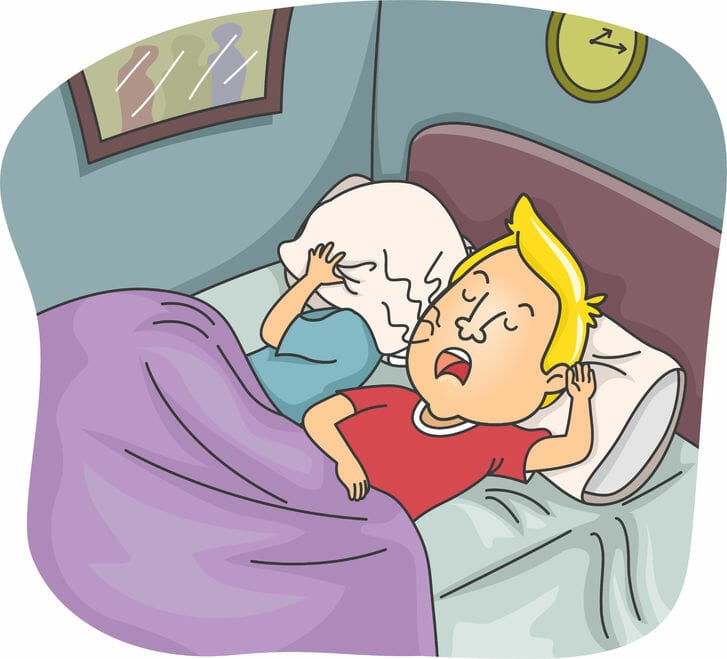
For years snoring has prompted humorous cartoon depictions of bed partners sorting out their different views of the problem and hilarious videos revealing what the non-snoring bed partner will resort to in order to get a good night’s sleep.

The problem with snoring, however, is that both parties – the snorer and snoree (what I call the person who is forced to listen to the noise) are ultimately impacted. Sometimes severely.

Let’s start with the snorer. Although snoring was once regarded as merely an annoyance, research now shows that it is actually the result of airway turbulence, often accompanied by obstructive sleep apnea or upper airway resistance syndrome. Both conditions cause sleep arousals and lead to less than refreshing sleep and excessive daytime drowsiness.

Snoring Is Much More Than An Annoyance

People who have obstructive sleep apnea experience episodes (sometimes lots of them) when their breathing completely stops while they’re asleep. Breathing only resumes when a drop in blood oxygen wakes up the brain and causes them to take a breath. This repetitive cycle of stopping breathing and loss of oxygen to the brain often leads to injury and inflammation in the lining of the blood vessels and cardiac tissue, which makes snorers more susceptible to heart attacks and strokes.

And if that’s not enough, snorers with obstructive sleep apnea airway problems are more likely to have gastrointestinal reflux (heartburn) and experience brain matter degeneration, which is one of the causes of Alzheimer’s disease.

Sadly, the majority of snorers do not realize that their snoring is more than just an annoyance and, therefore, never even think to seek care. The link between snoring and cardiac problems, reflux, and brain degeneration is proof that it’s much more than a social annoyance. Plus, even if the snorer does not have an airway problem, research shows that the vibrational trauma created by snoring will eventually lead to tissue floppiness in the pharynx, which leads to more snoring noise, combined with injury to the nerves that help maintain airway health.

It’s obvious that snoring carries serious health risks for the snorer. But what about the poor snoree?

The Majority Of Snorees Are Women

The majority of snorers are men and, therefore, women are the majority of snorees. Countless women suffer a considerable toll due to the disrupted sleep caused every night by their snoring bed partner. And it’s loud. A snorer’s roar can reach the decibel levels of a construction jackhammer. Imagine trying to sleep with a jackhammer being operated in your bedroom.

For the snoree, constant sleep arousals can lead to chronic muscle and joint pain (TMJ problems included), headaches, daytime sleepiness, and cognitive impairment – to name just a few. In addition, we have evidence that fragmented sleep with multiple arousals can also be responsible for tooth grinding when sleeping.

CPAP Is Not The Only Option

Putting this all together makes a real case for snorers to realize that by not seeking care they’re going way beyond simply being insensitive to their bed partners. Happily, medical professionals now have many ways to treat snoring including oral appliances, which are an extremely helpful therapy for snoring and obstructive apnea. CPAP is not the only option!

So, if you’re a snorer it’s time to get help. Not only is it a smart decision for your health, it’s a smart decision for your relationship, too.

Related Articles by Dr. Tanenbaum:
The Connection Between Sleep Apnea & TMJ 

Snorers! Now A Sleep Study Can Be Done in Your Own Home 

Categories
Jaw Problems Orofacial Pain Women & Pain

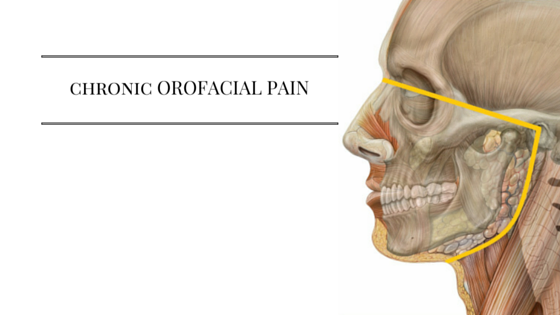
Chronic Orofacial Pain – The 60/40 Rule


Every morning upon my arrival at work I glance at the list of patients due to be seen that day. As a board-certified orofacial pain specialist, my patients are primarily people who seek treatment for their chronic orofacial pain. Some of them will be scheduled for a follow-up assessment and/or treatment. Others are first-time patients who seek answers to a problem that has recently emerged. And some are looking for answers to a chronic problem that has lingered despite self-directed care and/or prior interventions by other medical, dental, and health care providers.

With the knowledge that many of these patients suffer from headaches, muscle- and joint-related jaw disorders, persistent and stubborn toothaches, and/or nerve pain disorders, you would be right to assume that the treatment options for each would be very different. In some ways that thinking is accurate. To care for each of these problems the treatment choices and sequencing will vary to a considerable extent.

However, if success is to be realized there is one crucial element that must be considered. I call it the 60/40 Rule in the treatment of chronic orofacial Pain.

The 60/40 Rule In The Treatment Of Chronic Orofacial Pain Explained

The 60/40 Rule is this: the patient and the provider must share the responsibility of implementing the care plan. Sometimes the patient will do 60% of the work and the provider will do 40%. Sometimes that will be reversed. It all depends upon the nature of the patient’s problem.

I allude to this concept in my book Doctor, Why Does My Face Still Ache?Many of my colleagues who devote their energies to treating TMJ and chronic orofacial pain patients also embrace this concept. However, recently at a conference sponsored by the American Academy of Orofacial Pain it was asserted by one of the keynote speakers that an 80/20 Rule in regard to the treatment of chronic orofacial pain is the correct ratio. In his mind the patient should be responsible for 80% of the work and the provider for 20%. Though this an understandable goal, clinical research, which has consistently concluded that only 25% of chronic pain patients will only do 50% of what is required to make progress this 80/20 Split appears to be an unlikely reality

In my practice, the 60/40 Rule has been most helpful when treating patients with facial and jaw pain of muscle/ joint origin, often called TMD problems. The origin of their problems is related to persistent tightness and fatigue of the jaw and neck muscles combined with overuse-driven instability of the temporomandibular joints.

A multitude of risk factors is most often associated with these problems which include life circumstances, tension, emotions, acquired behaviors, food selections that overwork the muscles and TM joints, habitual and work-related postures, poor breathing dynamics, and loss of sleep quantity and quality. Taken all together you can readily see how the 60/40 Rule of shared responsibility makes sense.

Thankfully, I have an arsenal of treatment options at my disposal to help patients get relief from chronic orofacial pain.

Here are some of them:

  • Postural retraining
  • Daily home exercises
  • Home muscle massage
  • Elimination of destructive daily behaviors and habits
  • Diaphragmatic breathing strategies
  • Formal meditation training
  • Movement therapies such as Feldenkrais or The Alexander Technique
  • Improvement in sleep quantity and quality
  • Medication
  • Oral appliances that support and rest muscle and joint injuries


This collaborative approach between the patient and the provider is essential for success. When the responsibility is shared, patients own their successes and in addition, are more open to share their disappointment if treatment fails.

The 60/40 Rule in chronic orofacial pain treatment ensures that patients are fully engaged in their own treatment and this sets providers free from an expectation that they are fully responsible to fix or cure a chronic problem that may not have an easy solution. The 60/40 Rule must be explained at the outset of treatment when both patient and practitioner are the most focused on the challenges that lie ahead. This is particularly true if the patient has experienced treatment failure in the past.

As new knowledge indicates that chronic pain problems are best treated with interventions that confront the nervous system, the immune system and the emotional brain, a collaborative approach to care is now even more critical. Patients and providers that embrace The 60/40 Rule will be the beneficiaries of treatment that is both successful and lasting.

Dr. Donald Tanenbaum is a dentist with offices in New York City and Long Island, NY. He is uniquely qualified to diagnose and treat problems associated with facial painTMJ and sleep apnea. To find an orofacial pain expert in your area, link to the American Academy of Orofacial Pain here: http://www.aaop.org/

Categories
Case Studies Facial Pain Headaches Women & Pain

Headaches & Facial Pain Caused by Emotional Distress

Caring for the Caregiver

Case Study: Joan

Joan was referred to my office due to her daily headaches and facial pain that had continued to get worse despite taking over-the-counter medication on a daily basis and treating herself to a few massage sessions. She had seen her family doctor who had assured her that there was nothing terribly wrong, that the headaches and facial pain were a result of stress, and that she should start exercising more frequently and try to get more sleep.

Joan came to me when she could no longer tolerate the pain. After careful listening and a full examination, it was clear to me that her pain likely had a muscle origin. For Joan, along with countless other people in America and across the globe, her aching facial, jaw, and neck muscles were undoubtedly the result of an ongoing burden that had begun to dominate her life. Joan’s particular burden was that six months prior, her husband had suffered a debilitating stroke and she had become his sole caregiver.

Joan’s world had changed overnight. She was now a full time, worrier, cook, chauffeur, appointment maker, and sole provider of her husband’s physical and emotional needs. Although she took on these responsibilities with love and commitment, it was clear that she had been unprepared for the enormous challenges she faced. As the weeks and months passed, friends and family retreated to their own worlds, and she was left to fill the voids in her husband’s life, knowing that this job came with an unknown future.

As a result of her daily caregiver obligations, Joan’s sleep suffered, her independence all but disappeared and her ability to exercise and stay healthy dwindled to almost nothing. Suddenly her neck ached, headaches emerged, and she found herself gritting her teeth during the day as she tried to maintain patience and deal with the physical effort it required to get her husband showered, dressed, and fed.

Joan’s headaches and facial pain were clearly the result of  muscles that were in crisis as a result of a ‘brain under siege’ and muscle fatiguing behaviors (clenching/raised shoulders…) that were prompted by the realization that she was alone and unprepared for an unknown future. The more Joan and I talked, the more I realized that not only was she suffering with pain, but she was lonely and depressed as well.

To help address Joan’s sore and painful jaw, face and neck muscles, I set her up with number of common therapies. These included “physical self regulation techniques” which help patients identify and change the behaviors that they have developed as a result of ongoing life challenges and stressors.

Just becoming aware of when the brows are furrowed, the lips are tense, the shoulders are raised, the jaw muscles are braced, or the teeth are clenched is the first step. I then taught her a number of exercises and breathing techniques that reduce muscle tension and can lead to significant pain relief over time. To complement these self-care efforts, we added medications, muscle injections, oral appliances, and physical therapy.

Though as a result of these efforts Joan felt somewhat better (in spite of the fact that nothing had actually changed in her life), there clearly was more that had to be done to help Joan not fall back into her acute pain state once formal treatment in my office stopped. That is when I introduced her to the Caregivers Survival Network, founded by Adrienne Gruberg.

By joining The Caregiver Survival Network (CSN), she became part of a community of other caregivers eager to interact, share stories and be a source of support. She found a lot of free services geared exclusively to a caregiver’s needs and links to other organizations and websites for caregivers, as well. As a result of taking advantages of the ideas and services shared on the CSN, her feelings of being alone started to dissipate and I feel that Joan is on the mend both physically and emotionally.

If you are in a similar situation, or know someone who is, please direct him or her to http://www.caregiversurvivalnetwork.com/