Manhattan

212-265-0110

White Plains

914-227-2305

Springfield, NJ

973-315-7830

Hauppauge

631-265-3136
Categories
Sleep Apnea Snoring

Treatment for Sleep Apnea May Assist in Weight Loss

While on a recent airplane flight to Chicago, I was unfortunately sitting across from a young man around thirty years old who was sleeping fitfully. From his outward appearance he was not overly tall, likely about 5’11” but clearly overweight particularly in the midsection.

With each breath came a snoring (or roaring) sound accompanied occasionally by a gasp for air. It was clear that this young gentleman had the appearance of obstructive sleep apnea and one can only wonder about his future if he did not address this problem with weight loss or medical intervention.

This scenario of young men and women snoring excessively is played out daily across America and the reason most of the time is obesity. Though there are many individuals that snore and develop obstructive sleep apnea, due to large tonsils and small airways due to thin necks and set back lower jaws, the problem is most commonly seen in overweight people.

For these individuals their calorie intake continues to exceed the calories they burn with the end result of fat being deposited in the neck and airway along with their midsections. Once established these patterns of weight gain are hard to reverse taking tremendous self control and discipline.

The end result unfortunately is not only a disturbed bed partner and daytime fatigue but new evidence suggests that a persistent obstructive sleep apnea condition can weaken the body’s immune system and increase the risk for cancer, as the results of a recent study published in the American Journal of Respiratory and Critical Care Management suggests.

What is also interesting is that once an obstructive sleep apnea problem has been established with the associated oxygen deficits while sleeping, there is also a disruption of the delicate hormonal balance that controls appetite and hunger patterns.

As a result it has been shown that moderate to severe obstructive sleep apnea conditions often impair weight loss efforts despite caloric control and increased exercise. As a result of this reality, a great number of patients in our office are using oral appliance therapy while sleeping and as a result are breathing better and losing the weight that they were unable to previously shed. As an end result, their improved airway capacity will most certainly reduce their risk of cancer in the future and help all of us rest peacefully on our next airplane flight.
Categories
Sleep Apnea

Sleep Apnea Treatment Improves Heart Function

In a previous blog post, I discussed how CPAP (Continuous Positive Airway Pressure) and custom oral appliances could be used to facilitate night-time airflow into the lungs, preventing snoring and aiding mild to moderate sleep apnea.

Researchers in England have found a new development in sleep apnea treatment. A CPAP breathing machine can improve heart function and may even prevent heart failure.

According to a new study, published by the American Heart Association, researchers at England’s University of Birmingham used echocardiogram exams to study heart structures and function in sleep apnea patients before and after CPAP therapy.

Patients were broken into three groups:

  • Group One: Patients with High Blood Pressure
  • Group Two: Patients with Obstructive Sleep Apnea
  • Group Three: Healthy Control Group

The lead researcher, Gregory Lip, found asymptomatic sleep apnea patients had measurable heart damage. The observable structural and functional changes found in moderate to severe sleep apnea patients were found to be akin to those suffering from high-blood pressure.

All three groups were treated across six months with CPAP. After a second round of echocardiograms, much of the heart damage had been reversed in several major areas:

  • Reduced thickness of the heart muscle wall
  • Improvement in cardiac function
  • Loosening of the cardiac chambers

Given the therapy’s role in improving overall heart health, sleep apnea patients should consider CPAP treatment regardless of cardiac problems. This could translate to a major reduction in stroke and risk for other heart-related diseases.

If you suffer from sleep apnea and are considering CPAP as treatment please do not hesitate to contact me. Learn more about Dr. Tanenbaum here.

Categories
BOTOX® Bruxism

BOTOX® and Bruxism

In previous blog posts on bruxism, I’ve discussed how teeth grinding can lead to worn teeth, fractured teeth, facial or jaw pain, and a host of other maladies. There are many ways to treat bruxism, and one of the most recent and perhaps unexpected is BOTOX®.

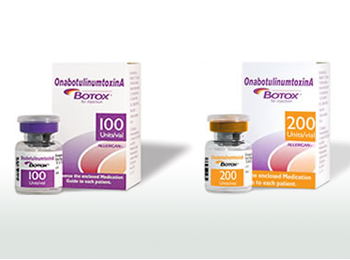
BOTOX® was originally used for treating muscle spasticity diseases such as strabismus (eye misalignment), blepharospasm (eyelid spasm), and torticollis (wry neck). BOTOX® works by temporarily decreasing or paralyzing the muscles it is injected into. The logical extension of this would be to apply BOTOX® to a myriad of other medical conditions in which excessive or intense muscle contractions are causing pain or dysfunction.

It turns out that BOTOX® can in some cases, be a sensible medical application to bruxism, as injections of BOTOX® into the masseter and temporalis muscles – the large muscles that close the mouth and bring the teeth together – can reduce the forces of bruxism to a significant extent.

The Procedure: By injecting small doses of BOTOX® (different levels are used for each patient) directly into the masseter and temporalis muscles, the muscles are weakened enough to diminish the forces associated with involuntary grinding of the teeth and clenching of the jaw. As a result damage due to the TMJs and symptoms of jaw pain and headaches should be reduced if not eliminated after 2- 3 injection sessions over several months. Luckily, chewing and facial expressions will not be effected by BOTOX®.

Reasons to Consider BOTOX®:

  • If you know you are clenching at night but oral appliances are not helping or making your morning symptoms worse.
  • Positive effects can be felt within 10- 14 days even if you have been suffering for month or years.
  • If helpful, the need for medication (muscle relaxants) at bedtime and pain medications during the day will be reduced or even eliminated.

The optimal dose of BOTOX® must be determined for each patient as some people have stronger muscles requiring more BOTOX®.  The effects last for about three months. After a few rounds of injections, many of our patients require no further  injection sessions though we continue to advise the use of an oral appliance while sleeping if tolerated.

If are suffering from bruxism please do not hesitate to contact me so I can assist you in making treatment decisions.

BOTOX® for teeth grinding is in the news! I was recently interviewed on ABC’s Good Morning America on the topic, Can BOTOX® be used to treat teeth grinding?  Click the link to watch the segment.

Categories
Sleep Apnea Snoring

Oral Appliance Saves Marriage

Recently, a 52 year old female patient told me about her experience with CPAP. She has a history of loud and disruptive snoring, which ultimately caused her husband to sleep in a separate bedroom.

After being evaluated at a sleep lab, she was diagnosed with mild to moderate Obstructive Sleep Apnea (OSA) and was prescribed a CPAP device. Thanks to the CPAP, her snoring was gone, but her husband still slept in the next room–he refused to get into bed with Darth Vadar. Now it was the cumbersome CPAP mask was causing her love life to suffer.

We made her an oral appliance to use nightly as an alternative to the CPAP. Presently, husband and wife are happy again.

Dr. Donald Tanenbaum has been practicing in New York City and Long Island for over 20 years. He is uniquely qualified to diagnose and treat Sleep Apnea, facial pain, TMJ and TMD problems, muscle pain disorders, nerve pain disorders, tension headaches, and snoring. Learn more here

Categories
Sleep Apnea Snoring

What is CPAP?

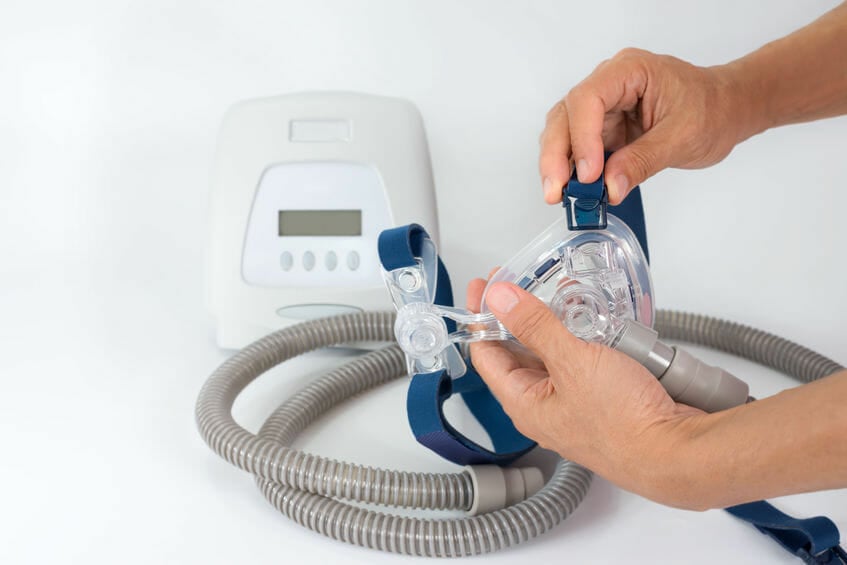
CPAP, or Continuous Positive Airway Pressure, is the primary therapy used to manage a condition called Obstructive Sleep Apnea (OSA). As the airway narrows during sleep in individuals with OSA, the CPAP device is designed to provide a constant flow of compressed air under pressure to keep the airway open.

Often called the most effective nonsurgical treatment for obstructive sleep apnea, wearing a CPAP mask at night can improve the quality of sleep. Nightly use of the CPAP machine can also reduce high blood pressure, daytime sleepiness and snoring.

Though the CPAP machine can provide great results, it is NOT the right solution for everyone. As a matter of fact, many people find CPAP to be uncomfortable, preventing them from falling or staying asleep. As a result, according to the American Sleep Apnea Association, 60% of CPAP users discontinue use within one year because of discomfort or side effects.

Drawbacks of CPAP include:

• Can cause excessive dreaming and nightmares
• The mask often causes skin irritation
• The mask or nasal attachments often slip out of position while sleeping, diminishing the effectiveness of the device
• The airway hoses can wrap themselves around the wearers head
• The mask creates a sense of claustrophobia
• The machine is loud and can disrupt you or your sleep partner

Alternative to CPAP

An alternative to a CPAP machine is a custom fitted oral appliance which can be used to prevent snoring and to treat mild to moderate sleep apnea. Scientific studies have shown that properly constructed and adjusted oral appliances have the capacity to consistently facilitate nighttime air flow into the lungs thereby reducing the risk of stroke and high blood pressure developing in individuals with this medical condition.

An oral appliance works one of two ways. The first and most commonly utilized type of oral appliance repositions the jaw forward, carrying the tongue out of the airway . This type of appliance attaches directly to the teeth of the upper and lower dental arches. With the tongue forward the patency of the airway increases. The second type which is infrequently used is called a tongue retaining device. This appliance attaches only to the tongue and via a suction mechanism, the tongue is pulled forward out of the mouth. The end result is typically a sore tongue and a restless nights sleep.

The Perfect Marriage

As any one treatment over the course of many years can become monotonous we continue to advocate the use of both oral appliances and CPAP in patients that seek our advice. Whether a fixed schedule of alternating between the oral appliance and the CPAP is established or whether the oral appliance is just worn when traveling for work or on vacation, many of our patients have benefitted from this scenario. As over the long term oral appliances have been shown to have a better than 70% compliance they have therefore become an important component of managing OSA and socially disruptive snoring.

If you enjoyed this blog post, please consider subscribing. Thank You!

Dr. Donald Tanenbaum has been practicing in New York City and Long Island for over 20 years. He is uniquely qualified to diagnose and treat Sleep Apnea, facial pain, TMJ and TMD problems, muscle pain disorders, nerve pain disorders, tension headaches, and snoring. Learn more here

Categories
Sleep Apnea Snoring

Beware! The Snore Patrol Has Arrived at Your Hotel

Recently, I read in the news that a large hotel chain is making a focused effort to identify which of their nightly guests’ snoring is disrupting the sleep of others. Corridor monitors are instructed to identify the sources of snores and to knock on the doors, waking the inhabitants from their sound, but disruptive, sleep. Once identified, these sound offenders will be asked to relocate to a different part of the hotel if they are planning to stay several days. The hotel is also installing soundproof walls and purchasing soundproof headboards to silence the symphony of snores.

To those of us involved in the world of sleep, snoring has been of long concern. Not only has snoring been cited as a top reason why partners sleep apart, but the disruptive character of snoring actually diminishes the quality and quantity of your partner’s sleep. Imagine sleeping next to someone who continued to talk all night long as you attempted to fall or stay asleep. Impossible? In fact, many snorers snore at a decibel level of normal conversation, while the snoring of some has been rated to be as loud as a jackhammer!

A Simple Oral Appliance May be the Solution to Your Snoring Problem

Fortunately, there is a great solution to snoring both at home and when traveling. Though being available for years, oral appliances have only just begun to get the attention they deserve. These devices, when made by a dentist, have been shown to stop or reduce snoring on a predictable basis and are extremely comfortable to wear. As approximately 30-50% of snorers have a condition called Obstructive Sleep Apnea, oral devices are often used to treat this serious medical problem. In many cases, oral appliances can be used instead of a facemask at night and offer a portable alternative to the facemask apparatus at home while traveling.

Oral appliances that stop snoring will allow you to once again sleep with your partner…and to help you avoid the embarrassment of being awakened by hotel Snore Police.

You can read the article I referred to above here.

Dr. Donald Tanenbaum has been practicing in New York City and Long Island for over 20 years. He is uniquely qualified to diagnose and treat Sleep Apnea, facial pain, TMJ and TMD problems, muscle pain disorders, nerve pain disorders, tension headaches, and snoring. Learn more here