Manhattan

212-265-0110

White Plains

914-227-2305

Springfield, NJ

973-315-7830

Hauppauge

631-265-3136
Categories
Jaw Problems Orofacial Pain TMJ

What Is An Orofacial Pain Specialist?

If you’ve never heard the term orofacial specialist, I’m not surprised. I’m one of only a few hundred formally trained orofacial pain specialists in the United States. That’s because orofacial pain specialists have not been terribly visible on the health care playing field – until recently. Until very recently the field of orofacial pain was not a recognized specialty by the American Dental Association. This fact made it difficult for patients to get proper treatment. But in March 2020, the American Dental Associations’ National Commission on Specialty Status finally named Orofacial Pain as a new dental specialty, 

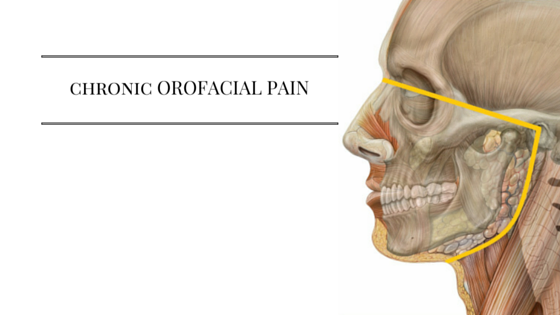
Orofacial specialists like me treat patients who suffer from pain of muscle origin, joint origin, and nerve origin that is focused in the head, neck, mouth, face and jaw area. For example, we treat people who have chronic toothaches and gum pain – despite having multiple dental evaluations and treatment. The problems we treat involve jaw pain, limited mouth opening capacity, and jaw clicking and locking. In addition, many patients with TMJ issues have problematic headaches, and in many cases, have pain in the nerves that supply the teeth, gums and other facial tissues.

At times we also are called upon to diagnose and or treat patients with complex medical problems that result in facial pain.

Why don’t more people know about orofacial pain specialists?

Because until recently, this specific area of dentistry has not been granted “specialty status” by the American Dental Association. And that’s why orofacial pain specialists can be difficult to find. But now, dental schools that train dentists to become oral surgeons, endodontists (root canal), periodontists (gum therapies) and orthodontists (braces) can also train them to be experts in orofacial pain. 

To help our patients, orofacial specialists rely on a wide variety of treatment options including education, medication, therapeutic injections, oral appliances, and muscle and joint rehabilitation therapies. Patient education is crucially important in my field as many of the problems we treat in the jaw muscles and joints are the result of daytime jaw overuse behaviors and sleep-related teeth grinding and clenching. Most orofacial specialists have strong referral relationships with physical therapists, clinical psychologists, pain management physicians, psychopharmacologists, chiropractors and even acupuncturists and leaders of meditation programs. All of these together allow us to successfully care for our patients’ individual needs.

We often validate the fact that your pain is not only real but helpable despite – past treatment failures. Just knowing there’s an answer helps my patients feel better right away.

If you or someone you know has been suffering you can find an orofacial specialist in your area by linking to the American Academy of Orofacial Pain at aaop.org. Look for a specialist with “Diplomate” status. If you’re in the NYC 212-265-0110 or Long Island 631-265-3136 area, feel free to call my office for a consultation.

Relief is here.

Dr. Donald Tanenbaum is a dentist with offices in New York City and Long Island, NY. He is uniquely qualified to diagnose and treat problems associated with facial painTMJ and sleep apnea.

Categories
Jaw Problems Orofacial Pain Women & Pain

Chronic Orofacial Pain – The 60/40 Rule


Every morning upon my arrival at work I glance at the list of patients due to be seen that day. As a board-certified orofacial pain specialist, my patients are primarily people who seek treatment for their chronic orofacial pain. Some of them will be scheduled for a follow-up assessment and/or treatment. Others are first-time patients who seek answers to a problem that has recently emerged. And some are looking for answers to a chronic problem that has lingered despite self-directed care and/or prior interventions by other medical, dental, and health care providers.

With the knowledge that many of these patients suffer from headaches, muscle- and joint-related jaw disorders, persistent and stubborn toothaches, and/or nerve pain disorders, you would be right to assume that the treatment options for each would be very different. In some ways that thinking is accurate. To care for each of these problems the treatment choices and sequencing will vary to a considerable extent.

However, if success is to be realized there is one crucial element that must be considered. I call it the 60/40 Rule in the treatment of chronic orofacial Pain.

The 60/40 Rule In The Treatment Of Chronic Orofacial Pain Explained

The 60/40 Rule is this: the patient and the provider must share the responsibility of implementing the care plan. Sometimes the patient will do 60% of the work and the provider will do 40%. Sometimes that will be reversed. It all depends upon the nature of the patient’s problem.

I allude to this concept in my book Doctor, Why Does My Face Still Ache?Many of my colleagues who devote their energies to treating TMJ and chronic orofacial pain patients also embrace this concept. However, recently at a conference sponsored by the American Academy of Orofacial Pain it was asserted by one of the keynote speakers that an 80/20 Rule in regard to the treatment of chronic orofacial pain is the correct ratio. In his mind the patient should be responsible for 80% of the work and the provider for 20%. Though this an understandable goal, clinical research, which has consistently concluded that only 25% of chronic pain patients will only do 50% of what is required to make progress this 80/20 Split appears to be an unlikely reality

In my practice, the 60/40 Rule has been most helpful when treating patients with facial and jaw pain of muscle/ joint origin, often called TMD problems. The origin of their problems is related to persistent tightness and fatigue of the jaw and neck muscles combined with overuse-driven instability of the temporomandibular joints.

A multitude of risk factors is most often associated with these problems which include life circumstances, tension, emotions, acquired behaviors, food selections that overwork the muscles and TM joints, habitual and work-related postures, poor breathing dynamics, and loss of sleep quantity and quality. Taken all together you can readily see how the 60/40 Rule of shared responsibility makes sense.

Thankfully, I have an arsenal of treatment options at my disposal to help patients get relief from chronic orofacial pain.

Here are some of them:

  • Postural retraining
  • Daily home exercises
  • Home muscle massage
  • Elimination of destructive daily behaviors and habits
  • Diaphragmatic breathing strategies
  • Formal meditation training
  • Movement therapies such as Feldenkrais or The Alexander Technique
  • Improvement in sleep quantity and quality
  • Medication
  • Oral appliances that support and rest muscle and joint injuries


This collaborative approach between the patient and the provider is essential for success. When the responsibility is shared, patients own their successes and in addition, are more open to share their disappointment if treatment fails.

The 60/40 Rule in chronic orofacial pain treatment ensures that patients are fully engaged in their own treatment and this sets providers free from an expectation that they are fully responsible to fix or cure a chronic problem that may not have an easy solution. The 60/40 Rule must be explained at the outset of treatment when both patient and practitioner are the most focused on the challenges that lie ahead. This is particularly true if the patient has experienced treatment failure in the past.

As new knowledge indicates that chronic pain problems are best treated with interventions that confront the nervous system, the immune system and the emotional brain, a collaborative approach to care is now even more critical. Patients and providers that embrace The 60/40 Rule will be the beneficiaries of treatment that is both successful and lasting.

Dr. Donald Tanenbaum is a dentist with offices in New York City and Long Island, NY. He is uniquely qualified to diagnose and treat problems associated with facial painTMJ and sleep apnea. To find an orofacial pain expert in your area, link to the American Academy of Orofacial Pain here: http://www.aaop.org/

Categories
Jaw Problems Orofacial Pain TMJ

When Is TMJ Surgery Needed? What You Need To Know

TMJ surgery has received some negative press over the years. You may have read horror stories on the Internet about TMJ surgery gone bad. The reality is countless patients would still be living with acute jaw pain and limited jaw motion if they had not had surgery as an option.

I’ve spent the past 40 years focused almost exclusively on treating patients with TMJ and facial pain problems. I’m often asked how I determine when TMJ surgery is needed. 

Non-Surgical Treatments Are Always Tried Before Surgery Is Ever Considered

It’s important to understand that TM joint problems are orthopedic problems – just like tennis elbow or a rotator cuff injury, for example. Sometimes, tissue injury in the TM joints is severe and involves compromised ligaments, stubborn inflammation, displaced cartilage, and/or arthritic and erosive problems affecting the bones. 

If your TM joint pain is due to inflammation, and after we’ve tried all non-evasive therapies, our one last non-surgical effort is steroid injections into the “hot” joint.

The success of steroid treatment depends upon how long you’ve experienced pain, the origin of your problem, the condition of your underlying bone, ligaments and cartilage, and your ability to avoid new injury to the joint. If progress is made after the first injection, a second is usually administered in about three months.

However, when no relief is experienced after the first injection, the steroid method is put aside.

When Steroid Injections Don’t Work – The Next Option Is Arthrocentesis 

If steroid injections are unsuccessful, the next option is usually arthrocentesis. Arthrocentesis is a procedure whereby your injured TM joint is, in essence, washed-out to remove the irritating chemicals that accumulate when you have tissue injury.

In addition, your injured TM joints may not move easily due to sticky adhesions. So, the second goal of arthrocentesis is to break down these adhesions, which allows your joint to move more easily. When movement is easier, so are your prospects of healing. (Arthrocentesis is usually performed under local anesthetic and light sedation.)

As with steroid injections, supportive therapies are put in place afterward such as oral appliances, home treatments and exercises, dietary caution, oral medications, and physical therapy.

When Arthrocentesis Doesn’t Work, Is TMJ Surgery Next?

Like any orthopedic problem, there are times when all non-surgical treatments fail.

The procedure of choice in this instance is arthroscopic surgery. Arthroscopic surgery allows your doctor to visualize the damage in your TM joint and effectively remove any adhesions, smooth any irregular bone, and inject steroids right into areas that are inflamed. We often take tissue biopsies at the same time.

When performed by experienced hands, arthroscopic surgery is extremely effective in starting the process of natural healing, which for most patients, results in profound pain reduction and increased ease of jaw motion. Although usually performed under general anesthesia, arthroscopic surgery is an outpatient procedure.

(Home exercises and/or physical therapy are always required after arthroscopic surgery.)

When All Else Fails

If the MRI and CT scans reveal extreme tissue damage, extensive bone erosions, and/or degenerative arthritis, then we may need to surgically open the joint. Opening the joint enables extensive repairs to be made, but it requires special surgical skills and experience. Like all the procedures outlined in this article, long-term rehabilitation is put in place and is required.

A full regimen of non-surgical care must always be attempted before TMJ surgery is ever considered. TMJ surgery can repair injured tissues, relieve (or even eliminate) pain, and improve your jaw function. But it should be always considered as the last resort.

The Takeaway: If you do need surgery, ongoing collaboration between your dentist, a board-certified orofacial pain specialist, your surgeon, and your physical therapist must exist in order for you to heal and experience long-lasting results.

To find a board-certified orofacial pain specialist in your area, visit The American Academy of Orofacial Pain and look for a doctor with Diplomate status.

Categories
Facial Pain TMJ

Chronic Facial Pain More Debilitating Than Back Pain

A lot of times people deal with aches and pains by simply ignoring it, or taking an aspirin in the morning before heading out to work. In many cases aches and pains are the unfortunate byproducts of getting older or working hard. For some patients, they look at having a TMJ problem in a similar fashion. They’ll take a couple aspirin, massage their jaw muscles or maybe switch to soup for a day, and then try to ignore it. But did you know that TMJ disorders can be among the most debilitating forms of pain people can suffer?

According to a recent study by University College in London, orofacial pain is any type of pain that occurs in the region of the face, including the mouth, jaw (TMJ), nose, ears, eyes, neck, and head are considered more debilitating to its sufferers than those suffering with chronic back pain or headaches. When compared, those who suffered from facial pain reported higher levels of disability and limitation than those who suffered from backaches or headaches by a margin of more than 19%.

Dr. Leeson, a member of the pain study, said. “These initial results suggest that chronic orofacial pain can have a significant impact on patient’s lives, affecting their normal daily activities, ability to work and causing marked disability.”

Though creating high levels of suffering, help is available for these problems. Rather than suffer through the pain and jeopardize your ability to perform at your job, or to have a fulfilling life, consulting with an orofacial pain specialist is the first step in getting relief. It is not uncommon for patients who have been suffering for months or even years to find considerable relief from the nonsurgical therapies that are commonly employed. If, however, care is not provided, these problems can become rather complex and challenging to manage.

Dr. Donald Tanenbaum is a specialist with offices in New York City and Long Island, NY. He is uniquely qualified to diagnose and treat facial pain associated with jaw problemsTMJreferred painnerve pain, and migraines. Find out more at www.nytmj.com.