
A Patient’s Journey
“Thirties and thriving.” That’s how the saying often goes. However, for Lindsay, a 32-year old female, her life was one stressful day or miscalculated neck motion away from intense headaches and unrelenting facial pain. Before coming to our practice, other providers told her that stress was the cause, but provided no answers.
Stress is Not A Diagnosis
Lindsay is financially comfortable, follows a healthy diet, and is physically fit to the best of her ability. Yet, her health was impacted by orofacial pain to the point where it was taking over her life. Something as simple as chewing food or speaking was taxing.
Her dietary restrictions and taking pain medicine permitted Lindsay to tolerate the facial discomfort and jaw locking that accompanied her daily meals and social events. She saw a physical therapist, but the relief was only temporary. The aching and postural strains that preceded her jaw and neck pain always came back.
Trigger Point Therapy: A Gateway to Relief
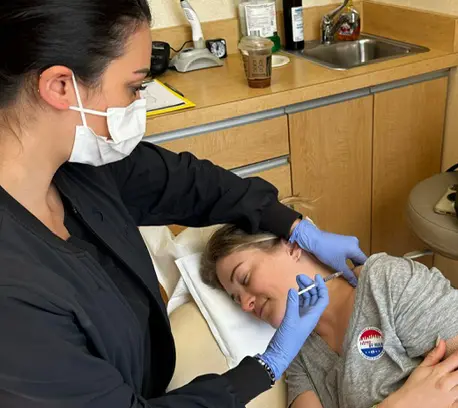
When she arrived at our practice, Lindsay was exhausted. I spent a lot of time listening carefully as she described her pain journey. We uncovered daily ergonomic challenges and clenching behaviors that were contributing to her recurrent symptoms. We further discussed modifications to her existing medications in order to minimize side effects. I targeted locations across her jaw and neck with trigger point therapy.
Trigger point therapy, a form of needling therapy that releases taut muscles and tendons commonly responsible for musculoskeletal pain and postural restraints, became invaluable to her progress.
“I can actually straighten my neck more,” she would say as her range of motion improved almost immediately. BOTOX® therapy was planned in conjunction with the trigger point therapy to maximize her therapeutic outcomes and time without pain.
An individualized home care plan and collaboration with her physical therapist optimized her time beyond my care. We developed a timeline for treatment so that she could stay abreast of her symptoms.
Sustainable Results Through Comprehensive Care
Lindsay always appreciated her appointments and looked forward to the extended relief they afforded her. Excedrin was no longer part of her daily ritual. She was able to enjoy trips abroad and time with friends without fear.
Although the tension returns over time, it no longer escalates to jaw-locking and temporal headaches as it had before her therapy.
Stress was no longer driving Lindsay’s symptoms because stress alone was not the source of her pain. She now has autonomy over her care and optimism for the future.
You May Be Interested In
Understanding ‘Lockjaw’ – A Guide for Healthcare Providers
Rethinking Your Patient’s Pain
Heterotopic Pain & Its Role In Facial Pain
