
Clinical Perspective
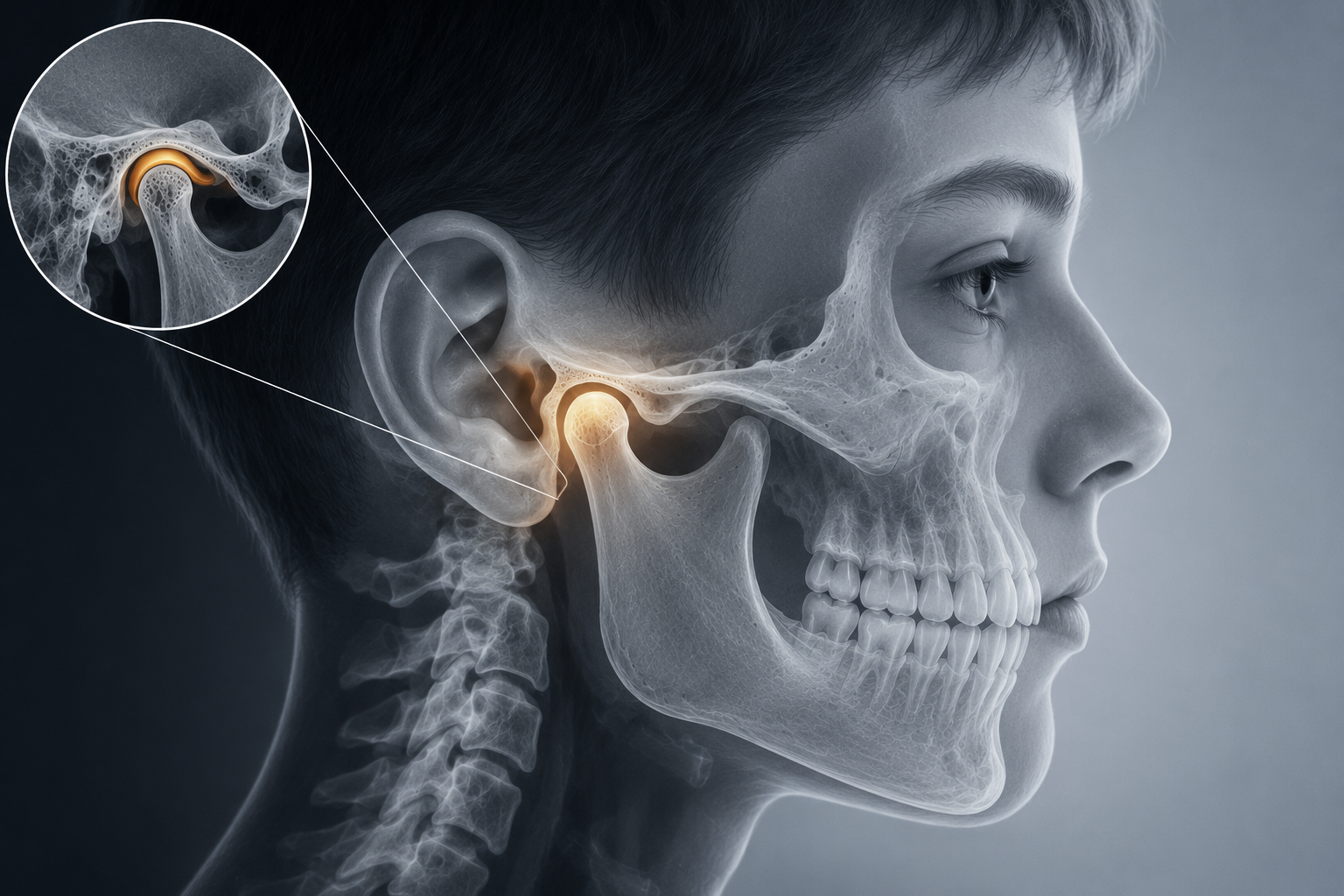
Temporomandibular disorders (TMD) in adolescents and young adults present unique diagnostic and management challenges. Hormonal influences, migraine comorbidity, orthodontic treatment, psychiatric medications, sleep disruption, and psychosocial stress frequently converge during this developmental period, creating conditions favorable for TMD onset and chronification. Early recognition and interdisciplinary management are essential for optimal patient outcomes.
In our clinical experience treating patients throughout the New York City metropolitan area, adolescents and young adults represent one of the more common patient cohorts presenting with muscular TMD and TMJ disc displacement disorders.
There are several contributing factors and treatment considerations unique to this patient population that are important for dentists, orthodontists, pediatric providers, and other healthcare professionals to recognize.
Hormonal changes in young women
The sex disparity in TMD is well established. Roughly twice as many women as men seek care for temporomandibular disorders. The reason for this disparity is believed to be largely hormonal in nature.
Estrogen receptors are found in high concentrations within the cartilage and retrodiscal tissues of the temporomandibular joints. As estrogen levels fluctuate, the laxity of the TMJ ligaments may also change, predisposing susceptible individuals to TMJ disc displacement.
As girls enter puberty, major hormonal changes occur. Not coincidentally, this is often the age at which TMJ clicking and other early TMD symptoms first become apparent.
The migraine connection
TMD and migraine are highly comorbid conditions, meaning that patients suffering from one disorder are more likely than average to suffer from the other. This relationship is closely tied to trigeminal nerve sensitization.
The trigeminal nerve is central to migraine pathophysiology and is also responsible for sensory innervation of the jaw structures. First-onset migraine frequently occurs during the teenage years and early adulthood, overlapping substantially with the onset of TMD symptoms.
It is extremely common for patients to present to their dentist with complaints of “headaches and jaw pain,” attributing the entire issue to a TMJ disorder. However, many of these patients are actually suffering from two distinct but overlapping conditions, migraine and TMD, both of which require recognition and appropriate management for optimal outcomes.
In our experience treating adolescent TMD patients throughout the New York City metropolitan area, this overlap between migraine and jaw pain is frequently underrecognized during initial dental evaluation.
Orthodontics and TMD
Orthodontic treatment is extremely common in adolescents, making it an important variable when evaluating adolescent TMD treatment considerations in this age group.
Numerous studies have evaluated the relationship between orthodontics and TMD over the years. The academic consensus remains that there is no strong causal relationship between orthodontic treatment and TMD, nor is orthodontic therapy considered a standard treatment for TMD.
Much of the perceived association is likely coincidental, as both orthodontic treatment and initial TMD onset commonly occur during adolescence.
That said, there are important nuances to this discussion.
Orthodontic forces alter proprioceptive feedback from the periodontal ligaments, which may subsequently influence muscle firing patterns and forces placed upon the TMJs. Orthodontic elastics introduce additional loading forces to the joints. Discomfort associated with tooth movement may further contribute to trigeminal sensitization.
Specific to clear aligner therapy, some clinicians have observed that the continuous presence of material between the teeth may contribute to increased tooth contact awareness, sustained clenching behaviors, or symptom aggravation in susceptible patients.
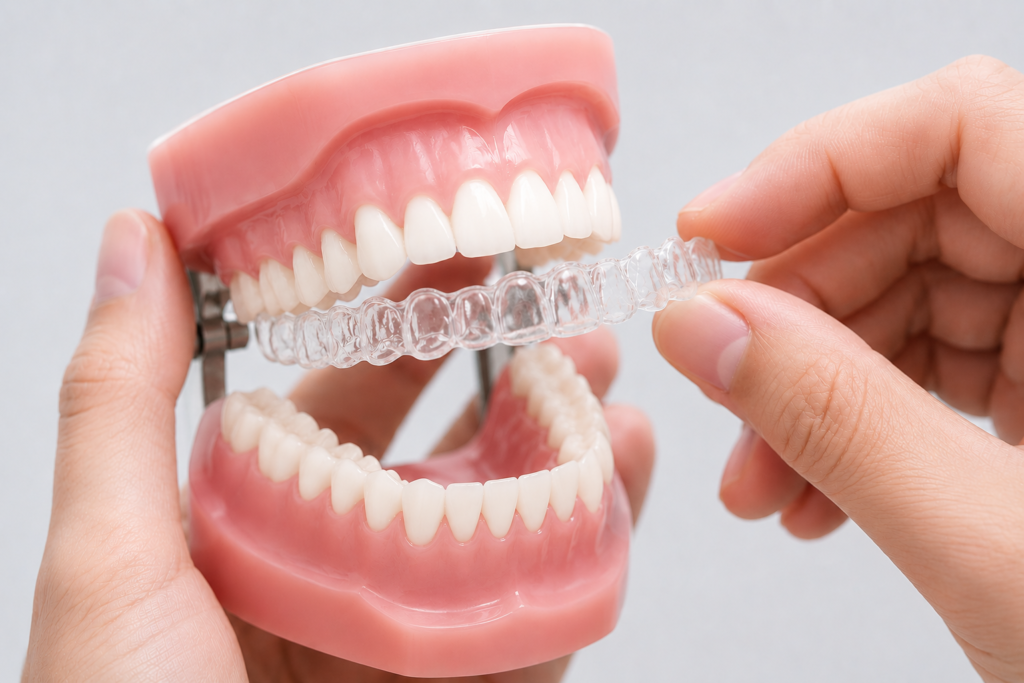
Taken together, orthodontic treatment may, in some patients, represent “the straw that breaks the camel’s back,” converting a previously subclinical condition into a symptomatic TMD presentation.
This does not imply that orthodontic treatment should be avoided in adolescents or young adults. Rather, patients should be carefully screened for TMD symptoms prior to initiating treatment and appropriately counseled regarding potential risks.
When TMD symptoms arise during orthodontic treatment, management decisions must be individualized. Orthodontic appliances or aligners may act as ongoing contributing factors, and active orthodontic treatment can sometimes limit available TMD therapies. For example, many forms of oral appliance therapy are not feasible in patients currently undergoing orthodontic treatment.
In more severe cases, particularly when oral appliance therapy is necessary or significant orthodontic treatment remains incomplete, discontinuing orthodontic therapy earlier than originally intended may occasionally need to be considered.
Medications: SSRIs, stimulants, and bruxism
There has been a dramatic rise in psychiatric medication usage among adolescents and young adults in recent decades. Selective serotonin reuptake inhibitors (SSRIs) and stimulant medications are now among the most commonly prescribed medications in this demographic.
SSRIs, including sertraline, escitalopram, and fluoxetine, are commonly prescribed for anxiety and depression. A well-established side effect is the onset or worsening of sleep and awake bruxism, often developing within weeks of medication initiation.
Stimulants prescribed for ADHD, including both amphetamine-based and methylphenidate-based medications, are also strongly associated with increased bruxism activity. Because these medications are generally taken in the morning, they are particularly associated with daytime clenching and parafunctional behaviors.
It is therefore essential to ask any adolescent or young adult patient presenting with new-onset muscle pain or bruxism whether new medications were initiated within several months of symptom onset.
When medication-induced bruxism is suspected, communication with the prescribing physician may be appropriate to determine whether alternative therapies are feasible. If medication changes are not possible, management strategies may include behavioral therapy, oral appliance therapy, botulinum toxin injections, and other supportive interventions.
Sleep disturbance and the adolescent chronotype
The relationship between poor sleep and chronic pain is well established. Sleep disturbance is consistently one of the strongest predictors of TMD onset and chronicity.
Simply put, patients who do not sleep well are more likely to develop pain, and persistent poor sleep impairs recovery.
An individual’s “chronotype” reflects their biologic tendency toward sleep and wakefulness. During adolescence and early adulthood, there is a well-recognized shift toward a delayed sleep phase or “night owl” chronotype.
The American Academy of Sleep Medicine recommends that teenagers obtain between 8 and 10 hours of sleep nightly. (Sleep Education). Given that most schools have early start times, a situation is created in which it is impossible for many adolescents to get enough sleep.
An additional modern consideration is the widespread use of smartphones and screens before bedtime. Screen exposure may disrupt melatonin production, increase physiologic arousal, and further delay sleep onset.

Psychosocial stress
Psychosocial stress is widely recognized as a major contributing factor to TMJ disorders.
Academic pressure, social stressors, athletic demands, and constant social media exposure create significant stress burdens for many adolescents and young adults. While these stressors may differ from those experienced later in life, they are no less significant physiologically.
Accordingly, stress management and physiologic self-regulation remain foundational components of evidence-based adolescent TMD treatment.
Jaw relaxation techniques, diaphragmatic breathing exercises, consistent sleep scheduling, and referral to mental health professionals when appropriate should all be considered as part of comprehensive management.
Alcohol considerations in college-aged patients
Alcohol use is another important consideration in college-aged patients.
Alcohol consumption may contribute to jaw pain through disrupted sleep and increased sleep bruxism. It also carries important implications for pharmacologic management.
Many medications commonly used in TMD management, particularly muscle relaxants and other sedating medications, may potentiate the effects of alcohol and create potentially dangerous situations.
Due to these factors, it is essential that this population is explicitly educated on the risks of medication and alcohol interactions prior to prescribing.
Temporomandibular joint resorption
Two important conditions affecting younger patients warrant particular attention: Idiopathic Condylar Resorption (ICR) and Juvenile Idiopathic Arthritis (JIA).
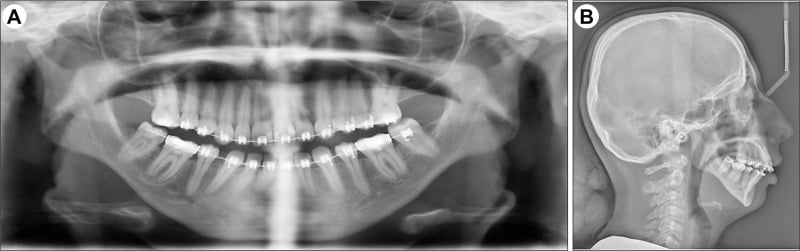
Both conditions may lead to rapid destruction of the mandibular condyles, resulting in significant facial and occlusal changes, including mandibular retrusion and progressive anterior open bite.
Idiopathic Condylar Resorption most commonly affects females between the ages of 15 and 35. Although the precise cause remains unknown, hormonal influences are believed to play a significant role.
Juvenile Idiopathic Arthritis is a systemic autoimmune disease that frequently involves the temporomandibular joints.
While comprehensive diagnosis and management of these conditions are beyond the scope of this article, they should always be considered in young patients demonstrating progressive mandibular retrusion or anterior open bite, particularly because both conditions may occur with or without associated jaw pain.
Conclusion
Adolescents and young adults with TMD represent a uniquely vulnerable patient population in whom hormonal changes, disrupted sleep, psychiatric medications, orthodontic treatment, migraine comorbidity, and psychosocial stress frequently converge.
In specialty orofacial pain practices serving the New York City metropolitan area, these patterns are increasingly recognized among adolescent and young adult patients presenting with complex jaw pain and headache disorders.
Early recognition of these contributing factors, and timely, evidence-based adolescent TMD treatment, is critical in helping prevent chronic pain progression and improving long-term outcomes.
For our colleagues in the New York City metropolitan area
If your practice is located in the New York City metropolitan area, New York TMJ & Orofacial Pain has four locations staffed by board-certified orofacial pain specialists. We provide evidence-based, multidisciplinary care and collaborate closely with referring providers to achieve optimal patient outcomes.
CONTACT ONE OF OUR OFFICES →
Additional resources
- Is It TMD Or Is It Migraine? Two Case Studies
Dr. John Dinan - Sleep Bruxism – What To Consider
Dr. Donald Tanenbaum - Current Status of the Management of Idiopathic Condylar Resorption/Progressive Condylar Resorption – A Scoping Review (2024)
Journal of Clinical Medicine
Eiji Tanaka, Louis G. Mercuri - Management of Orofacial Manifestations of Juvenile Idiopathic Arthritis: Interdisciplinary Consensus-Based Recommendations (2023)
Published in RMD Open (BMJ) - Diagnosis and management of idiopathic condylar Resorption: A review of literature
Saudi Dental Journal (2024) (Image)
The author
Dr. John Dinan is a board-certified Orofacial Pain specialist who is dedicated to the treatment of TMJ/TMD disorders and related conditions. He practices in our Manhattan and Springfield, NJ offices.
