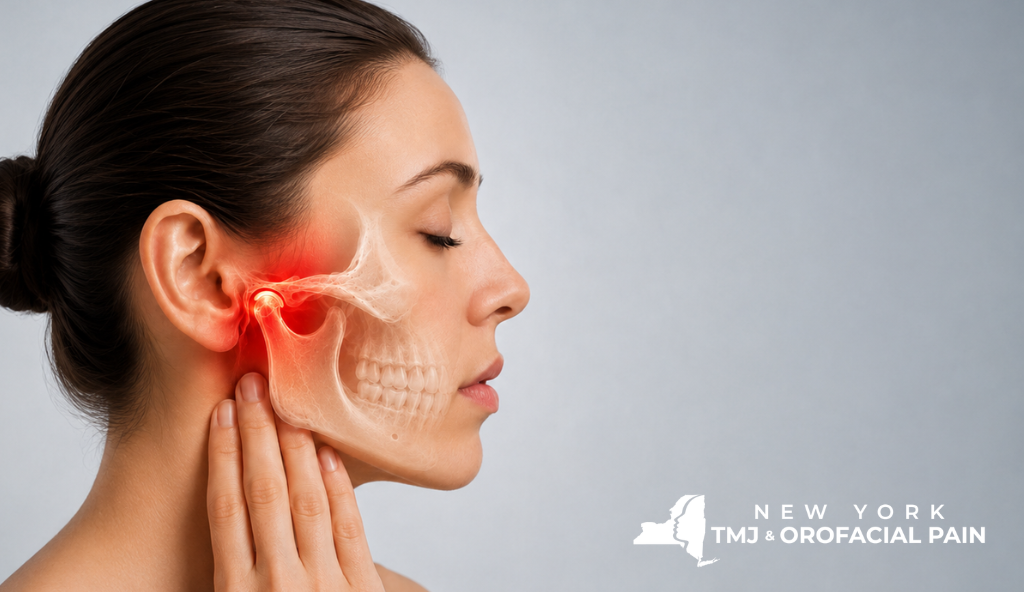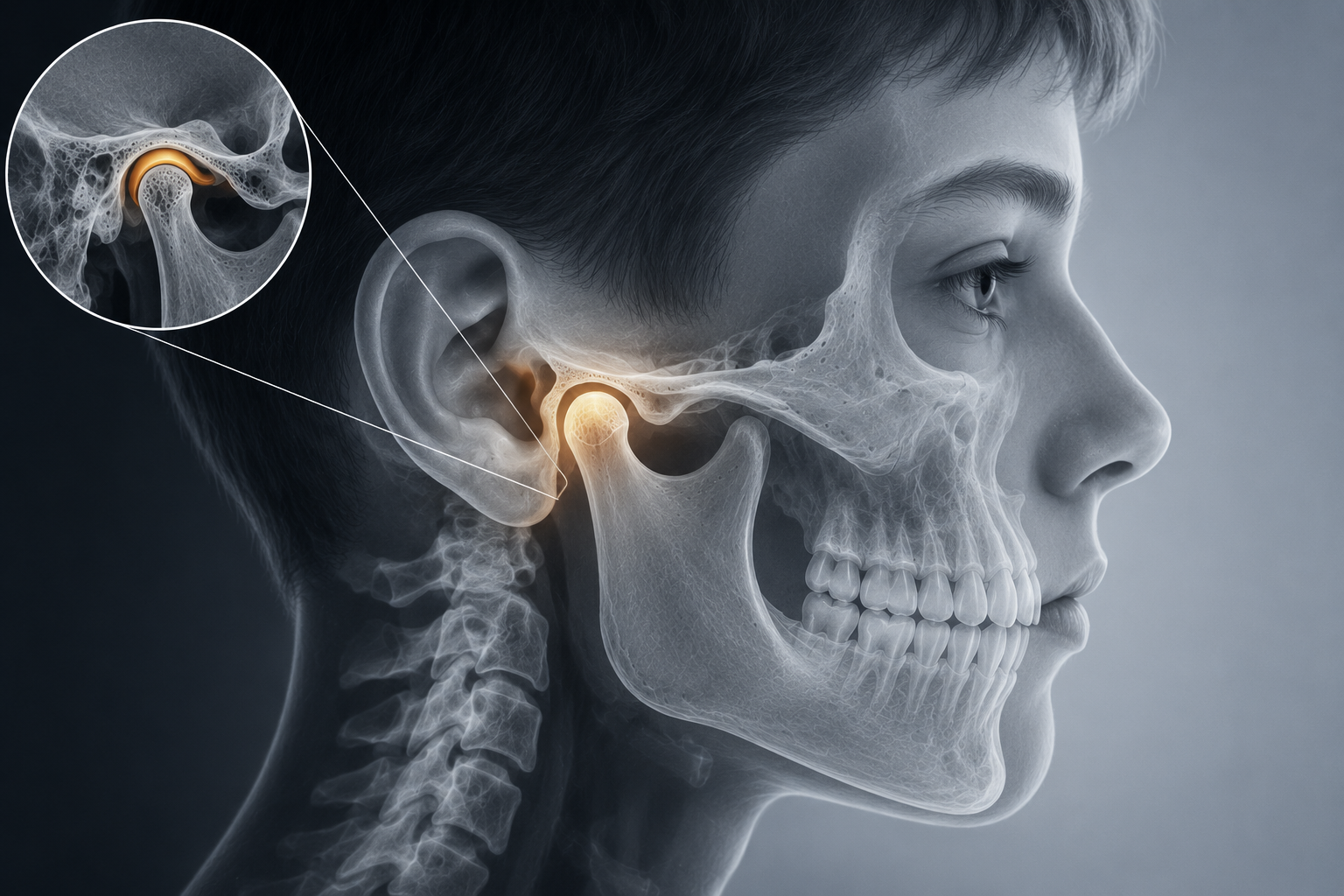
If surgery has come up in your TMJ treatment, you probably have a lot of questions. Here are some answers.
Do I Need TMJ Surgery?
There are times when TMJ surgery becomes a necessity due to persistent joint inflammation, displacement of the shock absorbing disc, arthritic disease, and other systemic medical disease processes that are responsible for persistent pain and limitations of jaw motion.
The reality, however, is that despite these pathologic situations, most patients under our care over the last 40 years did not require surgical care due to the resiliency of this joint and its adaptive capacity when provided supportive care.
For those who did move forward with surgery, advancements in understanding why their temporomandibular joints became compromised in the first place and the availability of improved surgical procedures have, in my experience, commonly led to the restoration of pain-free function for most all patients.
With that in mind, before you consider moving forward with a TMJ surgical plan of care that has been recommended, there are several things to consider.
Why Did Your Temporomandibular Joint(s) That Now Require Surgery, Become Compromised in the First Place?
The most common reasons include:
- A single traumatic event can initiate serious joint damage that ultimately requires surgery, however, this scenario is not the most common pathway. Sports injuries, motor vehicle accidents, and medical and dental traumas can all lead to unstable and symptomatic TMJs that don’t respond to nonsurgical care. If over time the resultant traumatically initiated tissue injury in the joint progresses, surgery may become a reality.
- Persistent Overload: It is important to remember that jaw problems are essentially orthopedic problems. As a result, persistent overload to the TMJs inclusive of sleep related tooth clenching or grinding, and/or jaw overuse behaviors during the day can potentially put enormous strain on the joint tissues leading to the irreversible tissue damage and inflammation that drives pain and mechanical limitations. Mind body influences and fragmented sleep can be influential in these pathways.
- Medical conditions: Such as rheumatoid arthritis, psoriatic arthritis, lupus, osteoarthritis, Ehlers-Danlos syndrome, and Lyme disease amongst many others can make the TM joint more structurally vulnerable and subject to inflammatory driven pain. Though the symptoms may appear similar to those driven by other pathways the outcome of treatments may be less predictable and influenced by the medical disease process.
- Structural and Bite Related considerations: Though it is the opinion of this practitioner that structural and bite related considerations are much less likely when compared to the other pathways to structurally compromise the TMJs to an extent leading to surgery, mention is due. Structural and bite imbalances then can be considered risk factors overtime particularly when coupled with persistent overload, traumatic impacts and medical conditions.
Knowing this answer is extremely important!
Now That Surgery Has Been Recommended, Ask Yourself the Following Questions
- Were the reasons for my joint problems fully understood and explained to me in an understandable fashion?
- Did the answers make sense based on the history of the symptom onset, progression, and your medical status?
- Did you understand the nature of the structural compromises in the joint that were thought to be driving the pain and movement limitations? Did you receive a diagnosis that made sense?
- Did the treatment that was put into place attempt to address these compromises?
- Was sufficient time allowed for these non-surgical efforts inclusive of medications, dietary modifications, exercises, physical therapy, oral appliances, change in daytime overuse behaviors, and joint and muscle injections to make an impact?
- Was imaging done (MRI/CT), and did the findings confirm the previously communicated diagnoses? Did the findings help explain the lack of response to the non-surgical care provided?
- Was an anesthetic like lidocaine injected into the symptomatic joint at one point in time, and if so, did it mostly eliminate the pain for a short period?
If you are satisfied with your answers to these questions, surgery may in fact be the next logical step. If you are not satisfied with your answers, clarify your concerns with your treating doctor and or get another opinion.
What Are the Types of TMJ Surgery Available?
As with all orthopedic joints there are multiple TMJ surgical options which are chosen to match the history, imaging, physical findings and established diagnosis.
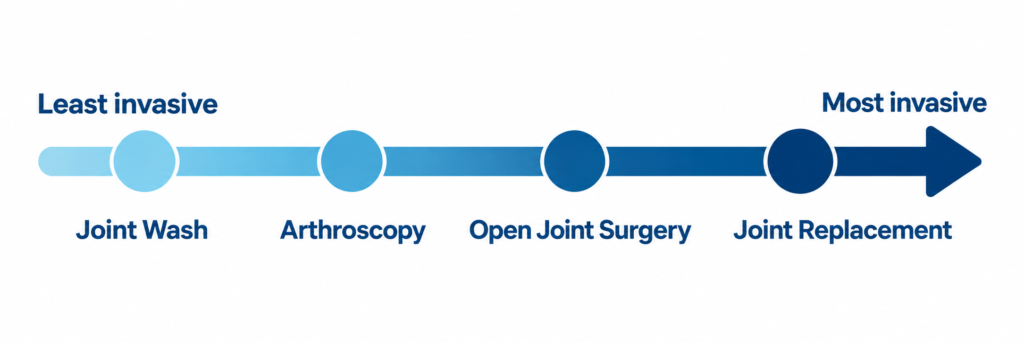
The Surgical Spectrum
Arthrocentesis (Joint wash): The least invasive option, done in an outpatient setting, washes out the joint to reduce inflammation, and break up adhesions, providing nature with a better opportunity to support tissue healing and adaptation. After the wash is completed, steroids, joint lubricants and or components of a patient’s blood are injected into the joint with the goal of pain reduction and improved jaw motion.
Arthroscopy adds direct visualization of the joint commonly under general anesthesia, allowing more extensive removal of adhesions and inflammatory tissue, biopsy, recontouring of bone tissue, and at times relocation of a displaced disc. Injections of steroids, joint lubricants and/or components of a patient’s blood are also done routinely with the goal of pain reduction and improved jaw motion.
Open joint surgery becomes relevant when less invasive approaches have failed. Disc repositioning can preserve an intact but displaced disc when caught early. Discectomy removes a disc that is torn, perforated, or too damaged to preserve, often followed by other procedures to cushion the joint space and reduce the risk of bone-on-bone deterioration, particularly in younger patients.
Total joint replacement remains the last resort, reserved for end-stage joint disease, ankylosis, congenital malformation, or failed prior surgery. Outcomes for pain and function are generally favorable, though long-term stability beyond 10 to 15 years remains an area of ongoing study.
Surgery Is Only One Part of Your Care
TMJ surgery works best when there is: a full understanding of the diagnosis, a presurgical conversation about expectations, a clear recovery plan, continued efforts to identify sources of origin and control or manage them, and collaboration with physicians when there are underlying medical conditions to address.
If you want to better understand temporomandibular problems, my new book, Lockjaw: A Human Problem, explains what TMJ problems are, what causes them and leads to pain and functional limitations, and the full range of treatment options, all in language you can easily follow.
As a resource, The American Board of Orofacial Pain has a directory of board-certified orofacial pain specialists who can provide support and assistance in decision making.
ARE YOU FACING JAW PAIN IN THE NYC METROPOLITAN AREA?
If you’re in the New York City metropolitan area and you’ve been told you may need TMJ surgery, or you’re unsure whether it’s the right next step, you deserve answers, not just a recommendation.
At New York TMJ & Orofacial Pain, we specialize exclusively in diagnosing and treating TMJ disorders and orofacial pain. We take the time to identify the true cause of your symptoms and build a treatment plan that directly addresses it, starting with the least invasive care that can help.
We have four locations: Midtown Manhattan, White Plains, Hauppauge, and Springfield, NJ.
CONTACT US TODAY TO SCHEDULE A COMPREHENSIVE EVALUATION →
Further Resources
Understand your TMJ
- What Causes TMJ?
- Is a Medical Condition Causing Your TMJ Pain?
- TMJ Hypermobility and Ehlers-Danlos Syndrome
- Can Lyme Disease Cause TMJ?
Non-surgical TMJ treatments
About us
About the Author
Dr. Donald R. Tanenbaum is a co-founder of New York TMJ & Orofacial Pain. He provides care at our Manhattan and Hauppauge locations. He is also the author of Lockjaw: A Human Problem and co-author of Doctor, Why Does My Face Still Ache?.
Frequently Asked Questions About TMJ Surgery
How do I know if I need TMJ surgery?
Surgery may be worth considering if imaging has identified joint pathology, and you have genuinely tried non-surgical care but still have joint pain, and limited jaw function that interferes with daily life.
How common is TMJ surgery?
It’s uncommon. Only a small number of people treated for TMJ problems need surgery, despite joint pathology that is confirmed with CT imaging and an MRI. In my experience, non-surgical care is predictably helpful.
What are the types of TMJ surgery?
From least to most invasive, the options are arthrocentesis (a joint wash), arthroscopy, open joint surgery, and total joint replacement. The procedure is matched to the history, physical exam, imaging and diagnosis.
Should I get a second opinion before TMJ surgery?
Yes, especially if surgery was recommended before non-surgical treatment had a real chance to work. A board-certified orofacial pain specialist can provide support and help in decision making.