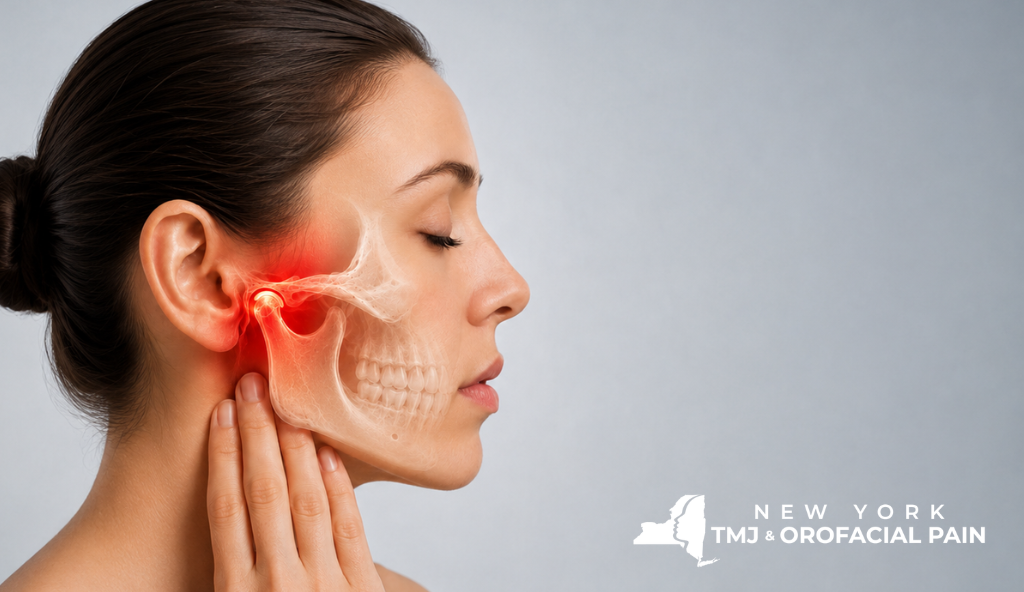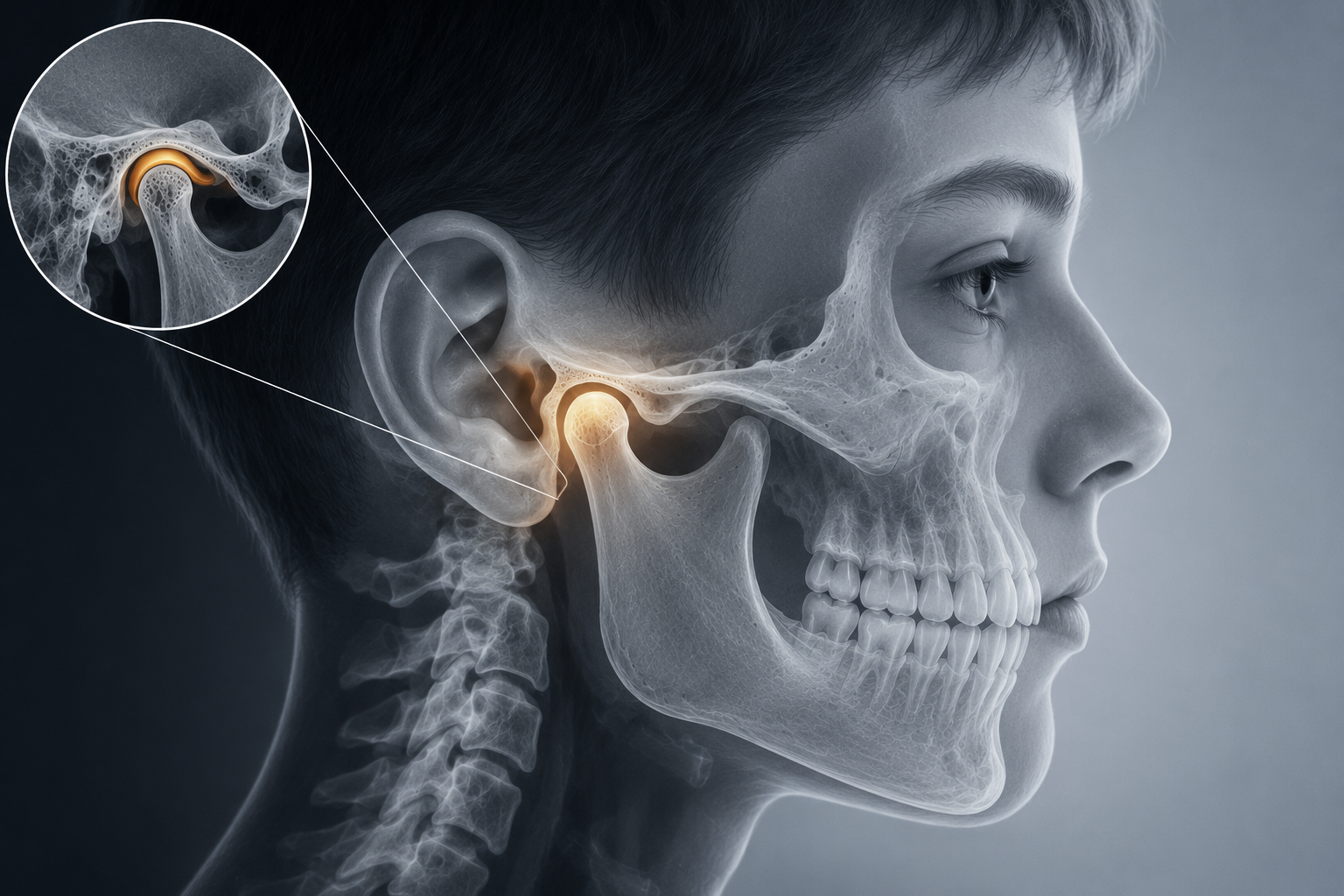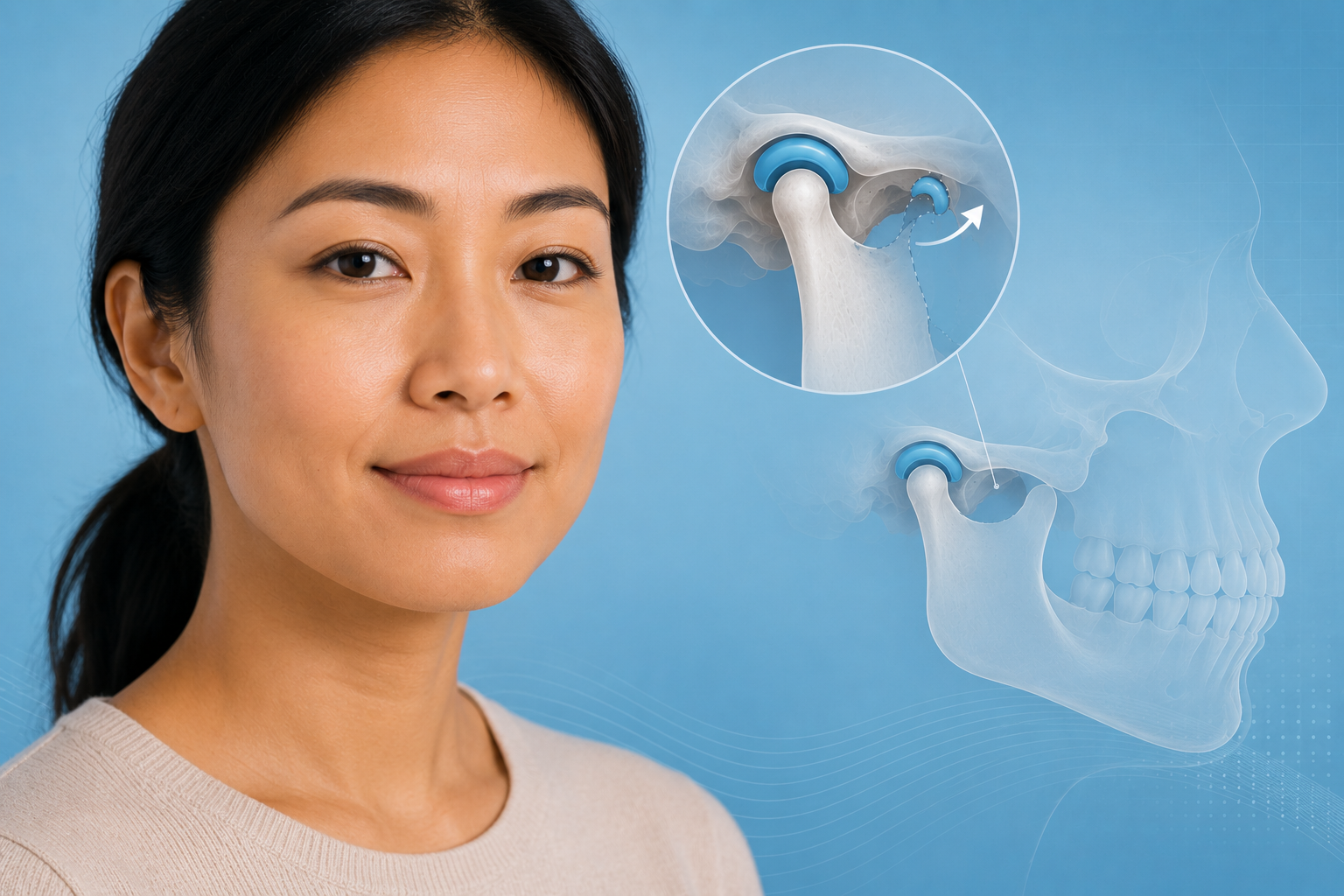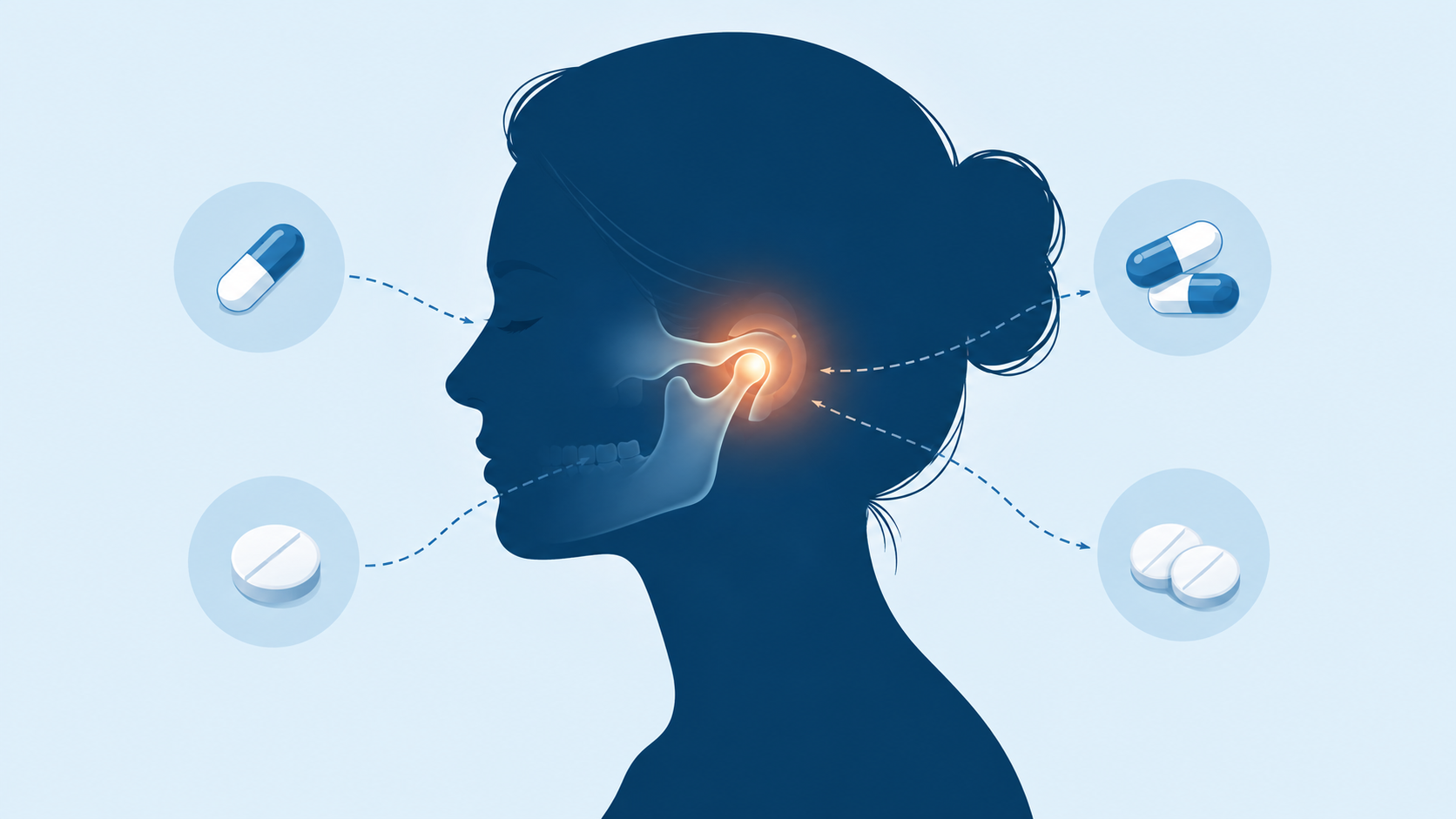
These common medications might make your jaw pain harder to treat.
Can medications contribute to your TMJ pain?
Yes. Some commonly prescribed medications can contribute to jaw pain or make it harder to treat. They can affect how your muscles work, how well you sleep, whether you grind your teeth at night, and how intensely your body registers pain. This does not mean your medication is the cause, but in cases where jaw pain is stubborn or hard to explain, your medication list is worth a careful look.
Maybe You Have Already Tried the Usual Things
Maybe you have tried a nightguard. Maybe you have done physical therapy, changed what you eat, or worked on your stress. And yet your jaw pain is still there and not getting better.
Surprisingly, one thing that rarely gets examined in these situations is your medication list.
Over many years of practice as an orofacial pain specialist, I have noticed a pattern. A meaningful number of patients whose jaw pain history does not quite add up turn out to be taking one or more medications that can quietly affect muscles, joints, or the way the body processes pain. These are not unusual medications. They are drugs that millions of people take every day for entirely good reasons, for their thyroid, their cholesterol, their blood pressure, their mood.
Finding a connection between a medication and your jaw pain does not mean the medication is wrong for you. It means there may be more to the story.
Why Would a Medication Affect Your Jaw?
It is a fair question, and a reasonable thing to be skeptical about.
Your jaw muscles work the same way every other muscle in your body does. They need adequate nutrients to function. They respond to how well you sleep. They are affected by how tense or activated your nervous system is. And the signals your brain uses to register pain can be turned up or down depending on what else is happening in your body.
Some medications shift one or more of these things in ways that make the jaw more vulnerable, more likely to ache, more likely to tense up, less able to recover. The effect is often subtle and gradual, which is part of why the connection goes unnoticed.
If your symptoms do not quite fit a simple explanation, this is worth considering.
Medications That May Play a Role

The medications below are not unusual or obscure. You may have been taking one of them for years. As you read, you might recognize something. It is a starting point, not a diagnosis.
- Thyroid medications (levothyroxine, Synthroid)
- Cholesterol medications (statins)
- Blood pressure medications (lisinopril, losartan)
- Acid reflux medications (proton pump inhibitors)
- Spironolactone
- ADHD medications (stimulants)
- Antidepressants (SSRIs and SNRIs)
Thyroid Medication: Levothyroxine and Synthroid
Most people take thyroid medication without any problems, and that is exactly how it should go. When the dose is right, it helps your body function the way it should.
The problems tend to come when the dose is off. Too little can leave you with low energy, poor sleep, and a kind of all-over muscle heaviness that can settle into the jaw. Too much can have the opposite effect, keeping your muscles tighter than they should be, disrupting your sleep, and making your whole system feel like it is running too fast.
If you have been on thyroid medication for a long time without a recent check-in, and your jaw symptoms do not fit a clear pattern, it may be worth asking your doctor whether your current dose is still the right one for you.
Cholesterol Medications: Statins
Statins are so commonly prescribed that it is easy to assume they cause no problems for most people. And often they do not. But muscle aching is a known and real side effect that affects a meaningful number of people who take them.
Your jaw muscles work the same way every other muscle in your body does, so they can be affected too. If your jaw or facial muscle discomfort developed after you started a statin, after a dose change, or after switching from one statin to another, it is worth mentioning to your doctor.
Blood Pressure Medications: ACE Inhibitors and ARBs, Lisinopril and Losartan
This one surprises most people. Blood pressure medication is not something you would typically connect to jaw pain, which is exactly why this connection so often goes unnoticed.
Medications like lisinopril and losartan are among the most commonly prescribed drugs in the country. What most people do not know is that one class of them, ACE inhibitors like lisinopril, can raise the levels of a substance in your body called bradykinin. Bradykinin turns up the volume on pain signals in tissue that is already irritated or inflamed. So if there is any low-level tension or inflammation in your jaw, even an amount that would normally be manageable, this can make it feel significantly worse than it otherwise would.
ARBs like losartan work through a different pathway and are less likely to cause this same effect.
This is part of why jaw pain in someone taking an ACE inhibitor can seem out of proportion to what a doctor is actually able to find. The pain is real. The medication may simply be amplifying it.
If your jaw pain has been hard to get on top of and you take one of these medications, it is worth mentioning to your doctor.
Acid Reflux Medications: Proton Pump Inhibitors
Medications like omeprazole are considered gentle, and for short-term use they generally are. But many people take them for years, and long-term use can gradually deplete magnesium in your body.
Magnesium matters for your muscles. Without enough of it, muscles can cramp, ache, and become more irritable with normal use, including the muscles you use to chew and talk. Vitamin D and B12 can also be affected over time.
If you have been on one of these medications for a long time and you experience unexplained jaw muscle cramping or a tenderness that does not go away, a simple blood test can tell your healthcare provider whether your levels are low.
Spironolactone
Spironolactone is prescribed for a range of conditions: heart failure, high blood pressure, fluid retention, and hormonal conditions such as acne.
What is worth knowing is that this medication may gradually lower your body’s ability to keep pain in check, and it can also deplete magnesium over time, which, as noted above, affects how your muscles hold up under everyday stress.
The link between spironolactone and jaw pain is still being studied, but it comes up often enough in the histories of people with unexplained jaw symptoms that it is worth mentioning to whoever prescribed it.
ADHD Medications: Stimulants
If you take a stimulant medication for ADHD, your jaw is probably the last thing on your mind. But these medications affect the whole body, not just attention.
Stimulants keep your nervous system in a more activated state, which means your muscles, including your jaw muscles, tend to stay tighter. They can also make you more likely to clench your jaw during the day or grind your teeth at night without realizing it.
If your jaw was already under some stress before you started the medication, that added tension can be enough to tip things in the wrong direction. If your jaw pain started or got noticeably worse after starting a stimulant, that is something to bring up with your doctor.
Antidepressants: SSRIs and SNRIs
This is one that surprises a lot of people. You started a medication to help you feel better, and the idea that it might also be affecting your jaw is not something most doctors think to mention.
What these medications can do in some people is increase nighttime teeth grinding. This happens because they affect the brain pathways that normally keep your jaw muscles relaxed while you sleep. The result can be waking up with a sore jaw, sensitive teeth, or a dull ache that is hard to explain.
If that started happening after you began or increased an antidepressant, it is worth bringing up with your doctor.
Something Worth Paying Attention To
If your jaw pain feels out of proportion to what any doctor has been able to find, or you have tried things that should have helped but did not, your medication list may be part of the picture. Finding a possible connection does not mean stopping the medication. It gives you something concrete to discuss with your healthcare provider, and sometimes that is the piece that finally moves things forward.
What You Can Do With This Information
If something in this article rang a bell, that matters. It is not a diagnosis, and it does not mean you have figured everything out on your own. But it may mean you have found a thread worth pulling.
The most important thing first: do not stop or change any medication without talking to your doctor. That is never the right move on your own.
What you can do is start paying attention to timing. When did your jaw symptoms begin or change? Did anything shift with your medications around that same time, a new prescription, a dose change, a switch from one drug to another? Write it down. That kind of timeline is genuinely useful information.

If your jaw pain has been going on for a while without a clear answer, it may be time to see an orofacial pain specialist. This is a doctor who focuses entirely on jaw pain, facial pain, and related symptoms. They will review your full health picture, including your medication list, and they are accustomed to working alongside the other doctors already in your life.
If you are in the New York City metropolitan area, we would be glad to help. If you are elsewhere, the American Board of Orofacial Pain maintains a directory of board-certified specialists across the country.
Are You Experiencing Jaw Symptoms That Are Not Responding to Treatment in the NYC Metropolitan Area?
If you’re in the New York City metropolitan area and you’ve been dealing with jaw pain that hasn’t improved the way it should, you deserve answers, not just temporary relief.
At New York TMJ & Orofacial Pain, we specialize exclusively in diagnosing and treating TMJ disorders and orofacial pain. We take the time to understand the full picture, including your health history and what medications you are taking, and build a plan that addresses the actual cause of your symptoms.
We have 4 locations: Midtown Manhattan, White Plains, Hauppauge, and Springfield, NJ.
Contact us today to schedule a comprehensive evaluation. →
Related Articles
Is a Medical Condition Causing Your TMJ Pain?
What Is an Orofacial Pain Specialist?
About the Author
Dr. Donald R. Tanenbaum is a board-certified specialist who has dedicated his 40-year career to diagnosing and treating Orofacial Pain, TMD/TMJ, headache, and sleep-related breathing disorders. He practices in our Manhattan and Hauppauge offices.
What to Expect at Your First Visit →
Frequently Asked Questions about Medications That May Contribute to TMJ Pain
Can the medications I take every day contribute to jaw pain?
Yes, some can. Certain commonly prescribed medications can affect how your muscles work, how well you sleep, whether you grind your teeth, and how your body registers pain. They are rarely the only cause of jaw pain, but they can make symptoms worse or harder to treat. It is a question worth raising with your doctor if your jaw pain has been stubborn or hard to explain.
How would I know if a medication is affecting my jaw?
The clearest signal is timing. Did your jaw symptoms start, or get noticeably worse, around the same time you started a new medication, changed a dose, or switched from one drug to another? Pain that seems worse than what any doctor has been able to find is another sign worth paying attention to.
Should I stop my medication if I think it might be connected to my jaw pain?
No. Please do not stop or adjust any medication on your own. That is not the right move, and it can cause real problems depending on what the medication is for. If you think there may be a connection, write down the timeline and bring it up with your doctor. That conversation is the right next step.
Can antidepressants cause jaw pain?
Not directly, but they can contribute to it in some people. Certain antidepressants, including common ones like sertraline (Zoloft), fluoxetine (Prozac), and escitalopram (Lexapro), can increase nighttime teeth grinding by affecting the brain pathways that normally keep your jaw muscles relaxed during sleep. If you started waking up with jaw soreness or sensitive teeth after beginning or increasing an antidepressant, that is worth mentioning to your doctor.
Which medications come up most often in people with unexplained jaw pain?
In my experience, the medications that show up most often include thyroid replacement medications, cholesterol medications (statins), blood pressure medications, acid reflux medications, spironolactone, ADHD stimulants, and antidepressants. Each one can affect the jaw through a different pathway, and any of them can be a contributing factor when the usual explanations do not quite fit.