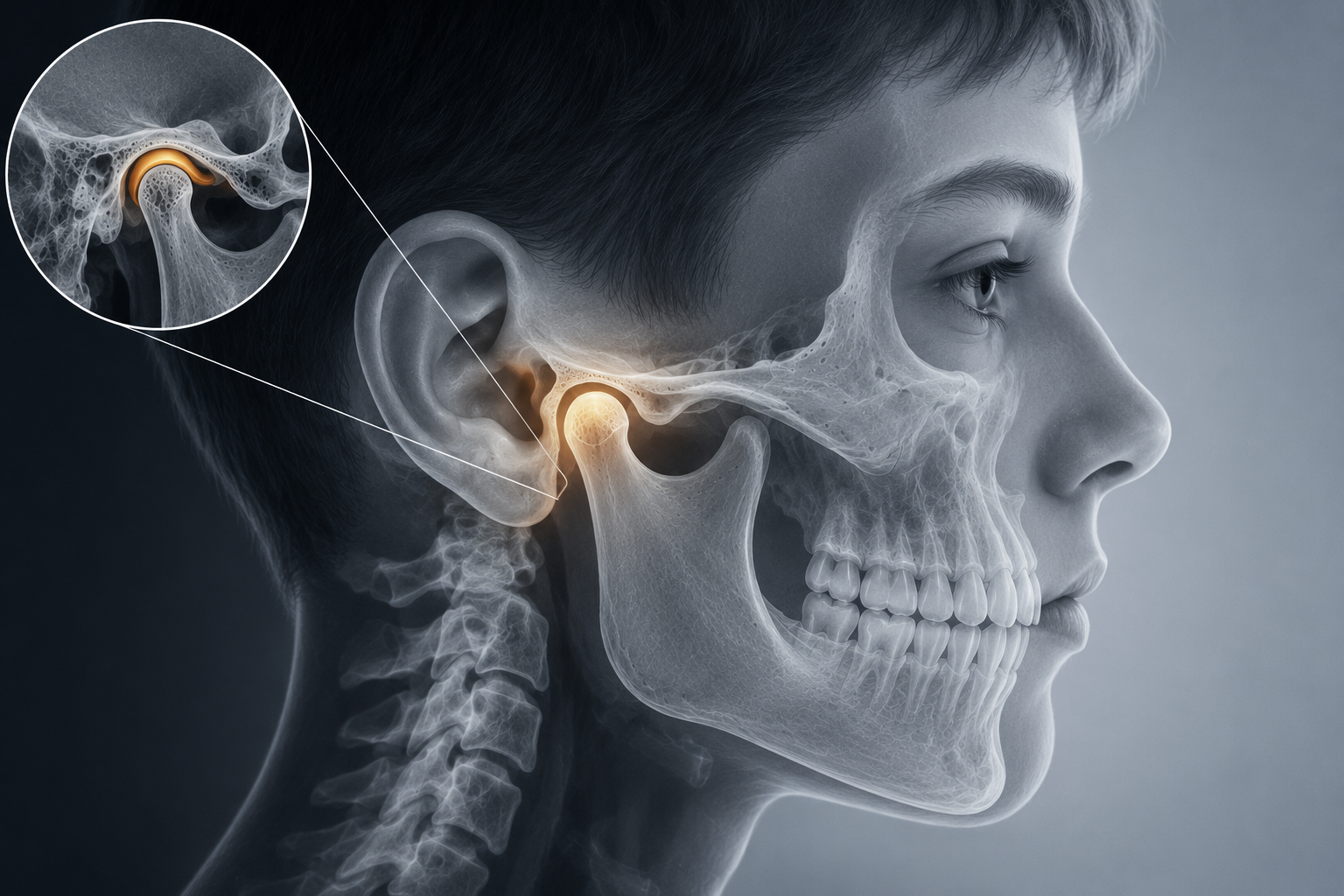
Your child started mentioning jaw pain a few months ago. Maybe they said their jaw clicks when they eat. Maybe they’ve been waking up with headaches, or complaining of ear pain their pediatrician can’t explain.
You brought it up at their next dental appointment. The dentist checked their teeth, said everything looked fine, and suggested a nightguard.
You tried the nightguard. The complaints kept coming.
If this sounds familiar, here’s something that may help: jaw pain and TMJ symptoms are well documented in adolescents and young adults. When they show up during this period of life, there are usually very specific, identifiable reasons why. And the right specialist can find them.
In the New York City metropolitan area, where academic pressure runs high and schedules are often relentless, we see this pattern regularly in our busy orofacial pain practice. Teens and young adults from Manhattan, Westchester County, Long Island, and northern New Jersey arrive having already been to their dentist, their pediatrician, and sometimes an ENT or neurologist. They are not getting answers. In many cases, the missing piece is a specialist trained specifically in orofacial pain.
What Is TMJ?
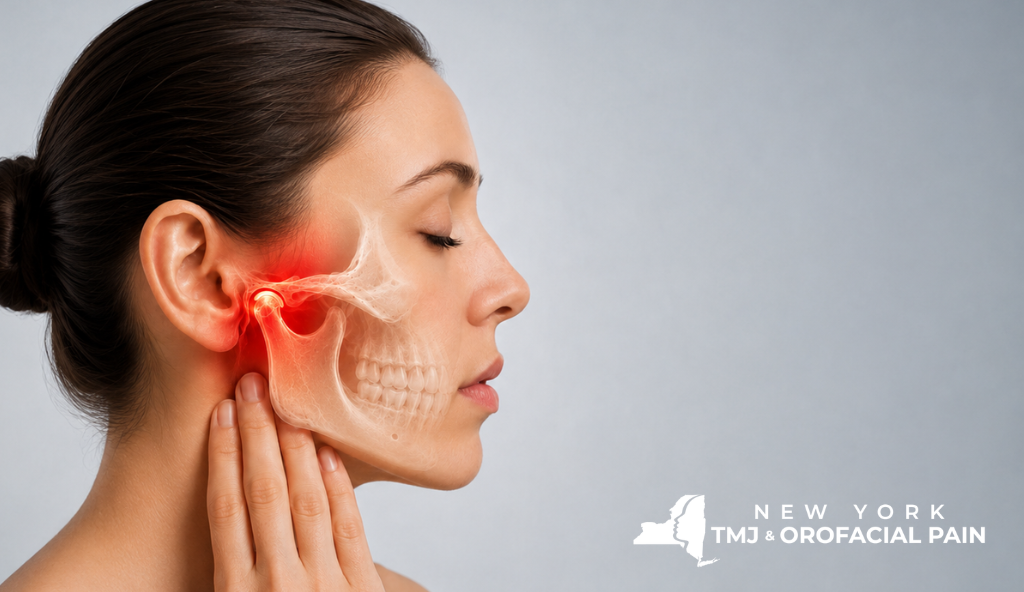
TMJ, or temporomandibular disorder (TMD), is a condition involving the jaw joint, the muscles that control jaw movement, and the surrounding tissues. It commonly produces jaw pain, clicking, headaches, ear fullness, and facial muscle tension. In adolescents, it is frequently triggered by a combination of hormonal changes, stress, sleep disruption, orthodontic treatment, and certain medications.
In teens and young adults, TMD most often shows up as some combination of the following:
- Jaw pain or soreness, especially in the morning or after eating
- Clicking, popping, or grinding sounds in the jaw
- Headaches, often starting at the temples or behind the eyes
- Ear fullness, ringing, or pain without an ear infection
- Difficulty opening the mouth fully or comfortably
- Facial muscle tension or fatigue
These symptoms are real, and they should not be something your child simply has to live with.
Why Does TMD So Often Start During the Teen Years?
Adolescence creates a convergence of factors that can push a vulnerable jaw system toward symptoms. Hormones shift significantly. Sleep patterns change. Stress levels rise. Orthodontic treatment is often in progress. And for many teens today, new medications enter the picture for the first time.
None of these factors alone necessarily causes TMD. But when several of them are present at once, they can tip a previously quiet jaw problem into an active, painful one.
Understanding which factors are driving your child’s symptoms is the starting point for effective care.
Why Are Girls More Likely to Develop TMD During Puberty?
TMD affects women significantly more often than men, and the difference is largely believed to be hormonal.
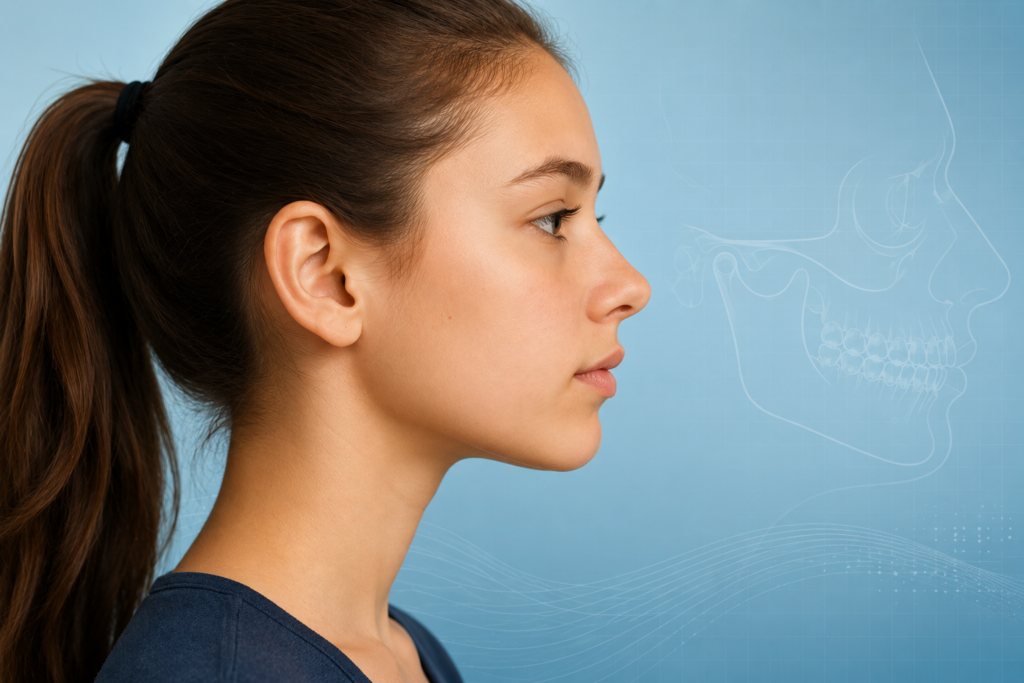
The jaw joint contains receptors for estrogen, the primary female sex hormone. As estrogen levels fluctuate, the ligaments supporting the joint can become more lax, making the joint less stable and more prone to problems.
Puberty triggers major hormonal shifts, and it is not coincidental that TMJ clicking and early jaw symptoms often first appear during this window. If your daughter’s jaw symptoms started in middle school or early high school, this hormonal connection may be part of the explanation.
Can a Teenager Have Both TMD and Migraine at the Same Time?
Yes, and it is more common than most parents expect. Many parents bring their child to our practice complaining of “headaches and jaw pain,” and assume the jaw is causing both.
Sometimes that is true. But a pattern we see frequently is that the child is actually dealing with two distinct but overlapping conditions: TMD and migraine. Both involve the trigeminal nerve, which governs sensation in the face and jaw. When one condition flares, it can amplify the other.
Migraine commonly begins during the teen years and early adulthood, overlapping almost exactly with the typical window for early TMD onset.
If your child has been treated for headaches and jaw pain without meaningful improvement, it is worth making sure both conditions have been formally evaluated. Treating only one when both are present often leaves a significant part of the problem unaddressed.
Can Braces or Aligners Make TMD Worse?
Orthodontic treatment does not cause TMD. That is well established in the research, and it is important to say plainly.
However, there are meaningful nuances that parents should understand.
Orthodontic forces change the feedback that teeth send to the jaw muscles. In some patients, the continuous presence of clear aligners between the teeth appears to increase tooth contact awareness and clenching activity. For teens who are already predisposed to jaw problems, orthodontic treatment can sometimes be what converts a subclinical condition into an active, symptomatic one.
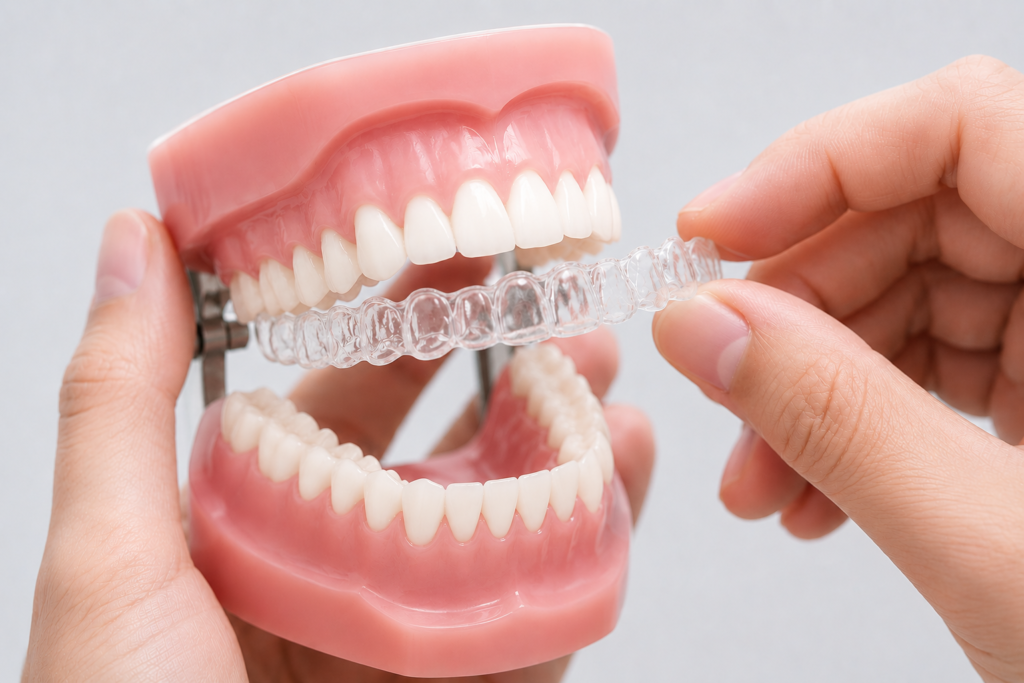
This does not mean your child should avoid or stop orthodontic treatment. It means two things. First, children starting orthodontic treatment should be evaluated by an orofacial pain specialist for existing TMD symptoms beforehand. Second, jaw pain that develops or worsens during orthodontic treatment should be evaluated by an orofacial pain specialist, not simply managed with over-the-counter pain relief or reassurance that it will pass.
In some cases, active orthodontic treatment limits the TMD therapies available, and those trade-offs need to be considered by a specialist.
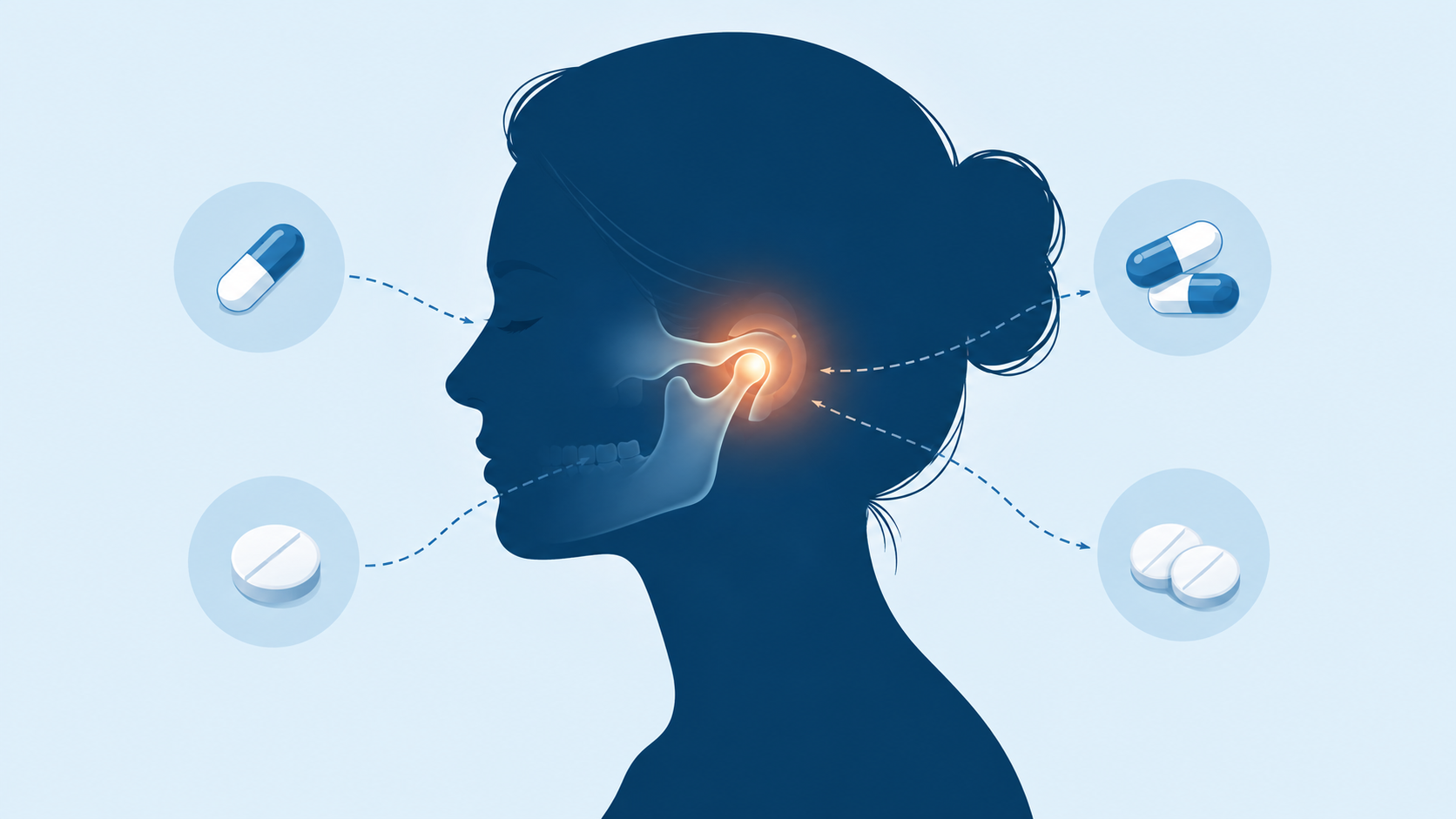
Can ADHD Medication or Antidepressants Cause Jaw Clenching?
Yes. This is a connection many families are not aware of, and it can be directly relevant to your child’s symptoms.
SSRIs, a common class of antidepressants that includes sertraline, escitalopram, and fluoxetine, are associated with a significant increase in bruxism, meaning clenching and grinding, both during sleep and while awake. This side effect can begin within weeks of starting the medication.
Stimulant medications prescribed for ADHD, including both amphetamine-based and methylphenidate-based drugs, are also strongly associated with increased daytime jaw clenching.
If your child began experiencing jaw pain or muscle tension shortly after starting a new medication, that connection is worth raising with their prescribing physician and with an orofacial pain specialist.
In some situations, alternative medications may be available. In others, the better path is managing the jaw symptoms directly while continuing the medication that is helping with the underlying condition.
How Does Poor Sleep Make Teen TMD Symptoms Worse?
Poor sleep is one of the strongest predictors of chronic pain, including TMD. When your child is not sleeping adequately, their muscles recover more slowly, their pain sensitivity increases, and their body is less equipped to manage the jaw problems that are already present.

During adolescence, the body’s internal clock naturally shifts toward a later sleep phase, making it biologically harder for teens to fall asleep early. The American Academy of Sleep Medicine recommends that teenagers get 8 to 10 hours of sleep per night. Given typical school start times, most adolescents fall well short of that.
Screen use before bed worsens the problem by suppressing melatonin and increasing physiologic arousal, pushing sleep onset even later.
If your child has jaw pain and is also consistently under-sleeping, the sleep deficit is not incidental. It is likely contributing to their symptoms and interfering with recovery.
Does Stress Really Cause Physical Jaw Pain?
It can be tempting to hear “stress is contributing to this” and interpret it as a suggestion that the pain is not real. That is not what it means.
Psychosocial stress, whether from academic pressure, social demands, athletic expectations, or the chronic low-grade stress that comes with constant social media exposure, has real physiologic effects. It activates jaw and facial muscles. It increases clenching. It raises systemic inflammation. And it disrupts sleep, which compounds everything else.
For many adolescents in Westchester County, Manhattan, and the surrounding suburbs, this kind of sustained pressure is a daily reality, and it shows up in the jaw.
Helping your child build skills for physiologic self-regulation, including jaw relaxation techniques, diaphragmatic breathing, and consistent sleep habits, is a legitimate and evidence-based part of managing TMD. Mental health support, when appropriate, is also part of the picture.
Read Part 2 to learn about treatment for TMD in teens.
Is Your Child Experiencing TMJ or Jaw Pain Symptoms in the New York City Metropolitan Area?
If you are in Manhattan, Westchester County, Long Island, or northern New Jersey and your child has been dealing with jaw pain, TMJ symptoms, or related headaches, you deserve answers, not just temporary relief.
At New York TMJ & Orofacial Pain, we specialize exclusively in diagnosing and treating TMJ disorders and orofacial pain. We take time to identify the true cause of your child’s symptoms and build a treatment plan that directly addresses it.
We have 4 locations: Midtown Manhattan, White Plains, Hauppauge, and Springfield, NJ.
Contact us today to schedule a comprehensive evaluation. →
About the Author
Dr. John Dinan is a board-certified Orofacial Pain specialist dedicated to the treatment of TMJ/TMD disorders and related conditions. He practices at New York TMJ & Orofacial Pain’s Manhattan and Springfield, NJ locations.
What to Expect at Your First Visit →
Frequently Asked Questions about Jaw Pain in Teenagers
Can TMD go away on its own in teenagers?
In some mild cases, symptoms improve with reduced stress, better sleep, and behavioral changes. However, TMD that persists beyond a few weeks, or that is associated with jaw clicking, bite changes, or recurring headaches, warrants a formal evaluation. Waiting without a diagnosis risks missing a condition that responds much better to early intervention.
What kind of doctor treats TMD in children and teenagers?
An orofacial pain specialist is the appropriate provider for diagnosing and treating TMD. This is a board-certified dental specialty focused specifically on jaw disorders, facial pain, and related conditions. General dentists and orthodontists are not typically trained in comprehensive TMD diagnosis.
Can braces cause TMJ problems?
The research is clear that orthodontic treatment does not cause TMD. However, in teenagers who are already predisposed, the forces and appliances involved in orthodontic treatment can sometimes activate symptoms that were previously quiet. Any jaw pain arising during orthodontic treatment should be evaluated, not assumed to be normal soreness.
Is jaw clicking in teenagers serious?
Jaw clicking on its own, without pain or limited opening, is common and often benign. However, clicking that is accompanied by pain, occurs on one side only, or is associated with changes in how the bite fits together is worth evaluating. Clicking can be an early sign of disc displacement inside the jaw joint.
Why does my teenager’s jaw hurt more in the morning?
Morning jaw pain is frequently a sign of nighttime clenching or bruxism during sleep. The jaw muscles work throughout the night and wake up fatigued and sore, much like any overworked muscle. This pattern is worth mentioning to an orofacial pain specialist, as it is highly treatable.
Can anxiety or depression contribute to TMD symptoms in teens?
Yes. Anxiety and depression increase muscle tension, disrupt sleep, and in many cases involve medications (such as SSRIs) that independently raise the risk of clenching. Addressing mental health as part of a comprehensive TMD plan is not a suggestion that the pain is psychological. It is simply treating the whole picture.
Further Reading
TMJ Problems During Invisalign Treatment