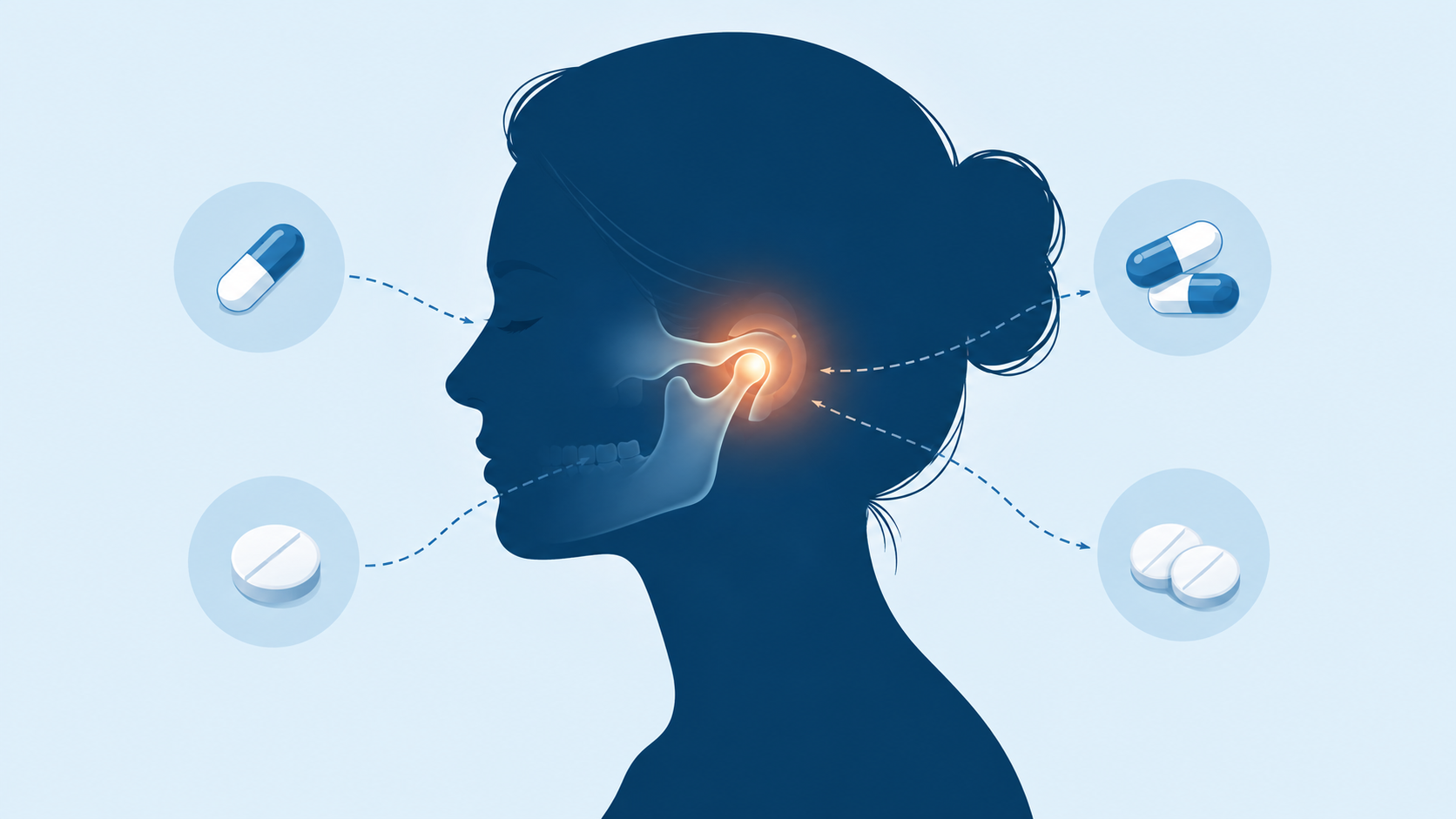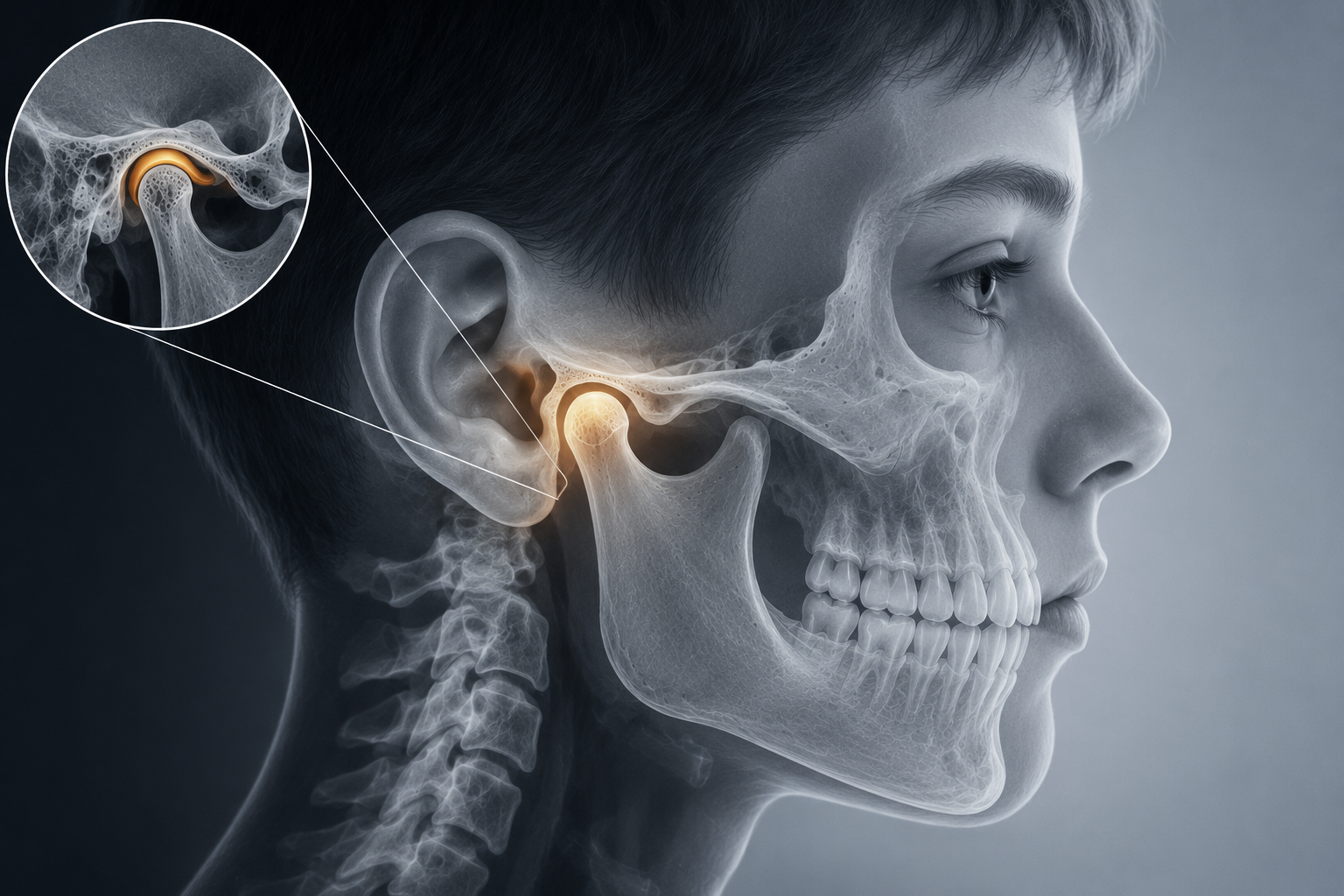
The temporomandibular joints (commonly abbreviated as TMJ) are the two joints connecting the jawbone to the skull. While healthy TMJ will work painlessly, the U.S. Department of Health and Human Services estimates that over 10 million Americans suffer from some kind of TMJ disorder. A dentist can often successfully treat TMJ pain with treatments either provided in the office or as part of an at-home regimen.
First-line therapies
Most dentists will first want to treat TMJ pain using noninvasive methods. Often, one or more of these therapies can help to reduce or eliminate TMJ pain.
Jaw exercises
Depending on a patient’s specific type of TMJ pain, a dentist may recommend exercises to stretch the jaw muscles, strengthen them or both. Regular, controlled working of the jaw can help increase mobility and promote healing. There is no single set of exercises that is beneficial for TMJ pain; a dentist will evaluate the causes of a specific patient’s pain and prescribe exercises based on that.
Mouthguards
A 2009 study published in the Journal of Manual & Manipulative Therapy found that occlusal orthotics (commonly called “mouthguards”) are one of the most effective ways to manage TMJ pain. These guards are custom-fitted to each patient and are designed to keep the jaw in a healthy, pain-free position. Patients who wake up with pain usually wear these at night. For those whose pain worsens throughout the day, a dentist will likely recommend wearing a guard for part of the day in order to break the habit of clenching the jaw.
Prescriptions
Often, a dentist will recommend over-the-counter pain medications to manage TMJ pain. For patients whose pain is severe, a dentist may briefly prescribe stronger pain medication. This type of prescription is almost always a temporary measure to relieve pain as treatment begins to take effect. For some patients, a dentist may also prescribe muscle relaxants, which can help reduce pain when the symptoms are caused by muscle spasms.
Advanced therapies
If conservative treatments do not improve a patient’s TMJ pain, a dentist may move to more advanced methods of addressing symptoms. These therapies carry more risk, but in some cases, they are the only way to eliminate pain.
Injections
In some people, corticosteroid injections into the affected joint can reduce TMJ pain. This is not a permanent treatment, but it can bring severe pain to a manageable level. Occasionally, botulinum toxin type A (commonly sold under the brand name BOTOX®) injections into the jaw muscle can also reduce pain.
Surgeries
There are a variety of surgical options available to treat persistent TMJ pain. These range from minimally invasive arthroscopic surgery to riskier, more involved open-joint surgery.
Conclusion
TMJ pain can get in the way of living a happy, productive life. For most patients, a dentist will be able to develop a treatment plan that works. If you are experiencing TMJ pain and looking for relief, do not hesitate to contact your dentist.
If you or someone you know is experiencing persistent or acute pain in the face or jaw, we invite you to set up a consultation with one of our Orofacial Pain specialists in the NYC metropolitan area. Our office locations and contact information are below.