

This content was originally published on 2/9/2022 and reviewed on 6/19/2026
What is trigeminal neuralgia?
Trigeminal neuralgia (TN) is a chronic nerve disorder that causes sudden, severe episodes of facial pain, typically on one side of the face. The pain is caused by irritation or compression of the trigeminal nerve and is often described as an electric shock or burning sensation. There is no cure, but medication, nerve blocks, and in some cases surgery can effectively manage symptoms.
Thousands of nerves and various neurological pathways run through our brain, and abnormalities or damage to those nerves can lead to chronic diseases. Trigeminal neuralgia is a painful disease that affects the trigeminal nerve, which runs through the face and upper jaw. Since its obvious spasms can be caused by touching the face, some patients mistake the symptoms for a dental issue when they first detect them while brushing their teeth. On the other hand, this disease is classified as a neurological problem rather than an oral health problem. Although there is no cure, there are ways to manage discomfort.
What Does Trigeminal Neuralgia Pain Feel Like?
Trigeminal nerve neuralgia causes sporadic to regular bouts of shooting facial pain that feels like a burn or an electrical shock. An episode can last anywhere from a few seconds to two minutes, and a person might be affected for an hour or more at a time.
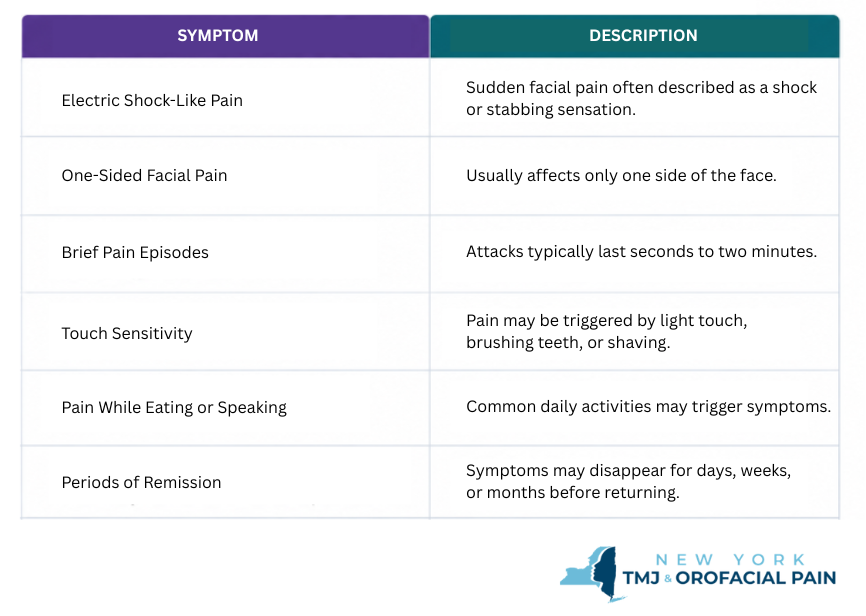
Daily living might be tough for someone who suffers from facial neuralgia. Eating and speaking can be challenging as the disease progresses, and even routine facial touch such as shaving, flossing, or applying cosmetics can cause a wave of discomfort. Constant anxiety over the next episode can turn to depression and other mental health issues, which are just as challenging to deal with as the neuralgia itself.
What Causes Trigeminal Neuralgia?
According to the National Institute of Neurological Disorders and Stroke, trigeminal neuralgia is one of the most painful neurological conditions and is often caused by compression of the trigeminal nerve.
An artery or tumor pushes on the trigeminal nerve, causing the illness. As a result of this contact, the nerve is compressed, and its protective covering is damaged. This can happen due to nerve damage caused by sinus surgery, mouth surgery, head trauma, a stroke, or a complication of multiple sclerosis. According to the Mayo Clinic, this type of neuralgia affects people regardless of their age. However, it is most prevalent in adults 50 and over, and women are more likely to be affected.
Can Trigeminal Neuralgia Be Mistaken for a Toothache?
This disease may manifest as pain in the lips, nose, eyes, or forehead, in addition to imitating the teeth or gum discomfort of a dental issue. Those who have tooth sensitivity or discomfort and suspect it is trigeminal neuralgia need to consult their dentist because these symptoms might indicate something else if there are no other symptoms of the illness.
Can Trigeminal Neuralgia Be Mistaken for a TMJ Disorder?
Although trigeminal neuralgia and TMJ disorder can both cause facial pain, they differ significantly in their causes, symptoms, diagnosis, and treatment approaches.
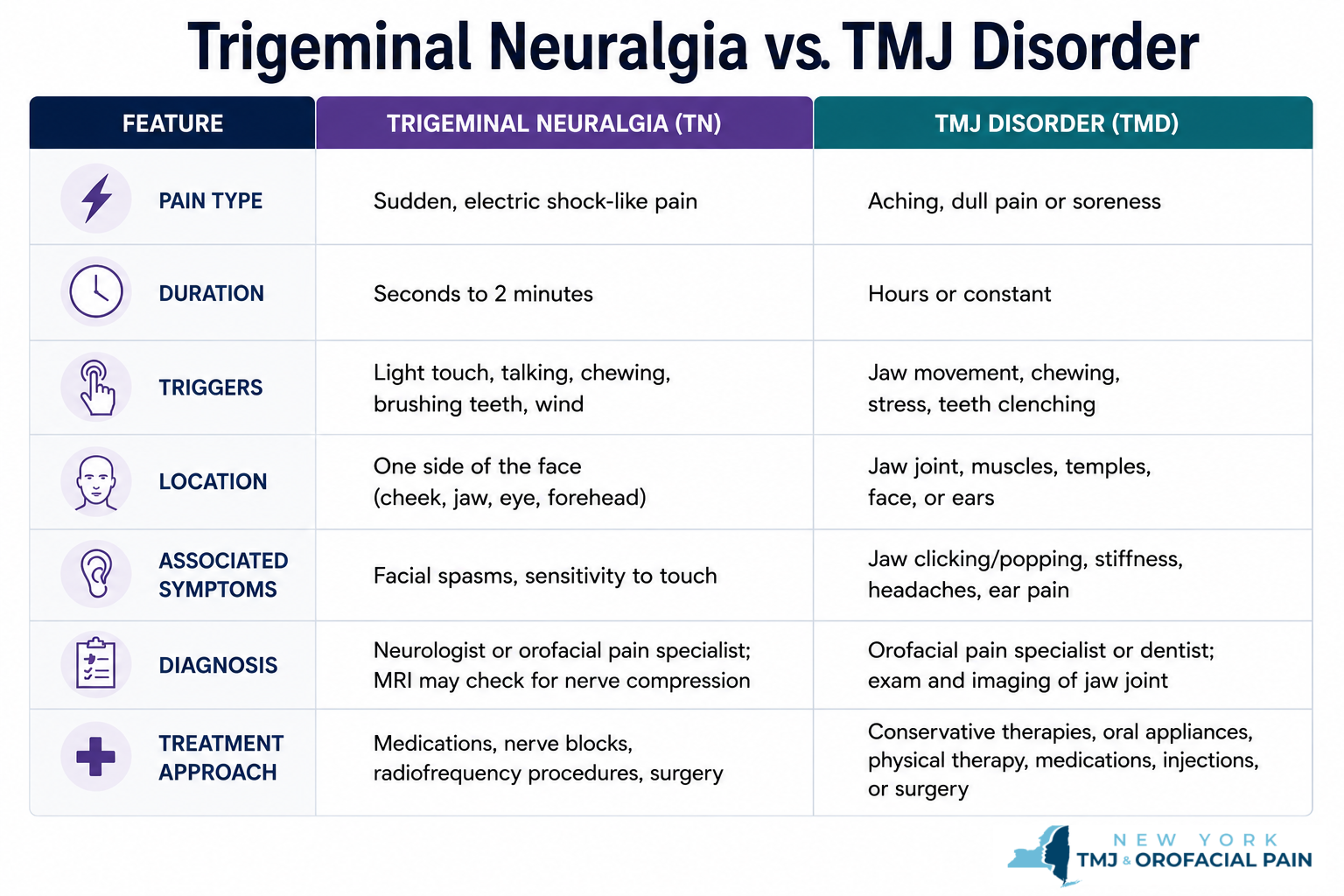
Because the terms are often used interchangeably, many patients are confused about the difference between trigeminal nerve pain and trigeminal neuralgia.
How Is Trigeminal Neuralgia Diagnosed and Treated?
To diagnose trigeminal neuralgia, a comprehensive medical examination and history are necessary. After discussing the problem with the dentist and doctor, they will send you to a neurologist, who may conduct a head MRI or other imaging to confirm the condition and begin developing a treatment plan.
While there is no universal cure or therapy that will work for everyone, a TMJ specialist may prescribe pain management techniques. A doctor’s first line of defense against the disease is generally nonsurgical therapy.
The pain associated with neuralgia is neuropathic (originating directly from the nerve). Thus, it does not react to over-the-counter pain medications or opioids. Anticonvulsants like carbamazepine (which is used to treat seizures) can help to decrease discomfort and attacks. To help reduce facial “shocks,” a neurologist may prescribe a muscle relaxant or other medicine.
Learn more about our trigeminal neuralgia treatment approach.
How Do You Manage Living with Trigeminal Neuralgia?
If you have noticed signs of trigeminal neuralgia, talk to a TMJ specialist about the best ways to deal with the pain. You can also speak to a counselor about the mental health issues that come with the illness. The specialist can assist you in your recovery, regardless of your age or stage in life, so you will not have to worry about discomfort when flashing your smile.
Why New York City Metro Area Patients Are Referred to NYTMJ for Trigeminal Neuralgia
Patients are frequently referred to our practice after:
- Multiple dental procedures failed to eliminate pain
- TMJ treatment did not improve symptoms
- MRI or neurological findings suggested trigeminal neuralgia
- Persistent facial pain remained unexplained
Our specialists focus exclusively on disorders of the jaw, face, head, and trigeminal nerve system, allowing for a more precise diagnosis and individualized treatment plan.
REQUEST AN EVALUATION →
Frequently Asked Questions About Trigeminal Neuralgia
Is Trigeminal Neuralgia Curable?
There is currently no cure for trigeminal neuralgia, but medications, nerve blocks, and surgical procedures can often significantly reduce symptoms and improve quality of life.
Is Trigeminal Neuralgia the Same as TMJ?
No. TMJ disorders affect the jaw joints and chewing muscles, while trigeminal neuralgia is a nerve condition.
How Long Do Trigeminal Neuralgia Attacks Last?
Individual episodes typically last from a few seconds to about two minutes.
What Triggers a Trigeminal Neuralgia Episode?
Light touch to the face, brushing teeth, shaving, washing the face, applying makeup, talking, chewing, and wind.
Can a Dentist Diagnose Trigeminal Neuralgia?
A dentist can rule out dental causes of pain, but diagnosis generally requires neurological evaluation.
Who Treats Trigeminal Neuralgia?
Treatment typically involves a neurologist and may also involve an orofacial pain specialist.
Can Trigeminal Neuralgia Cause Jaw Pain?
Yes. Many patients experience pain in the jaw, teeth, cheek, or lower face, which is one reason trigeminal neuralgia is often mistaken for TMJ disorders or dental conditions.