Manhattan

212-265-0110

White Plains

914-227-2305

Springfield, NJ

973-315-7830

Hauppauge

631-265-3136
Categories
BOTOX® TMJ

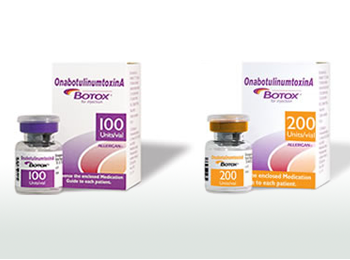
BOTOX® For TMJ Pain

Does It Work?

Despite the press advocating BOTOX® for TMJ pain problems, my clinical experience using it over the past 15 years suggests that it represents another supportive treatment at best and may not live up to the hype over the long term.

To start the discussion let’s focus on who is even a candidate for BOTOX®, a chemical agent that can be used to partially reduce muscle contracture. Since most of the commonly seen TMJ problems are orthopedic in nature, patients typically experience muscle and joint pain, limited jaw motion, difficulty chewing, and at times joint clicking, popping and locking.

Those patients whose problem is mainly mechanical – whose jaws click, pop, and lock – are typically not good candidates for BOTOX® injections. BOTOX® for TMJ pain and for people whose jaws have become more prominent due to excessive teeth grinding are more likely to get relief.

If you look at the common muscle problems we encounter with TMJ, the vast majority of patients will get better by:

  • Education, behavior, and diet modification
  • Postural awareness
  • Home exercise
  • Massage
  • Short-term medication

More stubborn problems will get better by adding:

  • Oral appliances
  • A prescription for physical therapy
  • Trigger point injections and/or acupuncture

That leaves only a small percentage of patients who would benefit from using BOTOX® for TMJ pain. It can be very effective in alleviating persistent jaw muscle pain resulting from the accumulation of lactic acid and other irritating substances. What makes people grind their teeth? Teeth grinding for most people is the result of negative emotions (stress), daytime overuse behaviors that fatigue the jaw and/or restless sleep associated with frequent arousals, and at times tooth clenching and grinding. Even when BOTOX® for TMJ pain is used in this select population of patients, success can only be achieved if what caused the problem in the first place is controlled or eliminated. It’s not an easy task!

People who opt for BOTOX® for TMJ pain typically need injections over a period of 9-12 months. If you are among the select few who are candidates, you have reasons to be optimistic. Patients for whom first-line therapies have failed report reduced suffering. Although still clench or grind their teeth they feel less pain as a result.

BOTOX® For TMJ Pain – The Take-Away

BOTOX®does have a place in the management of jaw muscle pain, but it is important to understand that it’s far from the remedy it is made out to be by those trying to sell it as a cure for TMJ problems.

Pain issues and sleep challenges do not have to be lifetime afflictions. You need someone who listens and possesses the knowledge and compassion to get your pain and sleep problems under control. I am that someone – and you’re in the right place.
Dr. Donald Tanenbaum, DDS MPH

If you or someone you know is experiencing persistent or acute pain in the face or jaw, we invite you to set up a consultation with one of our Orofacial Pain specialists in the NYC metropolitan area. Our office locations and contact information are below.

Categories
TMJ

TMJ Symptoms: Is Technology Necessary To Feel Better?

Recently as I flipped through a running magazine I came across an article that discussed the process of getting better following a leg injury. After reading this article I reflected for a moment on the current state of thinking within the dental profession as it relates to TMJ treatment options and the process of getting better following the emergence of symptoms in the TM Joints and jaw muscles.

The running article in a straightforward fashion outlined the principles of healing that would be required for typical leg injuries, inclusive of sprains/strains in order to get better. The focus, as expected, was on resting the injured tissues, supporting the injured tissues with wraps and braces based on the established diagnosis, heating/icing the area of concern, using medications to decrease pain, inflammation, and spasm, and employing home care strategies or formal physical rehabilitation efforts. The article repeatedly conveyed the theme that healing is a process and that similar orthopedic injuries may require different timeframes and treatment selections from person to person.

Unfortunately when it comes to TMJ problems, there continues to be a constant emergence of alternative strategies that seem to suggest that healing can only occur if assisted by some sort of high-tech wizardry and rearrangement of the teeth and jaw relationships. In fact, over the last 6 to 12 months endless email messages have been sent to dentists in the U.S. and abroad that offer new technologies that not only ‘cure’ TMJ problems but add an ongoing profit center to dental practices.

According to the ‘experts’ who are behind the sales pitch, accurate diagnoses can only be made with electronic instrumentation, which tracks jaw motions, and sensors which record the sequence, intensity, and duration of tooth contacts when the teeth are brought together.To the uninformed and sometimes vulnerable patient, these bells and whistles are rather convincing but unfortunately add cost and unnecessary treatment, usually inclusive of multiple sessions of ‘bite balancing’ or ‘bite reconstruction’ based on data collected on technology that has no scientific support.

To further cloud the issues, if a patient gets better during the weeks or months of technology guided treatment, success is attributed to the technology, not to the passing of time, or other strategies that may have been initiated.

The take home message

Jaw problems like other orthopedic problems typically get better without electronic technology. Though seeking professional care may be essential to your recovery, if more time is spent by the doctor you chose hooking your head and jaw up to sensors and tracking devices, getting a second opinion is recommended and probably in your best interest.

To learn about other possible jaw & facial pain treatments, please click below:

Dr. Donald Tanenbaum is a specialist with offices in New York City and Long Island, NY. He is uniquely qualified to diagnose and treat facial pain associated with jaw problemsTMJreferred painnerve pain, and migraines. Find out more at www.nytmj.com.